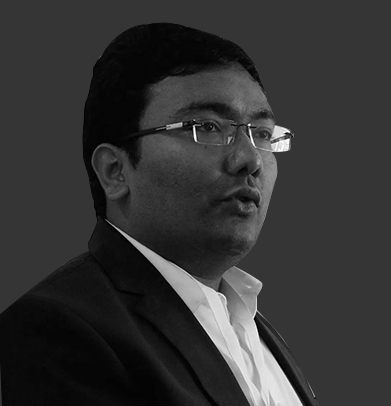
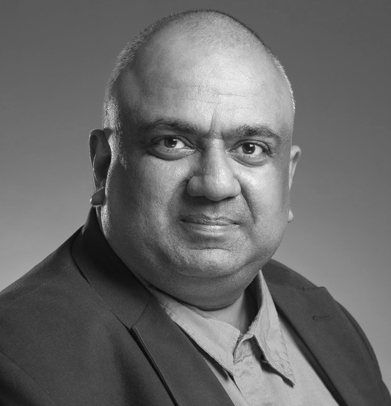
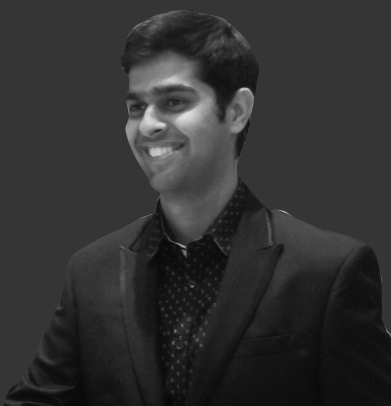
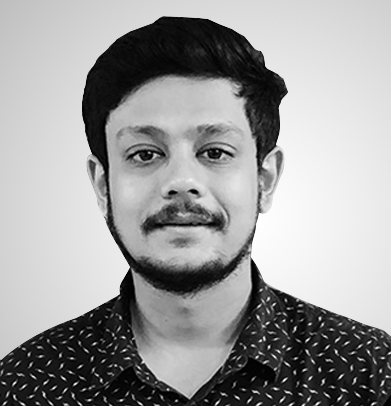
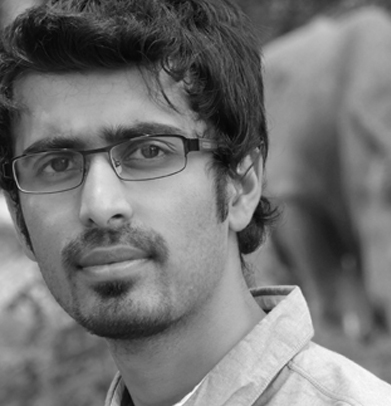
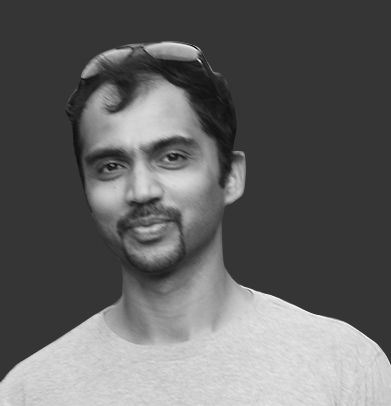
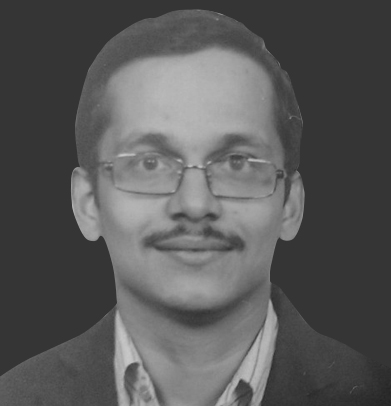
Varun Khandelwal is a Solution Architect for Analytics (MENA and India region) with Bahwan Cybertek. Through thought leadership and customer engagement, he helps businesses remain competitive in the ever-changing digital landscape.
Varun has worked in many industries such as Financial Services, Energy, Life Sciences, Media & Networks, Consumer Goods & Retail, and Telco to address business problems in the analytics domain. Over the period of years, he has developed deep experience in analytics and optimization area.
He also works as a technology evangelist to spread Analytics/Data Science knowledge across partners, customers and the data science community.
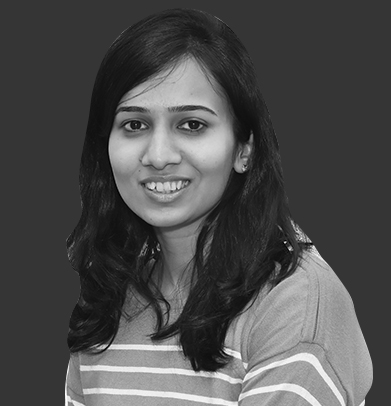
Vikas Agrawal works as a Senior Principal Data Scientist in Cognitive Computing for Oracle Analytics Cloud. His current interests are in automated discovery, adaptive anomaly detection in streaming data, intelligent context-aware systems, and explaining black-box model predictions. Vikas credits his continued learning to smart creative colleagues and mentors at Intel Corporation, Infosys Limited, and Oracle Corporation, where they researched and developed novel IP, products, and solutions to amplify humans such as:
Activity context-aware virtual personal assistants with N=1 personalization for insurance, pharma, retail and investment banks with risk and fraud detection
Real-time asset management, predictive maintenance, and reliability risk prediction systems using the Internet of Things (IoT) driven data-streams in mining and production systems for eliminating downtime, waste, and delay in manufacturing with explainability.
Automated discovery, anomaly detection, and guided modeling systems for scientific analysis of HCM, CRM, ERP, and SCM datasets.
Vikas received a B.Tech. in Electrical Engineering from the Indian Institute of Technology, New Delhi (1997), an MS in Computer Science and a PhD in Computational Modeling from University of Delaware, with post-doctoral research at California Institute of Technology (CalTech, Pasadena, CA) with colleagues from NASA’s Jet Propulsion Labs (JPL) for NSF’s FIBR.
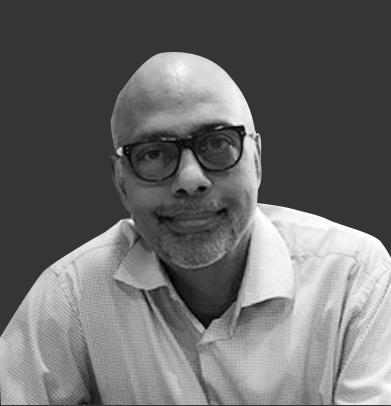
Raghav Bali is a Senior Data Scientist and a published author. He currently works at one the world’s largest health care organizations. His work involves research & development of enterprise-level solutions based on Machine Learning, Deep Learning and Natural Language Processing for Healthcare & Insurance-related use cases.
In his previous role at Intel, he was involved in enabling proactive data-driven IT initiatives using Natural Language Processing (NLP), Deep Learning and traditional statistical methods. He has also worked in the finance domain with American Express, solving digital engagement and customer retention use cases. Raghav has a master’s degree (gold medalist) in Information Technology from International Institute of Information Technology, Bangalore.
Raghav has also authored multiple books on R, Python, Machine Learning, Social Media Analytics, & Deep Learning with leading publishers, the recent one on latest in advancements in Transfer Learning research. He regularly contributes to leading online journals focusing on Machine Learning and Data Science.
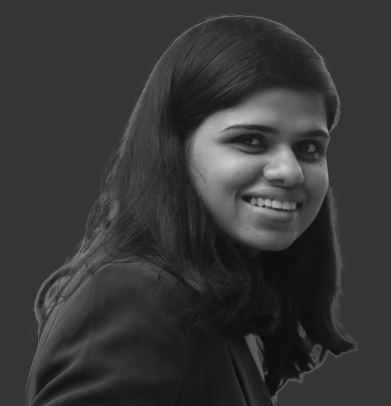
Krupal started his career as a Research Trainee at Hewlett-Packard Laboratories and is currently Director of Machine Learning at Haptik. He specializes in rapid prototyping of machine learning algorithms and has efficiently deployed multiple models to production addressing different use-cases.
He likes to mentor engineers and researchers to help them align their efforts in a result-oriented direction. Apart from technology, he also likes to read and learn about product development and business strategy. One of his dreams is to solve a real-world problem which positively impacts at least one of the fundamental needs of the human race.
Hardik Meisheri is a researcher at TCS Research, Mumbai since 2016. He is currently working on the application of Deep Reinforcement learning to a control problem with high dimensional action space. He has also worked extensively on sentiment analysis over noisy text.
Before joining TCS, Hardik was pursuing M.Tech with specialization in Machine Intelligence from DA-IICT, Gandhinagar. His research interests include Intersection of Deep learning and Natural Language Processing, Reinforcement learning on optimal control problems and Artificial General Intelligence/Meta-Learning.
Richa Verma is a researcher at TCS Research, Delhi since 2017. She uses Reinforcement Learning for solving high-dimensional combinatorial optimization and planning problems. She has done her M.Tech from IIIT Delhi with specialization in Data Engineering. Her research interests include multi-agent RL and spatial computing.
Dr. Mandaar Pande is currently a Professor of IT at the Symbiosis Centre for Information Technology, Pune (a constituent of Symbiosis International (Deemed) University). After completing a Ph.D. in Theoretical Physics from the University of Hyderabad on practical uses of nonlinear phenomena in nonlinear optics, he comes with around 26 years of varied experiences in industry and academia.
In his initial stint in academics, he was a faculty at BITS, Pilani, where he taught digital electronics and communications. For two decades in the IT industry, he worked with Tech Mahindra and Wipro on multiple projects and global programs specifically addressing the non-functional and performance engineering space across all industry verticals. He was globally heading the Performance Engineering Practice at Wipro from 2013-2017.
After moving back to academics in 2017, he has been teaching IT subjects such as Managing Presales, Global Delivery Management, with focus on Data Science & Data Analytics. He conducts the Design Thinking course in workshop mode to bring in innovative approaches to complex problem-solving in today’s VUCA world. He is working on industry-focussed and pure scientific research problems in Quantum Computing, Quantum Machine Learning, and Quantum Communications. Quantum Computing is a cross-disciplinary area encompassing Quantum Physics, Computer Science and Communications, and is the future of computing.
Sonam Srivastava is a quantitative investment management professional with more than 7 years of experience in systematic portfolio management and quantitative trading. Most recently she worked as a portfolio manager at Qplum, where she used machine learning and artificial intelligence to automate investment decision making. She has previously worked at HSBC and Edelweiss as a senior quantitative researcher and an algorithmic trader. She is an engineering graduate from IIT Kanpur and a Masters in Financial Engineering from Worldquant University.
Sonam is an avid researcher and blogger in the field of quantitative investment research. Her area of expertise is time series analysis, statistical modeling in finance and application of machine learning and deep learning in investment management. You can find her latest research here.
Currently, she is researching systematic trading strategies in the Indian markets using equity factors, risk modeling and asset allocation methods.
Harshad Khadilkar is a scientist with the research division of Tata Consultancy Services Ltd and leads the Planning & Control team. The focus of his group is on improving the efficiency of industrial operations, with current emphasis on the use of AI techniques such as reinforcement learning. The application domains are wide-ranging, from transportation systems such as railways and airlines to supply chain operations, port operations, and decision-making in robotics.
Before moving to TCS, Harshad was with the smart energy solutions group in IBM Research. He holds a bachelors in Aerospace Engineering from IIT Bombay (2009), and an SM (2011) and Ph.D. (2013) from the Massachusetts Institute of Technology.
Kiran R is the director of the Data Sciences CoE for VMware globally. He drives data sciences & advanced analytics projects across sales & marketing, digital, partner, pricing, and e-commerce in his functional role. He also leads the Information Innovation Center (IIC) in India which has teams like Master Data Management, Business Intelligence & Analytics.