Hi!👋 I am your Mentornaut - a helpful mentor to help you navigate through your AI learning journey. Click here to engage me anytime.


Building & Evaluating Agentic AI Systems
IntermediateLevel
519+Students Enrolled
6 Hrs Duration

About this Course
- In this course you are going to learn about building and evaluating agentic ai systems through advanced agent architecture patterns and orchestration strategies.
- Explore agentic AI trends and latest tools like Tavily Search API, Google AI Studio, and DeepEval to build intelligent, scalable, production-ready autonomous systems.
- Understand memory management, context engineering, few-shot prompting, and chain-of-thought prompting techniques for building conversational and reasoning-based agents.
- Master retrieval augmented generation, vector databases, and agentic AI examples including Text2SQL agents using LangChain, LangGraph, and FastMCP for enterprise applications.
Course Benefits
- Master the complete agentic AI learning path and gain expertise in agent architecture, types of AI agents, and AI agents vs agentic AI distinctions.
- Stay ahead with agentic AI trends knowledge and understand emerging patterns in agent architecture and autonomous AI systems.
- Learn cutting-edge tools including FastMCP, Tavily Search API, Google AI Studio, and comprehensive vector database management.
- Gain industry-recognized certification validating your expertise in building production-ready agentic AI systems at enterprise scale.
Learning Outcomes

Agent Architecture
Learn AI agent types and modern agent architectures.
Multi-Agent Systems
Build Text2SQL agents with vector database integration.
Production AI
Deploy AI agents with FastMCP, APIs, and monitoring.
Who Should Enroll
- AI Engineers & ML Pros: Master agentic AI, agent architecture, and production-ready AI systems.
- Python Developers: Learn different prompting technique, few-shot prompting, and chain-of-thought techniques.
- Data Scientists: Build AI agents with LangGraph, vector DBs, and agentic AI design patterns.
- Product & Tech Leaders: Design scalable AI agent systems with FastMCP and modern architectures.
Course Curriculum
A comprehensive 6-week agentic AI learning path covering agent architecture, types of AI agents, RAG systems with vector databases, agentic AI trends, Text2SQL agents, and advanced evaluation frameworks.


A comprehensive step-by-step setup guide covering platform configuration (Google Colab, ChatGPT, Claude, Google AI Studio), LLM API keys (OpenAI, Gemini, Groq), and essential development tools (LangChain, LangGraph, Tavily, LangSmith).
1. Setup Instructions Live Demo
Learn the fundamentals of Generative AI, LLMs, and Agentic AI, along with prompting and RAG techniques. Explore real-world applications through hands-on demos across leading platforms like ChatGPT and Claude. Gain practical exposure to APIs, tools, and environment setup for building and deploying AI-powered systems.
1. Introduction to Generative AI and Agentic AI
Learn prompt engineering fundamentals and advanced techniques like persona, few-shot, and chain-of-thought prompting. Explore multimodal capabilities across text, images, audio, and video with hands-on demos. Gain practical experience using LangChain to solve real-world problems, automate workflows, and build intelligent AI-driven applications.
1. Prompt Engineering and LangChain Essentials
Learn the foundations of Retrieval-Augmented Generation (RAG) by building an end-to-end pipeline from scratch. This session covers document ingestion, text chunking, embeddings, vector databases, retrievers, and answer generation, with hands-on guidance to create a document-grounded QA system that produces accurate and context-aware responses.
1. Build your first RAG Systems
Advance your RAG systems with techniques that improve retrieval quality and answer accuracy. Explore multi-query retrieval, keyword and hybrid search, reranking, contextual retrieval, and prompting strategies to reduce hallucinations. Apply these methods through practical projects to build robust, production-ready RAG applications.
1. Build Advanced RAG Systems
Learn the fundamentals of Agentic AI by understanding what makes systems agentic and how LLMs, tools, prompts, tool-calling, and orchestration work together. Build your first ReAct AI agent using LangChain and LangGraph with built-in utilities, gaining hands-on experience with the agent reasoning and action loop.
1. Build Your First ReAct AI Agent with LangChain & LangGraph
Build ReAct agents from scratch using LangGraph by working with states, nodes, edges, conditionals, and memory. Explore essential agentic design patterns such as routing, planning, reflection, and multi-agent workflows, then apply them to create scalable, real-world AI agents for complex problem-solving.
1. Agentic AI Design Patterns & Building ReAct Agents from Scratch with LangGraph
Learn how to build conversational AI agents that remain reliable across long, multi-turn interactions through effective context engineering. Explore short-term and long-term memory, history management, memory trimming, tool output summarization, and context retrieval techniques while building a memory-aware Healthcare Assistant that delivers consistent, relevant responses.
1. Memory Management & Conversational Agentic AI Systems
Discover how the Model Context Protocol (MCP) enables standardized integration between AI agents, tools, prompts, and data. Learn to build MCP servers and clients with FastMCP, understand multi-server MCP architectures, and explore how MCP supports scalable, enterprise-grade agentic systems across cross-functional workflows.
1. Integrating MCP with Agentic AI Systems
Learn how to design production-ready multi-agent systems using LangGraph by exploring network, swarm, and supervisor-based orchestration patterns. Understand how agents collaborate, delegate tasks, and coordinate reliably using constructs like Command to solve complex workflows. Through hands-on examples, you'll build scalable, maintainable multi-agent applications for real-world enterprise use cases.
1. Building Multi-Agent Systems with LangGraph
Discover how to build intelligent AI systems that combine retrieval, reasoning, and multimodal understanding. Learn to create Agentic RAG pipelines and multimodal agents capable of processing documents, PDFs, images, and other unstructured data. Apply these concepts in practical projects such as customer support, invoice processing, and enterprise knowledge navigation.
1. Building Agentic RAG and Multimodal Agentic AI Systems
Learn how to systematically evaluate the performance of LLM and RAG applications using industry-standard metrics and frameworks. Build evaluation datasets, measure retrieval quality with contextual precision and recall, and assess response quality through answer relevancy, hallucination detection, and LLM-as-a-Judge techniques. Gain hands-on experience with tools such as Ragas, DeepEval, and Opik to create reliable evaluation workflows.
1. Evaluating LLM & RAG Systems
Explore how to evaluate agentic AI systems by measuring goal completion, tool execution accuracy, and reasoning trajectories. Learn to add observability with tracing, monitoring, latency, and cost analysis using LangSmith to ensure production reliability. The session concludes by bringing together evaluation and monitoring best practices into a reusable workflow and reviewing the key concepts covered throughout the course.
1. Building Agentic RAG and Multimodal Agentic AI Systems
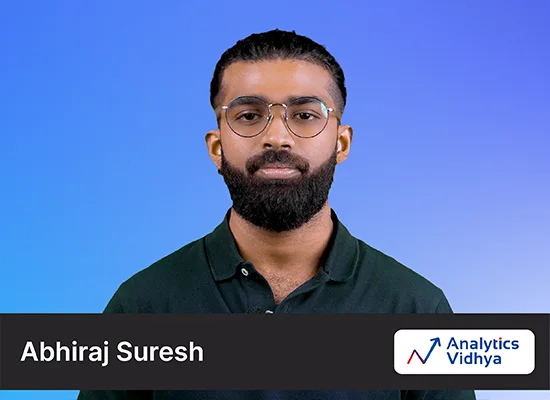
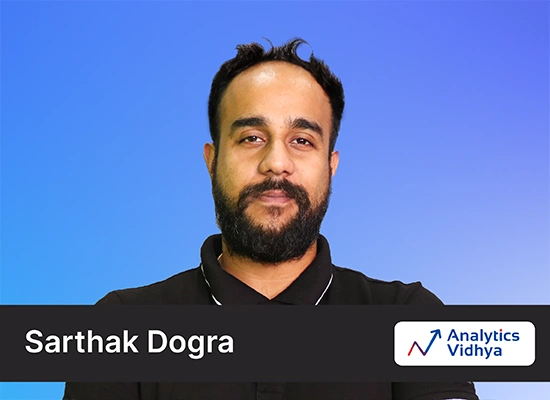
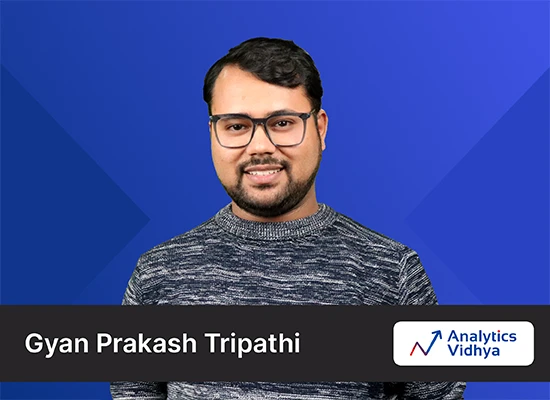
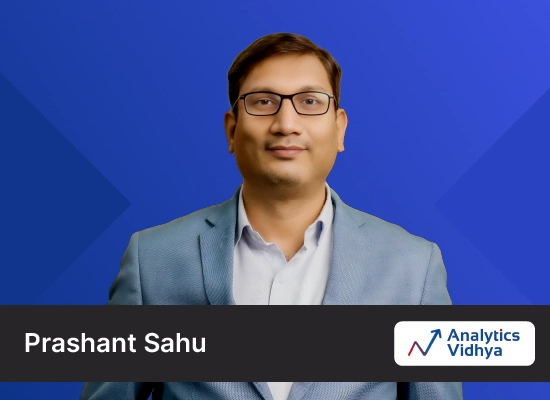
Meet the instructor
Our instructor and mentors carry years of experience in data industry




Get this Course Now
With this course you’ll get
- 6 Hours
Duration
- Alessandro Romano & + 1 More
Instructor
- Intermediate
Level
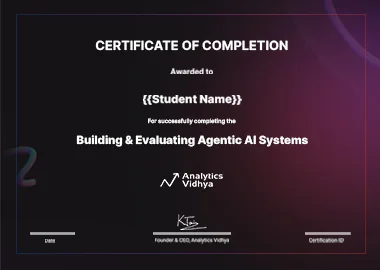
Certificate of completion
Earn a professional certificate upon course completion
- Industry-Recognized Credential
- Career Advancement Credential
- Shareable Achievement
Frequently Asked Questions
Looking for answers to other questions?
AI agents are systems that perceive and act within an environment. Agentic AI refers to AI systems with autonomous decision-making capabilities. The key difference: AI agents follow programmed rules, while agentic AI systems can reason, plan, and adapt dynamically. This course teaches you the complete agentic AI learning path.
Agent architecture refers to the structural design and components of an AI agent system (perception, reasoning, action modules). Types of AI agents include reactive agents, deliberative agents, hybrid agents, and multi-agent systems. Understanding agent architecture helps you design appropriate types of AI agents for specific problems.
You'll build agentic AI examples including Text2SQL agents that query databases, financial intelligence agents, healthcare provider discovery agents, invoice processing agents, and customer support routers. These demonstrate different types of AI agents and agent architecture patterns.
Key agentic AI trends include multi-agent orchestration, advanced memory management, tool use evolution, FastMCP protocols, and integration with vector databases. This course covers cutting-edge agentic AI trends and prepares you for emerging patterns in autonomous AI systems.
Few-shot prompting provides examples to guide agent behavior with minimal training data. Chain-of-thought prompting helps agents reason step-by-step through complex problems. Both techniques enhance types of AI agents by improving reasoning capabilities and reducing hallucinations.
FastMCP (Fast Model Context Protocol) is a protocol for managing prompts, data, and tools in agentic AI systems. It improves agent architecture by enabling seamless integration of multiple servers and tools, making it easier to build scalable, production-ready agents.
Related courses
Expand your knowledge with these related courses and expand way beyond

1 Hour 30 Minutes 3 Lessons 4.6
Foundations of LangGraph

1 Hour4 Lessons 4.8
Build and Deploy a GenAI App with RAG on AWS Cloud

2 Hours4.8
Building RAG Applications
Popular free courses
Discover our most popular courses to boost your skills

1 Hour1 Lesson1
AI Productivity at Work: Ask, Delegate, Build
1 Hour3 Lessons 3
Stop Doing It Manually: Tasks You Should Hand to Cowork
1 Hour1 Lesson1
Why AI Needs a Human in the Loop
2 Hours 30 Minutes 6 Lessons 6
Mastering Claude Cowork
3 Hours8 Lessons 8
FastAPI for AI Engineers: The Complete Guide to Building Scalable AI APIs
1 Hour0
The Forward Deployed Engineer: Taking AI From Pilot to Production

1 Hour 30 Minutes 1 Lesson1
Advanced Strands Agents with MCP
2 Hours1 Lesson1
Building Multi Agent Systems with Strands Agents

6 Hours3 Lessons 3
Building & Evaluating Agentic AI Systems

2 Hours0
Building RAG Applications

1 Hour 30 Minutes 3 Lessons 3
Foundations of LangGraph
6 Hours4 Lessons 4
Claude Code Mastery: AI-Augmented Software Engineering
1 Hour3 Lessons 3
Mastering Claude Cowork - Part 2
6 Hours5 Lessons 5
Building Generative AI Systems with No-Code (Using n8n)
30 Minutes 5 Lessons 5
Loop Engineering Explained
3 Hours1 Lesson1
AI Interview Questions & Answers Masterclass
3 Hours3 Lessons 3
Agentic AI Masterclass: Building Multi-Agent Systems with AutoGen, LangGraph & CrewAI

2 Hours5 Lessons 5
LLMOps in Action: Build, Deploy & Scale RAG-Powered AI Systems
1 Hour 30 Minutes 2 Lessons 2
Graph RAG: Build Knowledge Graph Powered Retrieval Systems
1 Hour 30 Minutes 4 Lessons 4
Mastering Google Antigravity
40 Minutes 0
NotebookLM Essentials to Pro: The Complete Practical Guide
40 Minutes 0
Foundations of Vector Database
1 Hour5 Lessons 5
Gemini 3: The AI That Thinks, Sees and Creates

1 Hour1 Lesson1
RIP Data Scientists
1 Hour2 Lessons 2
Vibe Coding with Cursor
2 Hours4 Lessons 4
GenAI to Build Exciting Games

1 Hour1 Lesson1
MCP: Unlock AI integrations with real-world demos
1 Hour2 Lessons 2
ChatGPT as Your Assistant

2 Hours6 Lessons 6
Data Science Course
2 Hours 30 Minutes 4 Lessons 4
LangChain Fundamentals

50 Minutes 2 Lessons 2
Introduction to CrewAI: Building a Researcher Assistant Agent

2 Hours2 Lessons 2
Understanding the working of Neural Networks

1 Hour2 Lessons 2
Vibe Coding with Replit

2 Hours5 Lessons 5
Online Excel Course for Beginners
2 Hours1 Lesson1
A Complete MLops Journey

2 Hours3 Lessons 3
Data Analysis with Apache Hive
1 Hour1 Lesson1
No Code Predictive Analytics with Orange

45 Minutes 1 Lesson1
Building Intelligent Chatbots using AI
1 Hour2 Lessons 2
GenAI for Everyone

4 Hours5 Lessons 5
A B C of Coding to Build AI Agents
30 Hours9 Lessons 9
Data Science Learning Path
9 Hours7 Lessons 7
GenAI Learning Path
5 Hours5 Lessons 5
Real World Projects on RAG
12 Hours10 Lessons 10
Data Analyst Learning Path
9 Hours5 Lessons 5
Vibe Coding Learning Path
30 Minutes 1 Lesson1
Getting Started with Kimi K2
2 Hours2 Lessons 2
Getting Started with Tableau

40 Minutes 2 Lessons 2
How to Build an Image Generator Web App with Zero Coding

2 Hours2 Lessons 2
Building and Evaluating RAG System
40 Minutes 1 Lesson1
Guide to Vibe Coding in Windsurf

30 Minutes 1 Lesson1
Build Products 10x Faster with GenAI
30 Minutes 1 Lesson1
Building a Collaborative Multi-Agent system

2 Hours4 Lessons 4
Building Smarter LLMs with Mamba and State Space Model
1 Hour2 Lessons 2
Nano Banana : Image Magic with Gemini 2.5 Flash
1 Hour1 Lesson1
n8n - A Complete Guide to Automation Tool

2 Hours6 Lessons 6
Building ML Pipelines using MLflow & DVC
1 Hour6 Lessons 6
Generative AI on AWS

1 Hour3 Lessons 3
Model Deployment using FastAPI
30 Minutes 6 Lessons 6
Demystifying OpenAI Agents SDK
30 Minutes 1 Lesson1
Build a Document Retriever Search Engine with LangChain

1 Hour1 Lesson1
Exploring Stability. AI

45 Minutes 6 Lessons 6
Knowledge Bases & Memory for Agentic AI

1 Hour1 Lesson1
Building Data Analyst AI Agent

40 Minutes 1 Lesson1
Building Scalable Industry Applications with RAG and Agents
1 Hour2 Lessons 2
OpenEngage: Build a complete AI Driven Marketing Engine
1 Hour1 Lesson1
Building a Deep Research AI Agent

5 Hours4 Lessons 4
Mastering Multimodal RAG & Embeddings with Amazon Nova & Bedrock

60 Minutes 3 Lessons 3
Frameworks for effective Problem Solving

1 Hour6 Lessons 6
Framework to Choose the Right LLM For your Business
1 Hour3 Lessons 3
Introduction to AI & ML

3 Hours6 Lessons 6
Microsoft Excel Formulas & Functions
15 Minutes 7 Lessons 7
Tableau for Beginners
5 Hours4 Lessons 4
Introduction to Natural Language Processing
1 Hour20 Lessons 20
Introduction to Python
1 Hour 15 Minutes 3 Lessons 3
Docker for Absolute Beginners
1 Hour3 Lessons 3
Foundations of Data Science

1 Hour 20 Minutes 1 Lesson1
Building Agentic AI System with Bedrock
3 Hours9 Lessons 9
Build Data Pipelines with Apache Airflow
1 Hour1 Lesson1
Building a Sentiment Classification Pipeline with DistilBert and Airflow
3 Hours3 Lessons 3
Introduction to Transformers and Attention Mechanisms

40 Minutes 1 Lesson1
Mastering Agentic Conversation Pattern with AG2

1 Hour1 Lesson1
Coding a ChatGPT-style Language Model From Scratch in Pytorch

30 Minutes 1 Lesson1
Navigating LLM Tradeoffs Techniques for Speed & Accuracy
1 Hour1 Lesson1
Data Preprocessing on a Real-World Problem
1 Hour 20 Minutes 6 Lessons 6
Getting Started With Large Language Models
4 Hours4 Lessons 4
Exploring-natural-language processing using deep learning
30 Minutes 5 Lessons 5
Ensemble Learning and Ensemble Learning Techniques
2 Hours4 Lessons 4
Evaluation Metrics for Machine Learning Models
1 Hour3 Lessons 3
Exploring OpenAI o3 and o4-mini

1 Hour1 Lesson1
Deep Dive Into QwQ-32B
30 Minutes 1 Lesson1
Build a Resume Review Agentic System with CrewAI
1 Hour 30 Minutes 3 Lessons 3
Getting Started with OpenAI o3-mini

30 Minutes 30 Lessons 30
Reimagining GenAI: Common Mistakes and Best Practices for Success
2 Hours3 Lessons 3
Building LLM Applications using Prompt Engineering
1 Hour6 Lessons 6
Bagging and Boosting ML Algorithms
1 Hour 20 Minutes 1 Lesson1
Understanding Linear Regression
1 Hour1 Lesson1
The A to Z of Unsupervised ML
2 Hours3 Lessons 3
Build your first RAG system using LlamaIndex
9 Hours4 Lessons 4
Getting Started with Deep Learning
1 Hour2 Lessons 2
Dreambooth: Stable DIffusion for Custom Images

1 Hour2 Lessons 2
Nano Course: Building Large Language Models for Code
9 Hours 30 Minutes 5 Lessons 5
Building Data Stories using Excel and Tableau
30 Minutes 2 Lessons 2
Naive Bayes from Scratch
3 Hours2 Lessons 2
Building Agent using AutoGen
3 Hours 30 Minutes 2 Lessons 2
Analyzing Data with Power BI
30 Minutes 1 Lesson1
Foundations of Model Context Protocol
30 Minutes 1 Lesson1
Revolutionizing Query Resolution with a RAG System Assisted by Agents
20 Minutes 6 Lessons 6
xAI Grok 3: Smartest AI on Earth

1 Hour1 Lesson1
DeepSeek from Scratch
34 Minutes 2 Lessons 2
Getting Started with DeepSeek-AI
30 Minutes 1 Lesson1
End to end RAG Application Development with LangChain and Streamlit

1 Hour1 Lesson1
Learning Autonomous Driving Behaviors with LLMs and RL

1 Hour1 Lesson1
GenAI for Quantitative Finance & Control Implementation

1 Hour1 Lesson1
Creating Problem-Solving Agents with GenAI for Actions
4 Hours3 Lessons 3
Generative AI - A Way of Life
30 Minutes 5 Lessons 5
K-Nearest Neighbors (KNN) Algorithm in Python and R

1 Hour 30 Minutes 9 Lessons 9
Fundamentals of Regression Analysis
1 Hour9 Lessons 9
Pandas for Data Analysis in Python

45 Minutes 1 Lesson1
Building a Customized Newsletter AI Agent

2 Hours4 Lessons 4
Agentic AI Design Patterns
30 Minutes 1 Lesson1
Build a QA RAG system with Langchain
1 Hour1 Lesson1
Improving Real World RAG Systems :Key Challenges
34 Hours1 Lesson1
Building Your First Computer Vision Model
1 Hour 10 Minutes 1 Lesson1
MidJourney: From Inspiration to Implementation
1 Hour 10 Minutes 2 Lessons 2
Building Text Classification Models in NLP

38 Minutes 1 Lesson1
Nano Course Cutting Edge LLM Tricks
19 Minutes 1 Lesson1
Introduction to Data Visualization
1 Hour5 Lessons 5
Introduction to Business Analytics
31 Minutes 4 Lessons 4
Introduction to PyTorch for Deep Learning
30 Minutes 4 Lessons 4
Time Series Forecasting using Python
2 Hours3 Lessons 3
Build Your 2025 Winning Data Science Resume with AI
2 Hours2 Lessons 2
Essential : SQL Skills for Data Beginners
2 Hours3 Lessons 3
A comprehensive Learning path to become a Data Analyst

1 Hour1 Lesson1
Mastering Multilingual GenAI Open-Weight for Indic Language
2 Hours5 Lessons 5
A Comprehensive Learning Path to Become a Data Scientist in 2025
1 Hour1 Lesson1
Introduction to Cloud
30 Minutes 5 Lessons 5
Dimensionality Reduction for Machine Learning
30 Minutes 1 Lesson1
Getting Started with Decision Trees
30 Minutes 1 Lesson1
Twitter Sentiment Analysis (Using Python)
30 Minutes 1 Lesson1
Big Mart Sales Prediction Using R
30 Minutes 1 Lesson1
Loan Prediction Practice Problem (Using Python)
Contact Us Today
Take the first step towards a future of innovation & excellence with Analytics Vidhya
Unlock Your AI & ML Potential
Get Expert Guidance
Need Support? We’ve Got Your Back Anytime!
+91-8068342847 | +91-8046107668
10AM - 7PM (IST) Mon-Sun[email protected]
You'll hear back in 24 hours