The T20 World Cup 2026 brings exciting matches, and fans constantly wonder which team will win. An AI agent answers this by analyzing live data and patterns instead of relying on intuition. Users enter a match date, and the system gathers all scheduled games and relevant context for that day.
Built with CrewAI and OpenAI’s gpt-4.1-mini, the agent predicts lineups and outcomes to estimate win probabilities. In this article, we explain how this AI system predicts match winners step by step.
Table of contents
What is an AI agent?
An AI agent functions as a software program which pursues specific objectives by monitoring input data and performing reasoning through its operational rules to create output decisions and execution commands. An AI agent differs from standard machine learning models because it possesses the ability to access external tools and databases while its reasoning capabilities can adjust to evolving situations.
This method works best in cricket analytics because match results depend on the circumstances surrounding each game. An AI agent can make deductions about match locations and probable playerParticipation and player performance based on different environmental conditions.
How does it solve our problem?
This AI agent provides predictions about which team will win upcoming matches of the ICC Men’s T20 World Cup 2026. The system solves three main problems which exist in conventional forecasting systems.
- The system uses unchanging models which do not consider the conditions that exist on match day.
- Traditional systems cannot handle unexpected developments which include player injuries and alterations in pitch conditions.
- The system makes predictions which lack clear explanations about how those predictions were reached.
Therefore, to overcome these, this system uses various dedicated agents to generate predictions which provide contextual information and explainability and repeatable results.
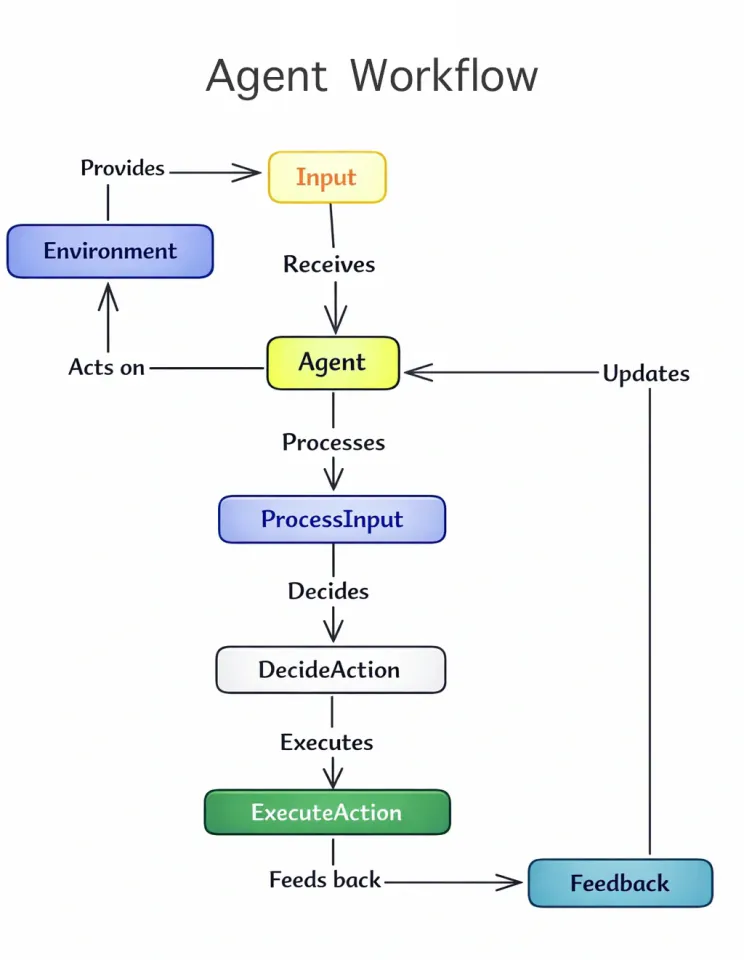
High-Level Architecture of the Multi-Agent System
The system operates with a multi-agent framework which assigns each agent to complete a single specific function. The system assigns different reasoning tasks to separate units because it needs to process multiple tasks simultaneously.
After each agent completes its task, it passes structured outputs to the next agent in the pipeline.
- Why a multi-agent approach is used
The results of T20 cricket matches depend on different factors which do not depend on each other but share some connections with other factors. Pitch conditions determine which players teams will select. Weather conditions impact the decisions teams make about the toss. Teams select their playing XI, which determines the matchups between their players.
Human analysts conduct their work through a multi-agent system. Each agent focuses on one question, reducing noise and improving interpretability.
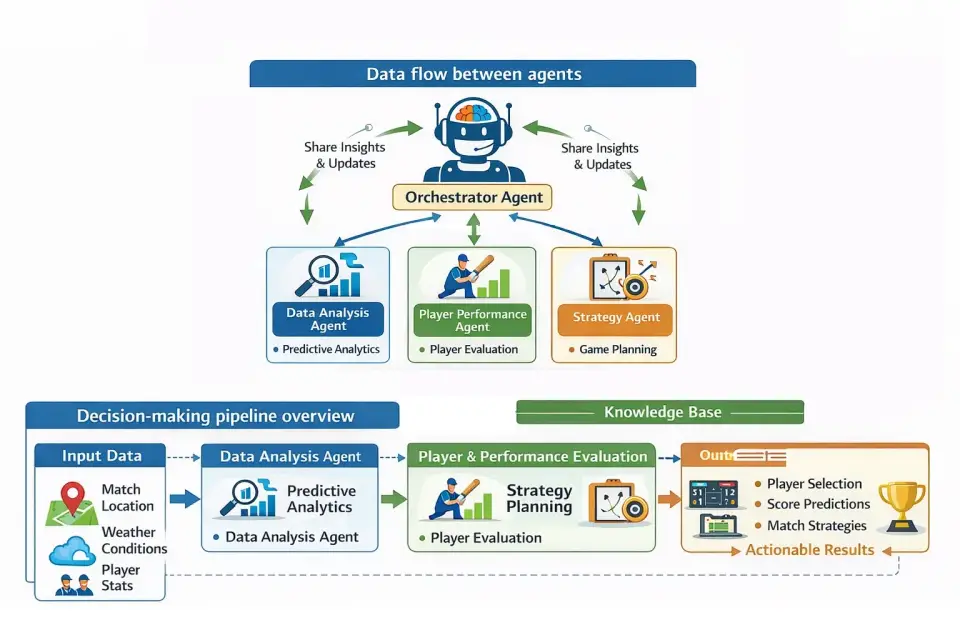
- Data flow between agents
The data flow follows a code-based deterministic pattern which moves through distinct stages The user input declares the specific match.
- The first agent establishes the venue and weather conditions.
- Agent 2 predicts playing XIs using that context
- The last prediction is made by agent 3 who merges all available signals.
- The agents receive structured context information as structured content which prohibits them from accessing any unstructured text content.
Example Workflow
The user enters a date (e.g., 11th February 2026) and a URL. The system will first identify the teams scheduled to play on that date. The match between South Africa and Afghanistan will take place on 11th February 2026.
1. match_details_agent
The match_details_agent collects all the essential match-related information, which encompasses:
- The venue where the match is being played
- Ground conditions
- Weather forecast
- Pitch type (whether it favors batting or bowling)
- The next agent receives the processed information after all data has been collected.
2. playing11_agent
The playing11_agent searches the web to find the probable playing XI for both teams. The system uses contextual data from the match_details_agent, which includes pitch report and weather conditions and ground behavior data, to determine the most probable playing XI for both teams.
The agent sends all gathered data to the next agent after he creates the expected team lineups.
3. winner_predictor_agent
The winner_predictor_agent receives the data from both the match_details_agent and the playing11_agent. The system performs additional web searches to collect:
- Individual player statistics
- Team records at that specific venue
- The agent uses all gathered information to execute data analysis, which produces the match winner prediction.
Step-by-Step: How the AI Agent Predicts the Winner
The section establishes a direct connection to the code execution path. The agent’s actions together with its data analysis activities and their importance to the mission are explained through each operational step.
User Inputs Explained: The user provides a minimal input, typically a match date. The system maintains its basic design after the user inputs their match date, which activates an advanced backend system.
user_date = parse_user_input(date_string) How the Agent Identifies Scheduled Matches
The timing of the match which includes both day and night matches.The agent uses the parsed date to search for official T20 World Cup scheduling information which provides details about.
- The teams that will compete
- The location of the match
- The timing of the match includes both day and night matches.
Libraries and Tools Setup
The AI agent relies on specialized libraries and tools which operate behind the main system. This system uses the CrewAI framework for agent development and a web search tool for data collection and OpenAI gpt-4.1-mini for language processing. The upcoming code section establishes essential library dependencies while developing supporting functions.
from crewai import Agent, Task, Crew, Process
from crewai_tools import ScrapeWebsiteTool, SerperDevTool
from langchain_openai import ChatOpenAI
import os
from datetime import datetim
After importing, the code sets up the tools with API keys and configurations:
search_tool = SerperDevTool(api_key=SERPER_API_KEY)

scrape_tool = ScrapeWebsiteTool()

llm = ChatOpenAI(model="gpt-4.1-mini", temperature=0.7, api_key=OPENAI_API_KEY)
Here, search_tool and scrape_tool give the access of the internet to the agents, while llm connects to the gpt-4.1-mini model. These tools let the AI fetch and analyze information like match schedules, player news, and weather data.
Now we’ll start creating the AI Agents!
The system defines three specialized agents (AI roles) to break down the prediction task:
- The Match Details Agent
- The Playing XI Agent
- The Winner Predictor Agent
All data collection processes such as team strengths and head-to-head records and pitch and weather information leads to win probability calculations.
The system assigns each agent their specific duties which include achieving their designated targets within their defined operational space. The Match Details agent is developed through this technical implementation.
Agent 1: Venue, Pitch, and Weather Intelligence Agent
Goal: Understand where and under what conditions the match is being played.
The Venue Pitch and Weather Intelligence Agent functions as a dedicated AI system which gathers and evaluates all environmental and contextual elements that can impact a cricket match. The system establishes match location and match conditions through its assessment of venue information and pitch patterns and weather predictions and match type and past performance records at the location.
match_details_agent = Agent(
    role="Cricket Match Details Specialist",
    goal="""Find all cricket matches scheduled for a specific date,
    extract venue details, pitch conditions, weather forecast,
    head-to-head records, and ground-specific statistics.""",
    backstory="""You are a cricket research expert with access to all major
    cricket websites (ESPNcricinfo, Cricbuzz, ICC, etc.). You excel
    at finding exact match schedules, venue analysis, pitch reports,
    weather conditions, and historical data for specific grounds.
    Your analysis helps predict match conditions accurately.""",
    verbose=True,
    allow_delegation=False,
    llm=llm,
    tools=[search_tool, scrape_tool],
    context=[
        "You must verify date formats and convert them to standard cricket schedules.",
        "Always check multiple sources: ESPNcricinfo, Cricbuzz, ICC website.",
        "Include toss time, match format (Test/ODI/T20), and local time.",
        "Pitch report should include: batting-friendly, bowling-friendly, spin/seam assistance, average scores."
    ]
)
The agent receives an explicit goal which establishes its objectives through its connection to cricket history and establishes its decision-making path. The system uses web search and scraping capabilities to gather current information from reliable sources which include ESPNcricinfo and Cricbuzz and ICC website. The rules of the context require date verification and multi-source validation and structured pitch analysis (batting-friendly or bowling-friendly and spin or seam assistance and average scores) to maintain consistent results that support accurate pre-match analysis.
Agent 2: Playing XI Prediction Agent
Goal: Predict the most likely playing XI for both teams.
The Playing XI Prediction Agent works to forecast which players will start in the first eleven for both teams. The system uses current team information along with player performance data and pitch condition assessment and weather forecasts to produce precise T20 match lineup predictions.
playing11_agent = Agent(
    role="Playing XI Prediction Expert",
    goal="""Predict the most probable playing 11 for both teams based on
    latest team news, player availability, pitch conditions,
    weather, and recent form.""",
    backstory="""You are a former cricket team selector... predict lineups with 90%+ accuracy.""",
    verbose=True,
    allow_delegation=False,
    llm=llm,
    tools=[search_tool, scrape_tool],
    context=[
        "Check latest team news from Cricbuzz, ESPNcricinfo 'Squads' section.",
        "Consider impact player rules for IPL/T20 leagues.",
        "Analyze player roles: openers, middle-order, finishers, wicket-keepers, all-rounders.",
        "Cross-check with multiple sources for consistency."
    ]
)
The agent collects current information from reliable platforms such as Cricbuzz and ESPNcricinfo while examining player status and performance history and team composition with its batting system and bowling resources and all-rounder players. The system utilizes match conditions from Agent 1 to determine the most likely starting XI for the game. The complete predicted lineups move to Agent 3 so it can conduct additional evaluations.
Agent 3: Player Statistics & Match Outcome Prediction Agent
The Player Statistics and Match Outcome Prediction Agent uses team data and player performance information to predict match results. The system calculates win probabilities for both teams by combining team statistics with their recent performance and venue records and current pitch conditions and weather conditions.
winner_predictor_agent = Agent(
    role="Cricket Match Outcome Analyst",
    goal="""Analyze team stats, player form, head-to-head records,
    venue statistics, pitch conditions, and weather to predict
    the match winner with probability percentages.""",
    backstory="""You are a cricket statistician and betting analyst...""",
    verbose=True,
    allow_delegation=False,
    llm=llm,
    tools=[search_tool, scrape_tool],
    context=[
        "Provide win probability percentages for both teams.",
        "Consider toss winner advantage (60% for batting first on batting pitches).",
        "Analyze key matchups: top bowler vs top batsman.",
        "Include recent form (last 5 matches), head-to-head at venue."
    ]
)
The agent evaluates recent player form, career T20 stats, head-to-head records, and venue-specific performance. The system uses toss advantages between teams to assess which players will succeed in specific matchups while evaluating overall team strength and how the field will assist spin bowlers versus fast bowlers. The system combines various indicators to generate final match results which include probability percentages for both teams.
Final Output: Most Probable Match Winner
crew = Crew(
   agents=[match_details_agent, playing11_agent, winner_predictor_agent],
   tasks=[match_details_task, playing11_task, winner_prediction_task],
   process=Process.sequential,
   verbose=True,
   memory=False
)

result = crew.kickoff()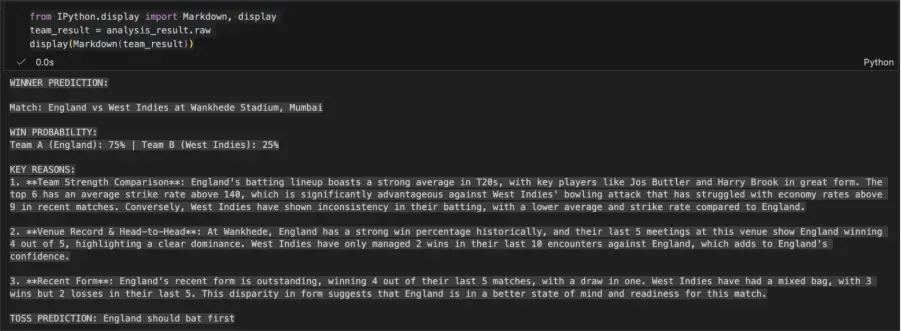
Why This AI Agent Is More Reliable Than Traditional Predictions
Traditional match predictions often rely on simple models or expert gut feeling. In contrast, this AI agent provides more data-driven and up-to-date analysis. Key advantages include:
- Data Depth: The AI processes far more data than a person. It can include minute stats, tracking data, weather, and sentiment from news.
- Real-Time Updates: Predictions are updated with the latest information, last-minute injury news or weather changes. Traditional picks are static, while this agent adapts on the fly.
- Higher Accuracy: Modern AI sports models reach around 75–85% accuracy in predicting winners, outperforming older statistical models.
- Scalability: The AI agent can predict dozens of matches simultaneously. An expert analyst might do only one or two manually.
For the complete version of code please refer: Code
Conclusion
Match prediction for ICC Men’s T20 World Cup 2026 requires more than three basic statistical methods and instinctual judgment because the competition exists at extreme pressure levels.
The AI-powered agent establishes structured intelligence through its three core technologies, which include large language models and real-time web search and multi-agent reasoning. The system divides the problem into multiple components which include match context and conditions and team selection and performance signals which experts use to make their assessments instead of using one single model to solve the issue.
The system produces understandable predictions through its AI agents, which work together and deduce information through their decision-making. Systems like this one, which use AI in their development, will become essential for intelligent cricket analysis that depends on data in the future.
Frequently Asked Questions
Q1. How does the AI agent predict winners in the T20 World Cup?
A. It analyzes match conditions, predicted playing XIs, and player statistics through a multi-agent pipeline to estimate win probabilities.
Q2. What roles do the three AI agents perform?
A. One gathers match context, another predicts lineups, and the third analyzes stats to forecast the winner.
Q3. Why is this AI system more reliable than traditional predictions?
A. It uses real-time data, structured reasoning, and automated updates instead of static models or human intuition.
Hello! I'm Vipin, a passionate data science and machine learning enthusiast with a strong foundation in data analysis, machine learning algorithms, and programming. I have hands-on experience in building models, managing messy data, and solving real-world problems. My goal is to apply data-driven insights to create practical solutions that drive results. I'm eager to contribute my skills in a collaborative environment while continuing to learn and grow in the fields of Data Science, Machine Learning, and NLP.