The bygone year has been an interesting one, especially so for the age of AI that is fast coming. We saw AI agents rise for the first time and take over repetitive tasks that traditionally required a human workforce. However, in 2025, most AI agents still lived inside demos, copilots, and experimental workflows. With the onset of 2026, that is set to change decisively, if industry insights by some of the top consultancy firms of the world are to be believed. The trends suggest that enterprises are shifting from testing AI agents to letting them run entire workflows, execute decisions, and trigger real-world actions in 2026. So, move over an incremental upgrade, and get ready for a structural reset – as 2026 is the year AI agents stop being impressive and start being accountable.
In this article, I attempt to cover all these trends that will shape the near future of work as we know it. Regardless of the industry you are in, if you don’t wish to be left out of this monumental shift, you’d better go through it and prepare yourself in time. So without any delay, let’s dive right into the new trends of AI agents for the year 2026.
Table of contents
Category 1: How AI Agents Work (Architecture & Capabilities)
Before AI agents can be trusted, we must understand how they’re evolving. This section answers: “What has fundamentally changed in agent design?”, giving us insights into what AI agents are technically capable of in 2026.

1. AI Agents Move From Tasks to Full Workflow Orchestration
AI agents are no longer limited to automating isolated tasks. In 2026, they take ownership of entire workflows. Which basically means that instead of helping humans execute steps, agents will now plan sequences, call up tools, manage dependencies, and – wait for it – even adapt when things break. As a human, you will just have to define the goal, while AI agents will handle the execution.
This marks a shift from step-based automation to outcome-driven systems. As noted in recent research by Gartner, enterprises are moving beyond single-agent tools toward orchestrated, multi-stage agentic workflows. In yet another report, PwC mentions the right way to go about it –
“After you identify the right high-value workflow, aim for wholesale transformation. Instead of cutting a few steps, rethink the workflow, which an AI-first approach may turn into a single step. That often starts by asking not how AI can fit into a workflow but how it can create a new one.”
2. Multi-Agent Systems Become the Default Architecture
As AI agents take on larger responsibilities, a single agent will no longer be enough. In 2026, most real-world deployments rely on multiple specialised agents working together, each handling a specific role within a larger workflow. In practice, this looks something like this –
“One agent plans, another executes, a third validates, while others monitor context or security.”
The intelligence no longer sits in one model but is found in coordination. This architectural shift solves a hard limitation of single agents: they struggle with long, multi-step processes. Gartner highlights a sharp rise in enterprise adoption of multi-agent systems precisely for this reason, noting that modular agent teams are far more reliable and scalable. Research from Andreessen Horowitz (via their Big Ideas 2026 report) also underscores the importance of coordinated agent systems as the foundation for reliable end-to-end automation.
3. Employees Become AI Orchestrators
As AI agents take over execution, human roles shift in a fundamental way. In 2026, employees are no longer valued for completing tasks end to end, but for directing, supervising, and even refining the work done by agents. The core human skill becomes intent-setting, with clearly defined goals and constraints. So who handles the operational heavy lifting? You guessed it – AI agents.
This marks a move away from “doing the work” toward orchestrating systems of work. The Gartner report also points to new roles centred on agent supervision and governance. Even business-focused studies, such as those from PwC, highlight that organisations extracting real value from AI are forming new roles around oversight and judgment. In short, in 2026, think more as a conductor of workflows than a regular employee.
4. Agent Orchestration Platforms (Agent OS) Emerge
As organisations deploy multiple agents across teams and functions, managing them manually becomes impossible. In 2026, this gives rise to agent orchestration platforms. These are often described as an Agent OS. These layers don’t perform work themselves. Instead, they coordinate agents, enforce policies, manage permissions, track outcomes, and handle failures.
Without this control platform, agent ecosystems will remain brittle and unsafe. This is why Gartner frames orchestration and observability as prerequisites for enterprise-scale multi-agent systems. From a business lens, PwC also emphasises unified orchestration to replace segregated AI use across an organisation.
5. Domain-Specific Agents Outperform General Agents
General-purpose AI agents are impressive, but they struggle with extensive tasks. In 2026, enterprises increasingly favour domain-specific agents, which means agents trained and grounded in highly technical and specific fields like finance, healthcare, legal, or supply chain operations. These agents understand industry rules, terminology, and constraints far better than generic models.
The reason is simple: accuracy and compliance matter more than versatility in a specific organisational workflow. Gartner highlights a growing shift toward domain-specific models to reduce errors and improve reliability. Business leaders also share this view, noting that specialised agents deliver faster ROI with fewer risks.
In practice, the future of agents isn’t one super-agent but many specialists working together.
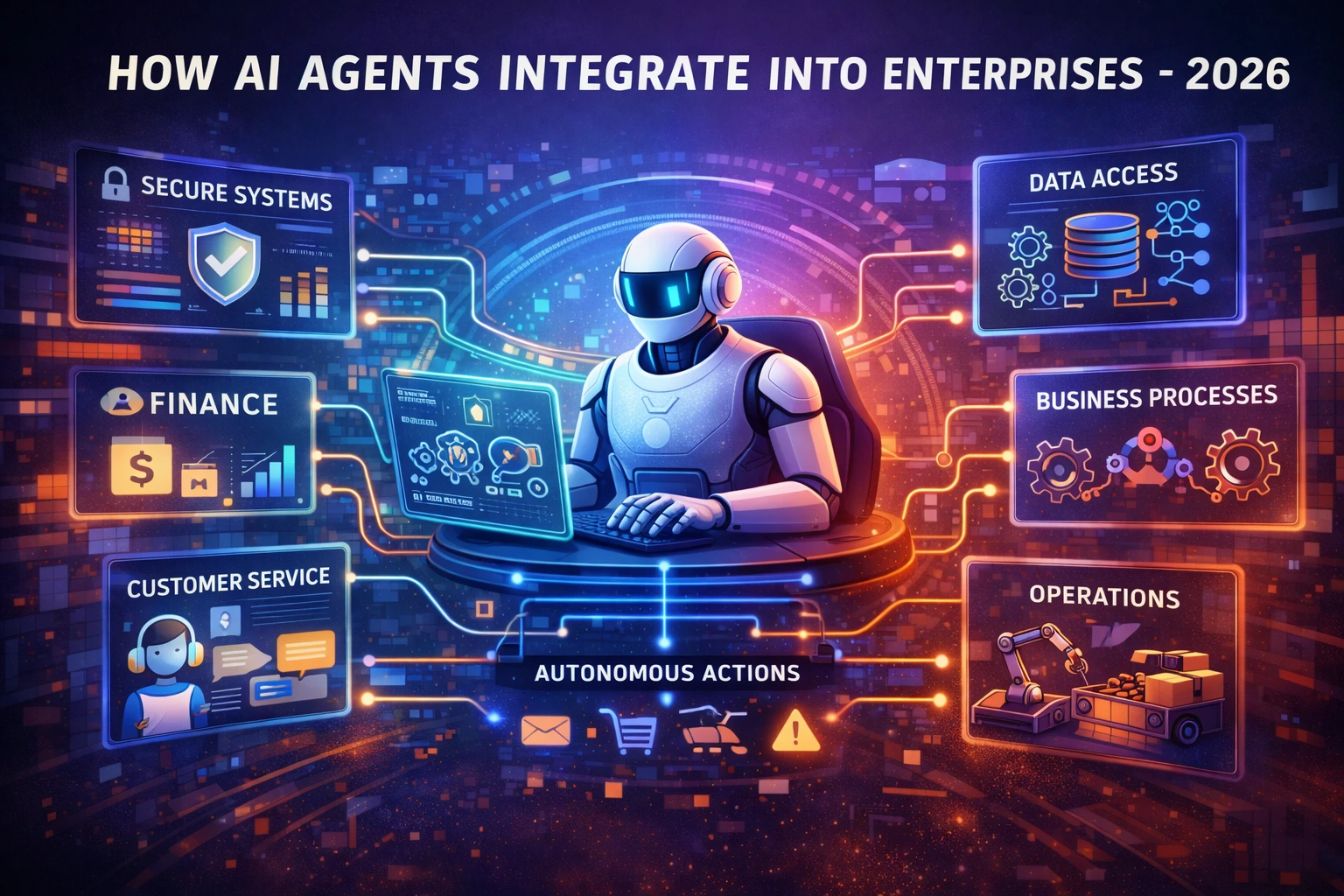
Category 2: How AI Agents Integrate Into Enterprises
Once AI agents become capable enough, the real challenge begins: integrating them into everyday work without breaking people, processes, or systems. Here is how we can envision this going down in 2026.
6. Grounding and Context Plumbing Become Mandatory
As AI agents take on real responsibilities, one weakness becomes impossible to ignore: agents are only as good as the context they operate in. In 2026, enterprises invest heavily in grounding agents to verified and real-time enterprise data. This context may be sourced from CRMs, ERPs, policy documents, logs, and internal knowledge bases.
Without this grounding, agents hallucinate and can possibly compound errors at scale. This is why Google Cloud, in its report, consistently stresses enterprise grounding as a prerequisite for production-grade agents. Even risk-focused analysis from Forrester warns that ungrounded agents can turn small inaccuracies into systemic failures.
7. Agent Interoperability Becomes Non-Negotiable
As enterprises deploy multiple agents across tools, teams, and vendors, isolation quickly becomes a bottleneck. In 2026, AI agents must communicate and collaborate with one another to hand off tasks, even when they are built on different platforms. Closed agents working in solitude simply won’t scale.
This is why interoperability moves from a “nice to have” to a core requirement. Gartner points to a rapid rise in multi-agent systems designed explicitly for cross-platform coordination in 2026.
8. AI Agents Extend Beyond Software Into the Physical World
Think AI agents are confined to digital workflows? Think again! In 2026, you will increasingly see AI agents operate in the physical realm – powering robots, drones, autonomous vehicles, warehouse systems, and smart infrastructure. They will work as coordinated fleets of physical agents that sense, decide, and act together.
Gartner highlights this as a defining enterprise trend, making this shift significant. This is because physical agents must collaborate in real time and adapt to changing environments, all while operating under strict safety constraints.
9. Agents Begin Executing Commerce and Payments
With automation comes responsibility! As AI agents grow more autonomous, their responsibilities cross a critical line: monetary transactions. In 2026, AI agents form a critical part of purchases and online shopping experiences. They no longer just recommend but carry out end-to-end transactions.
This fundamentally changes digital commerce. Instead of humans constantly checking prices or availability, agents act on intent and timing. Research from Google Cloud highlights emerging payment frameworks designed specifically for agent-initiated transactions. Of course, for such an automation to exist, authority, verification, and accountability will have to be built into the system.
10. Security Shifts From Alerts to Agentic Response
With AI agents taking on more responsibility, security has to be proactive. In 2026, security systems move beyond raising alerts and waiting for human action. Instead, AI agents actively investigate threats, correlate signals, and respond in real time. The idea is to do all this before any damage is done.
This changes the role of security teams entirely. Rather than drowning in alerts, humans focus on strategy and oversight, while agents handle detection and remediation. Insights from Forrester suggest that alert fatigue is now a bigger risk than missed attacks, pushing enterprises toward autonomous response systems.
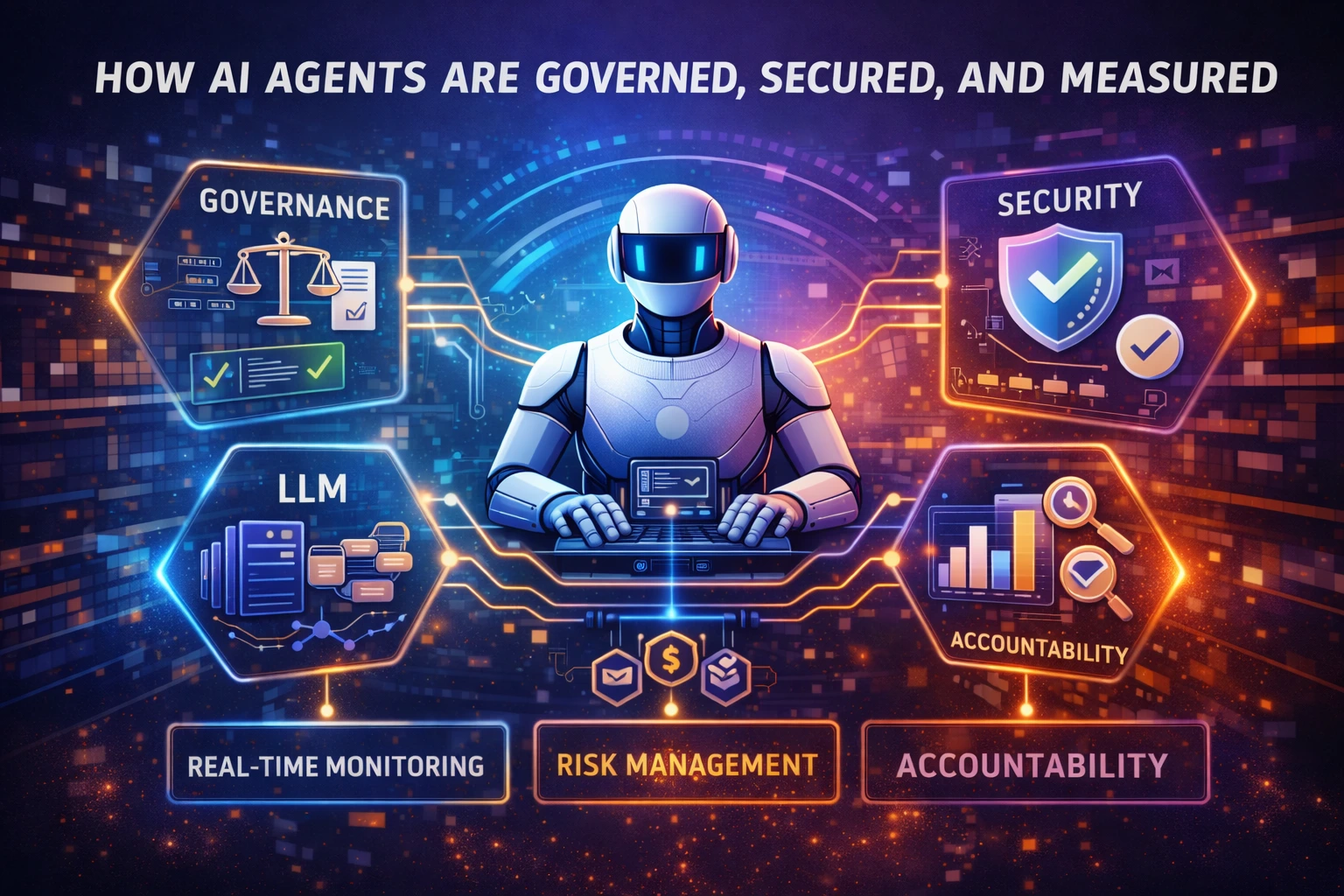
Category 3: How AI Agents Are Governed, Secured, and Measured
When AI agents start executing decisions, moving money, and acting autonomously, an alarming question is raised: What happens when something goes wrong?
11. Rogue Agents Become a New Threat Class
As organisations deploy more autonomous agents, a new risk emerges: rogue agents. These aren’t malicious in intent, but still can have a dangerous impact. Misconfigured permissions, incomplete context, or unchecked autonomy can cause agents to take actions they were never meant to.
Unlike traditional software failures, agent errors compound quickly. One wrong decision can cascade across systems, transactions, or workflows. Analysis from Forrester warns that at least one major enterprise breach will stem from agent misuse or failure, not external hacking.
12. AI Security Platforms Are Built Specifically for Agents
Traditional security tools were never designed for systems that can think, decide, and act. In 2026, that gap becomes impossible to ignore. As a result, enterprises adopt AI security platforms built specifically to monitor and control agent behaviour. These platforms track what agents do, what data they access, and whether their actions stay within approved boundaries.
These systems also detect risky prompts, unauthorised decisions, and abnormal agent activity before damage occurs. Industry analysis from Gartner points to the rise of such AI-native security layers as a direct response to agent autonomy.
13. Governance Shifts From Ethics to Survival
In 2026, organisations will realise that ethical AI conversations aren’t enough. They now need governance frameworks that manage risks and enforce accountability in real time.
Agents act on data, make decisions, and touch critical business processes. A misstep can lead not just to a bad suggestion, but to financial loss, compliance breaches, or operational failure. This sharp reality is reflected in research from PwC, which argues that responsible AI isn’t about theory anymore but about embedding governance into workflows before failure hits.
14. ROI Pressure Kills Experimental Agents
By 2026, the honeymoon period for AI experimentation is over. Enterprises are no longer impressed by demos, pilots, or clever proofs of concept. Every AI agent is expected to justify its existence with a measurable business impact. This can be a cost saved, time reduced, or revenue generated.
This shift is driven by growing scrutiny at the leadership level. Business-focused research from PwC highlights that AI investments are increasingly judged on outcomes, not capabilities. Agents that can’t demonstrate clear ROI are paused, scaled back, or shut down entirely.
15. The Rise of the AI Generalist Workforce
As AI agents take over execution-heavy and mid-tier tasks, the skills that matter most begin to change. In 2026, organisations place greater value on AI generalists. These are people who understand the business end-to-end and can supervise, guide, and evaluate agent-driven work across functions.
Instead of deep but narrow specialisation, companies look for individuals who can connect context, judgment, and outcomes. The McKinsey/World Economic Forum analysis shows how humans, agents, and robots will work together in hybrid roles focused on planning, oversight, and judgment, not just narrow specialisation.
Conclusion
The clear understanding for 2026 in terms of AI agents and associated trends is this: such agents are no longer an emerging idea but an operational reality. This shift is then increasingly about rebuilding how work gets done. Agents will orchestrate workflows, move money, secure systems, and even act in the physical world.
The winners won’t be those who experiment the most but those who integrate, oversee, and measure agents decisively. The only question then remains is whether your organisation is ready to work with them or be outpaced by those who are.