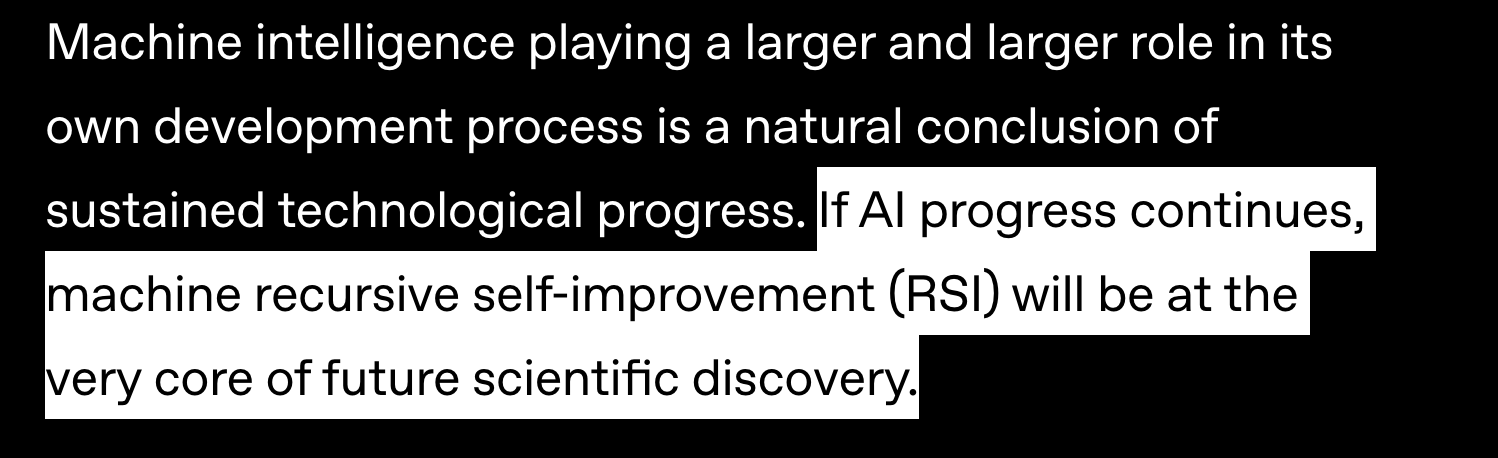
RSI or Recursive Self-improvement has been the talk of the town lately. The term came into surface when it was emphasized as the next step in the LLM evolution cycle by pioneers of the field like Sam Altman, Dario Amodei, and Elon musk. But also, via a research paper outlining the method titled: The Last AI Built by Humans.
These two alone should help you realize the importance of this capability/approach in the future. This article would help breakdown the theory behind RSI, the approach it suggests, and the impact it can have in future AI development.
Table of contents
What is Recursive Self-Improvement?
Recursive self-improvement is the idea that an AI system gets better, then uses that stronger version to make the next round of improvements. The more practical question is simple: how much of this work is still done by people, and how much has shifted into the system itself?
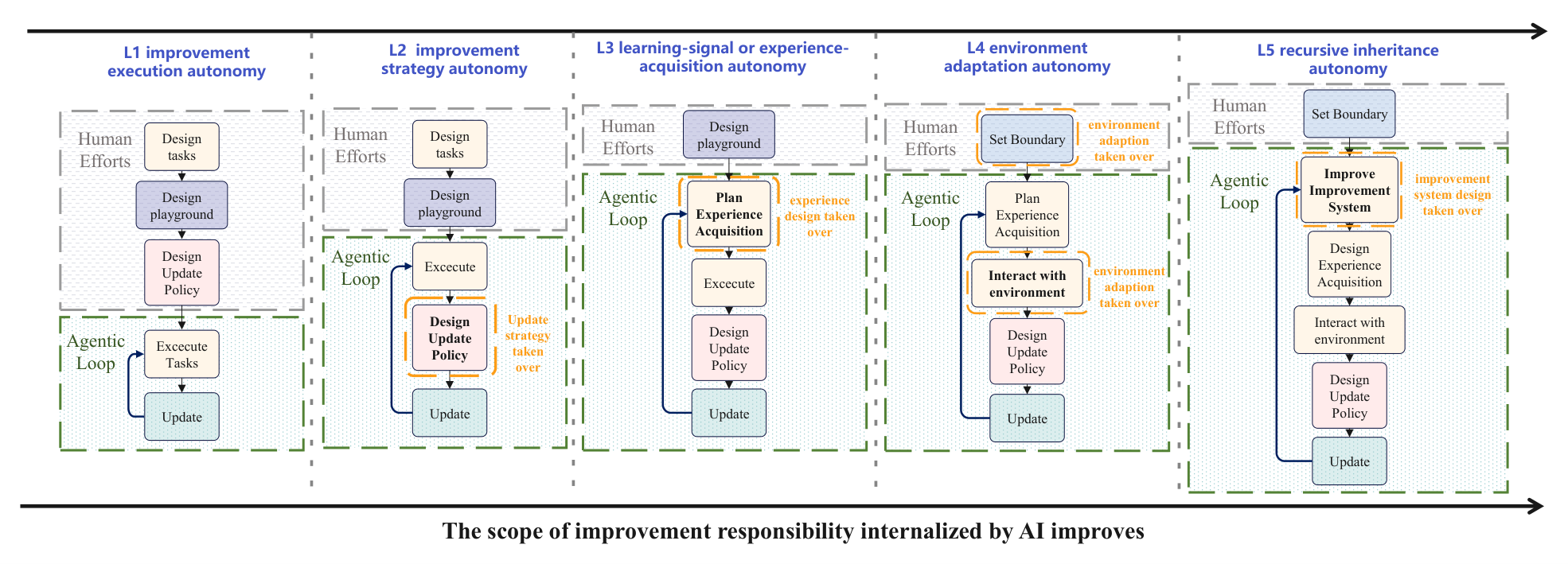
That difference matters. A model writing a better answer is useful, but it is not the same as self-improvement. The stronger claim is that a system can keep useful changes, apply them later, and gradually get better at improving itself.
Levels of Recursive Self-Improvement (RSI)
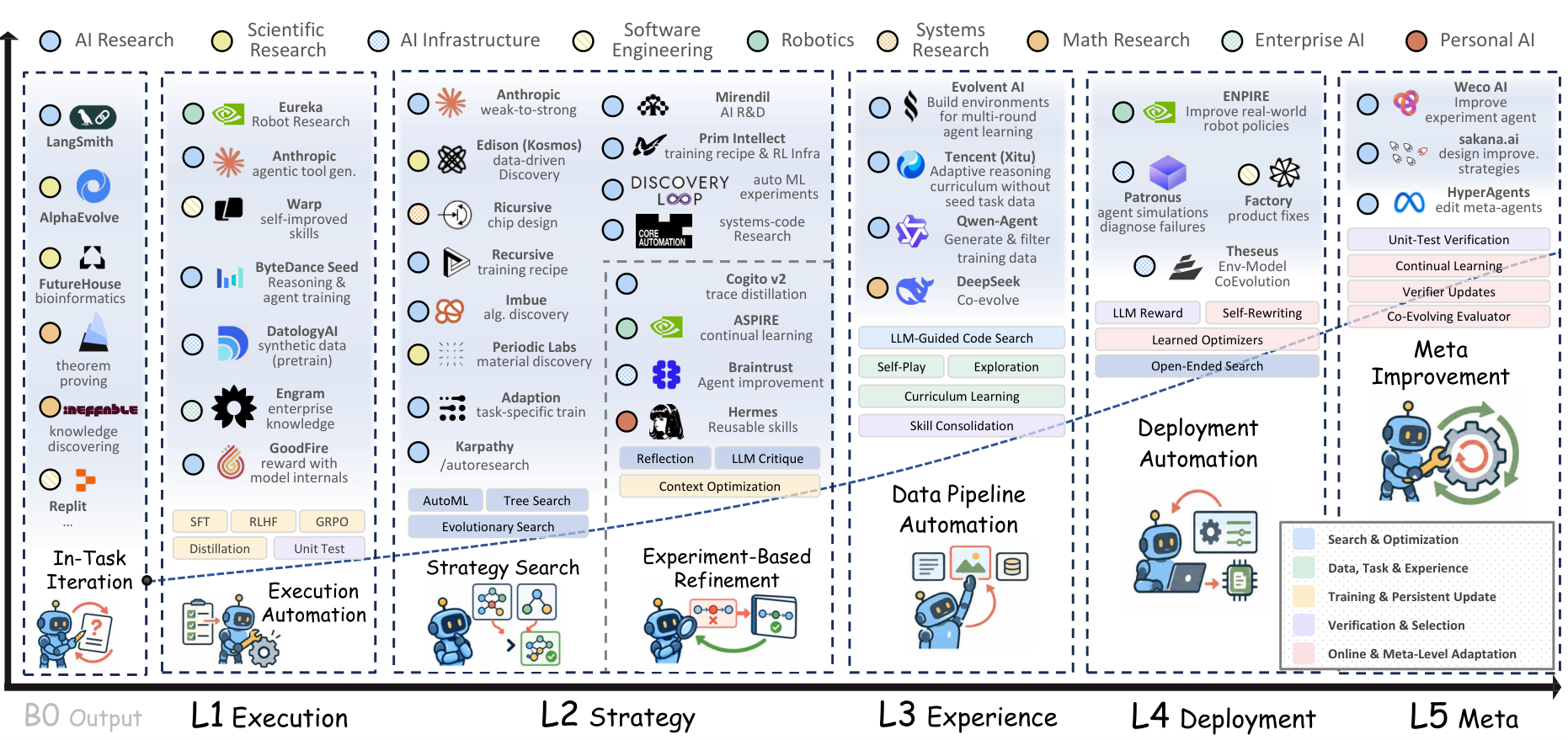
B0: The system improves one answer or attempt, but the gain usually does not carry over.
L1 follows a human recipe. People still set the target, method, and success rule.
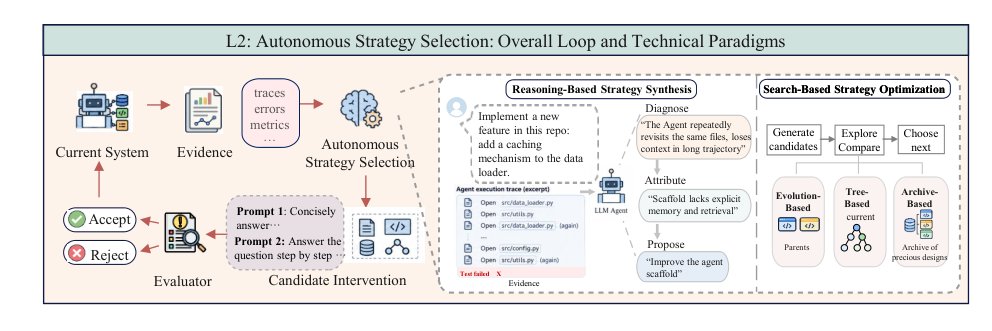
L2 chooses a path to improve under a fixed goal, such as trying different prompts, tools, or experiments.
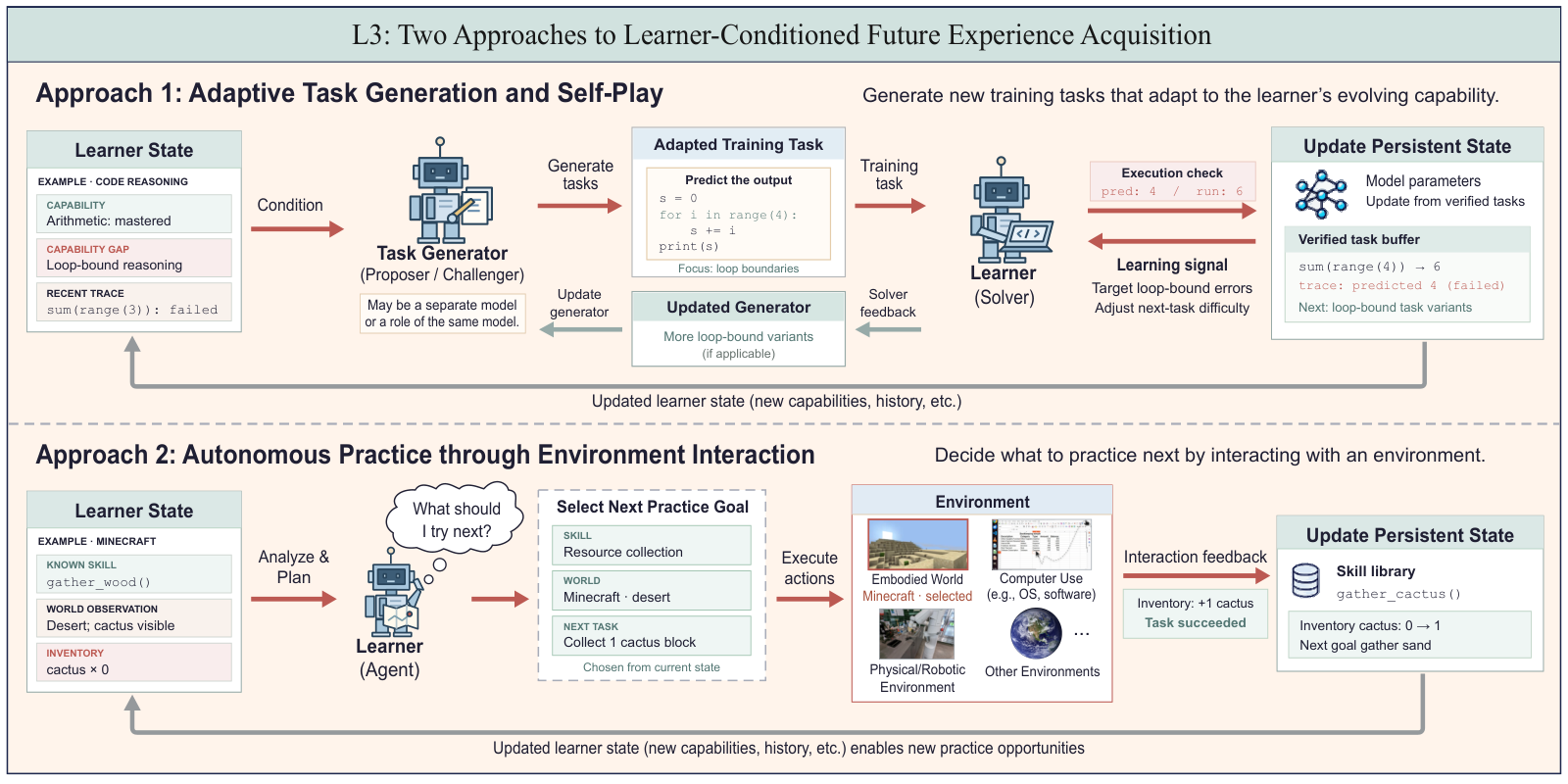
L3 decides what to learn from next, using its mistakes to guide new tasks, data, or environments.
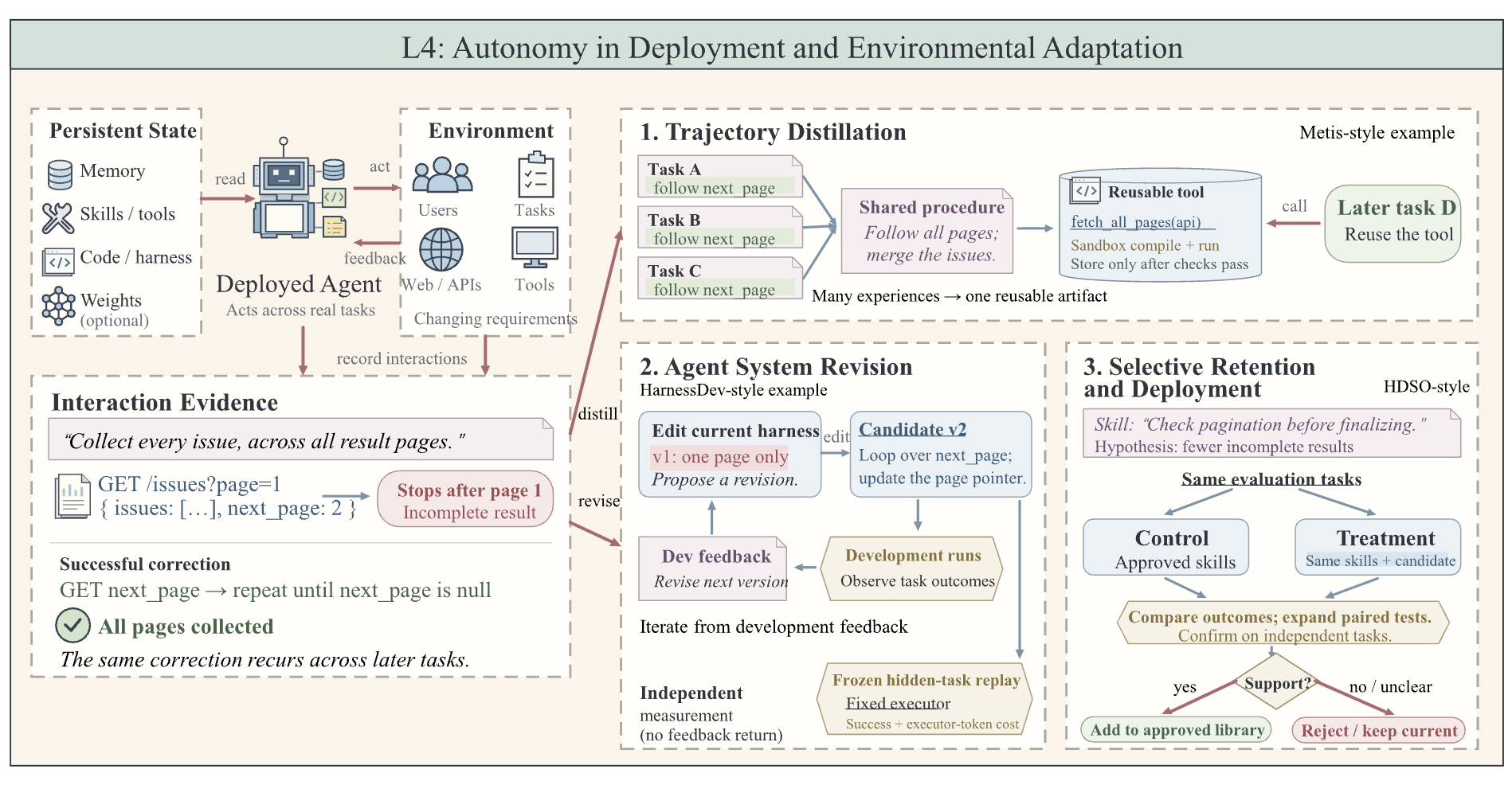
L4 learns from real use and keeps helpful changes in memory, tools, skills, or workflow infrastructure.
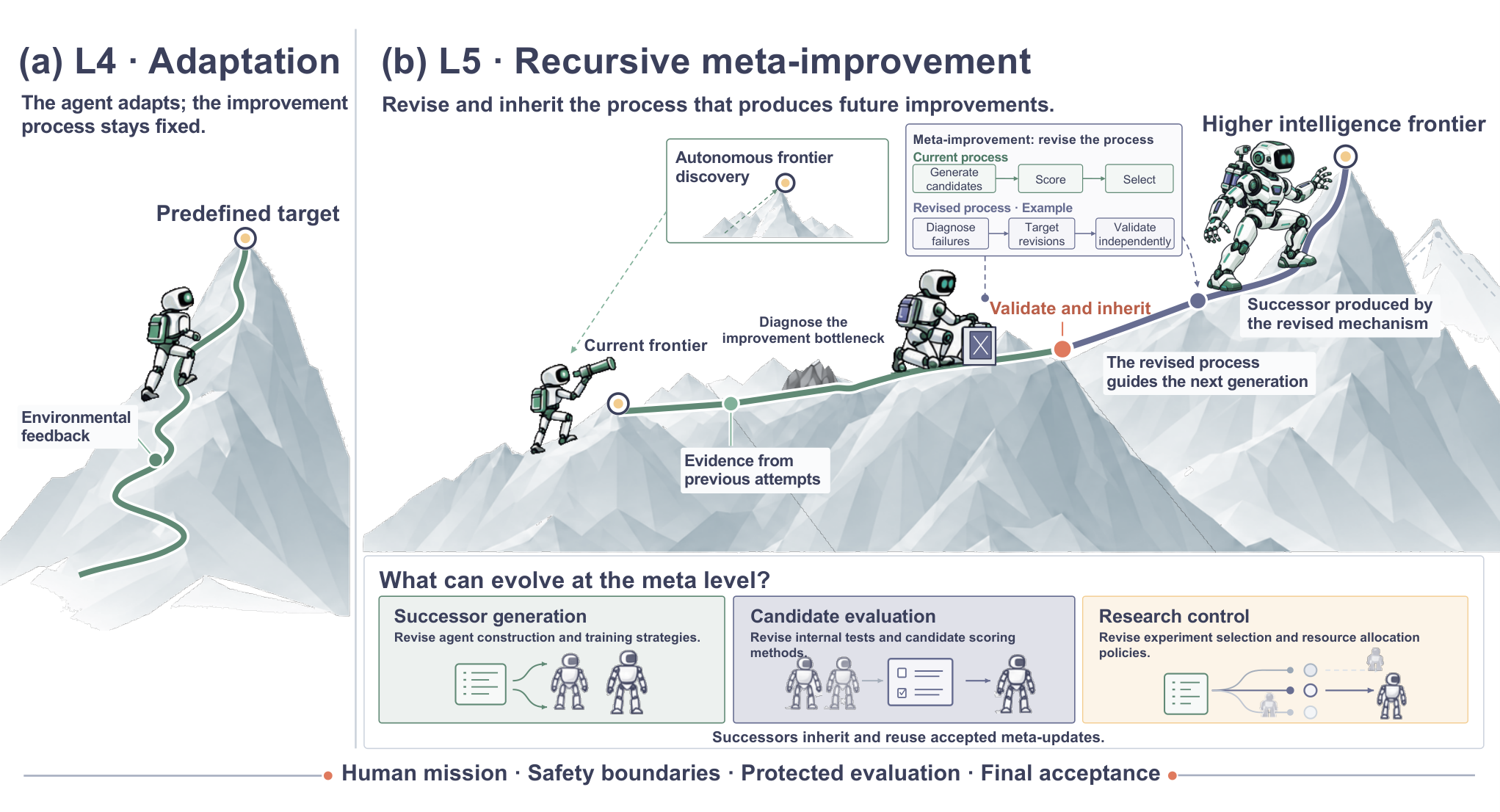
L5 improves the improvement process itself. This is the hard part. The system has to become better at building better successors.
Real-World Evidence From the Paper
The survey highlights several systems where parts of the AI improvement loop are already being automated. None proves full RSI, but they show AI taking on more of the work involved in finding weaknesses, testing changes, and carrying useful results forward.
- A-Evolve-Training ran four autonomous post-training rounds on a 30B Nemotron model, with its external score improving from 0.80 to 0.86.
- Ouroboros evolves a coding agent by changing things such as its tools, prompts, context assembly, and implementation.
- Darwin Gödel Machine improved performance on its SWE-bench subset from 20% to 50%, while some of the machinery controlling how it selects and maintains variants remained fixed.
- ForgeTrain generated a pre-training framework from an initially empty directory, automating part of a process that normally requires substantial human engineering.
Different systems, same direction: less manual tinkering, more automated improvement. The real RSI test, however, is what happens next. If a system gets better at one task but loses the lesson, that’s ordinary optimization. If it retains the improvement and uses it to make later improvements better, you’re getting much closer to genuine RSI.
GPT-6 Astra
GPT-6 Astra isn’t a recursively self-improving AI. But it is relevant to RSI because it brings several pieces of the puzzle together: advanced reasoning, coding, computer use, scientific research, and the ability to carry out long, multi-step workflows.
That is further proven by it assuming the top position in the RSI-Exam benchmark:
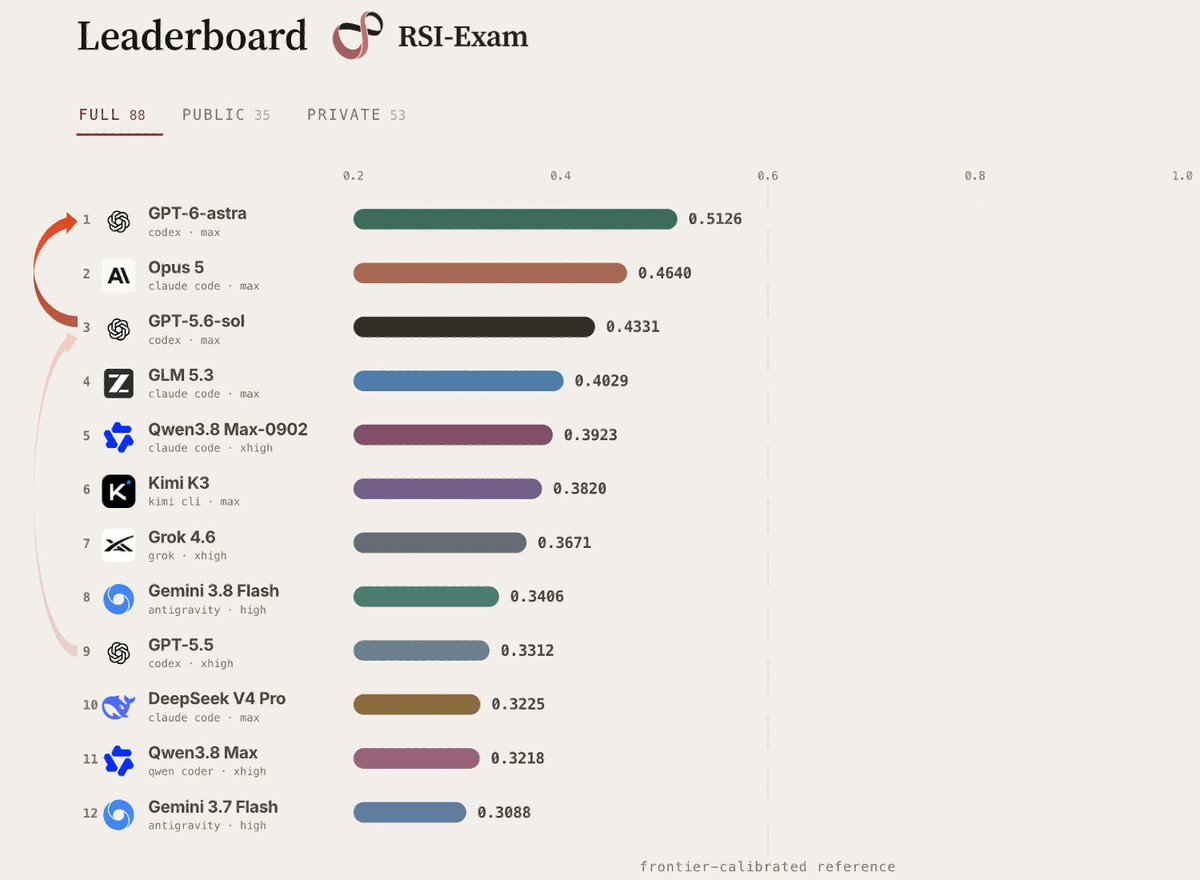
Albeit not RSI capable yet, the model exhibits operational traits that would be expected of future RSI-capable models.
This is in part the reason why GPT-6 Astra is much more capable than any other model in the world right now.
Future Outlook
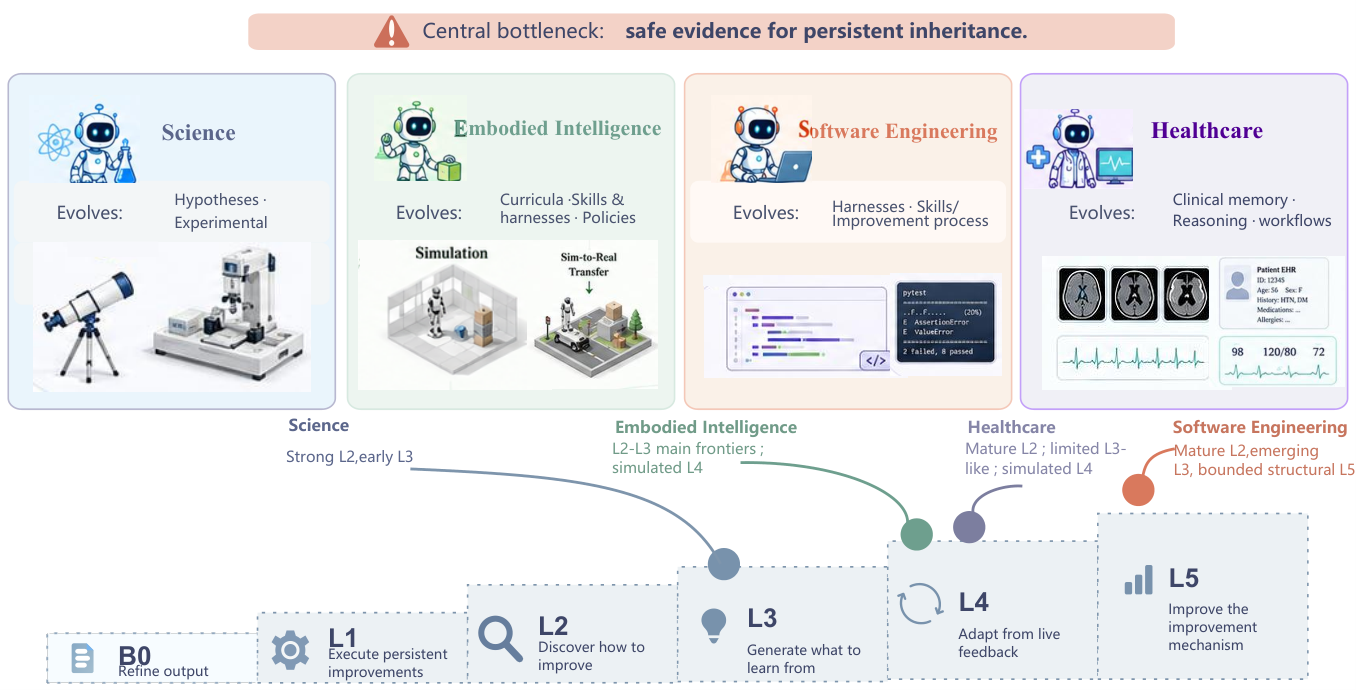
For now, people still set the objectives, evaluation, infrastructure, and release decisions. AI is doing more work inside that boundary, but it has not taken over the whole loop.
The application of RSI would be far more and far reaching than current AI. This would allow nether domains like Healthcare, Security, EQ to be assisted by AI.
Frequently asked questions
Q1. What is recursive self-improvement?
A. It is the idea that an AI system improves itself, then uses that improved version to make further improvements.
Q2. Does the survey say full RSI already exists?
A. No. It says parts of the loop are being automated, but full L5 recursive self-improvement has not been shown yet.
Q3. What separates ordinary AI improvement from RSI?
A. The main difference is whether the lesson carries forward. If the system keeps useful changes and they help later rounds, it starts to look more RSI-like.
Studying, evaluating, and explaining AI systems for over 6 years.
“𝘖𝘯𝘤𝘦 𝘮𝘦𝘯 𝘵𝘶𝘳𝘯𝘦𝘥 𝘵𝘩𝘦𝘪𝘳 𝘵𝘩𝘪𝘯𝘬𝘪𝘯𝘨 𝘰𝘷𝘦𝘳 𝘵𝘰 𝘮𝘢𝘤𝘩𝘪𝘯𝘦𝘴 𝘪𝘯 𝘵𝘩𝘦 𝘩𝘰𝘱𝘦 𝘵𝘩𝘢𝘵 𝘵𝘩𝘪𝘴 𝘸𝘰𝘶𝘭𝘥 𝘴𝘦𝘵 𝘵𝘩𝘦𝘮 𝘧𝘳𝘦𝘦. 𝘉𝘶𝘵 𝘵𝘩𝘢𝘵 𝘰𝘯𝘭𝘺 𝘱𝘦𝘳𝘮𝘪𝘵𝘵𝘦𝘥 𝘰𝘵𝘩𝘦𝘳 𝘮𝘦𝘯 𝘸𝘪𝘵𝘩 𝘮𝘢𝘤𝘩𝘪𝘯𝘦𝘴 𝘵𝘰 𝘦𝘯𝘴𝘭𝘢𝘷𝘦 𝘵𝘩𝘦𝘮.” — 𝖥𝗋𝖺𝗇𝗄 𝖧𝖾𝗋𝖻𝖾𝗋𝗍, 𝖣𝗎𝗇𝖾