What if your next teammate never sleeps, never misses a deadline, and can crunch terabytes while you grab coffee, would you celebrate the help or fear for your job? That question leads us straight to the big one: Will Agentic AI Replace Traditional Data Analyst Roles? In this article you’ll discover how autonomous agents are reshaping data work, which tasks they’ll lift from your plate, and how you can evolve from spreadsheet wrangler to strategic storyteller.
Table of contents
- Rise of Autonomous Agents in Data Workflows
- Will Data Analysts Become Obsolete?
- What Do Data Analysts Do Today?
- Agentic AI: A New Era in Data Workflows
- Hands-On Tasks: Agentic AI Automation
- Hands-On Tasks: Tasks that Still Require Human Data Analysts
- Augmentation, Not Replacement
- Conclusion
- Frequently Asked Questions
Rise of Autonomous Agents in Data Workflows
Today’s data landscape is overwhelming. Companies are flooded with information from websites, apps, sensors, and social media. Manually processing all of it is unrealistic. That’s where autonomous agents come in. These AI-powered tools run 24/7, monitoring data, preventing issues, and keeping systems running smoothly. They don’t get tired, miss deadlines, or make late-night mistakes.
What makes them especially powerful is their ability to manage the entire data pipeline—from collecting messy raw data to cleaning, analyzing, and even producing insights that once required human input. By automating these routine tasks, analysts are free to focus on what really matters: interpreting data and driving business decisions.
Thanks to cloud computing and AI, what once took entire teams can now be done by a few smart agents working quietly in the background.
If you don’t know what is Agentic AI and how does it work, read our previous articles:
- Agentic AI Demystified: The Ultimate Guide to Autonomous Agents
- What is the Difference Between AI Agents and Agentic AI
Will Data Analysts Become Obsolete?
Short answer: No. But this change is happening in the job.
Think of it this way: When Excel arrived, accountants didn’t just stop existing-they stopped working on calculations by hand and started working on financial strategies, and that is exactly what is happening to data analysts.
AI, at its core, can really crunch numbers but can’t understand the significance of the numbers: It can’t walk into a room and explain to the CEO why sales dropped last quarter in a manner that the CEO understands. It can’t read between the lines of company politics to realize that the marketing team requires different insights than the finance team.
What AI will take from you are the boring things: data cleaning, repeated report generation, and the standard analyses you perform every month. And that will buy you enough time to do those tasks that matter; that is, solving business problems, asking better questions, and helping your company make better decisions.
What Do Data Analysts Do Today?
Before we talk about what’s changing, let’s look at what data analysts do right now. Most of their time goes into five main areas:
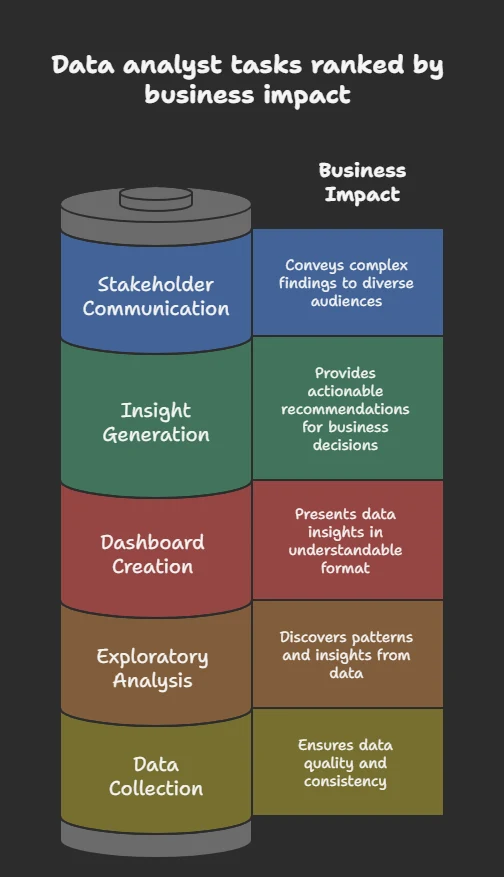
- Data Collection and Cleaning: This is the most time-consuming part of an analyst’s job. It involves gathering data from multiple systems, fixing errors, handling missing values, and ensuring consistency.
- Exploratory Data Analysis: Analysts identify patterns, detect anomalies, and determine what questions the data can answer. This is where they begin to uncover the story behind the numbers.
- Dashboard Creation and Reporting: Analysts convert insights into charts and reports. They build and maintain dashboards used for daily decision-making.
- Business Insight Generation: Analysts interpret patterns to answer key business questions: Why are customers leaving? Which products perform best? What actions should be taken?
- Stakeholder Communication: Analysts must explain complex findings to non-technical audiences. This includes translating data into business terms and addressing questions from decision-makers.
Agentic AI: A New Era in Data Workflows
Now we get to the interesting part. Agentic AI is changing how all this work gets done.
What is Agentic AI in the Context of Data Analysis?
Think of it as having a brilliant intern who never really sleeps and is a fast learner from every mistake. These systems understand your objectives, select the relevant data, perform the analysis, and provide recommendations on how to interpret the results. They learn over time about your organization’s quirks and preferences. They are capable of multitasking, something even the highest-level human analysts might struggle with. Need to analyze customer churn while simultaneously forecasting sales? They can do both, and they might do a bit of market research for you, too.
How do Agents work with data?
These AI systems are like a data detective in your company. They can hunt data from a bunch of sources, perform automatic cleansing and organizing, and then choose the right analysis techniques themselves, depending on what they find, without requiring you to tell them each and every step.
They also hold steadfast to rules, ensuring compliance with company policies and legal requirements, tracking data provenance, and recording every detail about what they’ve done. It’s like having a built-in intern who takes care of compliance.
Role of LLMs and Automation Tools
These systems have Large Language Models as their minds. They are able to interpret and understand the human language, which means you can make them any kind of query-well, question-well, anything in plain English, rather than packaging it into complex coding: “Why did the traffic drop last month?” Just ask.
Automation tools serve as their arms-the tools work with databases, running calculations, and then produce outputs. Combining these “brains” with automation creates systems that span from “I need to understand our customer behavior” to “Here’s your analysis with three actionable recommendations.”
Hands-On Tasks: Agentic AI Automation
Let’s get practical. Here are some real examples of what Agentic AI can do today, with step-by-step breakdowns you can follow along with.
Task 1: Automation Data Cleaning & Preprocessing
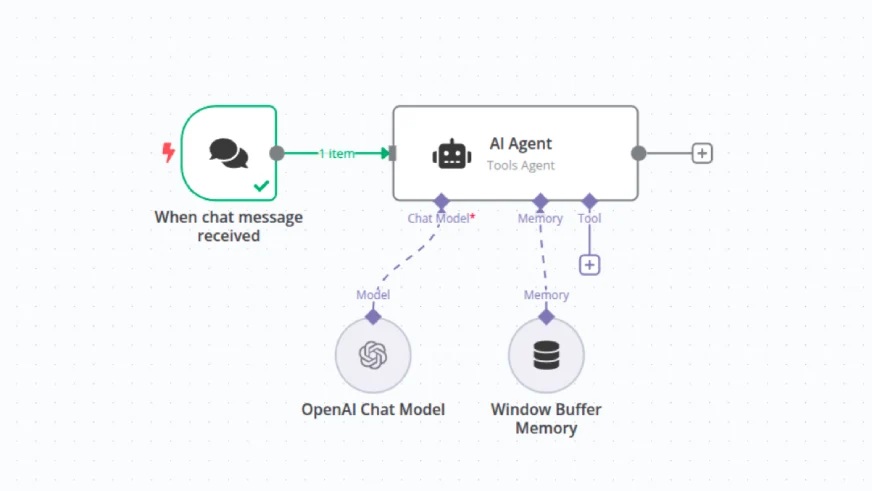
This is where AI shines. Data cleaning used to eat up 80% of an analyst’s time. Now with n8n workflows, AI can handle most of it automatically.
Don’t know how n8n works, checkout our free course on n8n automations.
Step 1: Set up the Data Source Connections in n8n
- Create n8n workflows with database, API, and spreadsheet connectors.
- Set up automatic data polling from different sources (MySQL, PostgreSQL, Google Sheets)
- Set up webhook triggers to ingest data in real-time.
- Use HTTP Request nodes to connect and interact with external APIs.
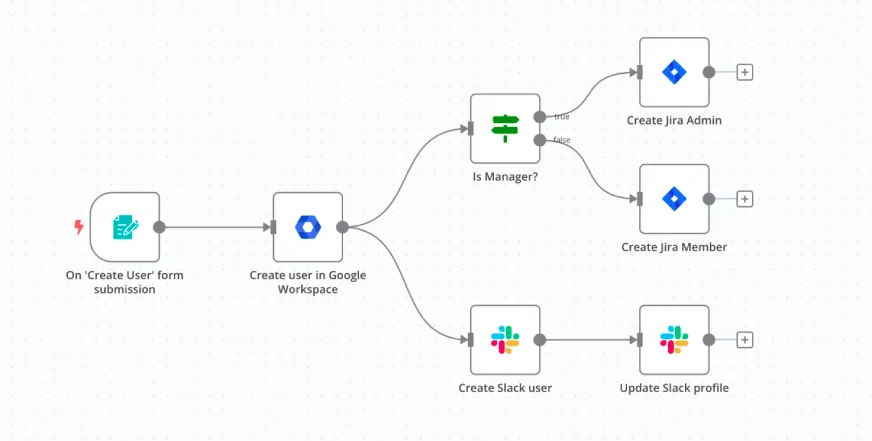
Step 2: Build Data Quality Assessment Workflow
- Add function nodes to scan for types, nulls, and duplicates
- Create conditional branches in IF nodes to treat different scenarios of data quality.
- Use Code nodes to check data quality against custom validation rules for your specific business logic.
- Alerts will be sent out to users via email/Slack when a data quality warning is raised.
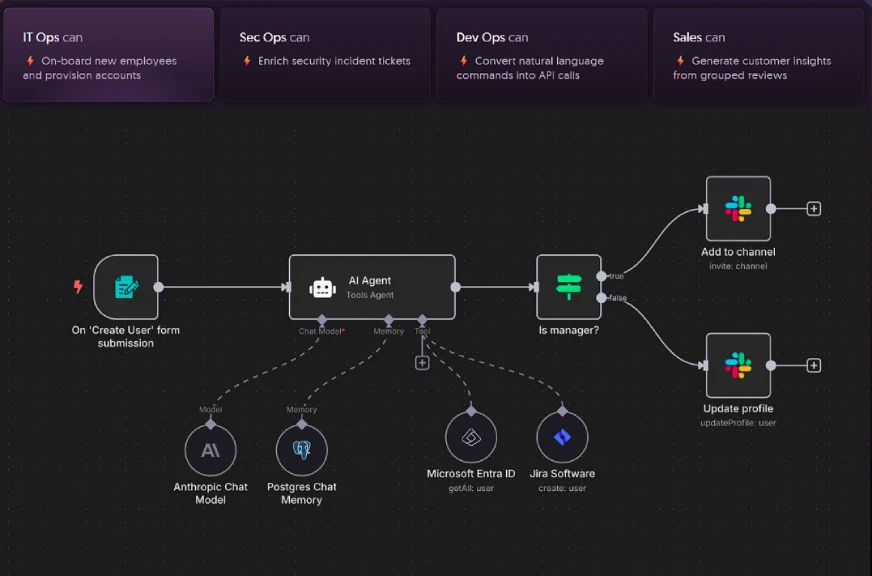
Step 3: Build an Automated Cleaning Pipeline
- Use n8n’s data transformation nodes to change formats and fill missing values.
- Create loops with Split in batches nodes for processing in batches of large datasets.
- Use AI nodes (OpenAI/Claude) to fill missing data or categorize ambiguous entries intelligently.
- Implement error handling using Try-Catch nodes for managing operational failures.
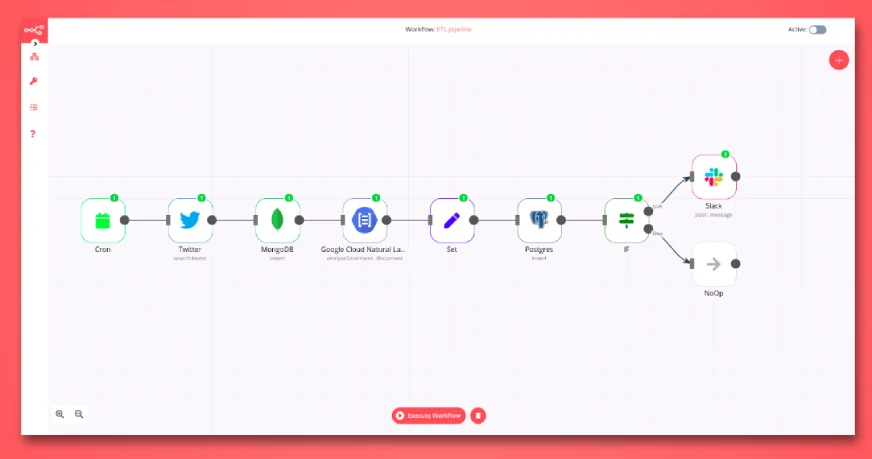
Step 4: Set up output and monitoring
- Configure to export clean data to your destination.
- Set up scheduled workflows in n8n by using the cron node, allowing for regular data processing.
- Develop monitoring dashboards with webhook outputs from n8n, keeping the processing status under observation.
- Set up logging to audit trail all transformations.
Also Read: Top 10 Must Use AI Tools for Data Analysis [2025 Edition]
Task 2: Auto-Generating Reports and Dashboard
Remember those monthly reports that took you hours to prepare; where you’d copy paste charts, change figures, and rewrite the same paragraphs maybe with slight changes to the data? Now AI handles all that stuff.
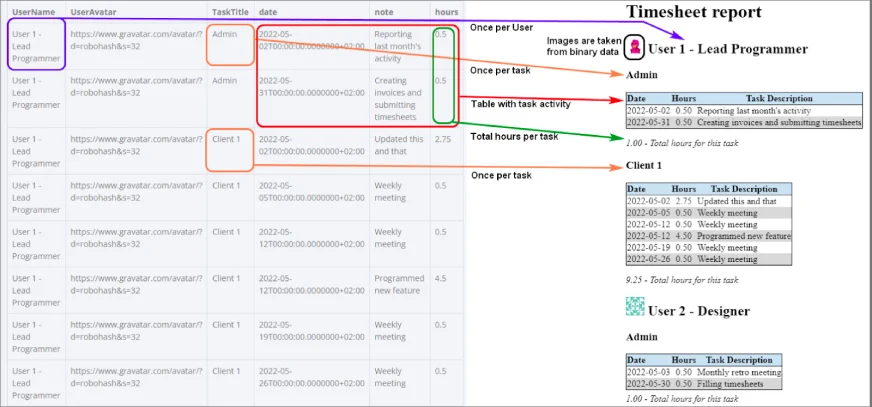
Step 1: Setting up the Template Creation Process for AI
The first thing is to make report templates that can be filled by AI automatically. We’d be basically setting up something like a Mad LIbs game; you stipulate the structure while AI fills in the blanks with relevant data and insights.
- Use something like Google Collab to create templates for reports that have placeholder sections
- Set up Markdown templates where the variable placeholders exist for major metrics, charts, and narrative explanations.
- Create prompt templates that instruct AI to provide contextual commentary considering your business rules.
- Let us try to build a layout that is sufficiently flexible to accommodate varying volumes of data and variable time periods.
- Create different template libraries for different kinds of reports (executive summaries, departments reports)
Step 2: Connect Data Sources to Report Generation
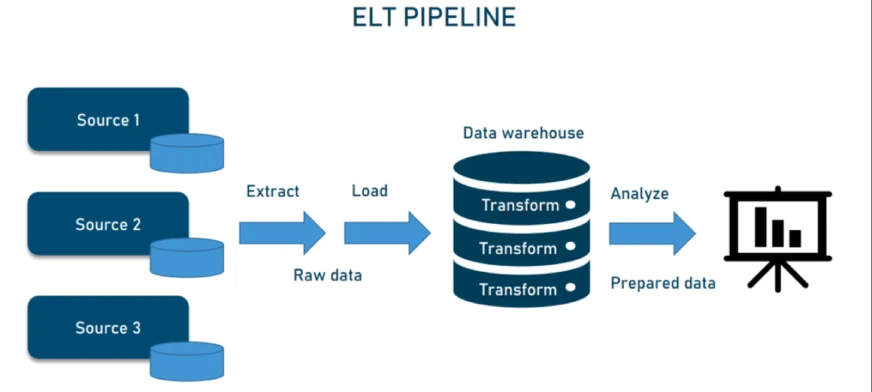
The AI through its programmatic interface needs to be made aware as to where exactly to find the data and comprehend it. This is about more than just linking databases.
- Link your cleaned data pipelines directly to report generation workflows through an API
- Set up data refresh schedules (daily, weekly, monthly) with error handling processes
- Create business rules that teach AI when numbers are considered “good,” “concerning,” or “critical”
- Add exception handling to address cases where data sources are unavailable or where they contain errors
- Establish validation checks on the data to make sure reports will be correctly generated
Step 3: Generate Natural Language Insight
Now, this is where things get interesting. AI is now capable of writing the narrative components of reports, which used to take ages to get through: What happened and why it matters.
- Use GPT-4o or Claude to generate explanations describing data trends using custom prompts
- Create business context prompts that also carry industry knowledge and company-specific terminology
- Set up comparison frameworks (month-over-month, year-over-year, vs targets) to automatically generate narratives
- Create conditional logic for several different scenarios (growth, decline, plateau) that will use the correct language for each
- Implement fact-checking workflow to verify that AI-generated insights correspond to actual data
Step 4. Automated Dashboard Update and Distribution
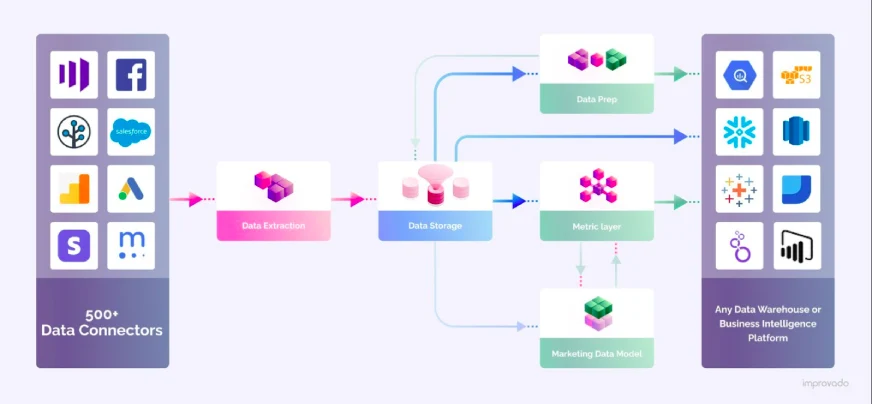
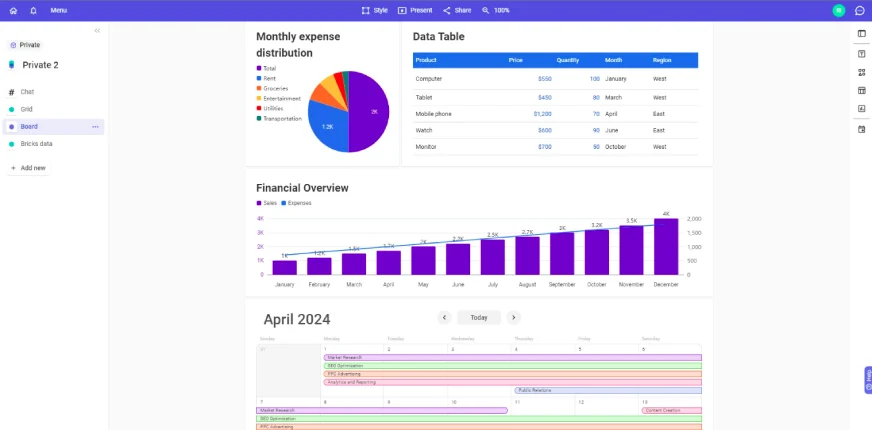
Static dashboards are hence becoming obsolete. AI can now churn out dynamic dashboards that update themselves according to what is crucial at present.
- Connect and visualize using Tableau, Power BI, or custom web dashboards
- Set up an automated refresh where it pulls fresh data again and recreates the visuals-all without human intervention-while alerting the stakeholders if there are major changes in key metrics
- Create an adaptive layout highlighting aspects that are now relevant according to the business priority and
- Create distribution lists automatically, with various versions of dashboards to cater to stakeholder groups
Hands-On Tasks: Tasks that Still Require Human Data Analysts
Task 1: Interpreting Results in Business Context
AI could tell you that sales fell 15% last month, but it cannot understand the reason why sales fell: maybe the biggest competitor launched a new product, marketing was in between campaigns, or a supply-chain glitch got in the way of inventory. Such contextual understanding is only human.
What this looks like in practice?
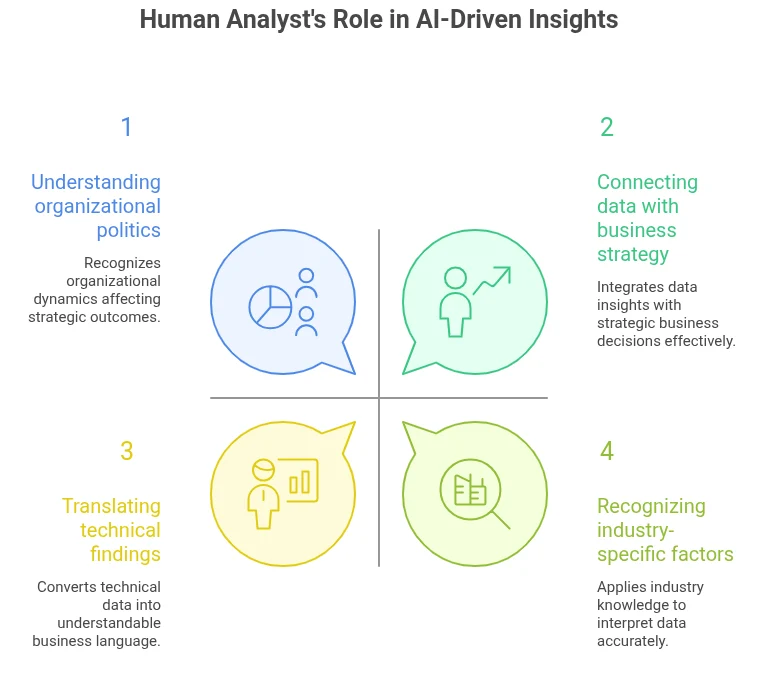
- Understanding the Why Behind the Numbers: If AI reports a 23% increase in customer acquisition cost, a human analyst investigates the cause, changes in marketing strategy, platform algorithms, or targeting. AI reports data; analysts uncover reasons.
- Connecting Data with Business Strategy: A 10% drop in engagement might prompt questions: Is this due to a new product launch? Are users shifting behavior? Is it expected? Analysts connect data trends to business context.
- Recognizing Industry-Specific Factor: Analysts know that a January sales dip may be seasonal, while a similar drop in November signals a problem. In SaaS, lower summer usage isn’t always churn, it may just be the norm. AI lacks this domain intuition.
- Translating Technical Findings into Business Terms: AI might report a negative correlation between discounts and customer value. Analysts reframe it: discounting attracts price-sensitive customers who don’t stick around.
- Understanding Organizational Context: When performance dips, analysts consider internal factors: budget cuts, team changes, or strategy shifts, that may explain the numbers. They interpret data in light of company dynamics.
Task 2: Asking the right questions
You can think of AI as very good at pattern recognition, while it never understands which questions are useful for your business. A human analyst would ask, “Why are customers churning?” whereas an AI system might just report that churn is happening.
What this looks like in practice?
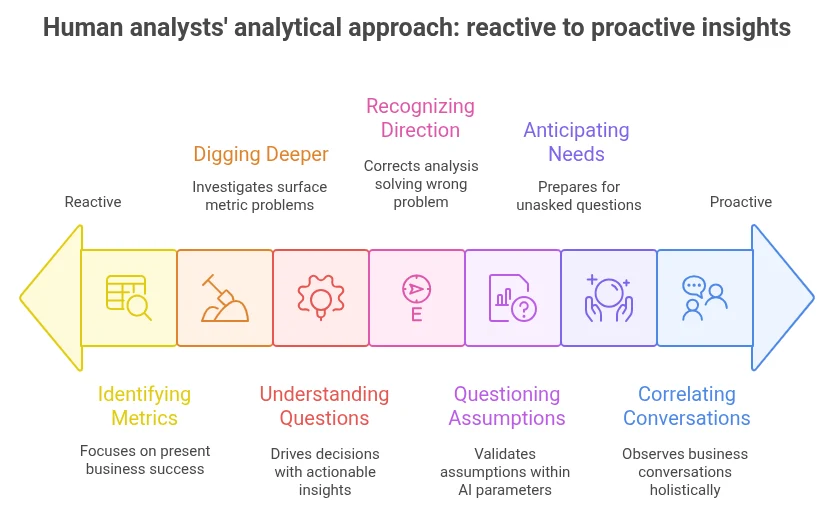
- Identifying Key Metrics: AI can track everything, but analysts know what matters. In a subscription business, feature adoption may be more critical than monthly active users. Revenue alone means little if acquisition costs are unsustainable.
- Knowing When to Dig Deeper: A 30% traffic spike prompts deeper questions: Where’s it from? Is it converting? Could it be bots? Analysts know that surface gains can hide underlying issues.
- Focusing on Decision-Driving Questions: Analysts align their work with business needs, what leaders need for planning, what product needs for prioritization, and what sales needs to hit targets. They focus on what moves the business forward.
- Redirecting Misguided Analysis: When the analysis veers off course, good analysts recognize it. They stop chasing irrelevant data and reframe the problem to get back on track.
- Questioning Assumptions: AI accepts input as-is. Analysts challenge the inputs: Are these the right segments? Are the metrics meaningful? Could the data be biased? They question the foundation of the analysis itself.
- Anticipating Future Needs: AI looks back. Analysts look ahead: What data will we need for expansion? What insights will guide our next product line? They prepare for tomorrow’s questions today.
- Connecting Business Dots: Analysts notice patterns AI might miss, like how complaints spike after certain campaigns, or how sales pitches affect product usage. They connect disparate events to uncover causality.
Also Read: Building Data Analyst AI Agent
Augmentation, Not Replacement
AI and humans are more effective together than alone. AI handles fast, consistent data processing; analysts bring business context, creativity, and communication. Like a calculator enhances a mathematician, AI amplifies the analyst.
- From Manual Tasks to Strategic Thinking: AI reduces time spent on cleaning data or generating reports, allowing analysts to focus on business problems, creative solutions, and cross-team collaboration, making them more valuable, not less.
- Upskilling Opportunities: As AI evolves, so does the analyst role. Analysts will learn to manage AI tools, extract insights, and apply strategic thinking. Those who can design AI workflows and combine machine output with human judgment will stand out.
- Analysts as Business-Technical Bridges: There’s growing demand for analysts who connect technical AI capabilities with business needs. Skills like consulting, project management, and strategy will be essential.
Conclusion
Without a doubt, agentic AI is creating new opportunities for data analysts rather than bringing an end to the trade. The future is for those data analysts who fairly work with AI systems and not against them. The most successful companies will have analytical powers that are out of reach for humans or AI alone.
There is a way out for data analysts, which is to embrace the new tools but then develop skills that build on the AI capabilities. This means becoming strong in strategy, the communication of ideas to stakeholders, and creative problem-solving, while learning to interact with AI. The analysts who are going to consider AI as their companion and not their enemy will definitely become successful. By working alongside AI, data analysts can provide never ending support to their respective organizations in decision making and achieving their goals.
Frequently Asked Questions
Q1. How long before Agentic AI takes over my job as a data analyst?
A. It won’t take over your job, but it will change it significantly within the next 2-3 years. The routine tasks like data cleaning and basic reporting will be automated, but strategic thinking, business context, and stakeholder communication will remain human responsibilities. Think evolution, not extinction.
Q2. Do I need to learn programming to work with Agentic AI systems?
A. Not necessarily. Many Agentic AI tools are designed to work with natural language commands. However, understanding basic programming concepts and data structures will help you work more effectively with these systems and troubleshoot when things go wrong.
Q3. Will Agentic AI make data analysis less accurate?
A. It often makes analysis more accurate by eliminating human error in routine tasks. However, you’ll need to verify outputs and understand the AI’s limitations. The key is knowing when to trust the AI and when to dig deeper with human judgment.
Q4. What skills should I focus on developing now?
A. Focus on business acumen, communication skills, and critical thinking. Learn to ask better questions, understand industry context, and translate technical findings into business language. These skills become more valuable as AI handles the technical heavy lifting.
Q5. How much will implementing Agentic AI cost for small businesses?
A. Costs are dropping rapidly. Many cloud-based solutions start at $50-200 per month for basic automation. The ROI often comes quickly through time savings and improved accuracy. Start small with specific use cases rather than trying to automate everything at once.
Data Science Trainee at Analytics Vidhya
I am currently working as a Data Science Trainee at Analytics Vidhya, where I focus on building data-driven solutions and applying AI/ML techniques to solve real-world business problems. My work allows me to explore advanced analytics, machine learning, and AI applications that empower organizations to make smarter, evidence-based decisions.
With a strong foundation in computer science, software development, and data analytics, I am passionate about leveraging AI to create impactful, scalable solutions that bridge the gap between technology and business.
📩 You can also reach out to me at [email protected]