Who has ever had a great idea about an application, only to be confronted with the reality of the development dread, which may take weeks, or even months. The path between the idea and a working product can be tiresome. Imagine that you could fit that whole procedure into the amount of time you spend having a cup of coffee? It is not a dream out there in the future.
This article describes the process of building a full-fledged personal productivity agent, with a single prompt up to a running deployed app, in five minutes using the GLM-5 AI model on the Z.human platform. The trip is representative of a new wave of agentic AI development, as the speed of creating an MVP application is at an all-time low.
Table of contents
What is the GLM-5 AI Model?
GLM-5, the flagship foundation model of Zhipu AI, is at the center of this rapid development. It is a big leap in the progress of the traditional AI assistants with coding capabilities. GLM-5 is intended in so-called Agentic Engineering. This implies that it is a self-driven entity that is able to comprehend high-level objectives, design multifaceted actions, write code, and resolve issues all by itself.
GLM-5 is built to handle the full software development lifecycle. Trained on vast amounts of code and engineering knowledge, it can create project structures, manage databases, and build APIs and user interfaces. Its ability to reason through problems makes it a powerful partner for developers looking to move faster. On the Z.ai platform, it works inside an integrated environment with access to a file system, terminal, and editor, allowing it to carry out tasks smoothly on its own.
Building a Personal Productivity Agent using GLM 5
We will be building a fully deployed app with Vibe Coding using Z.ai platform only. For that, we head over to https://chat.z.ai/ and select the GLM 5 model from the top. Also enable the “Agent” mode so that it can create files using Terminal in Cloud.
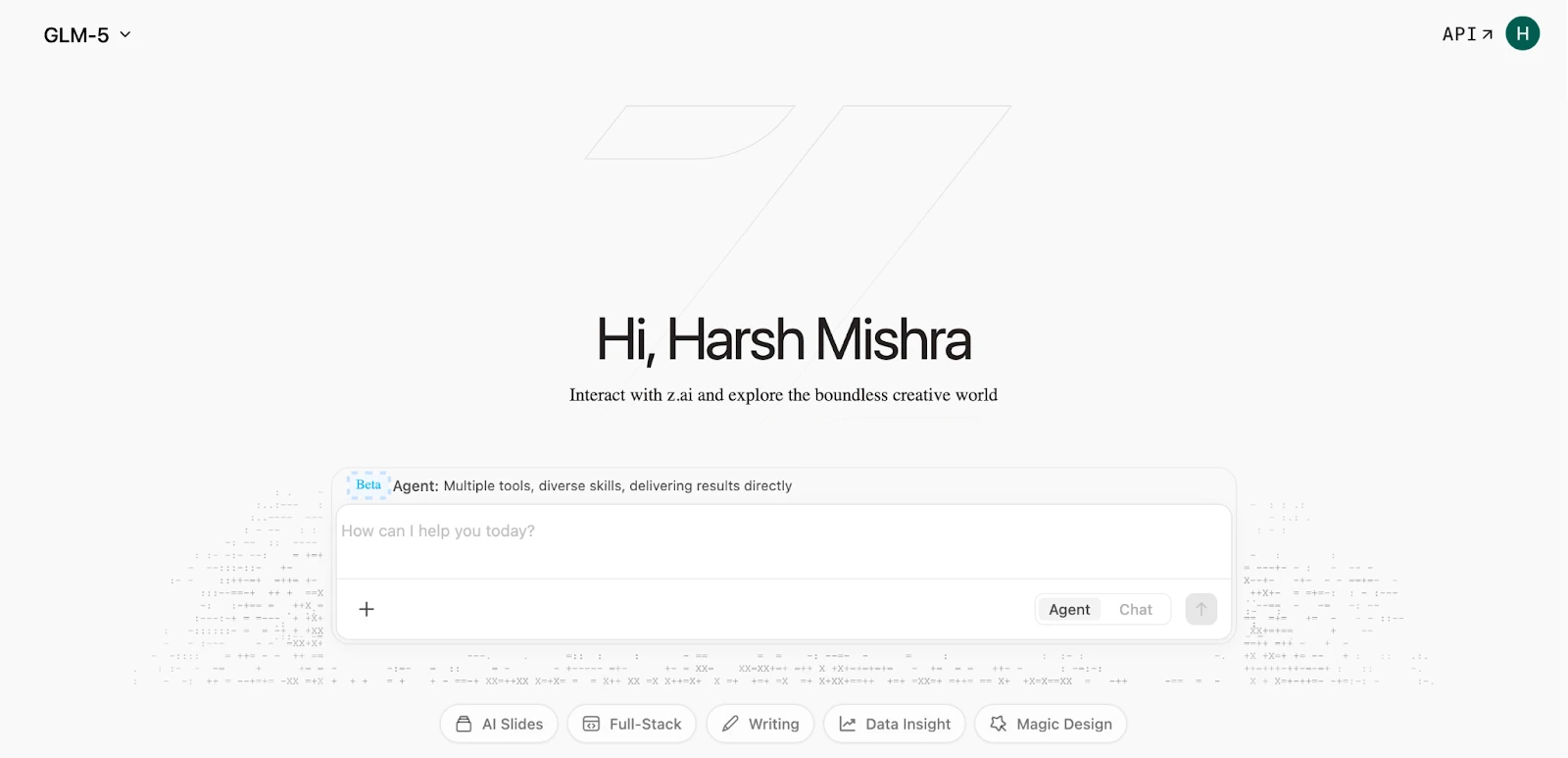
The First step: Brainstorming on the App
The project started with a simple, high-level prompt: “First Brainstorm about a Personal Productivity Agent. Then build an MVP version of that.”
This was the beginning of the process. GLM-5 AI model did not begin to write code. The first thing it was able to produce was a plan that was structured. Based on this plan, the main idea was outlined, the most important aspects brainstormed, and the scope of the MVP application was established. The GLM 5 can also be requested to brainstorm and then in the second prompt to develop the MVP. Nevertheless, we attempted to assess the agentic functions of GLM 5. Thus two compound tasks we threw in one prompt.
The output of the AI created features in rational categories. These were task management, time management and analytics. Thereupon chose a narrowed down set to the minimum viable product. This is one of the planning stages of agentic AI development. It makes sure that the end product is in line with the original vision and any code is written.
The Build Process and an Unexpected Hurdle
GLM-5 started the development phase with the plan approved. It began by developing the project structure and defining the database schema. It was done in a transparent manner with every file being created and edited in the integrated editor. The model was aimed at implementing the backend followed by the user interface.
But development is hardly ever a straight line. An error was experienced in the process. There was a terminal message of an error of Prisma database schema drift detected. The disk database failed to match the history of migration of the model. This is an everyday problem in the development of the real world. It was a true experiment of the problem-solving prowess of the AI.
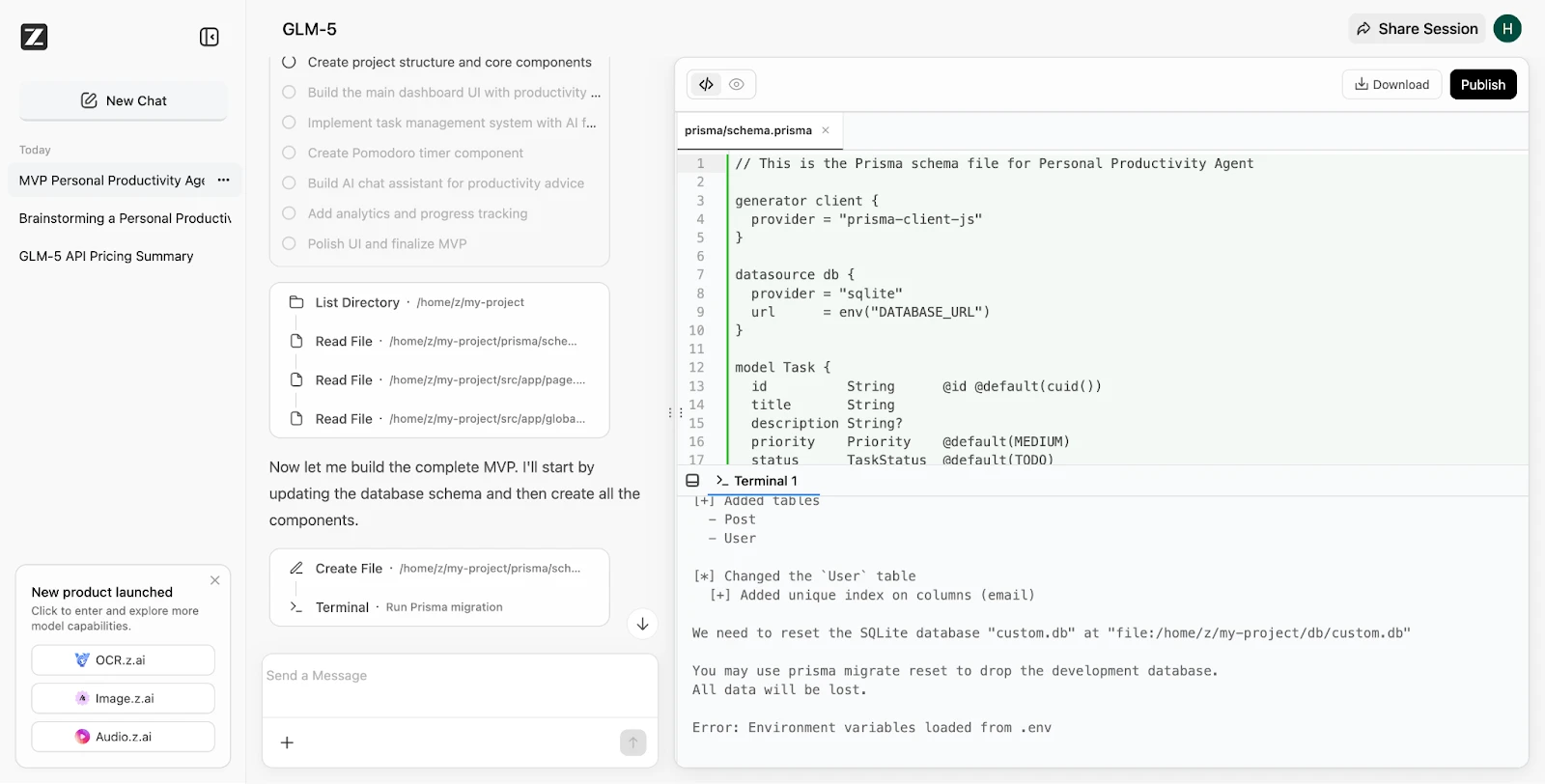
Intelligent Recovery
The build process paused. A simple follow-up prompt was given:
“What happened please continue building”
The GLM-5 artificial intelligence model analysed the error message. It rightly recognized the necessity to recount the database and conveyed this action. It then went ahead to the build without any additional human intervention.
This scene shows a major advancement in the development of agentic AI. The model never failed but realized the situation of the mistake and implemented a solution. After resetting the database, it generated the API routes in a systematic manner, developed the main dashboard, updated the layout and even made a self-crafted logo of the application.
The Final Product: A Deployed MVP
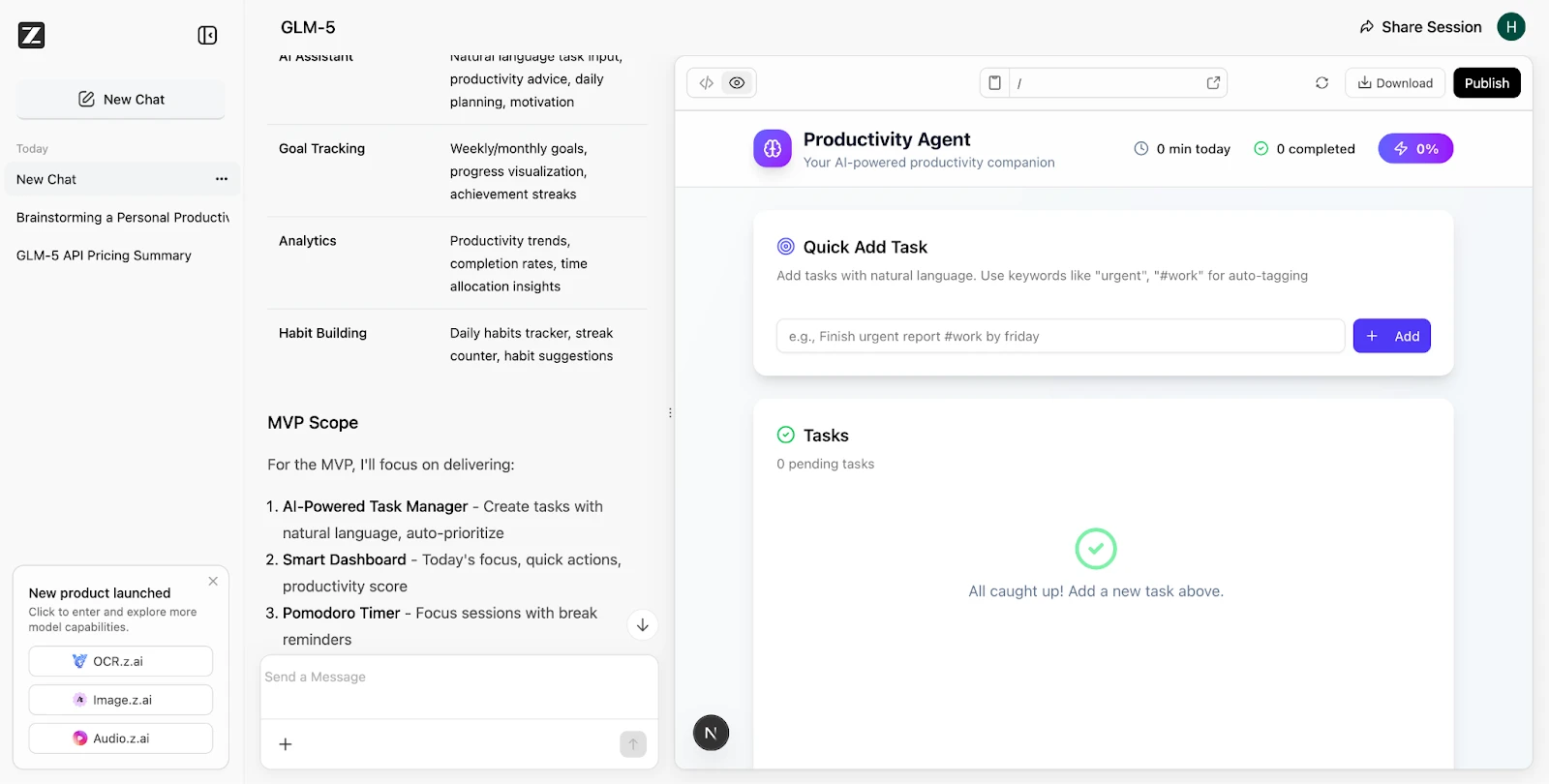
The MVP application was filled and it required nearly five minutes since the first prompt. The end result was a universal productivity agent of the individual. It was characterized by a sleek dashboard, intelligent task management that has a natural language interface, a Pomodoro timer and an AI Advisor.
The app had progressive features that were stipulated in the brainstorming stage. E.g. urgent tasks were assigned a higher priority. It was possible to add hashtags such as #work to tag tasks automatically. The whole process starting with a mere idea up to a working and fully featured web application has shown an unprecedented pace of development. The Z.human platform offers the required integrated environment on this smooth workflow.
Deploying the Application
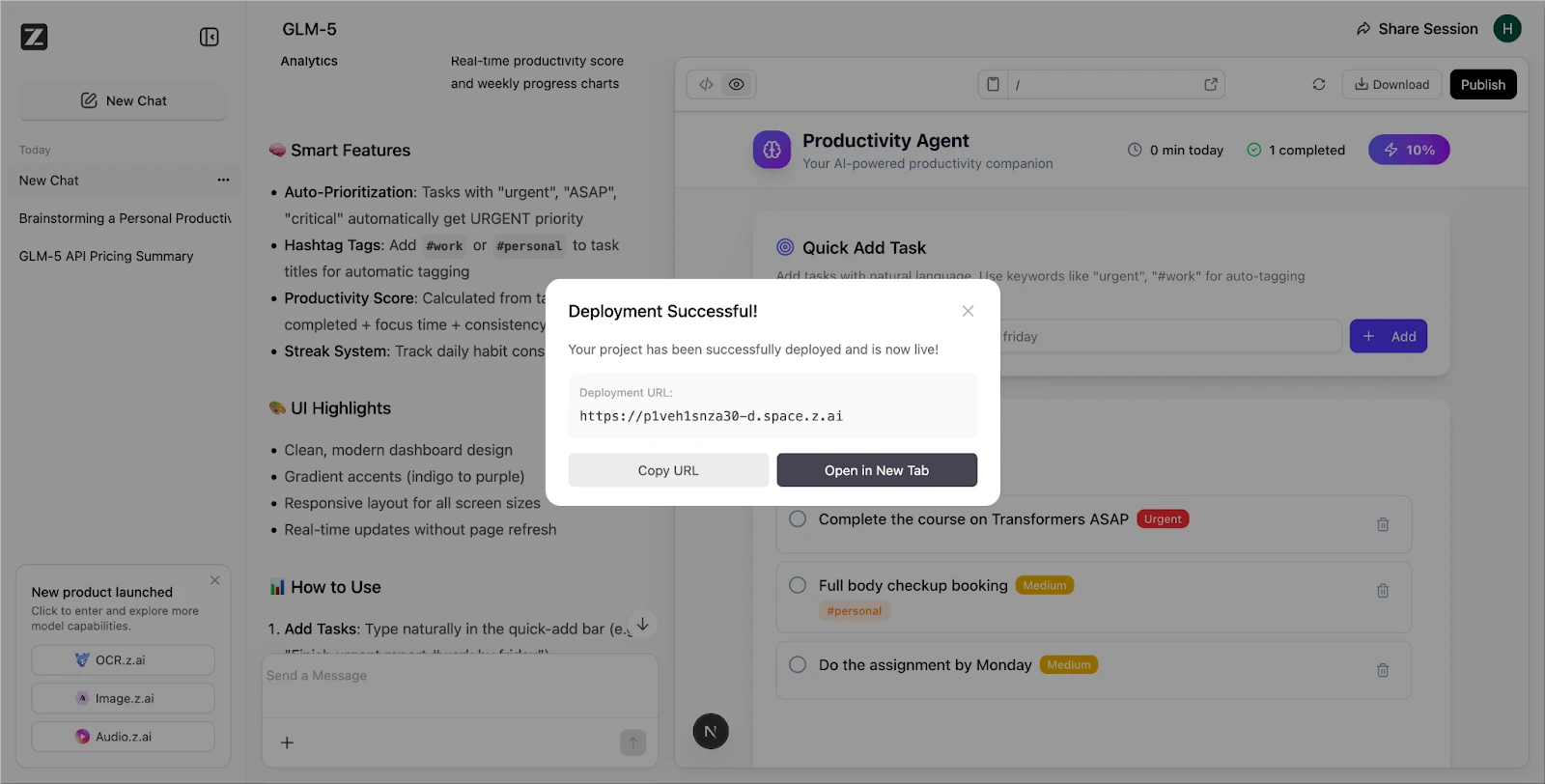
The Z.ai platform makes deployment incredibly simple. After the AI has been built, no complicated configuration files or shell scripts are to be maintained. The only thing you need to do to deploy the application is to press the “Publish” button in the upper right corner of the interface. This alone action will take care of the whole deployment. In a few seconds you have a pop-up containing a new unique URL and this adds up to your application being immediately available on the internet.
Link: https://p1veh1snza30-d.space.z.ai/
Testing the Application
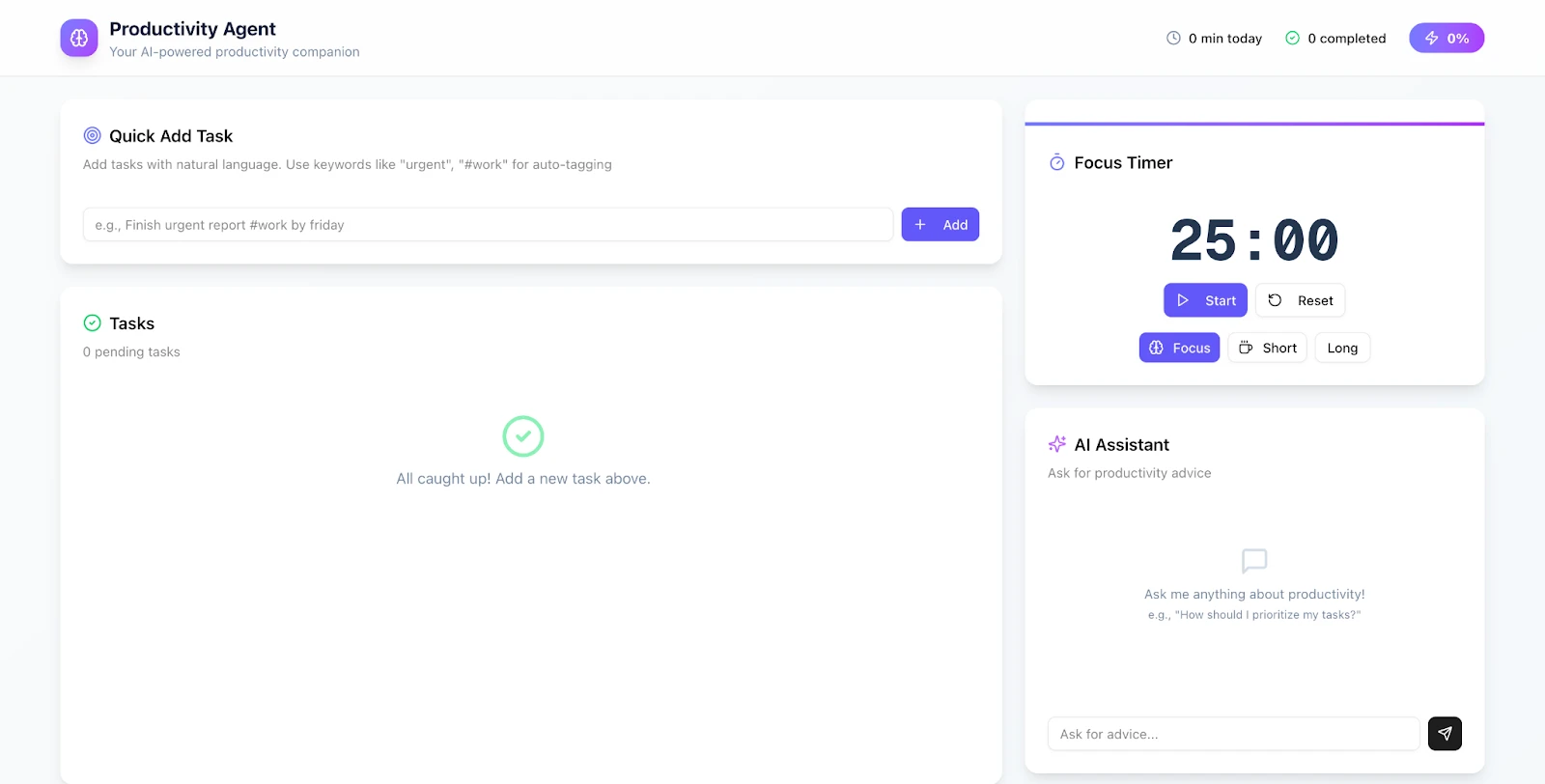
The app is live, so now it was time to test the main functions. The Quick Add Task was also functional. Typing Research about AI agents urgently opened a new task and used the priority tag Urgent, which was appropriate because it was typed in the correct key word as natural language. Another task was also introduced, and it is called Complete the assignments, which is displayed with a default priority of Medium.
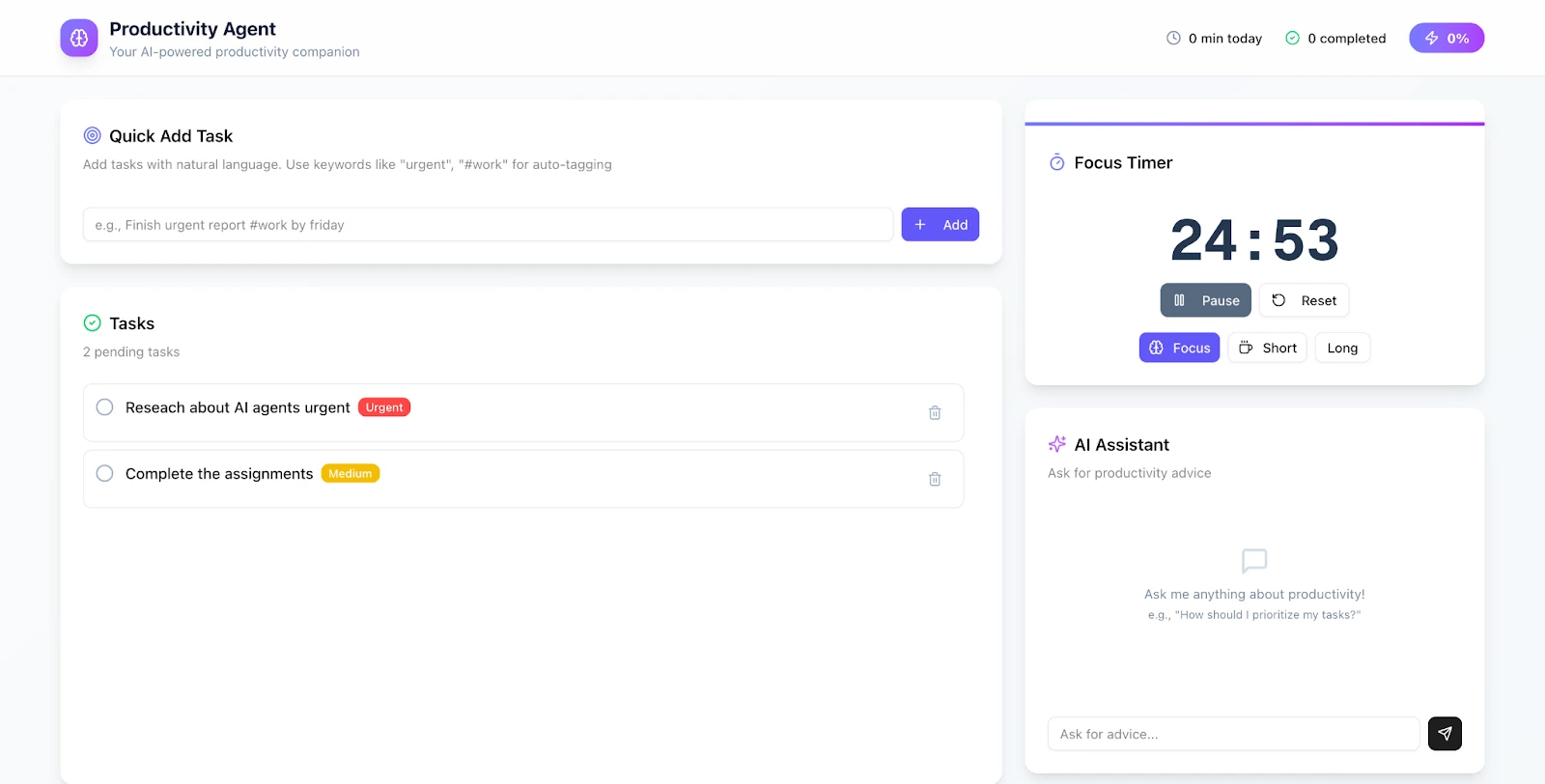
The Focus Timer was also useful. When the 25 minute Pomodoro timer was started by clicking the Start button, it started to count down as anticipated.
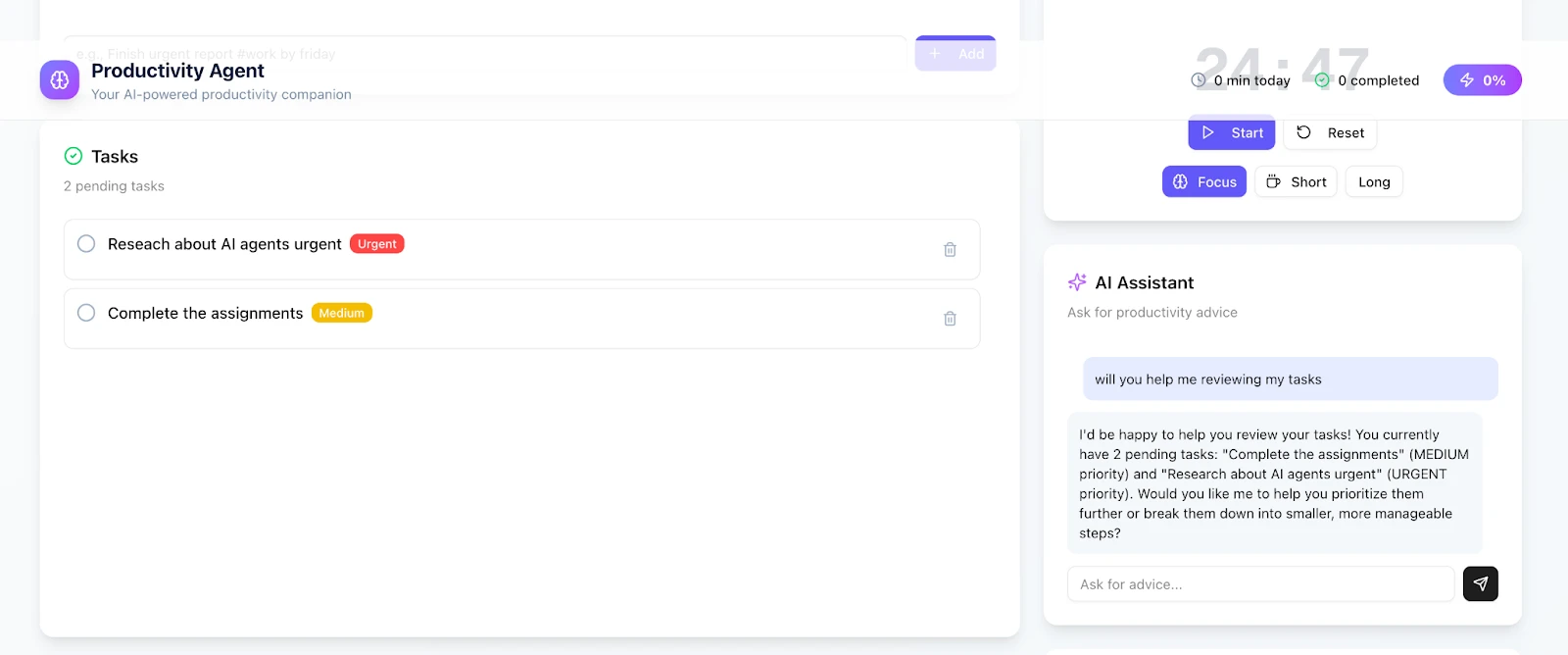
The best test was the “AI Assistant.” In response to the question, the assistant showed the actual context awareness when she responded, will you help me going through my tasks. It was very specific in enumerating the two tasks that were pending along with their priorities. It then voluntarily offered to assist in giving them a higher priority or subdividing them into smaller steps displaying the smart and helpful aspect that was in the original plan.
Conclusion
This five minute cycle of development is not just a new thing but is an indicator to a new phase in the development of software. This is a realistic (and, possibly, a conservative) estimate, based on the experience with GLM-5. These tools also have the benefit of automating the tedious work of code, debug, and deploy, allowing human developers to concentrate on doing what is important. Software does not aim to replace software developers, but rather enable them with extraordinarily powerful AI assistance.
Frequently Asked Questions
Q1. What is the GLM-5 AI model?
A. GLM-5 is a very strong model of foundation which is Z.human. It focuses on agentic tasks and complex coding, which makes it create applications independently.
Q2. What is the Z.ai platform?
A. The Z.ai platform is a combined development platform. It also offers access to models of Z.ai, such as GLM-5, through building, testing, and deployment of AI applications.
Q3. How long did it take to build the personal productivity agent?
A. It took around five minutes to generate the original idea up to a deployed and working application.
Harsh Mishra is an AI/ML Engineer who spends more time talking to Large Language Models than actual humans. Passionate about GenAI, NLP, and making machines smarter (so they don’t replace him just yet). When not optimizing models, he’s probably optimizing his coffee intake. 🚀☕