OpenAI has introduced ChatGPT Go, its most affordable subscription yet, priced at just ₹399 per month. On the surface, it’s another subscription tier. But if you look closer, it’s a strategic bet: India isn’t just a market anymore; it’s the launchpad for OpenAI’s global growth ambitions. This article will go over the ChatGPT Go subscription, what it offers, and how it fares with their other plans.
TLDR: Don’t have the time for an article? Watch the following short:
Table of contents
What ChatGPT Go Offers?
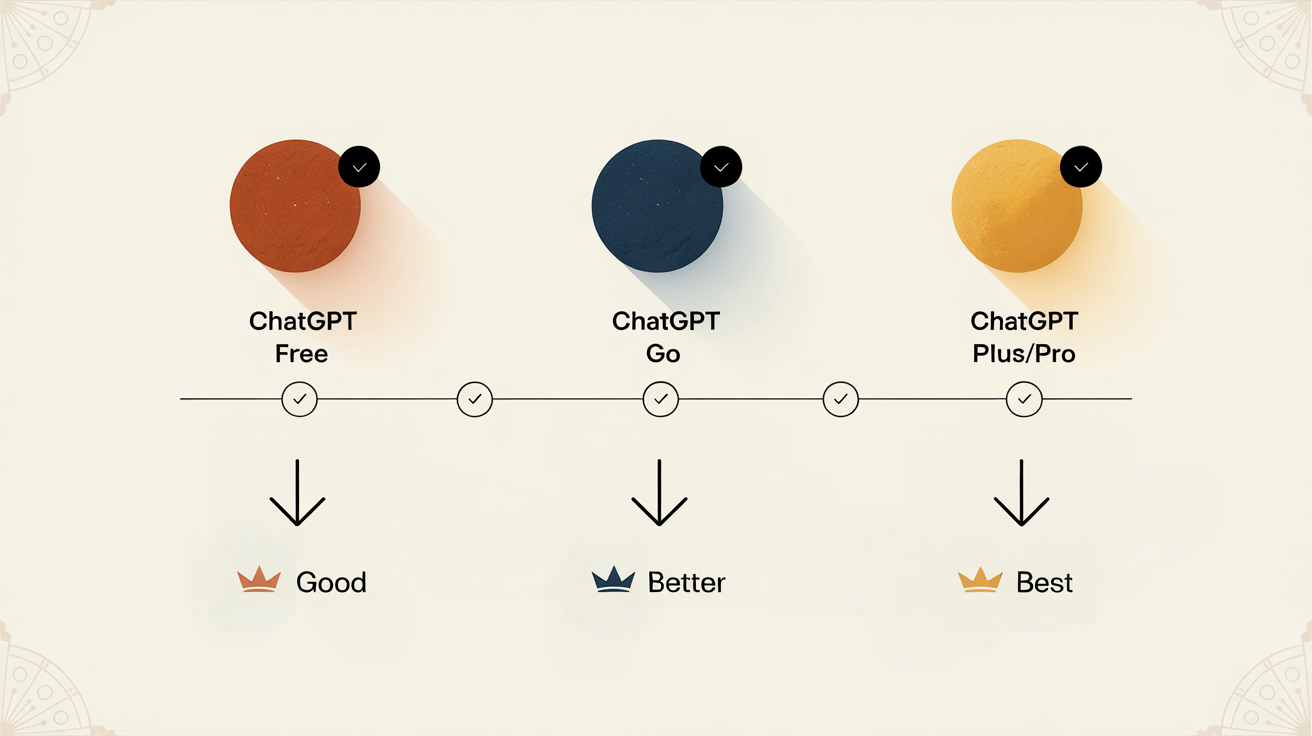
ChatGPT Go sits right between the free plan and the higher-end ChatGPT Plus/Pro options. The idea is simple: give users more power and flexibility than the free version, without the heavier costs that often feel out of reach due to their pricing.
| Plan | Price in India |
|---|---|
| ChatGPT Go | ₹399/month (~$5) |
| ChatGPT Plus | ₹1,999/month (~$20) |
| ChatGPT Pro | ₹19,900/month (~$200) |
Here’s what’s inside the plan:
- 10x higher message limits compared to free users
- 10x more image generations per month
- 10x more file uploads, which is huge for professionals who deal with PDFs, datasets, or lengthy documents
- Double the memory capacity, so the model remembers more context and gives smoother, more personalized responses
At less than the cost of a monthly OTT subscription, Go makes “premium-level” AI accessible to students, freelancers, creators, and professionals who don’t want to stretch to Plus at $20 (about ₹1,660, excluding taxes).
Why India First?
The India-first rollout wasn’t random. It’s the result of three overlapping trends:
- Rapid AI adoption: India has one of the fastest-growing pools of AI users. Whether it’s students using GPT for assignments, coders prototyping projects, or businesses automating workflows, demand is exploding.
- English-speaking + mobile-first base: Unlike many markets where language diversity is a barrier, India’s English fluency and smartphone penetration make it a fertile ground for AI tools.
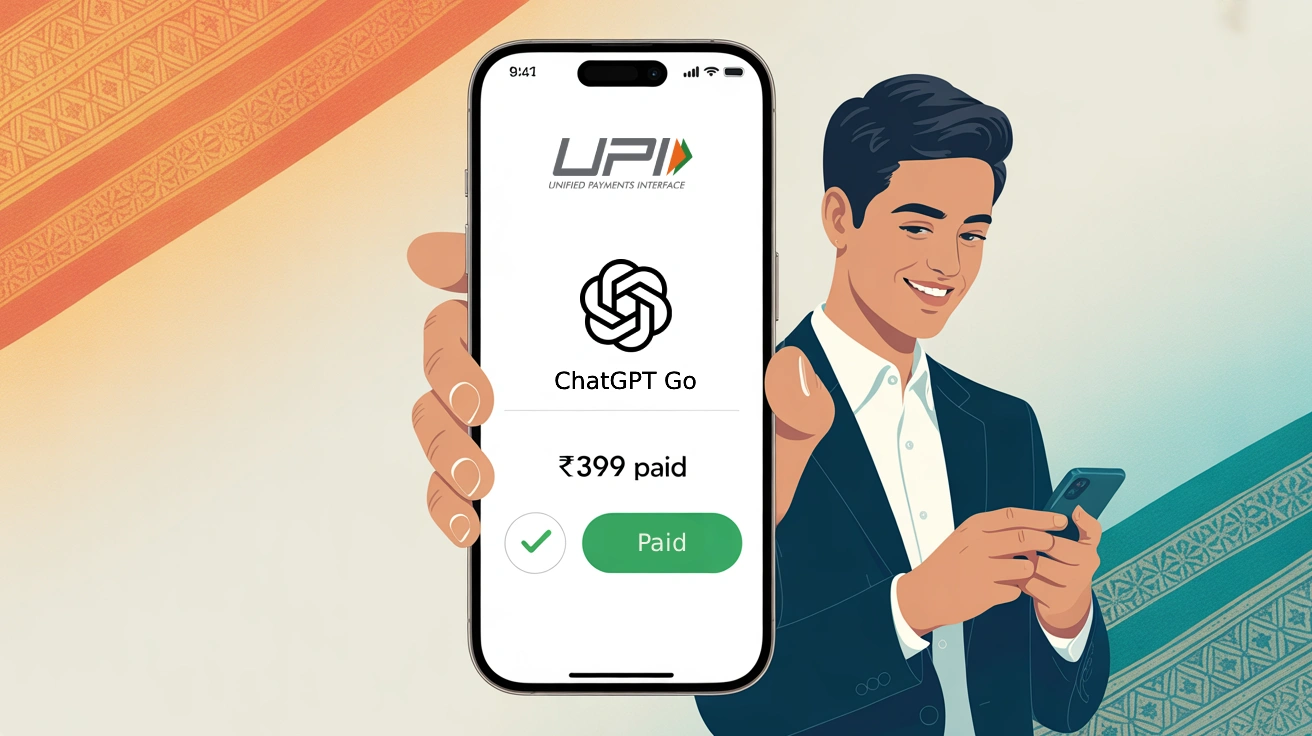
- Payments designed for India: This is the big one. OpenAI integrated UPI payments for Go. That’s critical because most Indians don’t rely on credit cards the way US or European users do. UPI makes the subscription one tap away, instead of a payment headache.
This isn’t just about affordability—it’s about accessibility. By lowering both the price point and the payment friction, OpenAI has opened the floodgates to tens of millions of potential users.
The Bigger Picture
There’s a larger strategy at play here. ChatGPT Go signals OpenAI’s response to two clear pressures:
- Affordability gap: At $20, ChatGPT Plus is priced for Western markets. The $20 in India feels premium, even elitist. A student or early-career professional might find ₹399 manageable, but ₹1,660 per month? That’s a leap.
- Local competition: Indian startups like Krutrim, Sarvam AI, and players backed by big tech (think Jio or Google) are already pushing low-cost AI products. If OpenAI stuck with Western pricing, it risked losing ground in a market too big to ignore.
By positioning Go as a cheaper alternative, OpenAI can expand its user base while keeping Plus and Pro as aspirational upgrades. It’s a textbook funnel strategy in place, designed to capture users at every price point.
For Users: Why This Matters?
Here’s what this means if you’re in India:
- Students: Cheaper access to AI means study aids, essay drafts, coding help, and even research exploration without breaking the bank.
- Freelancers & creators: With higher file and image limits, you can run workflows that were previously locked behind Plus. Think of drafting proposals, generating visuals, or analyzing large datasets.
- Professionals: Doubling memory capacity makes ChatGPT more practical for ongoing projects, where context matters across multiple sessions.
At ₹399, Go hits that sweet spot of “high utility without high cost.”

The fact that OpenAI is testing this model in India first says something bigger. India isn’t just a consumer market, it’s a sandbox for global strategy. If Go works here, expect to see similar offerings in price-sensitive markets like Brazil, Indonesia, or Africa.
It also highlights a shift in how global tech companies view India. It’s no longer just “outsourcing” or “emerging markets.” It’s where new products are launched, refined, and scaled before going global.
Hands-On
If you want to see what ChatGPT Go can do, here’s a quick hands-on section. Even though there are no new models offered by this subscription, the extended usage limits can surely be put to use. This will give you a direct sense of whether Go’s doubled memory and boosted limits feel worth the subscription.
Writing Test
Prompt: “Write a blog post about paraprosdokians in under 500 words. Also, create a LinkedIn post based on the above information.”
Response:
Observation: The response had a convincing blog content along with a riveting LinkedIn post in it. The model was able to decipher a complex topic into digestible bits, while being factually correct and consistent in terms of formatting.
Data Test
Prompt: “Summarize the key findings from the previous database in plain English. Also, visualize the important insights.”
For demonstration purposes, we’d be using this publicly available Kaggle dataset.
Response:
Observation: The response was satisfactory, and the illustrations were on point and easy to follow. The time it took for the model to analyze and respond was far less than if done using the free version.
Image Test
Prompt: “Create a logo concept for my brand on comic books.”
Response:

Observation: A cliché image was made in response to our query. But the image generation process was fast, and could be prompt-engineered to get a satisfactory image without running into rate limits.
Final Thought
ChatGPT Go isn’t just a cheaper subscription. It’s OpenAI’s signal that AI has to adapt, and not for us to adapt to the AI. India, with its scale, price sensitivity, and digital-first habits, is the perfect place to test that. If Go succeeds, it won’t stay India-only for long, as the company promises gradual availability worldwide.
This may not be of interest to the users holding on to the Pro or Plus accounts. But for an economically challenged person, this could come in handy.
Read more: ChatGPT Agent is here!
Frequently Asked Questions
Q1. What is ChatGPT Go?
A. ChatGPT Go is OpenAI’s new budget-friendly subscription in India, priced at ₹399/month. It offers higher usage limits and more features than the free plan, but is cheaper than ChatGPT Plus.
Q2. What does ChatGPT Go include
A. Subscribers get 10x more messages, image generations, and file uploads than free users, plus double the memory capacity for smoother, more contextual conversations.
Q3. Why was India chosen first for ChatGPT Go?
A. India has rapid AI adoption, a large English-speaking mobile-first user base, and widespread UPI payments, making it the ideal testing ground for affordability and accessibility.
Q4. How does Go compare to ChatGPT Plus?
A. At ₹399, Go is far cheaper than Plus (₹1,660). It offers extended limits and memory but doesn’t include newer model access, which remains exclusive to Plus/Pro users.
Q5. Who benefits most from ChatGPT Go?
A. Students, freelancers, and professionals in India. It makes AI affordable for studying, content creation, data analysis, and project workflows without the higher costs of Plus.
I specialize in reviewing and refining AI-driven research, technical documentation, and content related to emerging AI technologies. My experience spans AI model training, data analysis, and information retrieval, allowing me to craft content that is both technically accurate and accessible.