The generative AI headlines scream about parameter counts, but the quiet revolution of 2025 is: plumbing? Three protocols: Google’s Agent Payments Protocol (AP2), the open Agent-to-Agent Protocol (A2A), and the Model Context Protocol (MCP), are being hard-wired into checkout SDKs, cloud marketplaces, and IDE plug-ins. They let an LLM spend your money, negotiate with a stranger online, and pull live data without a custom REST wrapper. If you build software that talks to other software, these pipes will soon sit in your critical path. Miss the difference, and you will spend the next six quarters gluing code while competitors ship features in a sprint. This article will help you figure out the difference between the three AI communication protocols and will help you recognize them in the future.
Table of contents
What is AP2 (Agent Payments Protocol)?
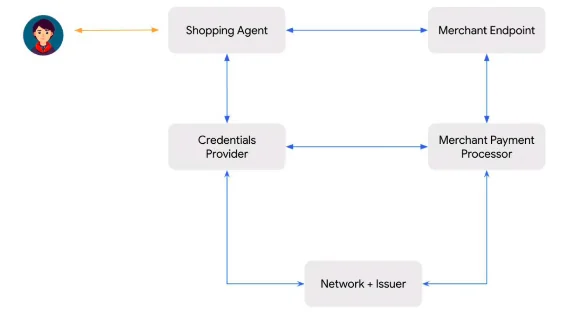
AP2 is a publicly available protocol developed in collaboration with leading payment and technology companies to securely initiate and transact agent-led payments across various platforms. This protocol is also appropriate for supplementing the Agent2Agent (A2A) protocol and Model Context Protocol (MCP). Together with existing industry rules and standards, this protocol will also serve as a payment-agnostic framework that provides users, merchants, and payment providers the ability to transact with confidence across all payment methods.
Read more: Google’s Agent Payments Protocol (AP2): The New Way AI Agents Pay for You
What is A2A (Agent-to-Agent Protocol)?
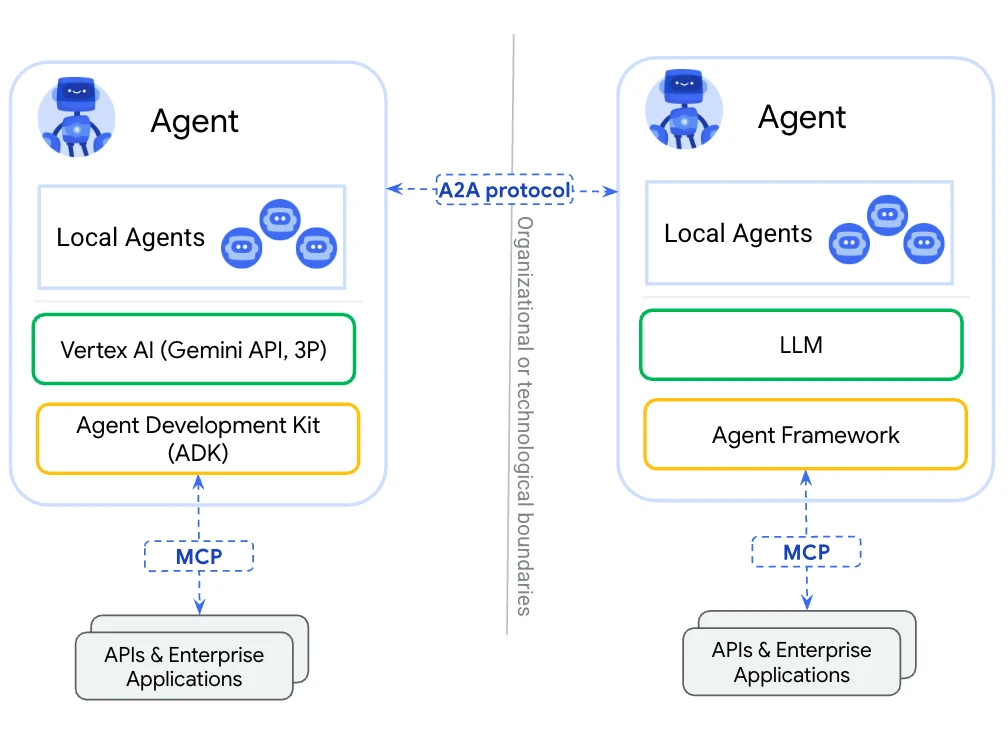
The Agent-to-Agent (A2A) Protocol directly tackles the communication gap in an agentic ecosystem. It offers a standard way for AI agents to connect. Using this protocol, agents can find out what other agents do, share information safely, and coordinate work across different company systems. Google Cloud started A2A with help from over 50 partners like Atlassian, Langchain, Salesforce, SAP, and ServiceNow. This joint effort shows a strong push towards making agents work better together.
Read more: Agent-to-Agent Protocol: AI Communication Protocols
What is MCP (Model Context Protocol)?
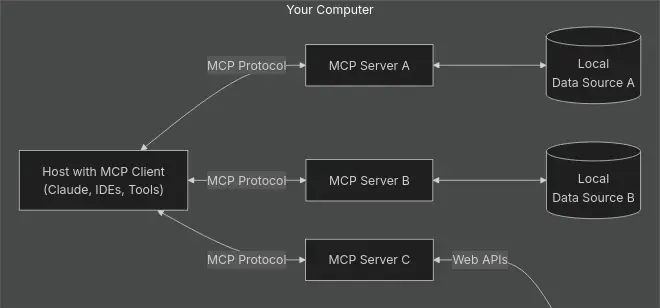
MCP is an open standard that creates secure, two-way connections between your data and AI-powered tools. Think of it like a USB-C port for AI applications—a single, common connector that lets different tools and data sources “talk” to each other.
- For AI Tools: With MCP, your AI models can access the exact information they need, no matter where it’s stored.
- For Developers: Instead of writing a custom connector for each new data source, you can build against one standard protocol.
Read more: Model Context Protocol (MCP): A Universal Connector for AI and Data
The Strategic Layers: Money, Trust, and Data
Before we dive into a side-by-side comparison of the AI communication protocols, it’s crucial to understand the strategic layer each protocol operates on. They aren’t just different technologies; they solve fundamentally different business problems. Think of them as layers in a new AI-native stack:
- AP2: The Money Layer. This protocol is exclusively concerned with the transfer of value. Its entire design, including mandate chains, cryptographic signatures, and regulatory alignment, is built to answer one question: “Can I safely and legally spend money on behalf of a user?” It’s a specialized, high-stakes protocol for commerce.
- A2A: The Trust Layer. A2A operates at a level above simple transactions. It’s about establishing verifiable agreements between autonomous entities. It answers the question: “How can two agents prove what they promised each other?” Its focus on DIDs, signed agreements, and auditable message chains is built for negotiation, collaboration, and accountability. It moves promises, not just funds.
- MCP: The Data Layer. MCP is the most foundational layer. It’s the universal connector that allows an LLM to perceive and interact with the digital world. It answers the question: “How can a model get the live information it needs to think, and how can it act on its conclusions?” It’s the plumbing that makes a static model a dynamic, context-aware agent.
Understanding these distinct roles, “Money, Trust, and Data,” is the key. They aren’t competing standards. They are complementary protocols designed to be stacked on top of each other to enable complex, end-to-end agentic workflows. Now, with this strategic context in mind, let’s look at how their technical specifications differ.
Comparison Table
| Layer | AP2 | A2A | MCP |
|---|---|---|---|
| Who talks | agent ↔ money rail | agent ↔ agent | LLM ↔ external data source |
| Transport | TLS 1.3 + signed mandates | TLS 1.3 + Noise | HTTPS/HTTP 2 |
| Payload | JSON mandate objects | JSON + signed blobs | JSON-LD context |
| Auth | mTLS + verifiable mandates | DIDs + verifiable credentials | OAuth 2 + JWT |
| Latency target | human-think (checkout) | WAN (<100 ms) | human-think |
| OSS repo | github.com/google/ap2 | github.com/open-a2a/a2a | github.com/modelcontextprotocol |
One Prompt, All 3 Pipes
User: “Plan my Tokyo trip and book it under ₹ 80k.”
- LLM uses MCP to pull live flights from Google Flights.
- LLM spawns travel-agent; hotel-agent negotiates bundle over A2A (signed offers).
- Travel agent creates a cart, user taps “Book”, and AP2 mandates move money via UPI.
Total human time: 20 seconds.
Conclusion
If money moves, route the flow through AP2 and let the signed mandate do the compliance talking. Two pieces of code must agree on who does what, let A2A handle the handshake and the receipts. If the model simply needs fresh facts or the power to act on them, expose an MCP endpoint and walk away. Nail these three decisions once, and your roadmap will finally talk about user value instead of adapter classes.
Hopefully, this article assists in demystifying the three elusive communication protocols. A good understanding of the three would prove valuable going forward.
Read more: What is the Difference Between A2A and MCP?
Frequently Asked Questions
Q1. Do I need to implement all three AI communication protocols in every product?
A. No. Use AP2 only when funds move, A2A only when two agents negotiate, and MCP only when the LLM needs live data. Most products start with MCP and add the others as soon as money or cross-org trust appears.
Q2. Which protocol carries the heaviest compute overhead?
A. A2A. DID signature chains and artefact hashing add ~5 ms per hop on LAN and ~50 ms on WAN, but save days of audit work later.
Q3. Can AP2 work with existing payment gateways?
A. Yes. Gateways expose a mandate verification endpoint; if the mandate chain hash matches the auth request, they process it like a normal card/UPI transaction.
Q4. Is MCP secure enough for PII or PHI data?
A. MCP rides on OAuth 2 + TLS 1.3 and inherits the scopes of the underlying API. Add row-level encryption and signed JWTs if you move PHI.
Q5. Will these protocols merge into one super-standard?
A. Unlikely. They solve orthogonal problems (money, trust, data). Expect bridges (e.g., MCP calling A2A for signed delivery) rather than a monolith.
I specialize in reviewing and refining AI-driven research, technical documentation, and content related to emerging AI technologies. My experience spans AI model training, data analysis, and information retrieval, allowing me to craft content that is both technically accurate and accessible.