There’s a lot of noise right now making it seem like you have to pick a side between MCP and Agent Skills. It’s being framed like a high-stakes rivalry, but that’s a total misunderstanding of the tech.
Skills and MCP is fundamentally different things. Skills are just a prompt loaded on demand, while MCP is Client-Server communication protocol.
To give you an analogy:
- MCP is the Infrastructure: It’s the universal adapter that connects agents to the world.
- Skills are the Playbooks: It’s the packaged intelligence that tells an agent how to behave.
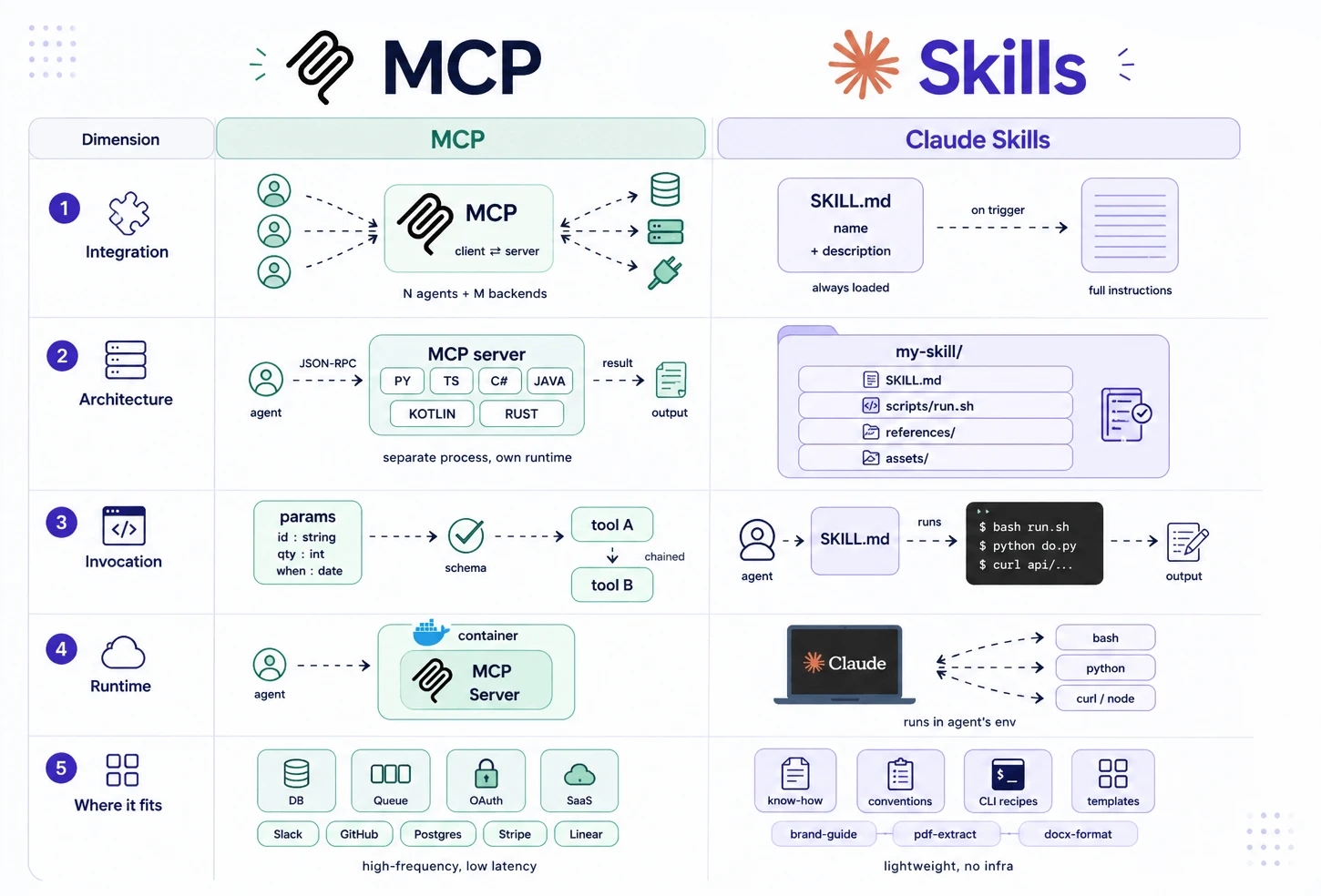
Table of contents
1. Integration: The N×M vs The Trigger
The first dimension is about how the agent connects to its world.
- MCP (Standardized Bridge): MCP solves the “N×M” problem. If you have 5 agents and 5 backends (Slack, GitHub, SQL), you shouldn’t write 25 integrations. MCP acts as the universal client-server bridge. One server talks to every agent.
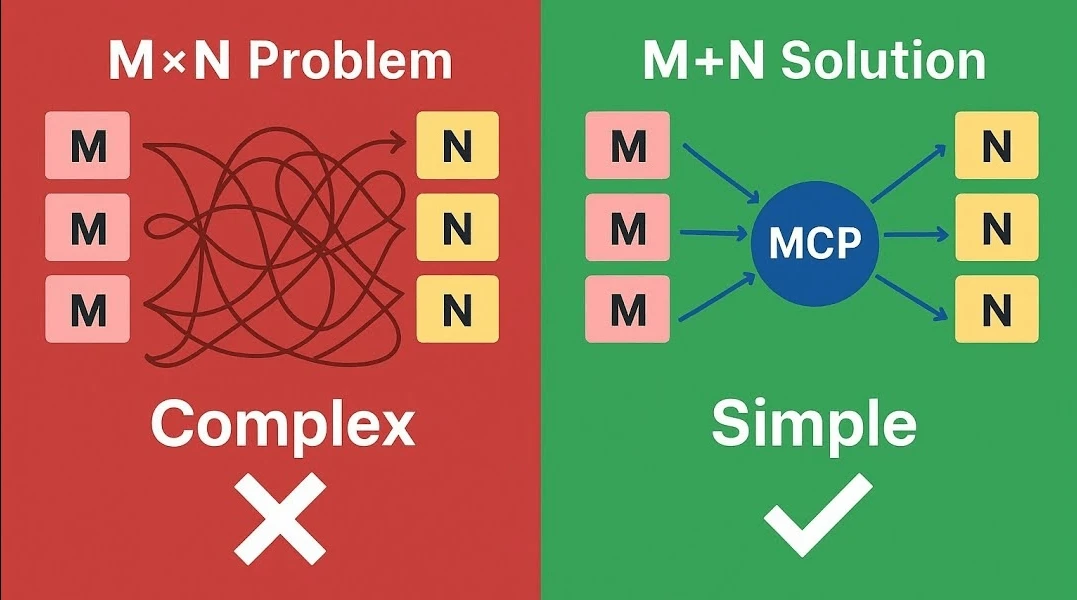
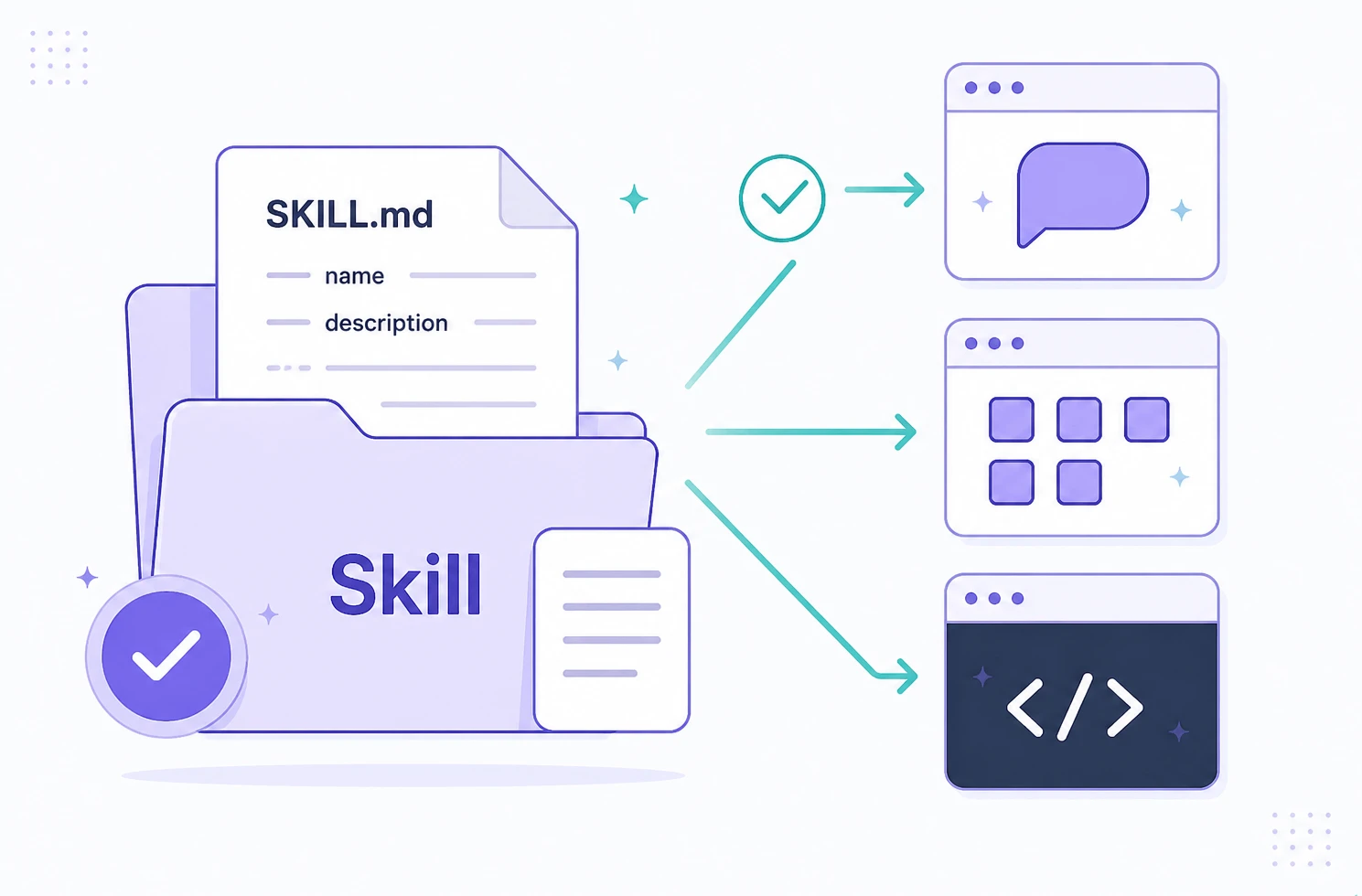
- Agent Skills (On-Demand Knowledge): Skills are about triggering. A skill like SKILL.md stays loaded in a lightweight state until a specific user request triggers the “full instructions.” It’s a pull-mechanism for intelligence.
2. Architecture: Service vs Filesystem
How is the capability actually built and hosted is a problem to which MCP and Skills have different solutions:
- MCP (Separate Process): An MCP server is a real piece of backend infrastructure. It can be written in Python, Go, or Rust, runs in its own process, and has its own runtime. It is robust and permanent.
- Agent Skills (Local Folders): A skill is just a folder on a disk. It contains a
SKILL.mdfor logic, ascripts/folder for execution, and anexamples/folder for documentation. It’s lightweight and lives inside the agent’s immediate environment.
my-skill/
├── SKILL.md           # Main instructions (required)
├── template.md        # Template for Claude to fill in
├── examples/
│   └── sample.md      # Example output showing expected format
└── scripts/
    └── validate.sh    # Script Claude can execute
3. Invocation: Structured Schemas vs Flexible Scripts
How does the agent actually “call” the capability?
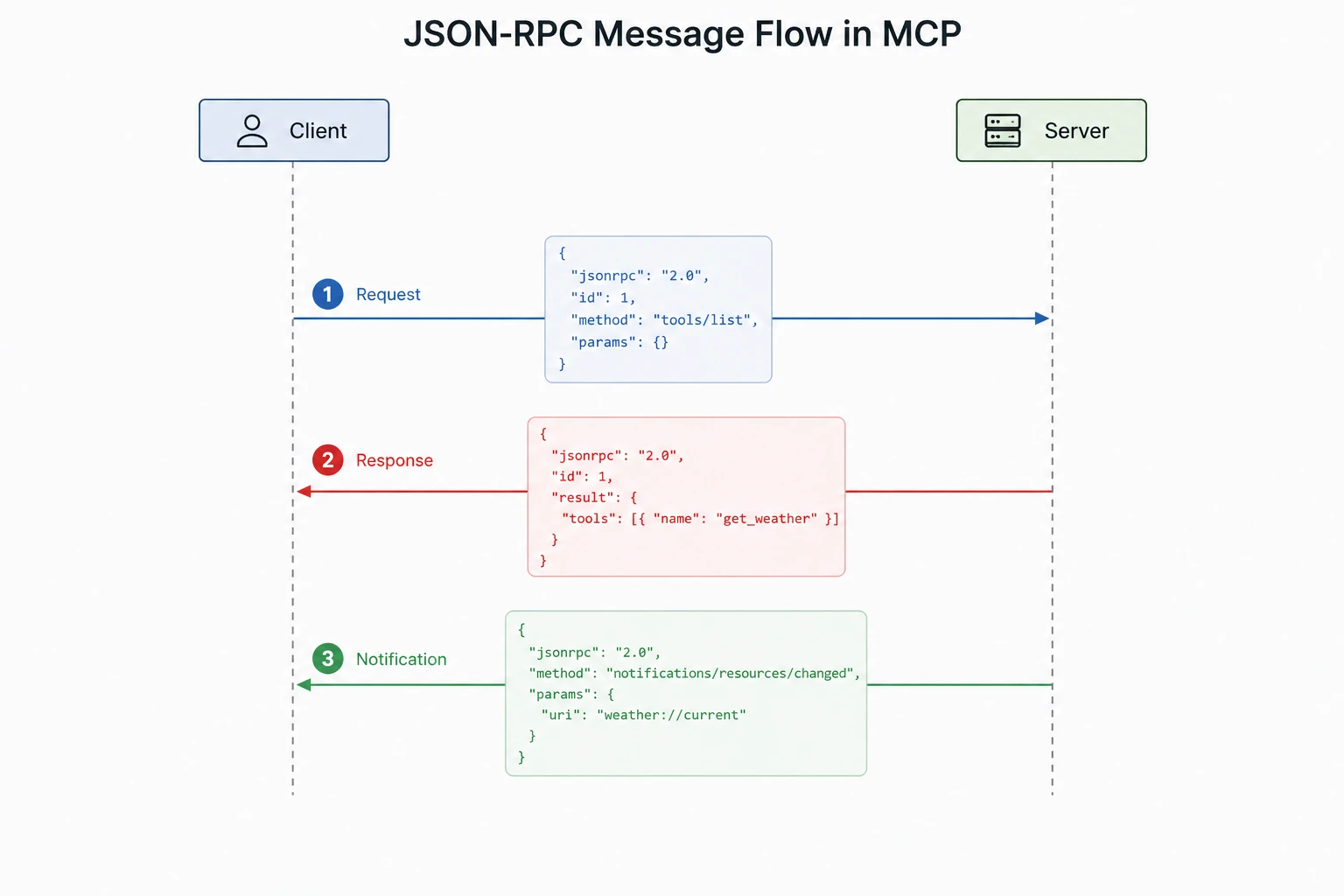
- MCP (Typed & Chained): MCP uses strict JSON-RPC. It requires defined parameters (strings, ints, dates). This allows for Tool Chaining, where Tool A’s output becomes Tool B’s input with zero room for error.
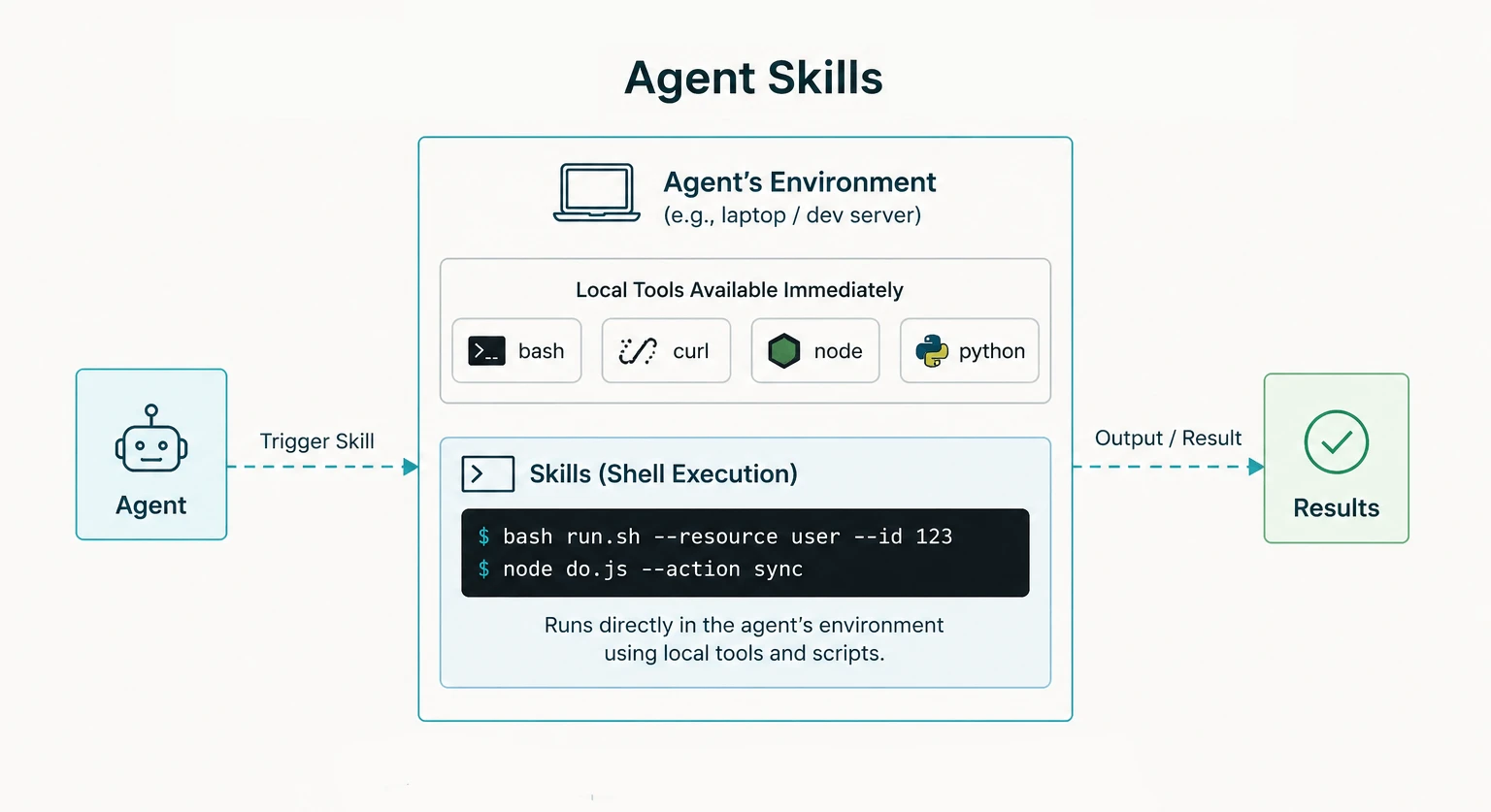
- Agent Skills (Shell Execution): Skills are flexible. When a skill is triggered, the agent simply runs a command in the shell (
bash run.shorpython do.py). It’s looser, faster to build, and great for quick automation.
4. Runtime: Isolated Containers vs Shared Environments
Where does the code actually execute?
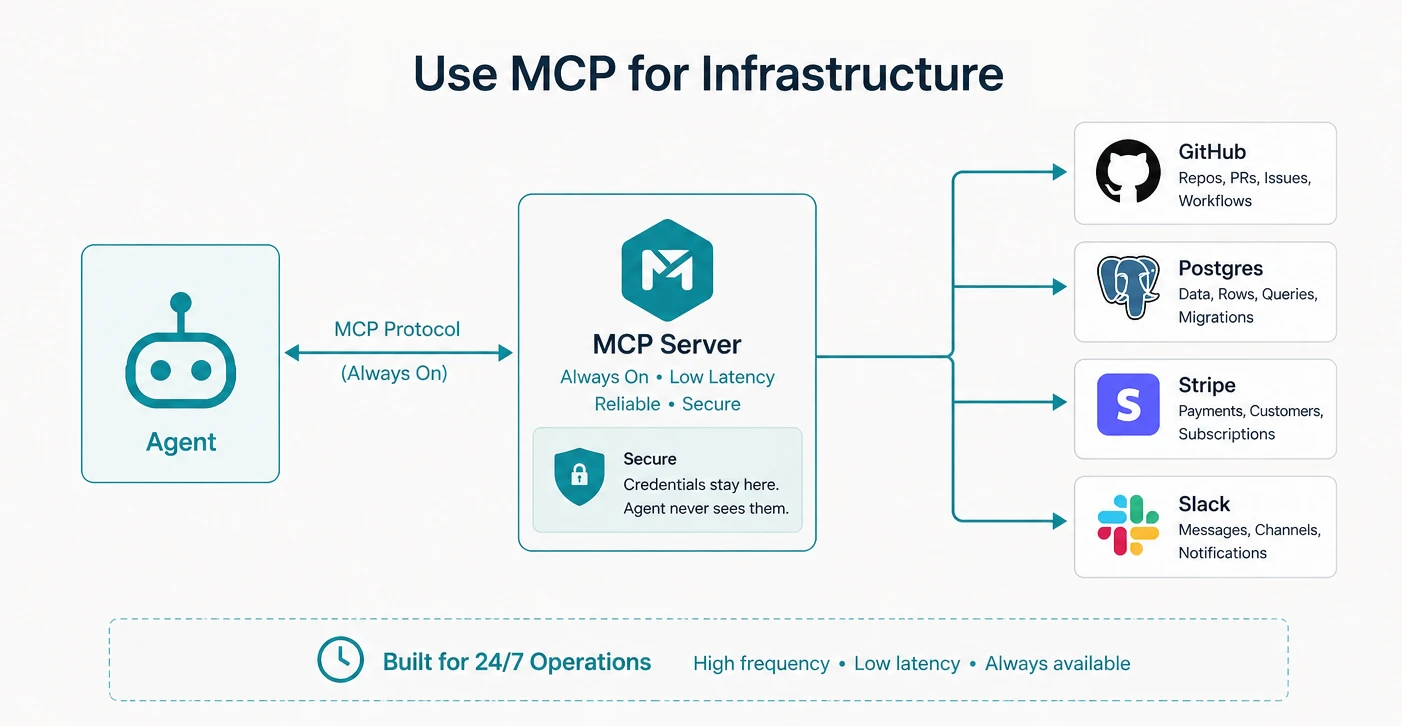
- MCP (Isolated Container): MCP servers usually run in their own containers. This provides a “security chokepoint.” The agent doesn’t need to see your database credentials (only the MCP server does).
- Agent Skills (Agent’s Env): Skills run directly in the agent’s environment (like your laptop or a developer server). This is incredibly fast and allows the agent to use local tools like curl or node immediately.
5. Where It Fits: High-Frequency vs Lightweight
When do you choose which?
- Use MCP for Infrastructure: High-frequency, low-latency operations. Use it for GitHub, Postgres, Stripe, and Slack. It’s for the “plumbing” that your agent needs to reach 24/7.
- Use Skills for Behaviors: Lightweight tasks that don’t need infra. Use it for Brand Guides, PDF Extraction, CLI Recipes, and Document Templates. It’s for the “playbooks” that teach your agent how to act.
The Bottom Line: Scaling Systems vs Scaling Brains
Stop looking for a winner. MCP scales your systems. Agent Skills scale your agent’s behavior.
The most successful AI architects in 2026 are using the hybrid approach: They use MCP to give the agent a standardized “nervous system” to touch the world, and they use Skills to give the agent the “mental playbooks” to know what to do once it gets there.
If you aren’t using both, you’re building half an agent.
Read more: Top 5 Github Repositories to get 1000+ Agent Skills
Frequently Asked Questions
Q1. What is MCP in AI agents?
A. MCP is a client-server protocol that connects AI agents to external systems like APIs, databases, and tools.
Q2. What are Agent Skills?
A. Agent Skills are reusable prompt-based instructions that guide how an AI agent performs specific tasks or behaviors.
Q3. How are MCP and Agent Skills different?
A. MCP handles system integration, while Agent Skills define behavior and execution logic within the agent.
Q4. When should you use MCP vs Agent Skills?
A. Use MCP for backend integrations and Agent Skills for lightweight, on-demand task execution and workflows.
Q5. Why combine MCP and Agent Skills?
A. Combining both enables scalable AI agents with strong system connectivity and intelligent task execution.
Studying, evaluating, and explaining AI systems for over 6 years.
“𝘖𝘯𝘤𝘦 𝘮𝘦𝘯 𝘵𝘶𝘳𝘯𝘦𝘥 𝘵𝘩𝘦𝘪𝘳 𝘵𝘩𝘪𝘯𝘬𝘪𝘯𝘨 𝘰𝘷𝘦𝘳 𝘵𝘰 𝘮𝘢𝘤𝘩𝘪𝘯𝘦𝘴 𝘪𝘯 𝘵𝘩𝘦 𝘩𝘰𝘱𝘦 𝘵𝘩𝘢𝘵 𝘵𝘩𝘪𝘴 𝘸𝘰𝘶𝘭𝘥 𝘴𝘦𝘵 𝘵𝘩𝘦𝘮 𝘧𝘳𝘦𝘦. 𝘉𝘶𝘵 𝘵𝘩𝘢𝘵 𝘰𝘯𝘭𝘺 𝘱𝘦𝘳𝘮𝘪𝘵𝘵𝘦𝘥 𝘰𝘵𝘩𝘦𝘳 𝘮𝘦𝘯 𝘸𝘪𝘵𝘩 𝘮𝘢𝘤𝘩𝘪𝘯𝘦𝘴 𝘵𝘰 𝘦𝘯𝘴𝘭𝘢𝘷𝘦 𝘵𝘩𝘦𝘮.” — 𝖥𝗋𝖺𝗇𝗄 𝖧𝖾𝗋𝖻𝖾𝗋𝗍, 𝖣𝗎𝗇𝖾