AI research in 2025 was defined by major shifts. The industry moved beyond chatbots and into reasoning systems, autonomous agent and multimodal systems.
Last year, companies like Google DeepMind, OpenAI, Anthropic, Meta, DeepSeek, and NVIDIA pushed AI research into new territory with papers focused on reasoning, coding agents, reinforcement learning, and scalable safety systems.
Here are the top AI research papers of 2025 that every AI researcher, ML engineer, and GenAI builder should know.
| Rank | Paper | Organization | Category |
|---|---|---|---|
| 1 | DeepSeek-R1 | DeepSeek | Reinforcement Learning |
| 2 | Gemini 2.5 Technical Report | Google DeepMind | Multimodal Reasoning |
| 3 | Qwen 2.5 Technical Report | Alibaba Cloud | Open Frontier Models |
| 4 | Large Concept Models | Meta | Next-Gen Language Modeling |
| 5 | Towards Robust ESG Analysis Against Greenwashing Risks | Ant Group | AI for Sustainability |
| 6 | VideoWorld | NVIDIA | World Models / Robotics |
| 7 | The AI Scientist-v2 | Sakana AI | Autonomous AI Research |
| 8 | SWE-Lancer | OpenAI | AI Coding Agents |
| 9 | OLMo 2 | Allen Institute for AI | Open Language Models |
| 10 | Mixture-of-Recursions | Academic Collaboration | Efficient Reasoning |
Top 10 AI Research Papers
The papers below were selected based on technical novelty, industry influence and impact within the global AI community throughout 2025.
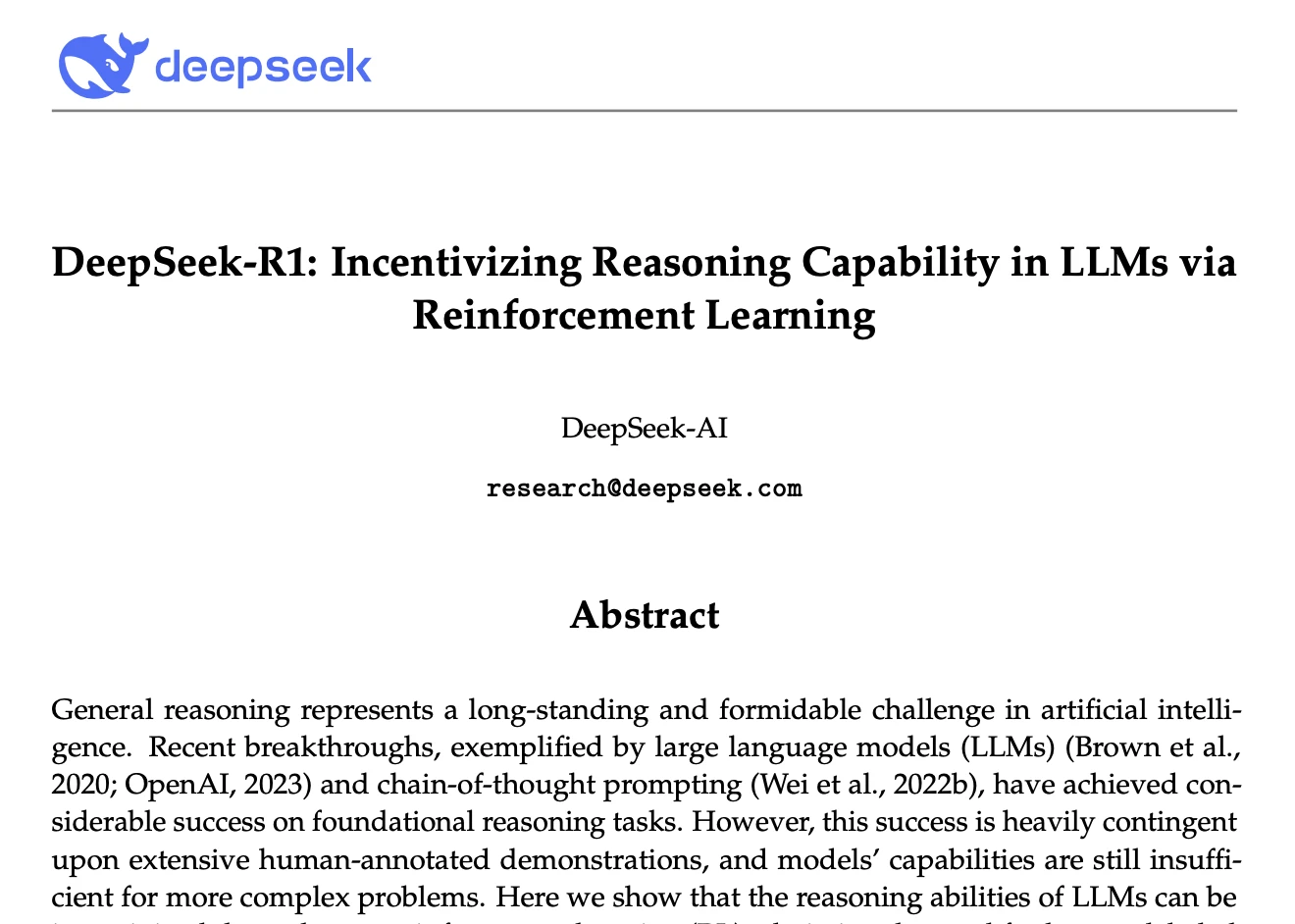
1. DeepSeek-R1: Reasoning Capability in LLMs
Category: Reinforcement Learning/Reasoning
The release of DeepSeek-R1 became one of the biggest open-model breakthroughs of 2025. This was groundbreaking as this research paper brought Reinforcement Learning as a model post-training approach to the public.
Before this, proprietary model companies like OpenAI, Anthropic, were using this technique for improving their models. DeepSeek was the model that first made the technique as well as its impacts public. The paper attracted massive attention for its mathematics, coding, and chain-of-thought reasoning abilities and brought to the limelight one of the most popular model architectures: Mixture-of-Experts (MoE).
It also intensified global discussion around China’s rapidly growing frontier AI ecosystem.
Outcome:
- Improved reasoning through reinforcement learning.
- Achieved strong performance in coding and mathematics.
- Became one of the most discussed open-model releases of 2025.
Full Paper: DeepSeek-R1 Paper
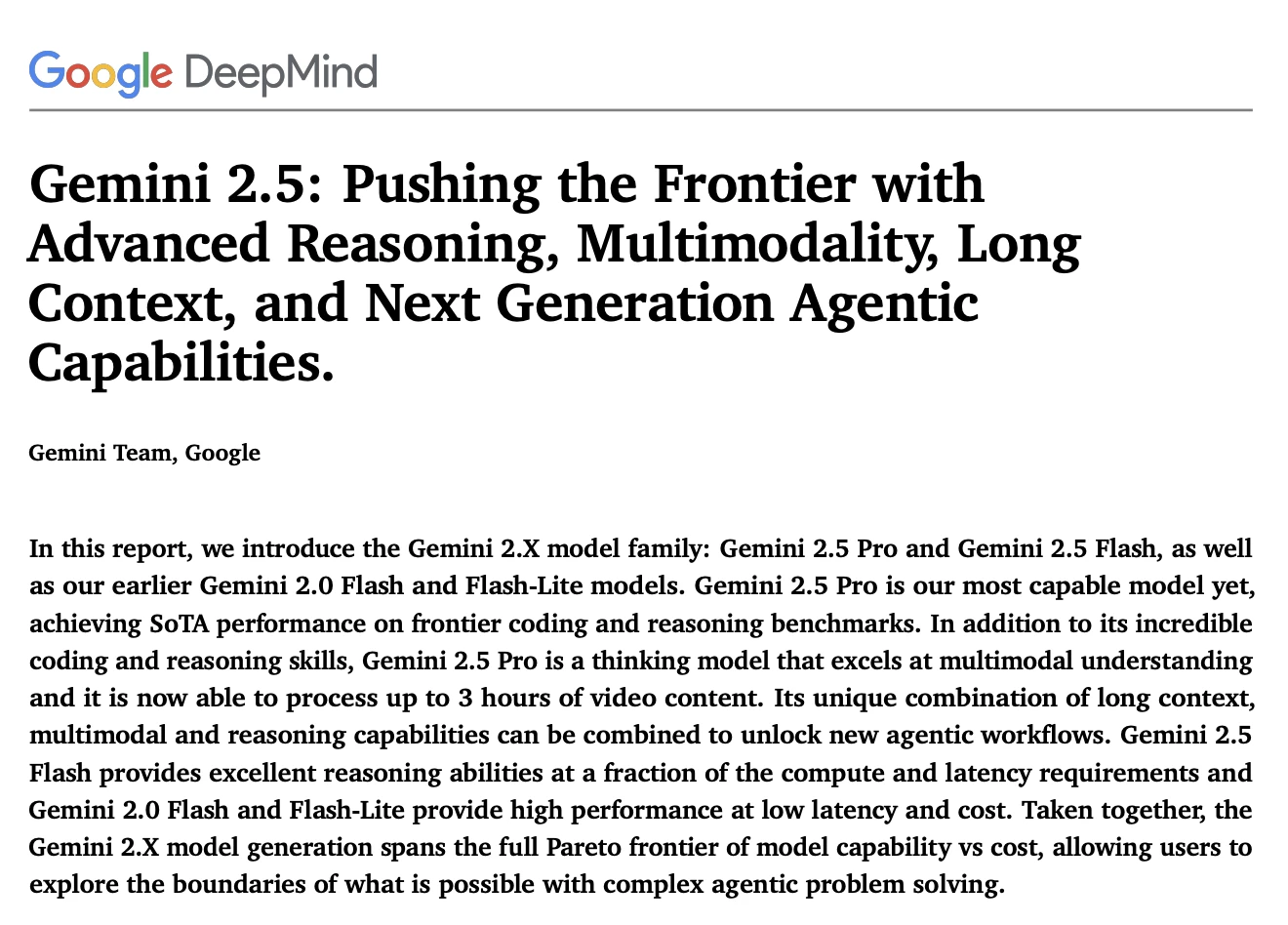
2. Gemini 2.5 Technical Report
Category: Multimodal Reasoning
Google DeepMind’s Gemini 2.5 paper became one of the biggest AI releases of 2025 because it marked a major transition from pure scaling toward reasoning-focused AI systems.
The report introduced major improvements in long-context reasoning, multimodal understanding, coding performance, and agentic workflows. One of the most talked-about additions was “Thinking Mode,” where the model performs extended internal reasoning before generating outputs.
The paper also paved the way for Gemini’s breakthrough in image generation via Nano Banana.
Outcome:
- Expanded multimodal understanding across text, video, and images.
- Supported extremely long context windows.
- Strengthened tool-use and agentic workflows.
Full Paper: Gemini 2.5 Technical Report
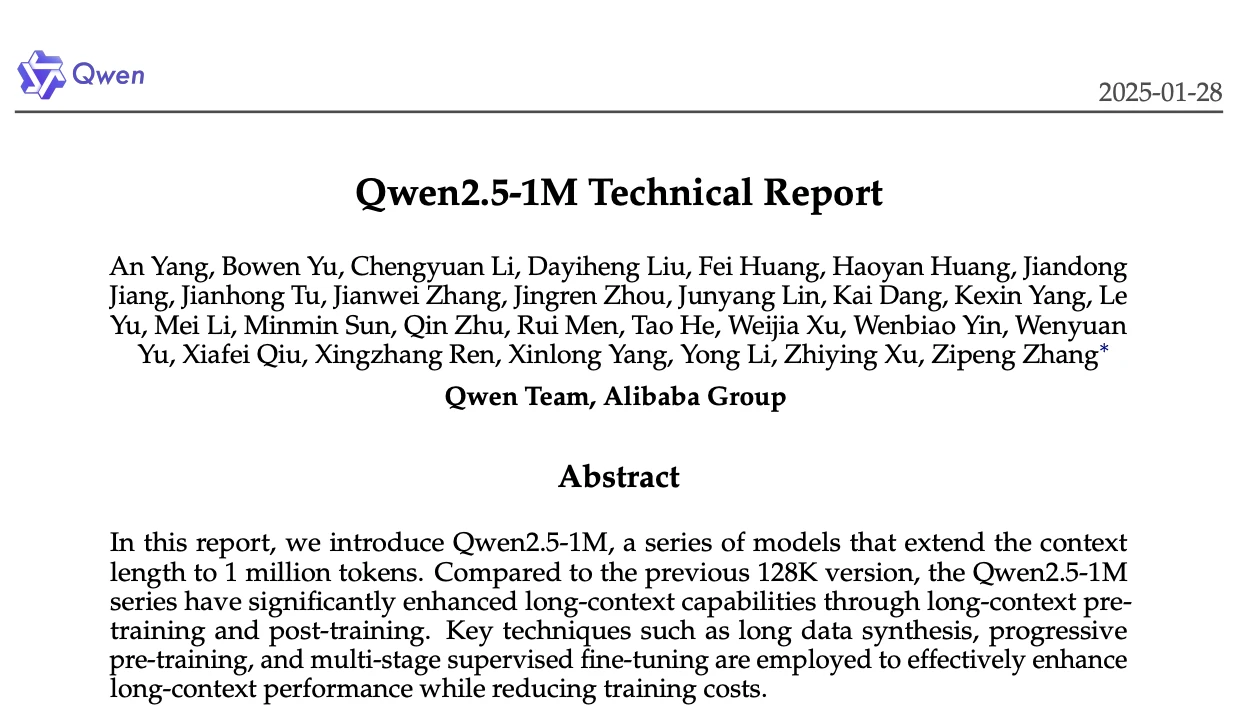
3. Qwen 2.5 Technical Report
Category: Open Frontier Models
Alibaba’s Qwen2.5 paper became one of the strongest open-model releases of 2025.
The report introduced improvements in multilingual reasoning, coding performance, long-context understanding, and brought architectures utilizing hybrid MoE to notice.
Qwen2.5 also strengthened China’s growing influence in frontier open-model development.
Outcome:
- Improved multilingual and reasoning performance.
- Expanded long-context capabilities.
- Strengthened open frontier AI competition.
Full Paper: Qwen2.5 Technical Report
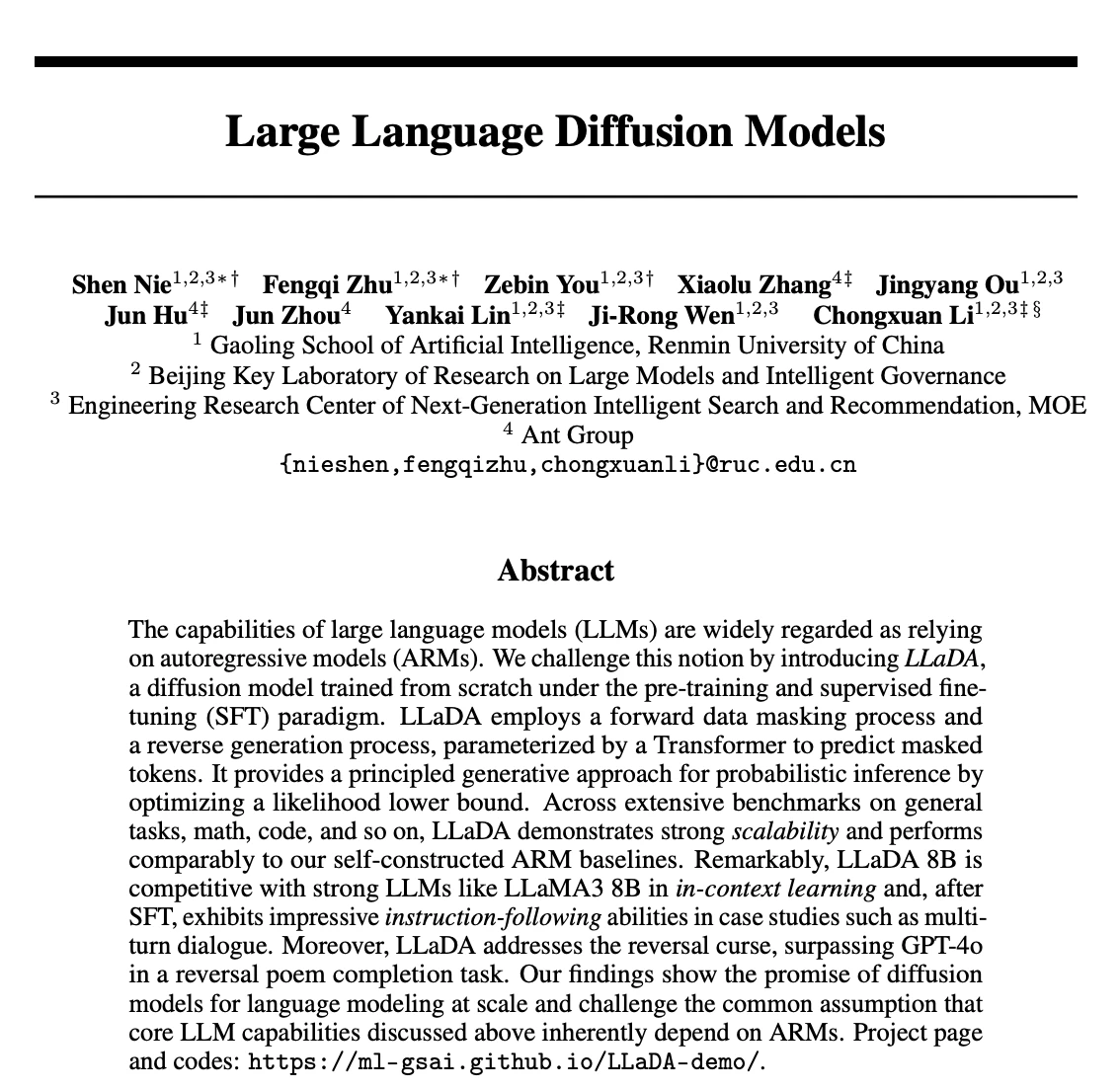
4. Large Language Diffusion Models
Category: Next-Generation Language Modeling
Large Language Diffusion Models paper explored an alternative to token-by-token text generation by modeling language at the sentence and concept level. The work became important because it suggested a possible future beyond standard autoregressive transformers.
Instead of predicting the next token, the model operates in higher-level semantic representation space.
Outcome:
- Explored concept-level language modeling.
- Reduced dependence on token-by-token generation.
- Proposed alternatives to standard transformer workflows.
Full Paper: Large Language Diffusion Models Paper
5. Towards Robust ESG Analysis Against Greenwashing Risks
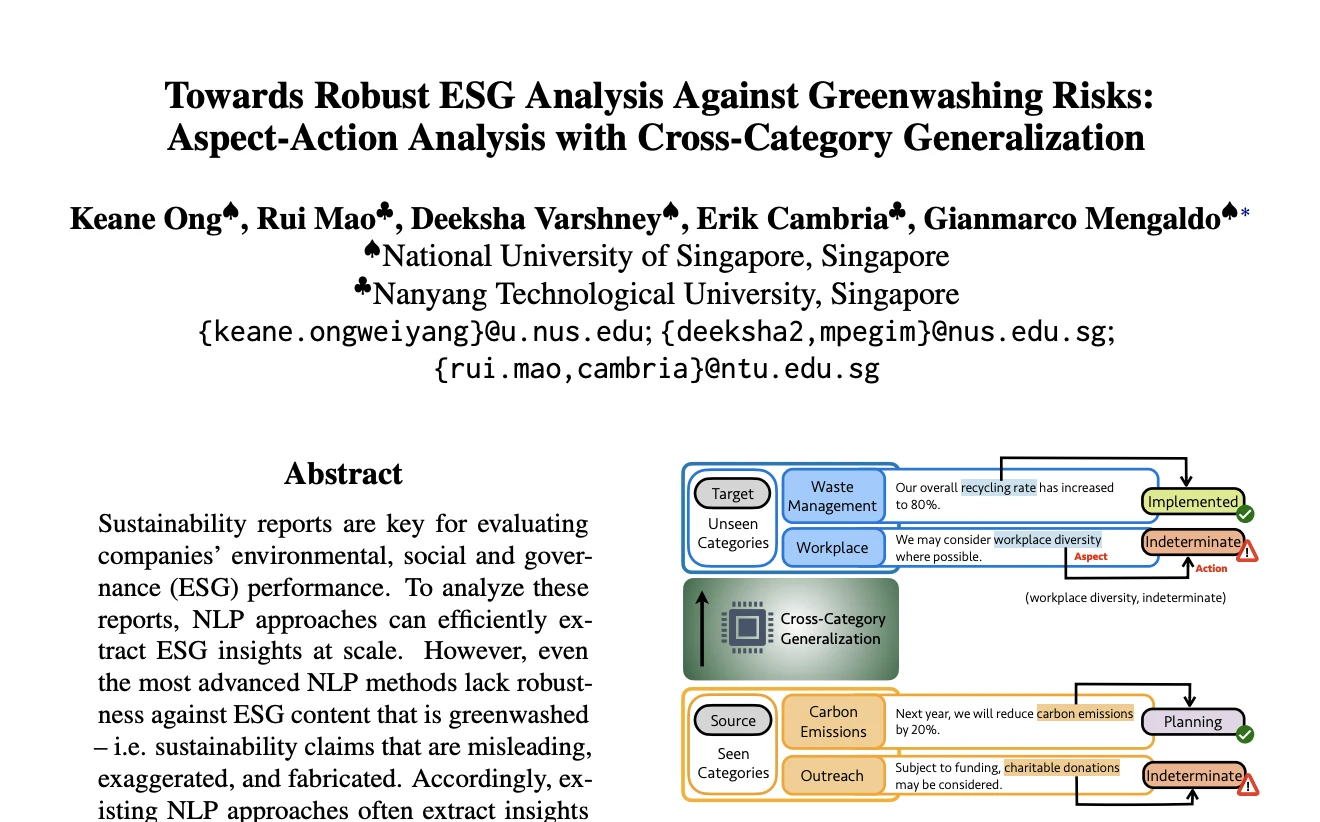
Category: AI for Sustainability/ESG Intelligence
This paper explored how AI systems can detect greenwashing in ESG reports and sustainability disclosures more reliably.
The researchers proposed an aspect-action analysis framework designed to improve how language models understand sustainability claims across different industries and reporting styles. Instead of simply identifying keywords, the system analyzed whether company actions actually matched their ESG claims.
The work focused heavily on improving cross-category generalization, helping models detect misleading sustainability narratives even in domains they were not explicitly trained on.
Outcome:
- Improved AI-based greenwashing detection.
- Introduced aspect-action ESG analysis frameworks.
- Enhanced cross-domain generalization for sustainability evaluation.
- Advanced the use of LLMs for ESG intelligence and compliance monitoring.
Full Paper: Towards Robust ESG Analysis Against Greenwashing Risks
6. VideoWorld: Exploring Knowledge Learning from Unlabeled Videos
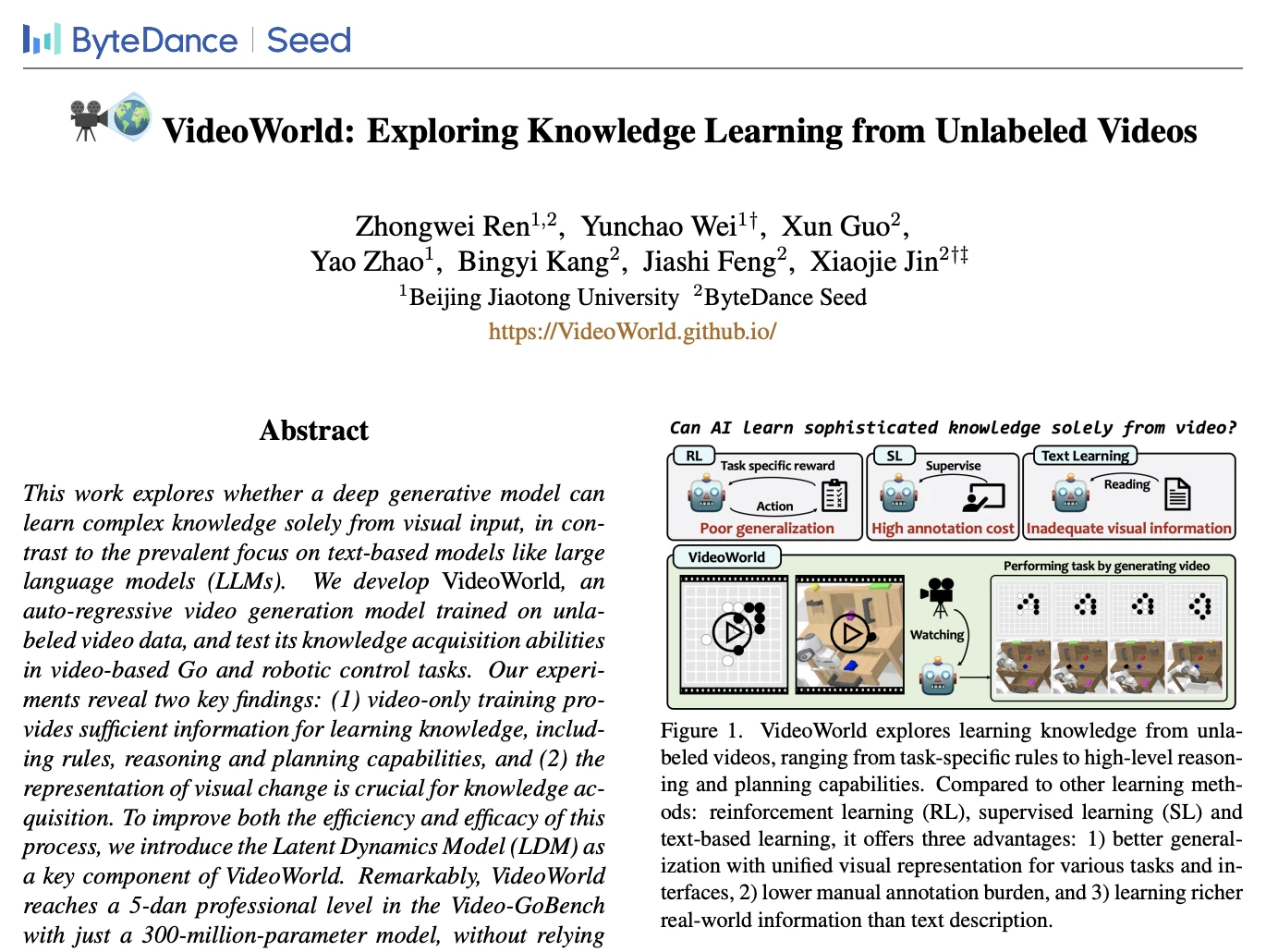
Category: Video Processing/Robotics
ByteDance’s VideoWorld paper focused on helping AI systems learn physical understanding directly from unlabeled video data.
The work became important in robotics and embodied AI because it connected prediction, simulation, and physical reasoning through world-model learning.
Outcome:
- Proposed video-driven world models.
- Improved physical reasoning capabilities.
- Advanced robotics-oriented AI learning.
- Connected video understanding with embodied planning.
Full Paper: VideoWorld Paper
7. The AI Scientist-v2
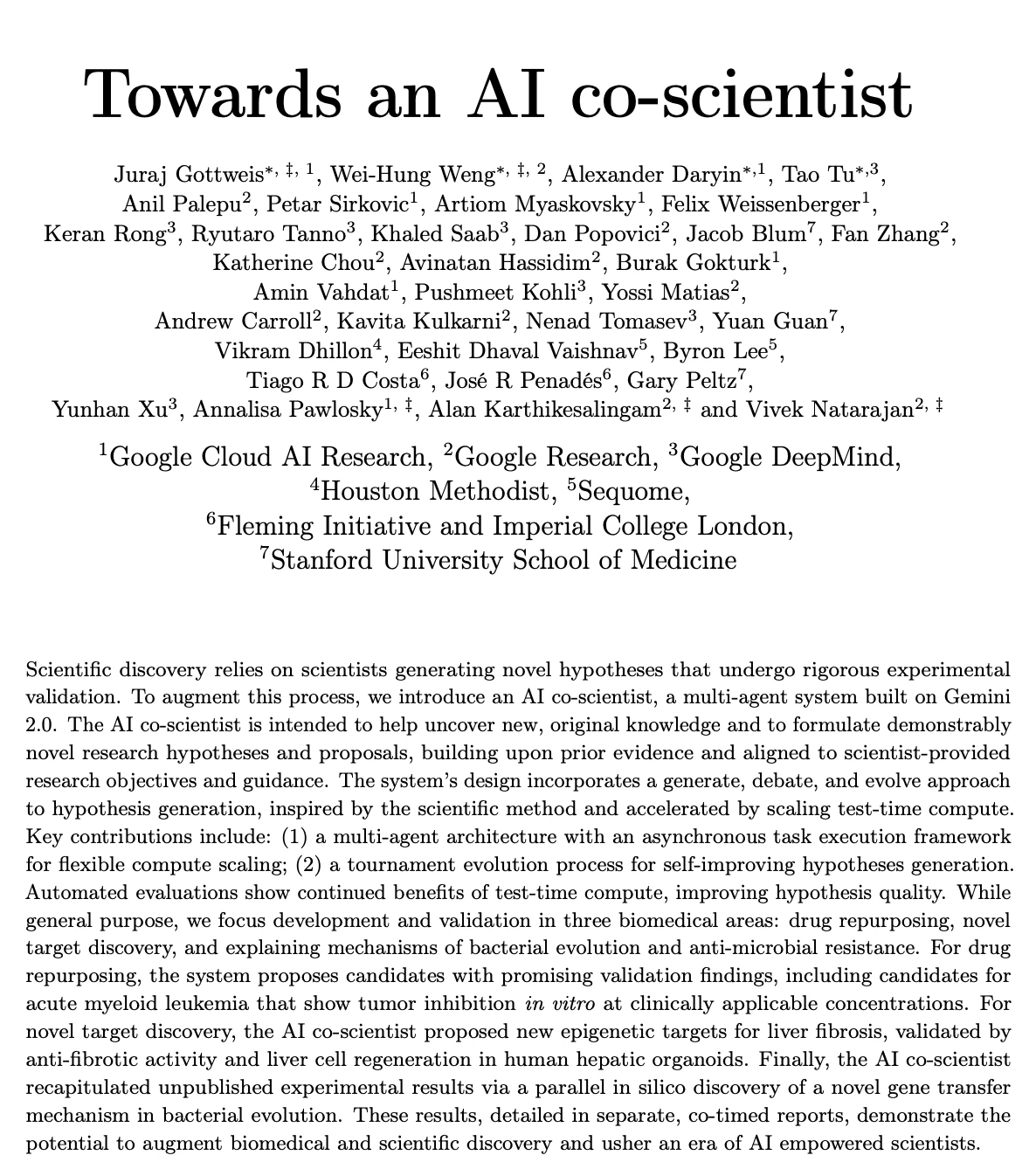
Category: Autonomous AI Research
AI Scientist-v2 paper expanded autonomous research systems capable of generating hypotheses, designing experiments, evaluating outcomes, and drafting scientific reports.
The paper became central to discussions around recursive AI improvement and automated scientific discovery.
Outcome:
- Advanced autonomous research workflows.
- Combined literature review, experimentation, and reporting.
- Demonstrated partially automated scientific cycles.
- Raised questions about AI-driven discovery systems.
Full Paper: The AI Scientist-v2 Paper
8. SWE-Lancer: Can Frontier LLMs Earn $1 Million from Real-World Freelance Software Engineering?
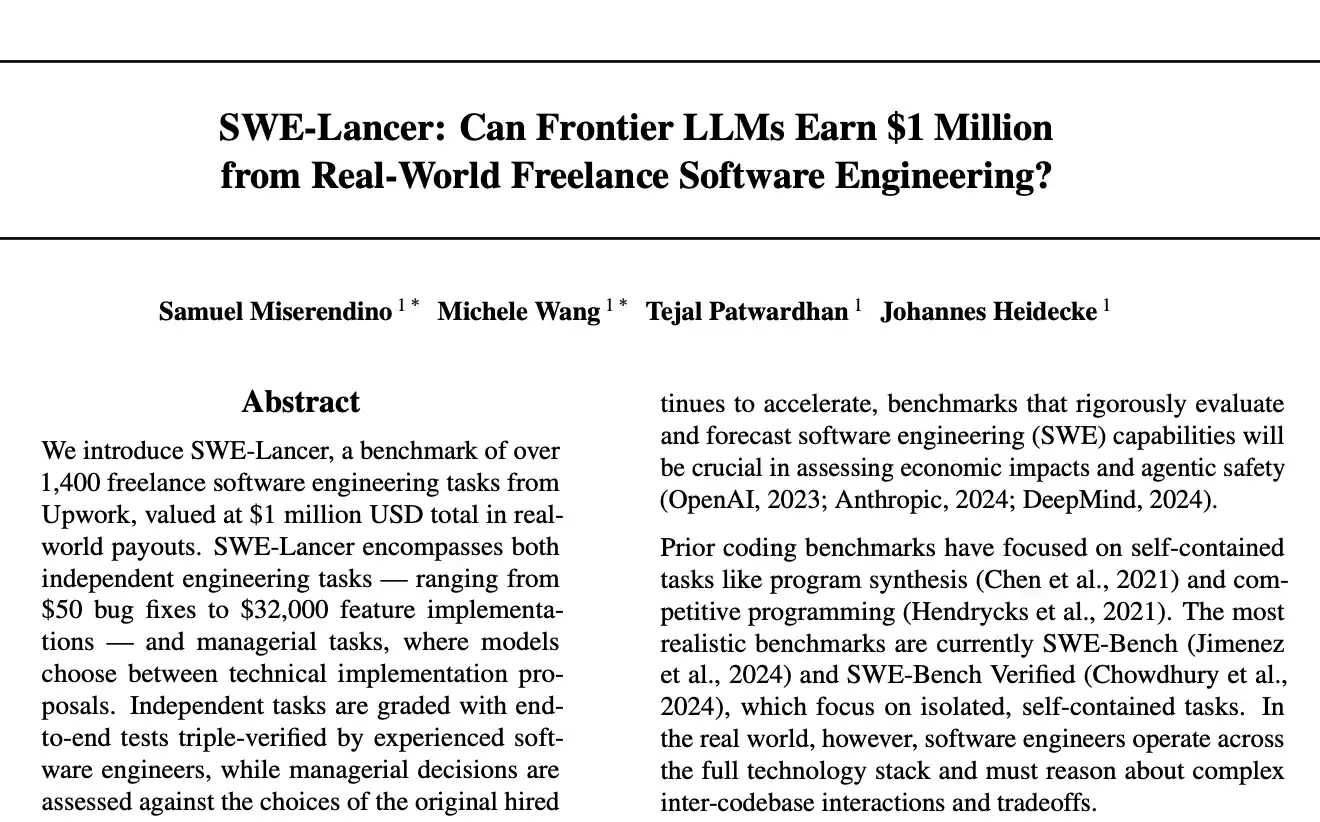
Category: AI Coding Agents
OpenAI’s SWE-Lancer paper became one of the most widely discussed benchmark papers of the year because it evaluated models on actual freelance engineering tasks instead of synthetic coding problems.
The benchmark included debugging, feature implementation, repository navigation, and project-level engineering tasks sourced from real-world freelance work.
The paper was important because it tied AI performance directly to economic value instead of abstract benchmark scores.
Outcome:
- Introduced a real-world benchmark for AI coding agents.
- Evaluated repository-scale engineering performance.
- Highlighted the gap between benchmark coding and production engineering.
Full Paper: SWE-Lancer Paper
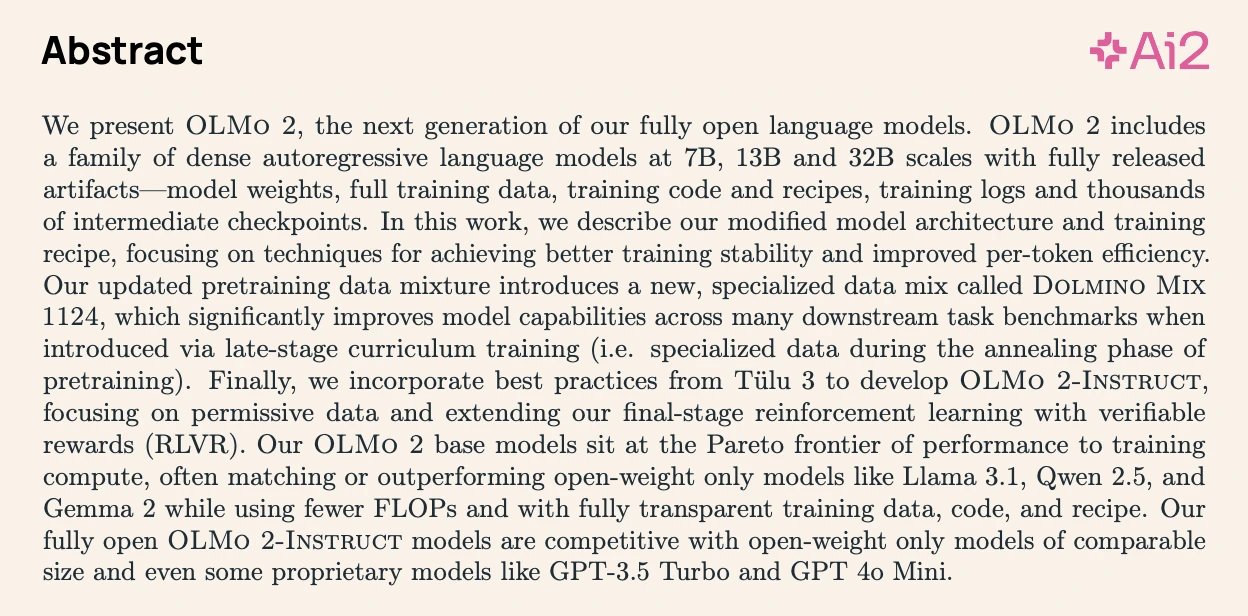
9. OLMo 2: The Best “Fully” Open Language Model to Date
Category: Open Language Models
OLMo 2 became one of the most important fully open AI model papers of 2025 because it emphasized complete transparency across training data, architecture, and methodology.
The paper strengthened the push toward reproducible open AI research.
Outcome:
- Released fully open training methodology.
- Improved transparency in LLM development.
- Became a major benchmark for open reproducibility.
Full Paper: OLMo 2 Paper
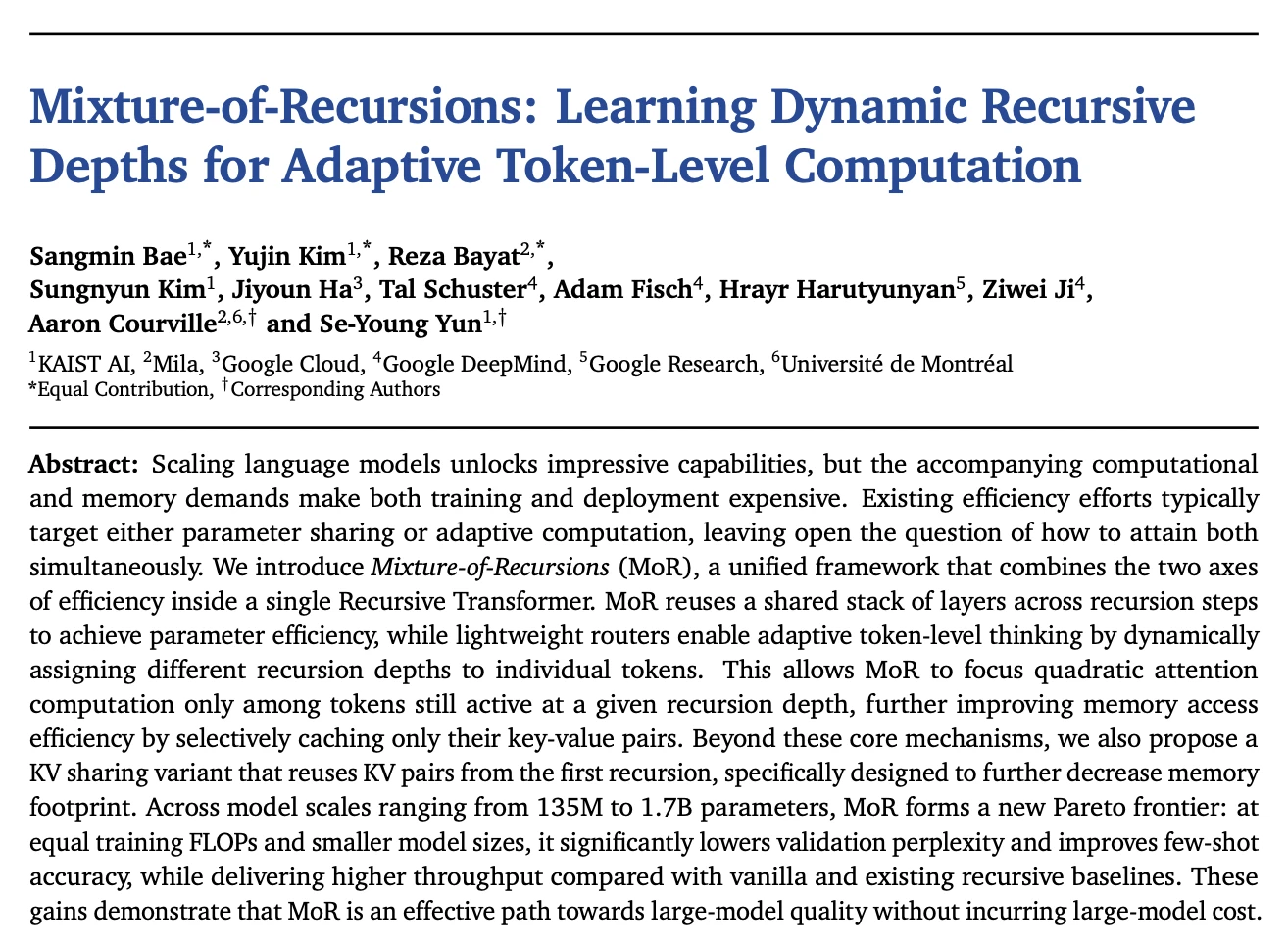
10. Mixture-of-Recursions: Learning Dynamic Recursive Depths
Category: Efficient AI Architectures
Instead of using fixed transformer depth, Mixture-of-Recursions dynamically allocates recursive reasoning depending on task complexity.
The paper became influential because it suggested a path toward more compute-efficient reasoning systems without simply scaling model size.
Outcome:
- Introduced adaptive recursive reasoning.
- Reduced unnecessary computation.
- Improved reasoning efficiency.
Full Paper: Mixture-of-Recursions Paper
Final Takeaway
The biggest AI research trend of 2025 was the shift from passive language models toward reasoning systems and autonomous agents. This year’s most important papers reveal five major industry shifts:
- Frontier labs are prioritizing reasoning over brute-force scaling.
- AI agents are moving into real-world workflows.
- Safety research is becoming increasingly adversarial.
- World models and robotics are returning to the spotlight.
- Autonomous AI research systems are becoming realistic.
AI systems have evolved into persistent reasoning agents capable of planning, self-correcting, collaborating, and operating across complex real-world environments.
If you’re trying to stay up to date with latest developments in AI refer to top 10 LLM research papers of 2026.
Studying, evaluating, and explaining AI systems for over 6 years.
“𝘖𝘯𝘤𝘦 𝘮𝘦𝘯 𝘵𝘶𝘳𝘯𝘦𝘥 𝘵𝘩𝘦𝘪𝘳 𝘵𝘩𝘪𝘯𝘬𝘪𝘯𝘨 𝘰𝘷𝘦𝘳 𝘵𝘰 𝘮𝘢𝘤𝘩𝘪𝘯𝘦𝘴 𝘪𝘯 𝘵𝘩𝘦 𝘩𝘰𝘱𝘦 𝘵𝘩𝘢𝘵 𝘵𝘩𝘪𝘴 𝘸𝘰𝘶𝘭𝘥 𝘴𝘦𝘵 𝘵𝘩𝘦𝘮 𝘧𝘳𝘦𝘦. 𝘉𝘶𝘵 𝘵𝘩𝘢𝘵 𝘰𝘯𝘭𝘺 𝘱𝘦𝘳𝘮𝘪𝘵𝘵𝘦𝘥 𝘰𝘵𝘩𝘦𝘳 𝘮𝘦𝘯 𝘸𝘪𝘵𝘩 𝘮𝘢𝘤𝘩𝘪𝘯𝘦𝘴 𝘵𝘰 𝘦𝘯𝘴𝘭𝘢𝘷𝘦 𝘵𝘩𝘦𝘮.” — 𝖥𝗋𝖺𝗇𝗄 𝖧𝖾𝗋𝖻𝖾𝗋𝗍, 𝖣𝗎𝗇𝖾