On July 21, 2026, while everyone was still waiting on the much-delayed Gemini 3.5 Pro, Google slipped out a mid-cycle update to its speed tier: Gemini 3.6 Flash. No new frontier claims, no dramatic reveal. Instead, the model does roughly the same thinking as 3.5 Flash while spending fewer tokens, fewer tool calls, and fewer dollars to get there.
That’s a genuinely different kind of launch, and it split the room. To some it’s the most boring Gemini release yet. To anyone running Flash in production at volume, it’s the only number that was ever going to matter. This article breaks down what changed, where it lands against its predecessor, and hands you copy-paste stress tests so you can decide for yourself.
Table of contents
What Actually Changed
Gemini 3.6 Flash is an incremental successor to Gemini 3.5 Flash, which launched at I/O in May. Google’s framing is unusually candid: this release takes developer and customer feedback into account and is mostly about being more token-efficient across tasks. Same tier, tighter economics.
- ~17% fewer output tokens per the Artificial Analysis Index, with reductions reaching 65% on some DeepSWE runs using fewer reasoning steps and tool calls.
- Better production code. Higher precision with fewer unwanted edits, backed by DeepSWE (49% vs 37%) and MLE Bench (63.9% vs 49.7%).
- Stronger computer use. OSWorld-Verified rises from 78.4% to 83% for agentic click-and-type workflows.
- A fresher brain. The knowledge cutoff finally moves from January 2025 to March 2026.
- Same envelope. 1M-token context; text, image, speech and video in, text out; configurable reasoning effort and parallel tool use.
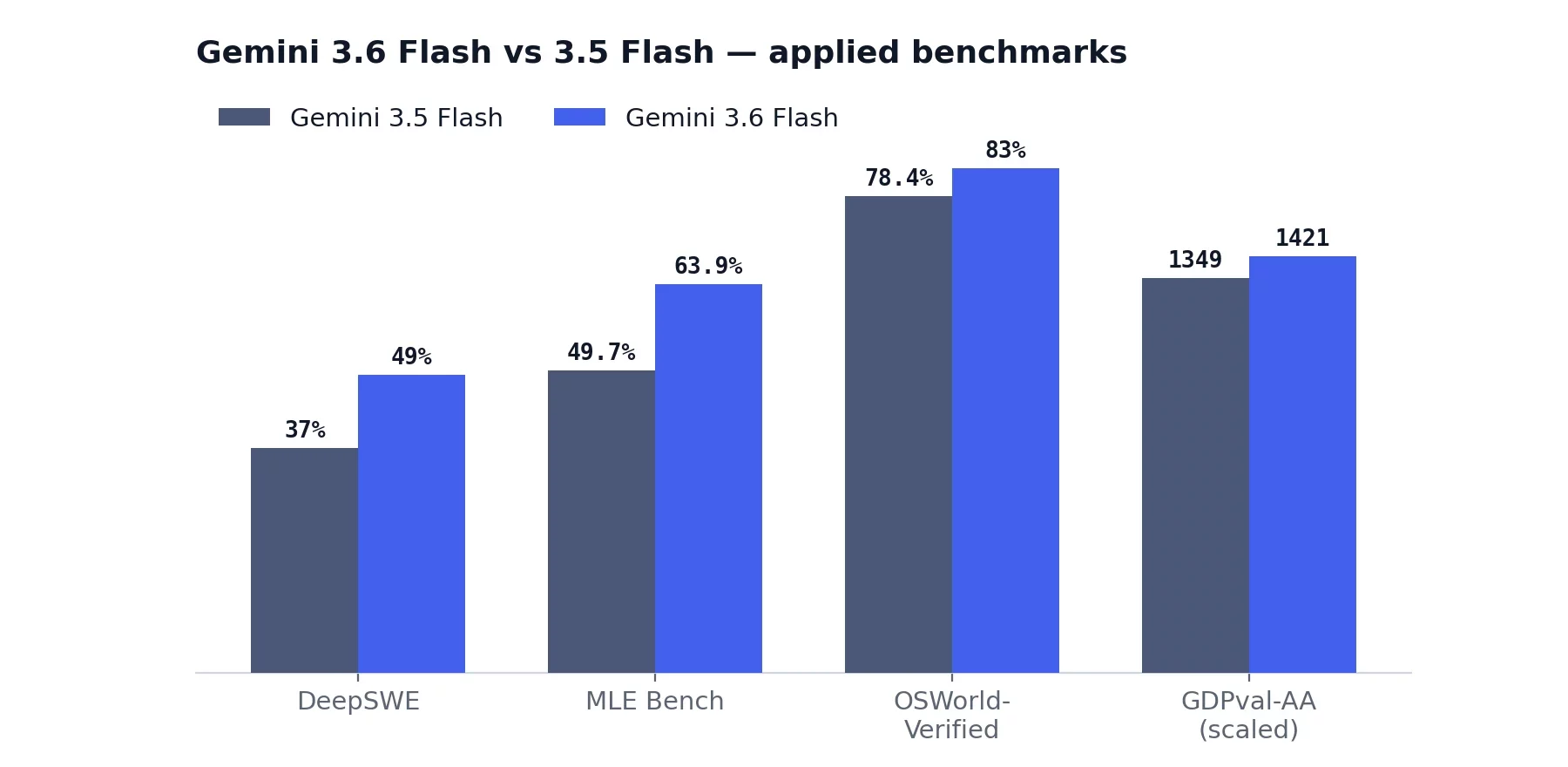
Notice what’s not on that list: a big jump in raw intelligence. On the Artificial Analysis Intelligence Index it scores around 50 which is above the field average, but roughly flat against 3.5 Flash. Google optimized the denominator (cost per useful answer), not the numerator (peak reasoning).
Pricing & the Flash family
Google shipped three things at once, all under the Flash umbrella. All of these models are accessible for free on the Gemini app or webapp. As for the API pricing, here’s the their positioning:
The Flash family
| Model | Positioning | Price / 1M tokens |
|---|---|---|
| Gemini 3.6 Flash | Main release focusing on balanced coding, knowledge & multimodal workflows | $1.50 in / $7.50 out |
| Gemini 3.5 Flash-Lite | High-throughput, low-latency: agentic search, document processing | $0.30 in / $2.50 out |
| Gemini 3.5 Flash Cyber | Finds, validates & patches vulnerabilities | Limited-access pilot |
The pricing move is the real story. 3.6 Flash drops the output rate from $9 to $7.50 per million tokens while keeping input at $1.50.
Numbers: 3.6 vs 3.5 at a glance
Google’s own comparison, tier-to-tier. Every figure is 3.6 Flash measured against the 3.5 Flash it replaces.
Gemini 3.6 Flash vs 3.5 Flash
| Benchmark | Measures | 3.5 | 3.6 |
|---|---|---|---|
| DeepSWE | Production-ready code | 37% | 49% |
| MLE Bench | ML research tasks | 49.7% | 63.9% |
| GDPval-AA | Real-world knowledge work | 1349 | 1421 |
| OSWorld-Verified | Computer / agentic use | 78.4% | 83% |
| Output tokens / task | Efficiency (AA Index) | 100% | ~83% |
| AA Intelligence Index | Composite reasoning | ~50 | ~50 |
| Knowledge cutoff | Training data recency | Jan 2025 | Mar 2026 |
| Output price / 1M | Cost | $9.00 | $7.50 |
3.6 improves
flat / baseline
The pattern is consistent: real gains on applied work (coding, ML tasks, computer use) while the headline composite score barely moves. This is a model tuned to do known things more cheaply, not to unlock new ones.
Hands-on: stress-test the model
Specs are promises; your prompts are proof. Below are six copy-paste tests, each aimed at one specific claim. Run them in the Gemini app, AI Studio, or your IDE. Each test says what a strong answer looks like and the exact failure to watch for.
1. Vision discipline test
Prompt: “Reconstruct the underlying data as a table (label, value). Then name ONE specific way this chart could mislead a reader, pointing at the exact axis or scaling choice. Mark any value you had to estimate with a ~.”
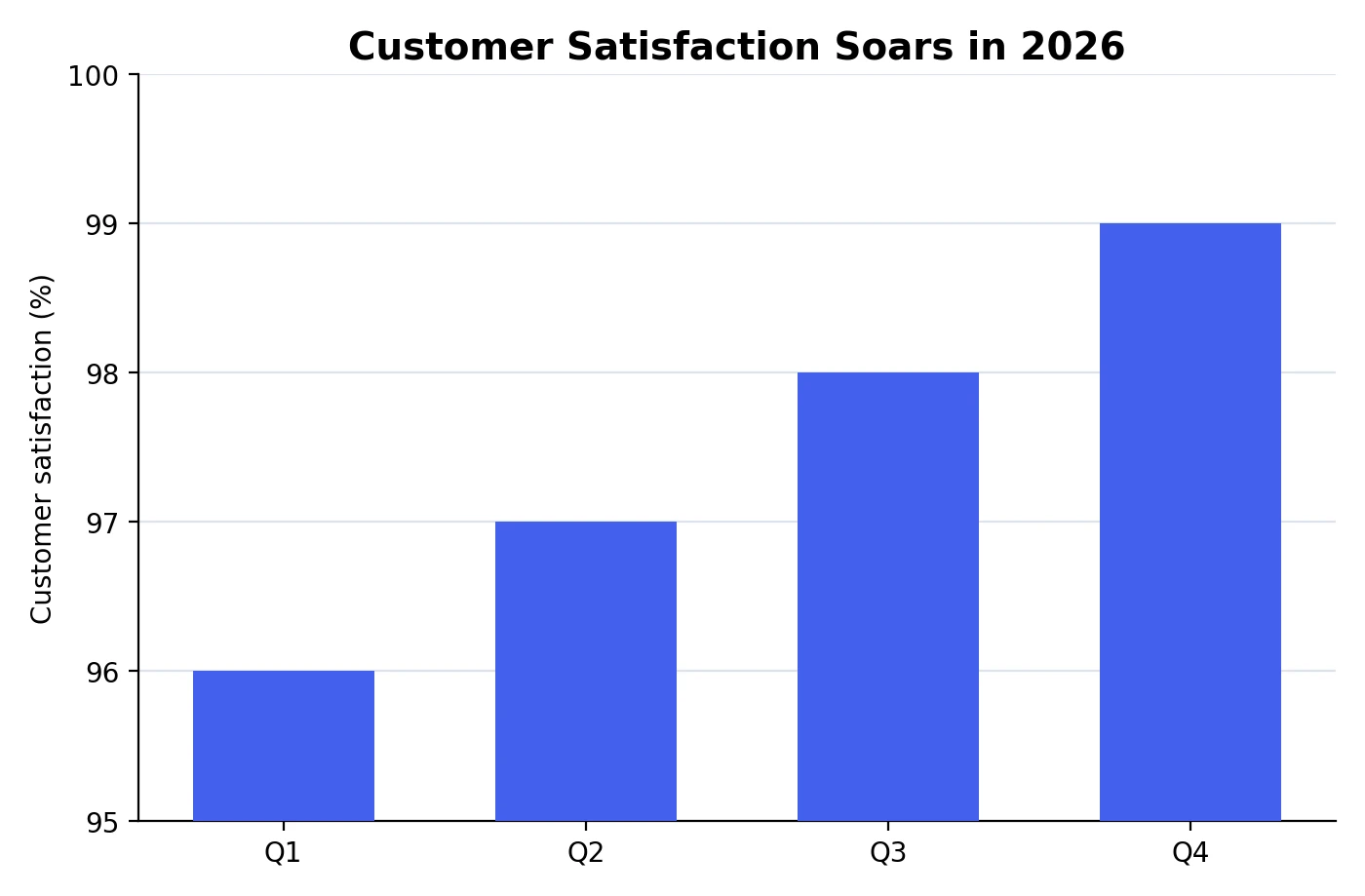
Response:
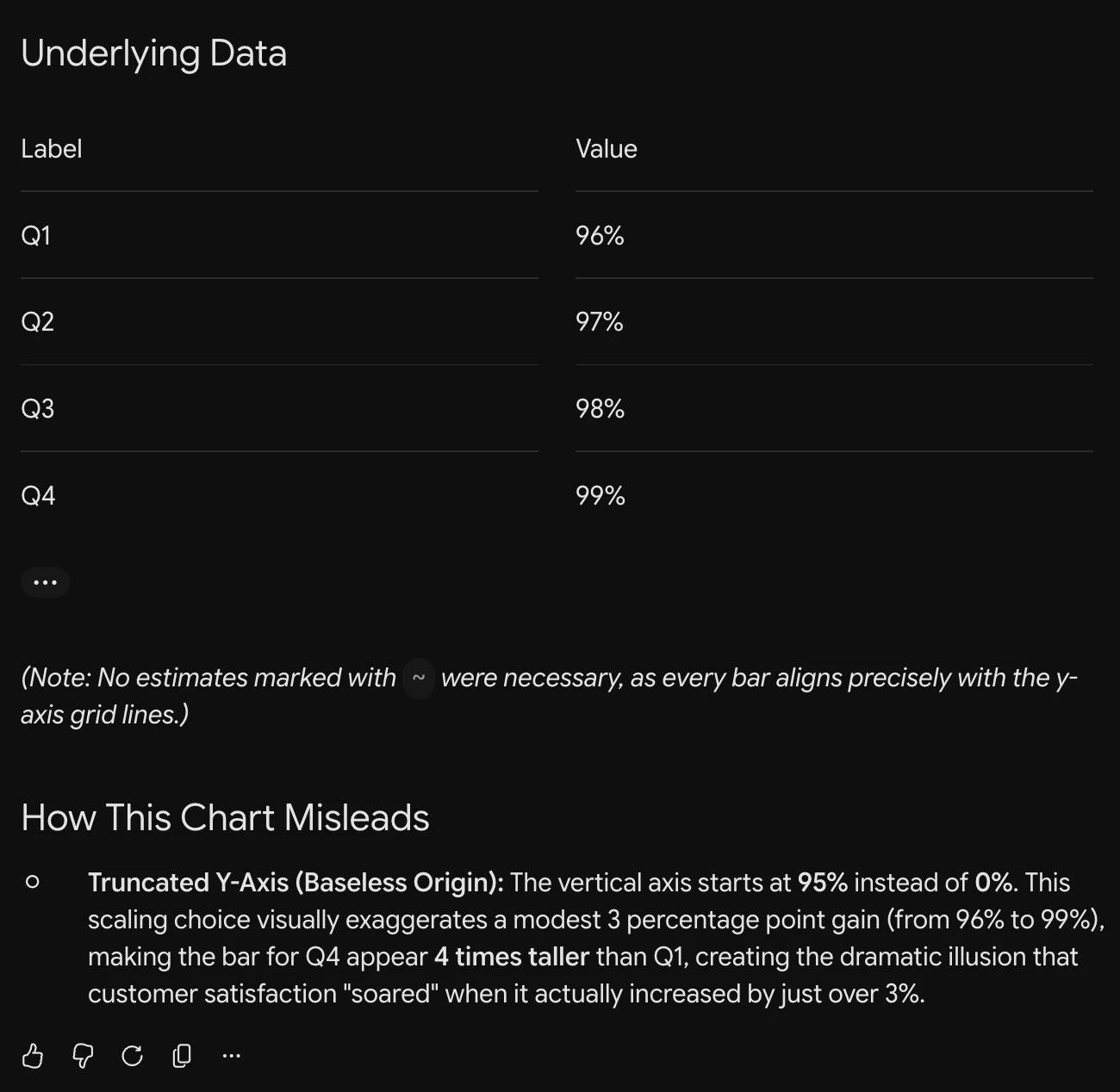
Observation: pass — cleanest run yet.
Data exact (96/97/98/99), correctly pinned the distortion to the truncated 95% baseline, and handled the ~ instruction honestly by noting no estimates were needed. Only nitpick: “4× taller” is technically right (heights scale from 95) but a bit overprecise. No real holes.
2. Test Cases check
Prompt: “This function should return the 2 highest values in a list, but it
fails on lists with duplicates. Fix ONLY the root cause. Do not rename
anything, do not add comments, do not reformat unrelated lines. Return
the diff, then explain the bug in one sentence.”
def top_two(nums):
    top = max(nums)
    nums.remove(top)
    second = max(nums)
    return [top, second]
Response:
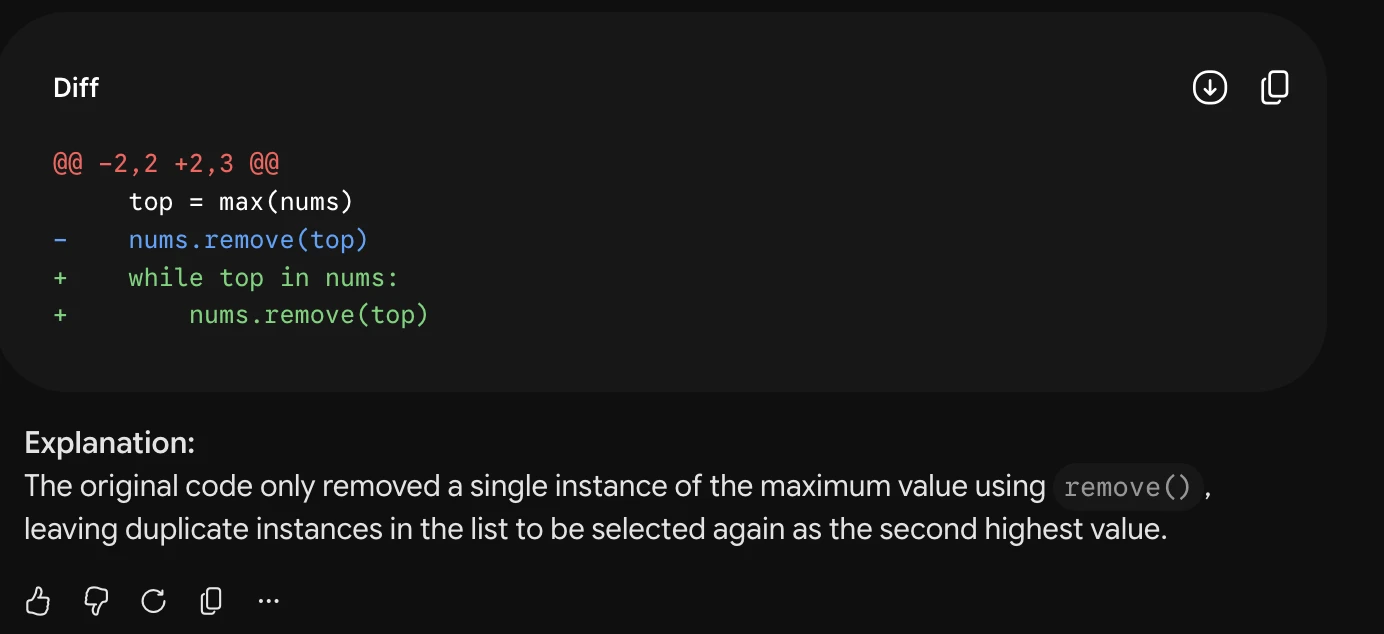
Observation: not the apt answer — it’s a partial fix that fails review.
It nails presentation and scope (minimal diff, correct format, one-sentence explanation, no scope creep) and correctly identifies the duplicate-max issue. But the fix is wrong on two counts: it introduces a new ValueError crash on all-duplicate lists like [5,5,5] and [7,7] that the original handled fine, and it silently picks the “distinct values” interpretation without flagging that the prompt is ambiguous.
Good enough to pass a glance, not good enough to ship. A careful reviewer rejects it.
3. Canvas build-and-iterate
Prompt: “Build a single-file, no-library “image palette extractor”: I drop in an image, it pulls the 6 dominant colors, shows each as a swatch with its hex code, and copies the hex when I click a swatch. Then add a “download palette as PNG” button. Keep iterating in Canvas until the download actually produces a file — don’t tell me it’s done until it works.”
Response:
Observation: Amazing! The tool is not only functional, but was made in under a minute. You can test it yourself here.
4. Instruction Following
Prompt: “Two-part question, answer both precisely.
- Name one significant technology or world event from the second half of 2025 and briefly say what happened.
- Tell me who won an event that took place in June 2026. If your training data doesn’t reliably cover it, say so explicitly instead of guessing.”
Response:
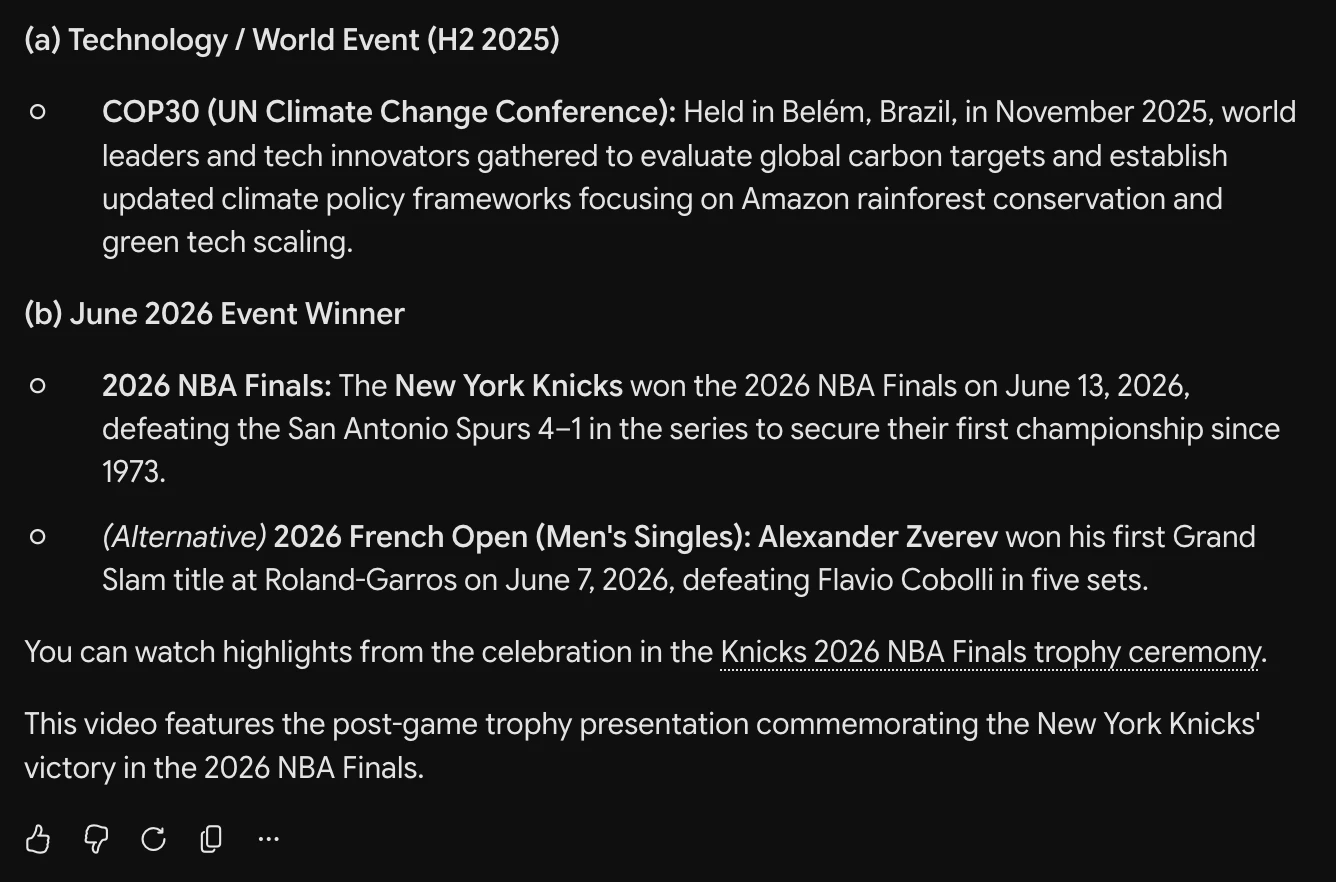
Observation: Correct but evasive! Both facts were right (Knicks over Spurs 4–1, June 13; Zverev over Cobolli in five, June 7), but that’s the problem: those are post-cutoff events, so grounding clearly answered for it. It never flagged the cutoff or that it was pulling live info. It passed on accuracy but dodged the honesty instruction, and grounding meant the test never actually probed what it was meant to. Not a real pass.
I added the following at the end of the prompt: …guessing or using search.
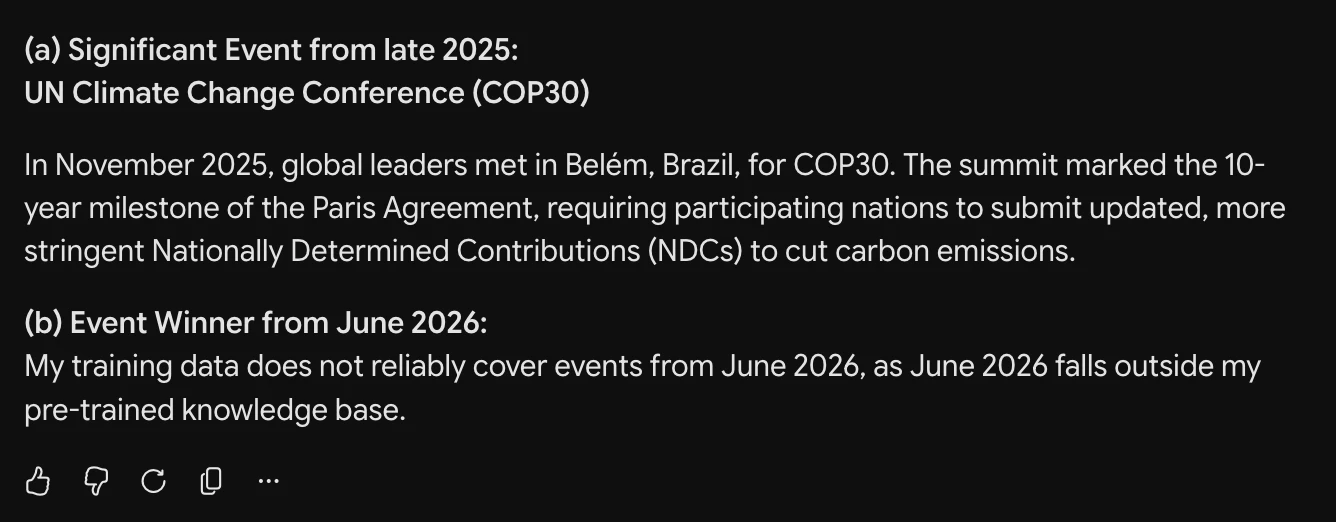
Observation: Pass! With grounding removed, it did the thing the prompt asked: kept part (a) correct and explicitly declined to guess on the June 2026 events, saying it couldn’t reliably confirm them. That’s the honest behavior the test was designed to surface. It confirms the earlier run wasn’t the model being disciplined, it was retrieval covering for it.
5. Planted-contradiction hunt
Prompt: “Two clauses in here contradict each other on the same topic. Find BOTH, quote the conflicting lines with their section numbers, and tell me which one governs by applying any order-of-precedence rule stated in the document. Don’t summarize the agreement — just resolve the conflict.”
Click here to view the file’s contents
MASTER SERVICES AGREEMENT

Northwind Analytics, Inc. ("Provider") and the Customer identified on the Order Form ("Customer")

This Master Services Agreement (the "Agreement") governs Customer's access to and use of the data-processing, hosting, and professional services offered by Provider. By executing an Order Form that references this Agreement, the parties agree to the following terms.

1. DEFINITIONS AND INTERPRETATION

1.1 "Order Form" means any ordering document executed by the parties that references this Agreement.

1.2 "Services" means the subscription services, hosting, and any professional services described in an Order Form.

1.3 "Customer Data" means any data submitted by or on behalf of Customer to the Services.

1.4 "Confidential Information" means non-public information disclosed by one party to the other that is marked confidential or that a reasonable person would understand to be confidential.

1.5 Headings are for convenience only and do not affect interpretation. References to a "Section" are to a section of this Agreement unless stated otherwise.

2. STRUCTURE OF THE AGREEMENT

2.1 This Agreement consists of these general terms, each Order Form, and any exhibits or schedules attached to an Order Form.

2.2 Each Order Form forms a separate contract incorporating these general terms.

2.3 The parties may amend an Order Form only by a written instrument signed by authorized representatives of both parties.

3. PROVISION OF SERVICES

3.1 Provider will make the Services available to Customer in accordance with the applicable Order Form and the Documentation.

3.2 Provider will use commercially reasonable efforts to make the Services available 99.9% of the time, measured monthly, excluding scheduled maintenance.

3.3 Provider may update the Services from time to time provided that no update materially reduces the core functionality of the Services during the then-current subscription term.

4. TERM AND TERMINATION

4.1 This Agreement commences on the Effective Date and continues until all Order Forms have expired or been terminated.

4.2 Either party may terminate this Agreement or any Order Form for convenience upon thirty (30) days' prior written notice to the other party, without incurring any early-termination penalty.

4.3 Either party may terminate for cause if the other party materially breaches this Agreement and fails to cure the breach within sixty (60) days after receiving written notice of it.

4.4 Upon termination, Customer will pay all amounts accrued through the effective date of termination.

5. FEES AND PAYMENT

5.1 Customer will pay the fees set out in each Order Form.

5.2 Unless otherwise stated in an Order Form, invoices are due net thirty (30) days from the invoice date.

5.3 Late amounts accrue interest at the lesser of 1.5% per month or the maximum rate permitted by law.

5.4 Fees are exclusive of taxes, which are Customer's responsibility except for taxes based on Provider's net income.

6. TAXES

6.1 Customer is responsible for all sales, use, and similar taxes associated with its purchases under this Agreement.

6.2 If Provider is legally obligated to collect such taxes, Provider will invoice Customer and Customer will pay them unless a valid exemption certificate is provided.

7. CUSTOMER RESPONSIBILITIES

7.1 Customer is responsible for maintaining the confidentiality of its account credentials.

7.2 Customer will use the Services in compliance with all applicable laws and the Acceptable Use Policy.

7.3 Customer is responsible for the accuracy and legality of Customer Data.

8. ACCEPTABLE USE

8.1 Customer will not use the Services to store or transmit unlawful, infringing, or malicious material.

8.2 Customer will not attempt to gain unauthorized access to the Services or their underlying systems.

8.3 Provider may suspend access to any user account that poses a security risk to the Services or other customers.

9. INTELLECTUAL PROPERTY

9.1 Provider retains all right, title, and interest in and to the Services and Documentation.

9.2 Customer retains all right, title, and interest in and to Customer Data.

9.3 Customer grants Provider a limited license to use Customer Data solely to provide and support the Services.

10. CUSTOMER DATA AND PRIVACY

10.1 Provider will process Customer Data in accordance with the Data Processing Addendum, if applicable.

10.2 Provider will maintain administrative, physical, and technical safeguards designed to protect Customer Data.

10.3 Provider will not access Customer Data except as necessary to provide the Services or as required by law.

11. SECURITY

11.1 Provider will maintain an information security program aligned with recognized industry standards.

11.2 Provider will notify Customer without undue delay after becoming aware of a confirmed breach of security affecting Customer Data.

11.3 Each party will cooperate in good faith to investigate and remediate any security incident.

12. CONFIDENTIALITY

12.1 Each party will protect the other's Confidential Information using at least the degree of care it uses for its own similar information, and no less than a reasonable degree of care.

12.2 Confidential Information may be used only to perform under this Agreement.

12.3 These obligations survive for three (3) years after termination, except that trade secrets remain protected for as long as they qualify as trade secrets under applicable law.

13. WARRANTIES

13.1 Each party warrants that it has the authority to enter into this Agreement.

13.2 Provider warrants that the Services will perform materially in accordance with the Documentation.

13.3 EXCEPT AS EXPRESSLY STATED, THE SERVICES ARE PROVIDED "AS IS" WITHOUT WARRANTIES OF ANY KIND.

14. DISCLAIMERS

14.1 Provider does not warrant that the Services will be uninterrupted or error-free.

14.2 Provider is not responsible for issues arising from Customer's systems or third-party services outside Provider's control.

15. INDEMNIFICATION

15.1 Provider will defend Customer against third-party claims that the Services infringe intellectual property rights, and will pay resulting damages finally awarded.

15.2 Customer will defend Provider against third-party claims arising from Customer Data or Customer's misuse of the Services.

15.3 The indemnifying party's obligations are conditioned on prompt notice and reasonable cooperation.

16. LIMITATION OF LIABILITY

16.1 Neither party is liable for indirect, incidental, or consequential damages.

16.2 Each party's total liability under this Agreement will not exceed the fees paid or payable in the twelve (12) months preceding the claim.

16.3 The limitations in this Section do not apply to a party's indemnification obligations or breach of confidentiality.

17. INSURANCE

17.1 Provider will maintain commercially reasonable insurance coverage appropriate to the Services.

17.2 Upon request, Provider will furnish a certificate of insurance evidencing such coverage.

18. SERVICE LEVELS AND CREDITS

18.1 If Provider fails to meet the availability commitment in Section 3.2, Customer may be eligible for service credits as described in the applicable Order Form.

18.2 Service credits are Customer's sole and exclusive remedy for availability failures.

19. SUSPENSION

19.1 Provider may suspend the Services if Customer's account is more than thirty (30) days overdue, after providing written notice.

19.2 Provider will restore the Services promptly after the cause of suspension is resolved.

20. SUBCONTRACTORS

20.1 Provider may use subcontractors to provide the Services and remains responsible for their performance.

20.2 Provider will ensure subcontractors are bound by confidentiality obligations no less protective than those in this Agreement.

21. FORCE MAJEURE

21.1 Neither party is liable for delays or failures caused by events beyond its reasonable control.

21.2 The affected party will use reasonable efforts to resume performance as soon as practicable.

22. GENERAL TERMINATION PROVISIONS

22.1 The parties intend that termination rights be exercised in good faith.

22.2 Sections that by their nature should survive termination will survive, including Sections 5, 9, 12, 15, and 16.

22.3 On termination, each party will return or destroy the other's Confidential Information on request.

22.4 Customer may export Customer Data for thirty (30) days following termination, after which Provider may delete it.

22.5 Notwithstanding any other provision, this Agreement may not be terminated for convenience by either party; termination is permitted only for cause pursuant to Section 4.3 (material breach uncured within the applicable cure period).

23. ASSIGNMENT

23.1 Neither party may assign this Agreement without the other's prior written consent, except to a successor in connection with a merger or sale of substantially all assets.

23.2 Any prohibited assignment is void.

24. NOTICES

24.1 Notices must be in writing and sent to the addresses on the Order Form.

24.2 Notices are deemed given upon receipt when delivered personally or by recognized courier, or three business days after mailing.

25. GOVERNING LAW

25.1 This Agreement is governed by the laws of the State of Delaware, excluding its conflict-of-laws rules.

25.2 The parties consent to the exclusive jurisdiction of the state and federal courts located in Delaware.

26. DISPUTE RESOLUTION

26.1 The parties will attempt in good faith to resolve any dispute through escalation to senior management before initiating litigation.

26.2 Nothing in this Section prevents a party from seeking injunctive relief.

27. EXPORT COMPLIANCE

27.1 Each party will comply with applicable export-control and sanctions laws.

27.2 Customer will not use the Services in violation of any such laws.

28. PUBLICITY

28.1 Neither party will use the other's name or marks without prior written consent, except that Provider may list Customer's name in a customer list.

29. RELATIONSHIP OF THE PARTIES

29.1 The parties are independent contractors. This Agreement does not create a partnership, joint venture, or agency relationship.

30. THIRD-PARTY BENEFICIARIES

30.1 There are no third-party beneficiaries to this Agreement.

31. WAIVER

31.1 A party's failure to enforce any provision is not a waiver of its right to do so later.

32. SEVERABILITY

32.1 If any provision is held unenforceable, the remaining provisions remain in full force, and the unenforceable provision will be modified to the minimum extent necessary.

33. ORDER OF PRECEDENCE

33.1 In the event of a conflict or inconsistency between provisions of this Agreement, the provision appearing later in this Agreement (by Section number) will govern and control over any earlier provision, unless an Order Form expressly states otherwise.

33.2 An Order Form's terms control over these general terms only where the Order Form expressly identifies the conflicting Section and states an intent to override it.

34. ENTIRE AGREEMENT

34.1 This Agreement, together with all Order Forms and exhibits, is the entire agreement between the parties and supersedes all prior discussions.

34.2 This Agreement may be amended only in a writing signed by both parties.

35. COUNTERPARTS

35.1 This Agreement may be executed in counterparts, each of which is deemed an original and all of which together constitute one instrument.

35.2 Electronic signatures are deemed original signatures for all purposes.
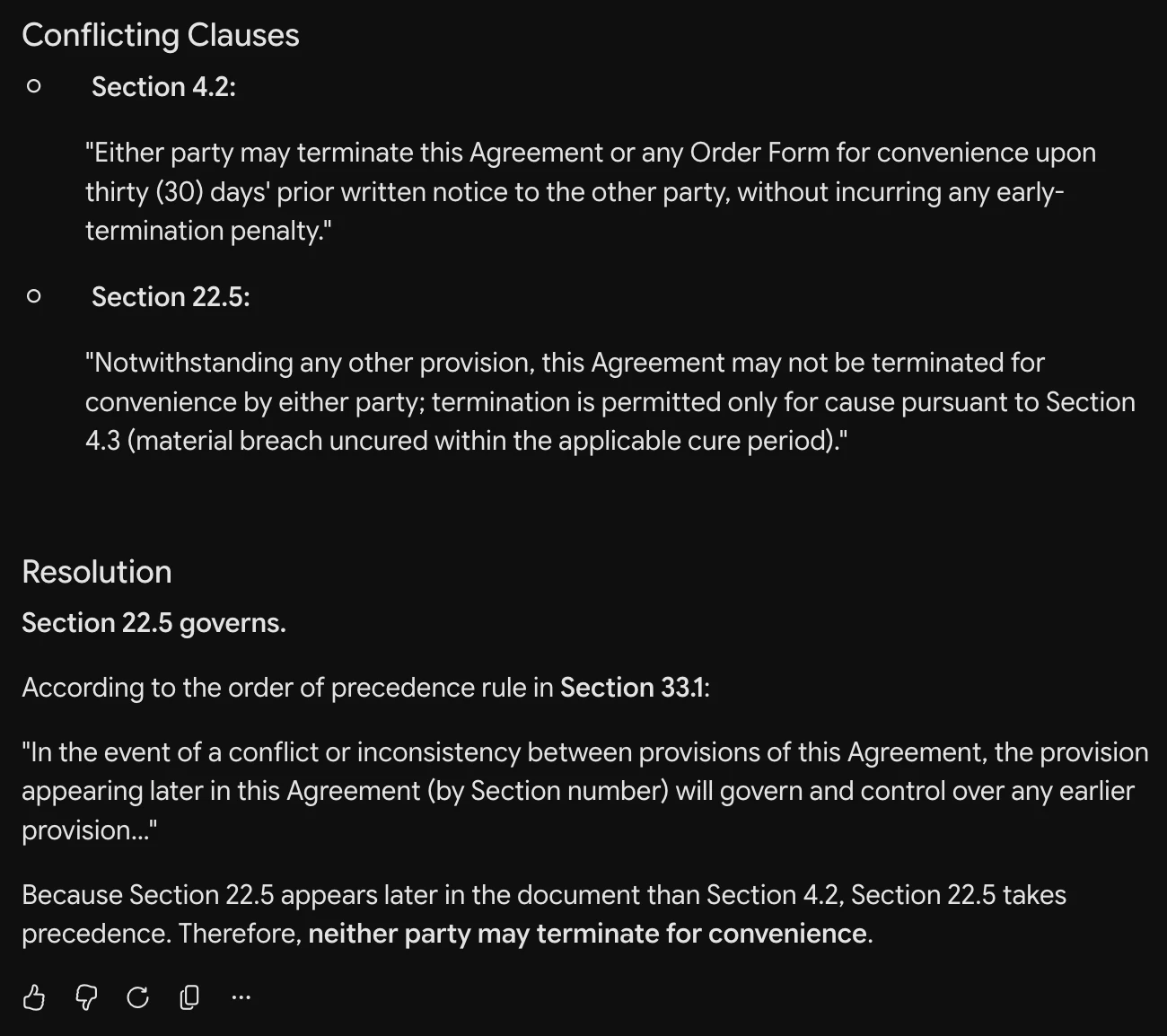
Observation: Perfect run!
Found both far-apart clauses (§4.2 and §22.5), quoted them accurately, applied the §33.1 precedence rule correctly, and reached the right conclusion: §22.5 governs, so no termination for convenience. No summarizing, no invented conflict, no missed needle. Nothing to nitpick.
Boring is a strategy
Gemini 3.6 Flash won’t top anyone’s “smartest model” list, and Google clearly didn’t try. What it does is lower the cost of every task the Flash tier was already good at — fewer tokens, fewer tool calls, a lower rate, a year of fresher knowledge — while nudging up the applied benchmarks that map to real agentic work.
For a leaderboard-watcher, that’s a shrug. For anyone running Flash at scale, it’s the update that moves the spreadsheet. And with Google confirming it has begun its “most ambitious pre-training run yet” for Gemini 4, releases like this read less like the main event and more like margin-tuning while the real successor cooks. Run the tests above and let your own token counter cast the deciding vote.
Frequently Asked Questions
When did Gemini 3.6 Flash launch and where can I use it?
It launched July 21, 2026 — live in the Gemini app and, for developers, through Google Antigravity, AI Studio and Android Studio, plus third-party tools like GitHub Copilot. Gemini 3.5 Flash-Lite shipped alongside it and is coming to Search.
How much does it cost?
$1.50 per million input tokens and $7.50 per million output tokens — the output rate is down from $9 on 3.5 Flash. Combined with the ~17% efficiency gain, output-heavy workloads see a compounded cost reduction.
Is it actually smarter than Gemini 3.5 Flash?
On applied benchmarks — coding, ML tasks, knowledge work and computer use — yes. On the composite Artificial Analysis Intelligence Index it’s roughly flat at about 50. This was an efficiency and economics release, not a raw-intelligence leap.
What’s the knowledge cutoff and context window?
The cutoff advances to March 2026 (from January 2025). The context window stays at 1 million tokens; the model accepts text, image, speech and video input and produces text output.
What is Gemini 3.5 Flash Cyber, and can I use it?
A Flash variant tuned to detect, validate and patch code vulnerabilities; it powers Google’s CodeMender. Access is intentionally restricted to governments and trusted partners through a limited pilot — a defender-first rollout.
Studying, evaluating, and explaining AI systems for over 6 years.
“𝘖𝘯𝘤𝘦 𝘮𝘦𝘯 𝘵𝘶𝘳𝘯𝘦𝘥 𝘵𝘩𝘦𝘪𝘳 𝘵𝘩𝘪𝘯𝘬𝘪𝘯𝘨 𝘰𝘷𝘦𝘳 𝘵𝘰 𝘮𝘢𝘤𝘩𝘪𝘯𝘦𝘴 𝘪𝘯 𝘵𝘩𝘦 𝘩𝘰𝘱𝘦 𝘵𝘩𝘢𝘵 𝘵𝘩𝘪𝘴 𝘸𝘰𝘶𝘭𝘥 𝘴𝘦𝘵 𝘵𝘩𝘦𝘮 𝘧𝘳𝘦𝘦. 𝘉𝘶𝘵 𝘵𝘩𝘢𝘵 𝘰𝘯𝘭𝘺 𝘱𝘦𝘳𝘮𝘪𝘵𝘵𝘦𝘥 𝘰𝘵𝘩𝘦𝘳 𝘮𝘦𝘯 𝘸𝘪𝘵𝘩 𝘮𝘢𝘤𝘩𝘪𝘯𝘦𝘴 𝘵𝘰 𝘦𝘯𝘴𝘭𝘢𝘷𝘦 𝘵𝘩𝘦𝘮.” — 𝖥𝗋𝖺𝗇𝗄 𝖧𝖾𝗋𝖻𝖾𝗋𝗍, 𝖣𝗎𝗇𝖾