With so much going on in tech nowadays, it might be hard for one to figure out where to begin. With learners having different preferences and requirements, catering to all of them might be a tall order. But this article is here to bridge that gap.
This article will list 10 YouTube channels for 10 different learning styles, to cater to all sorts of learners of Python.
Table of contents
- For visual learners
- For code-first learners
- For learners who want deep understanding
- For structured AI upskilling
- For learners with short attention spans
- For people who learn by building projects
- For automation-focused learners
- For learners who want full-length courses
- For beginners who need things broken down
- For learners who like concise, practical tutorials
- Where to start?
- Frequently Asked Questions
1. For visual learners
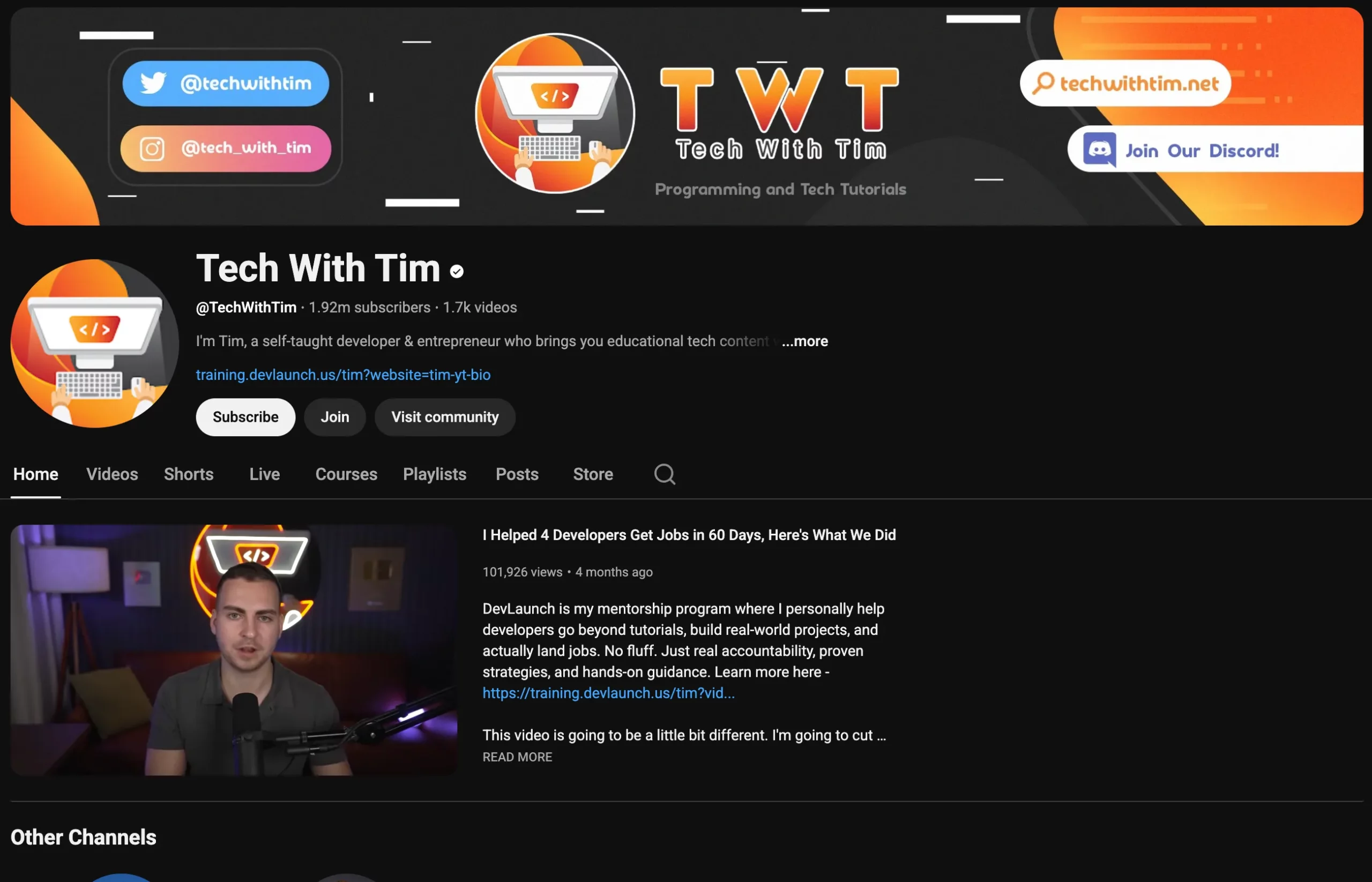
@TechWithTim | Visual, example-driven Python explanations
If you understand better when you can see code turn into something tangible, this channel hits the mark. Tim teaches Python through games, simulations, and small visual projects that make logic stick quickly. This would keep the learners engaged and wanting for more.
What makes this channel special?
- Strong visual feedback through projects and demos
- Explains logic using concrete examples instead of theory
- Great balance between explanation and execution
- Ideal for learners who zone out during abstract talk
Perfect if you need Python to show you what’s happening.
2. For code-first learners
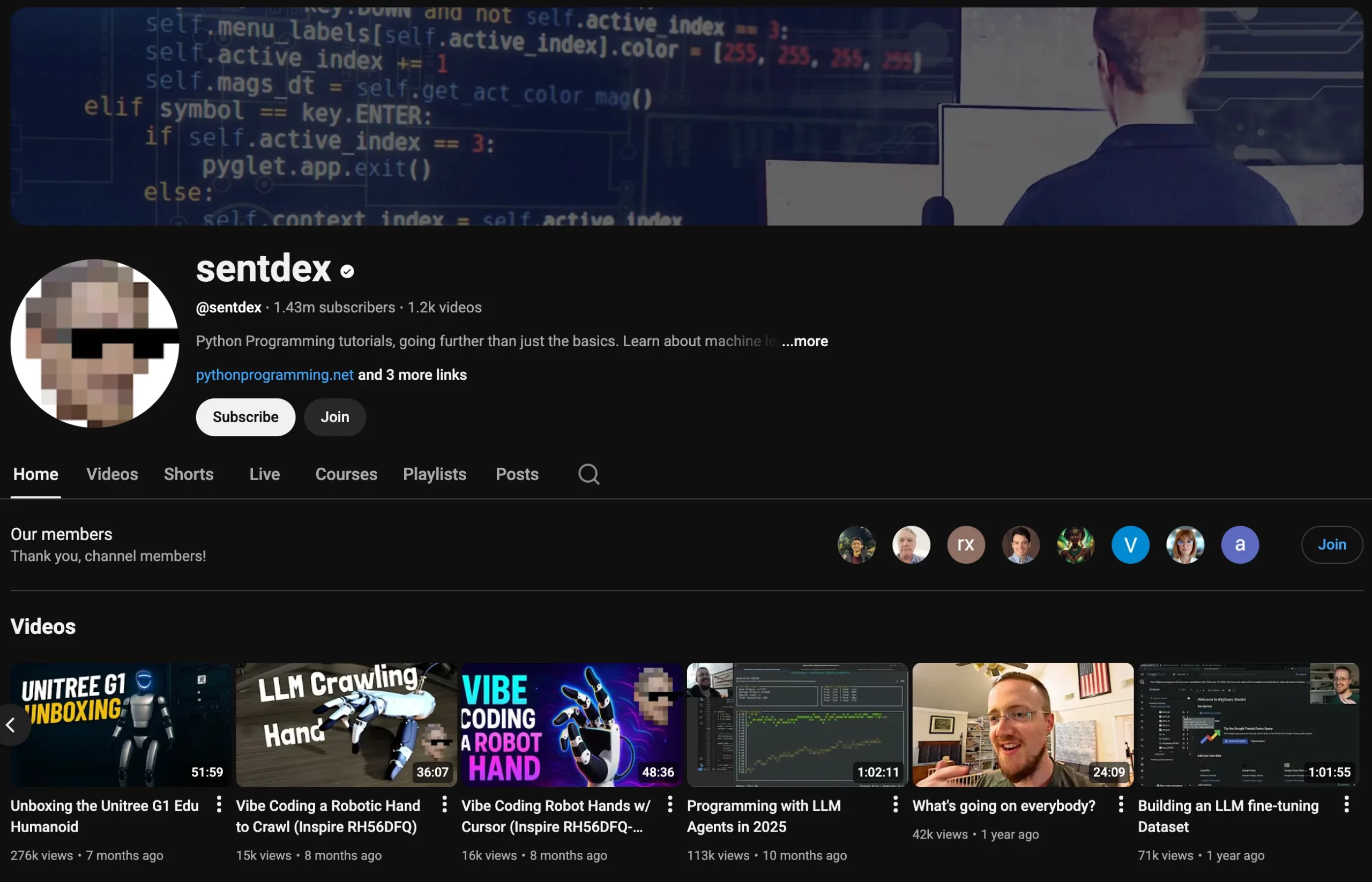
@sentdex | Hands-on, code-heavy Python tutorials
If your brain switches on only when code is on screen, this is your place. sentdex teaches Python by building real things and leaving the rough edges visible. The best part about the channels is that upon completion of the Python fundamentals, it seamlessly branches off to domain specific Python tutorials.
What makes this channel special?
- Python taught through real scripts and projects
- Debugging and mistakes included
- Focus on practical Python, not just syntax
- Excellent for learners who learn by doing
Perfect for Geeks!
3. For learners who want deep understanding
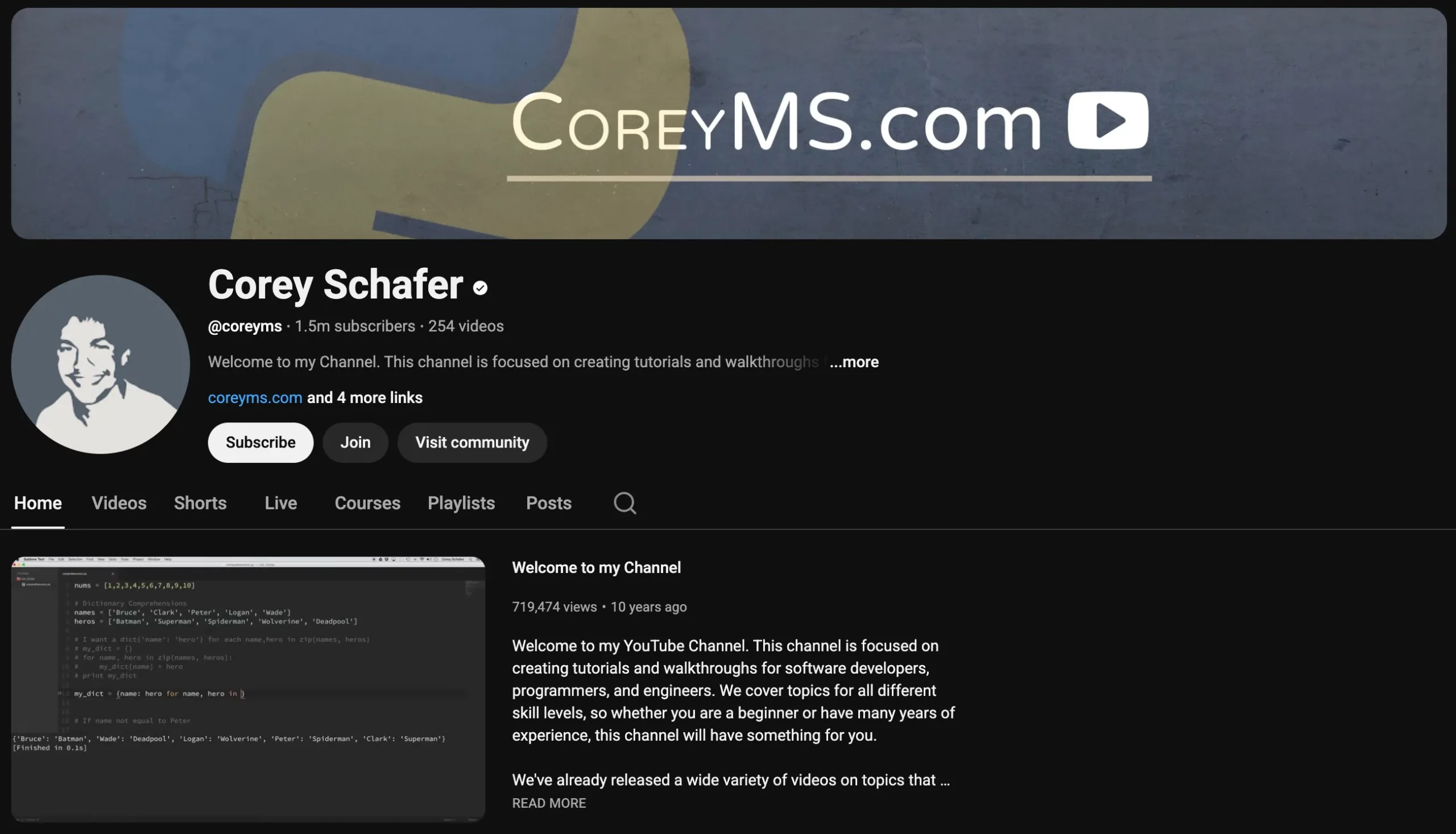
@coreyms | Clean, in-depth Python fundamentals
This is one of the best places on YouTube to understand Python. Corey explains core Python concepts slowly, clearly, and without noise. This is for individuals who want to have in-depth understanding of Python fundamentals. If you want a strong base, on which you can build domain-specific knowledge, this channel is a no brainer.
What makes this channel special?
- Excellent explanations of core Python (OOP, modules, decorators)
- Logical progression from basics to advanced topics
- Calm, structured teaching style
- Great for building strong foundations
Perfect for people who like depth and clarity over speed.
4. For structured AI upskilling
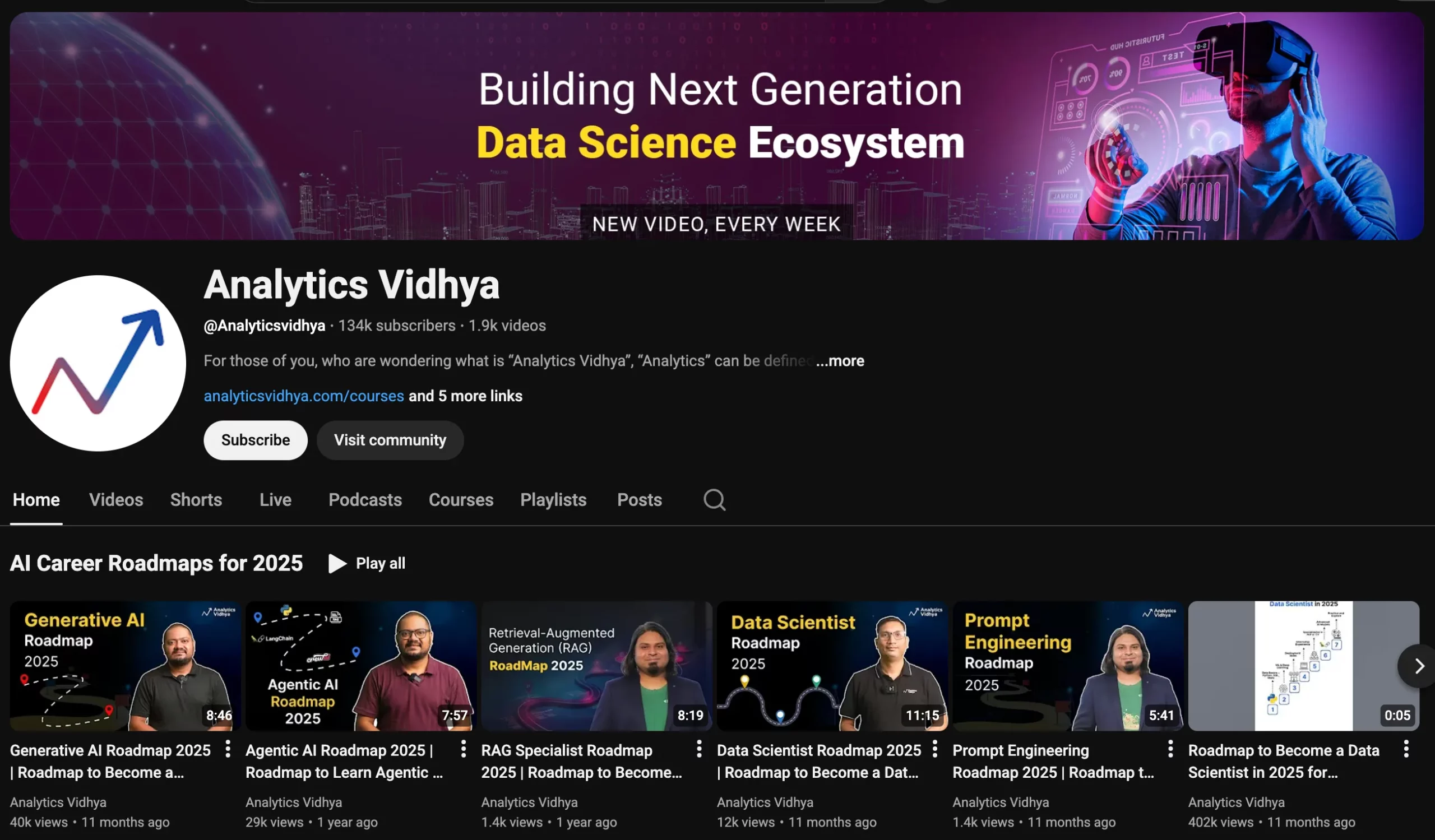
@AnalyticsVidhya | Structured learning for applied AI
If you want a clear learning path instead of scattered tutorials, this channel offers structured explanations and practical walk-throughs on Python and its applications. It’s built for people who want to grow career-ready skills in domains such as data science and machine learning.
What makes this channel special?
- Lessons are designed to build from fundamentals to applications without overwhelming you.
- Topics stay grounded in industry use cases—from automation to ML deployment.
- You get clarity, simple explanations, and examples that mirror real project workflows.
- It’s friendly for beginners yet thorough enough for working professionals.
Bonus: Get Yourself Python Certified for Free!
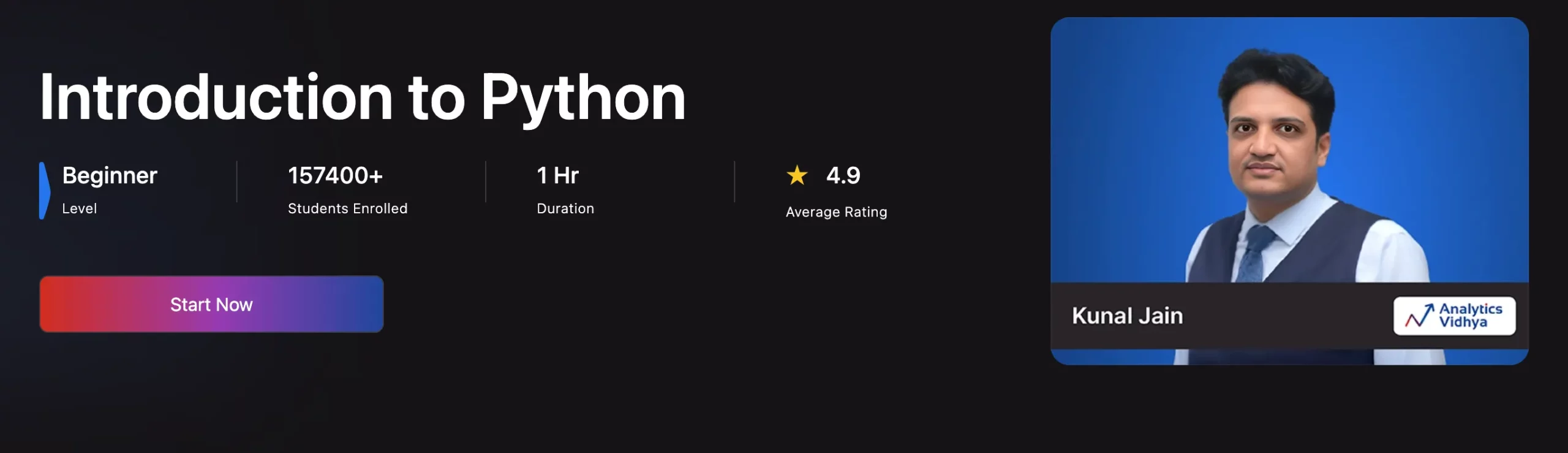
If you’re trying to showcase your skills in Python, you can enroll in this free course: Analytics Vidhya introduction to Python course that takes you through the fundamentals of the language.
Think of it as an organized curriculum, but delivered in a relatable, easy-to-follow format.
5. For learners with short attention spans
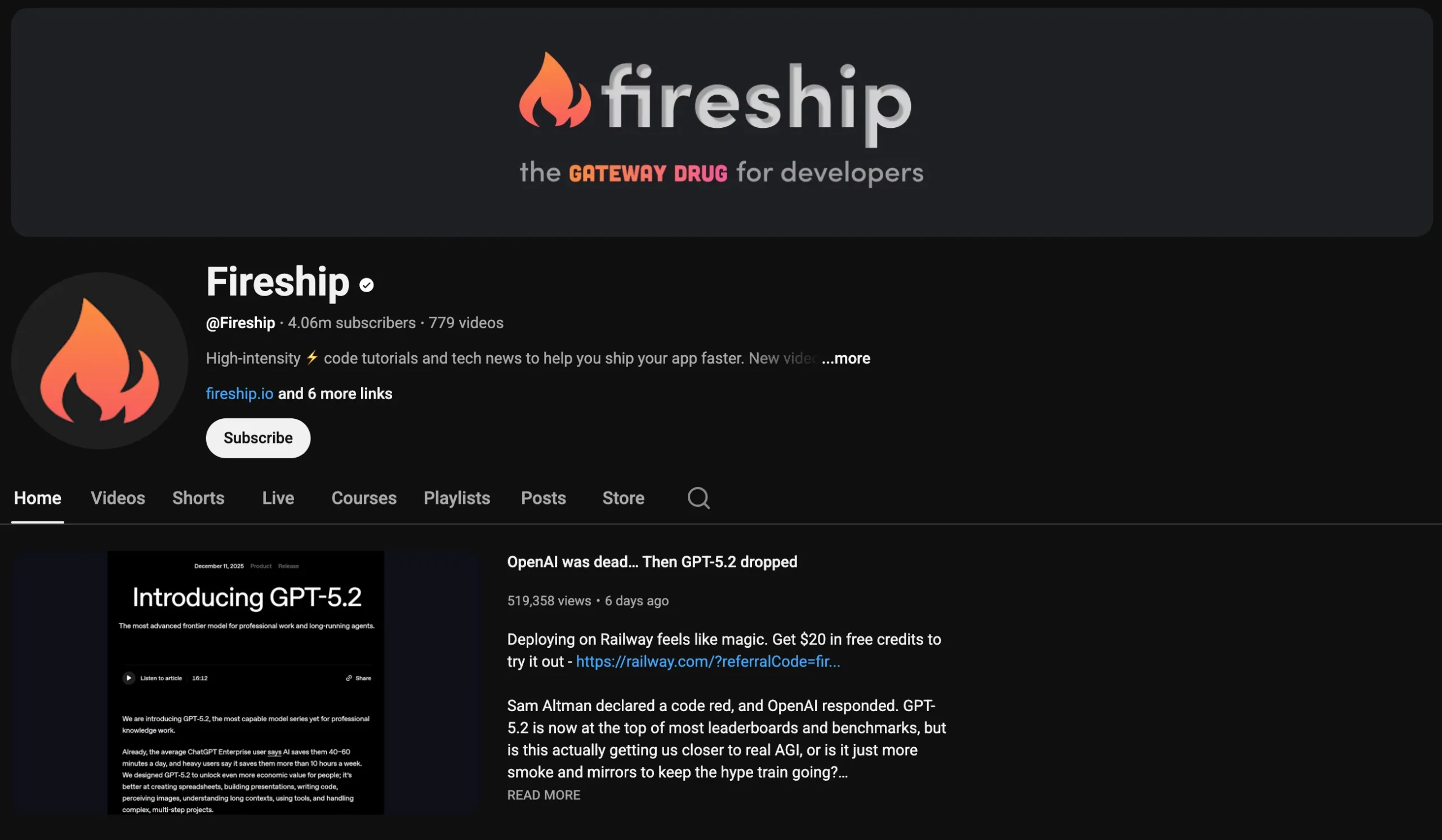
@Fireship | Ultra-condensed Python explanations
If long videos lose you instantly, this channel is built for you. Fireship explains Python concepts in tight, high-energy videos that get straight to the point without sacrificing clarity. Fireship isn’t limited to Python, and thereby explores other domains and trends in technology, via short, succinct videos.
What makes this channel special?
- Very short, fast-paced Python videos
- Zero rambling, instant value
- Great for quick concept exposure
- Perfect for learning in short bursts
Best for modern learners who want fast wins and high retention.
6. For people who learn by building projects
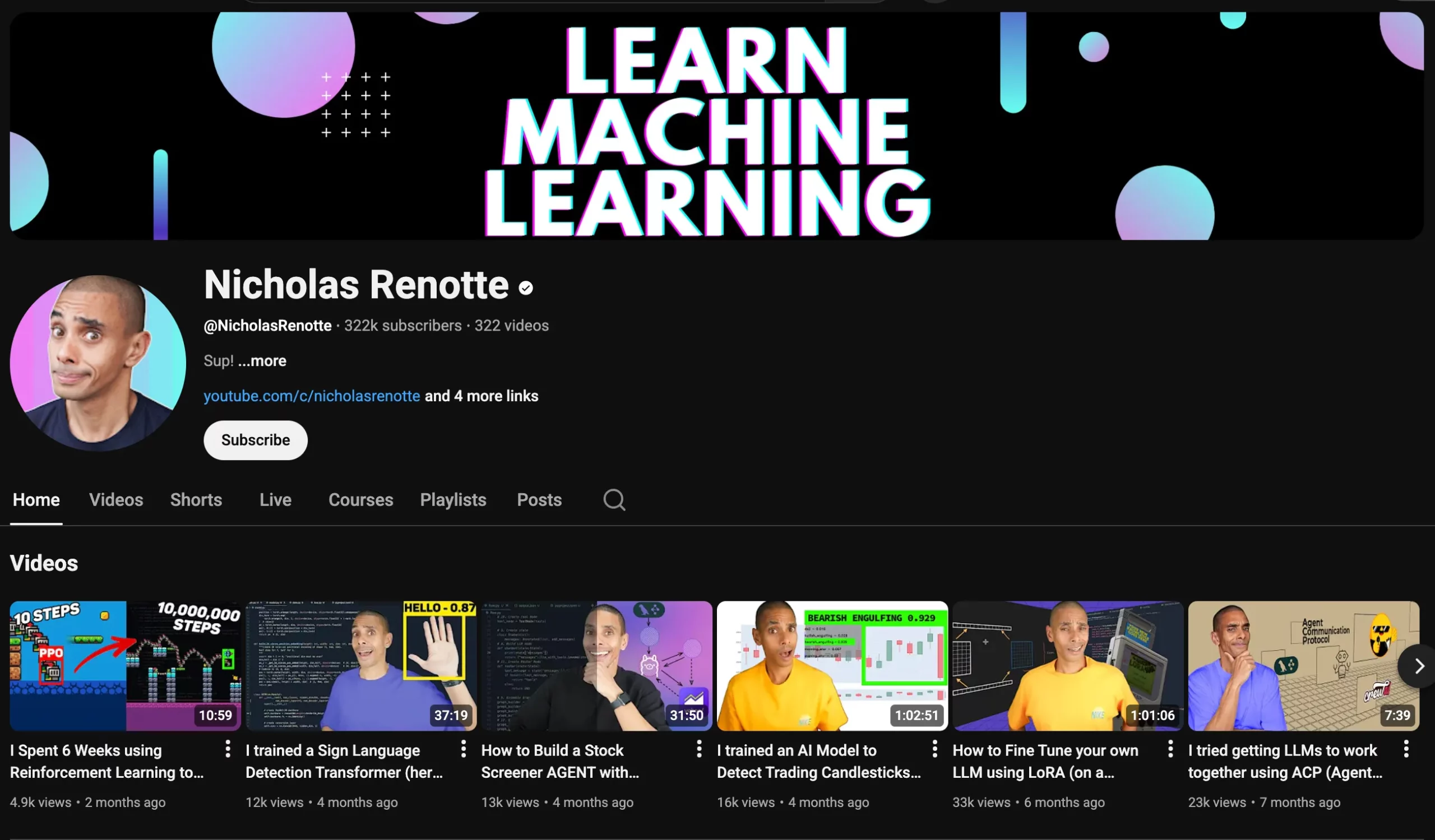
@NicholasRenotte | Project-driven Python learning
This channel teaches Python by building things you can actually see working. If theory doesn’t stick until results appear, this is a strong fit. From Mario to sign-language guesser, there’s a tutorial on almost anything zany you could think of doing in Python.
What makes this channel special?
- End-to-end Python project builds
- Visual outputs keep motivation high
- Covers real-world Python use cases
- Strong learning-through-building approach
Great for hands-on learners.
7. For automation-focused learners
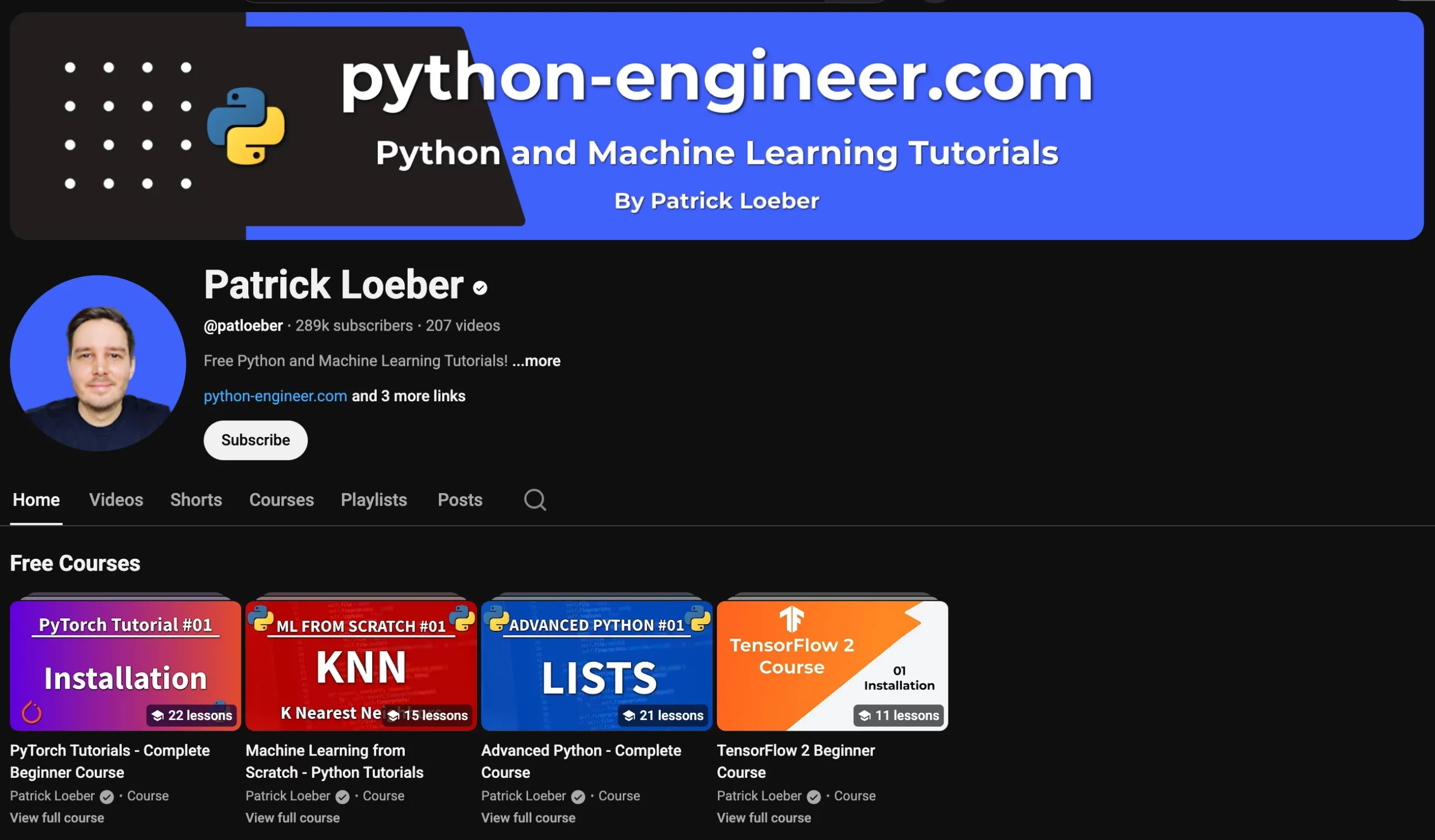
@patloeber | Practical Python for automation and scripts
If your goal is to make Python do work for you, this channel is extremely practical. Clean code, clear intent, real automation. From selenium, operating system, and commandline, to network applications, if anything is routine, it has been shown automated in one of the tutorials. Extremely pragmatic.
What makes this channel special?
- Focus on automation, scripting, and workflows
- Explains why code is written a certain way
- Practical Python patterns
- Minimal distraction
Ideal for productivity-focused learners.
8. For learners who want full-length courses
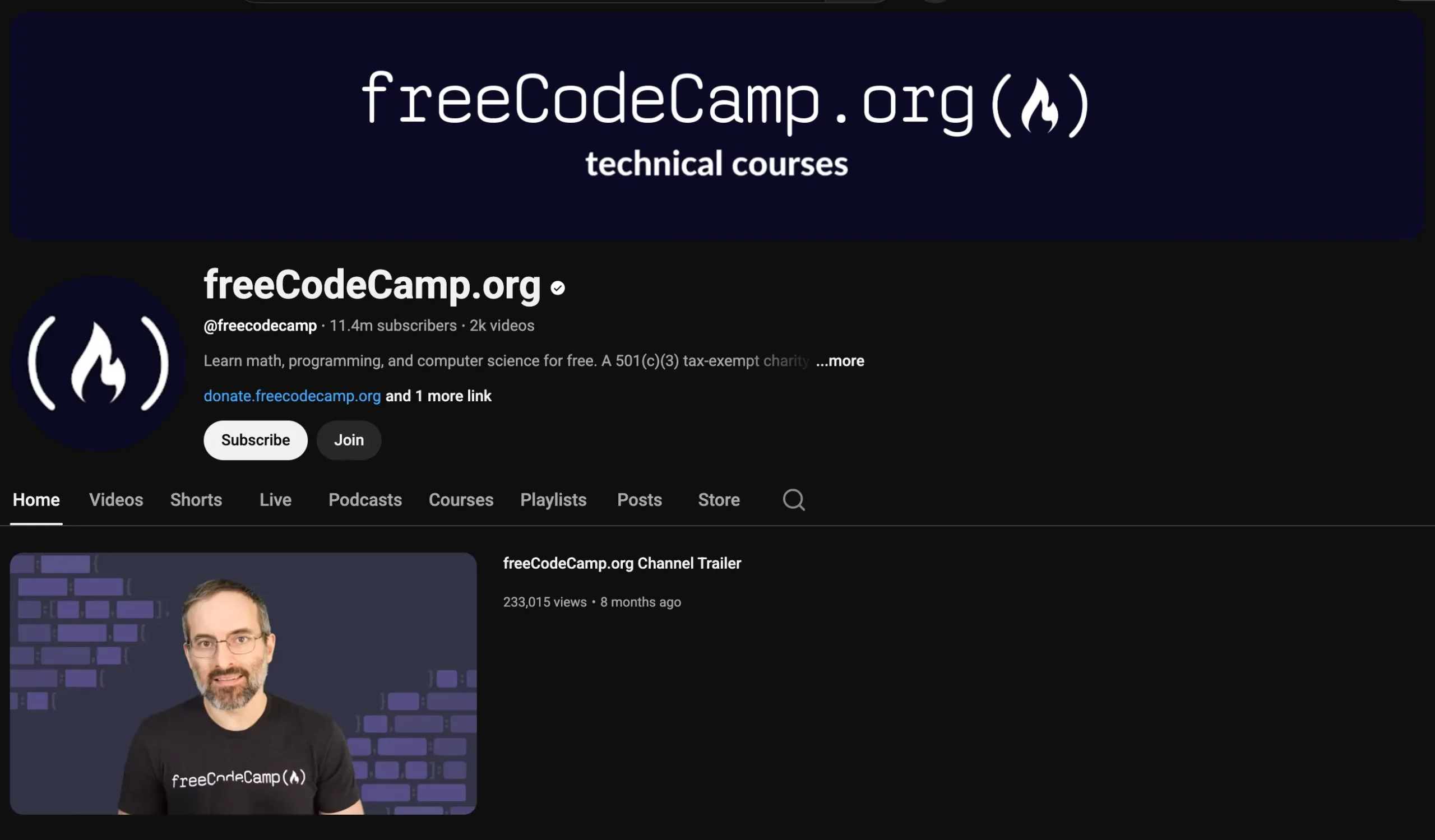
@freeCodeCamp | Long-form Python learning paths
If you prefer sitting down and following one complete roadmap, freeCodeCamp delivers. Structured, slow, and comprehensive. This is tailored to those looking for a one-stop tutorial on Python. Have some popcorn ready while you’re getting into it.
What makes this channel special?
- Full Python courses from beginner to advanced
- Clear structure and progression
- No clickbait, just content
- Good for disciplined learners
Best for people who like linear learning.
9. For beginners who need things broken down
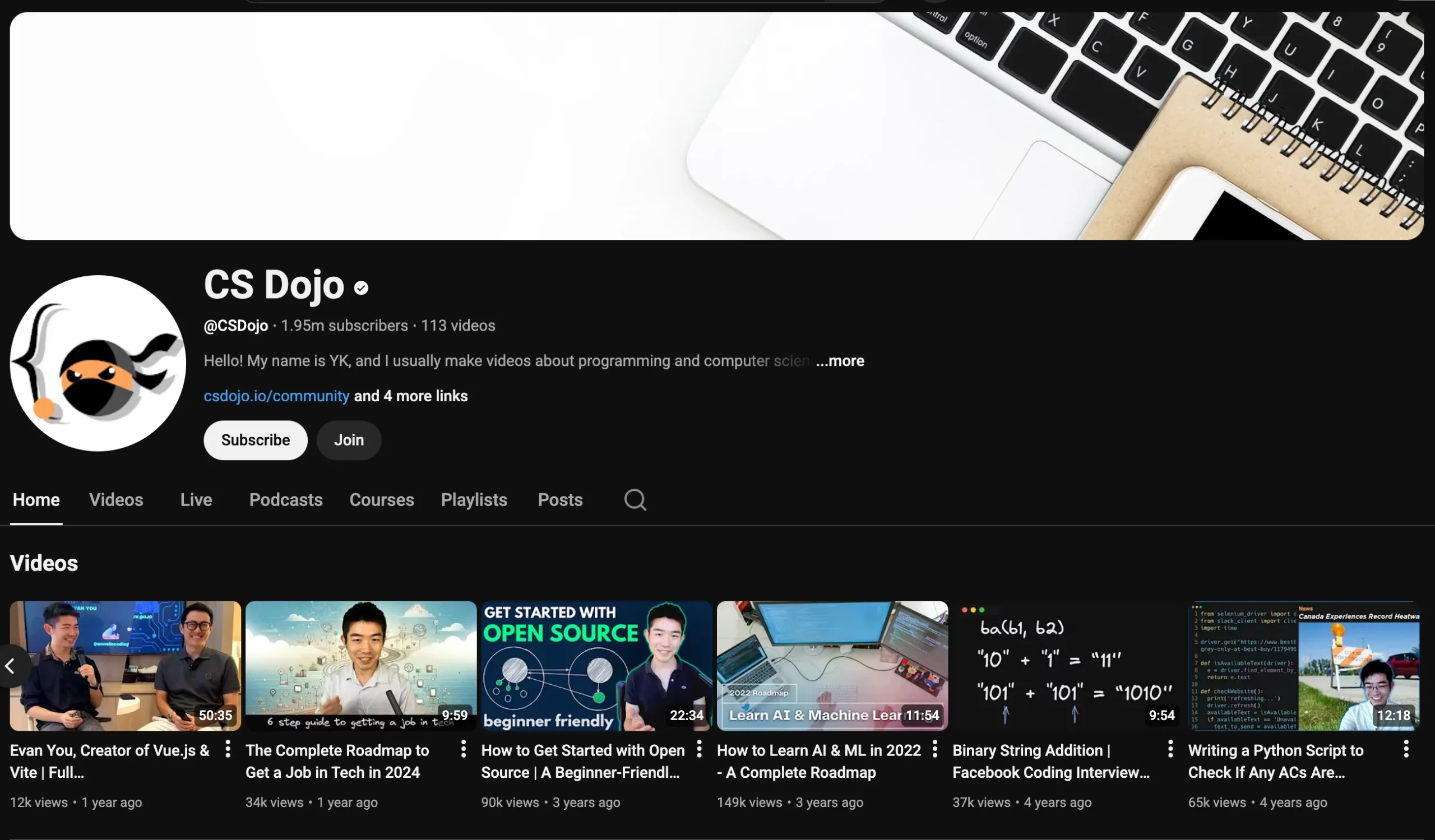
@CSDojo | Beginner-friendly Python explanations
CS Dojo explains Python concepts in a very accessible way, especially for people new to programming. Its Python tutorials for Absolute Beginners playlist is a standout for those looking to get into the language. The channel constantly puts out content that would help elaborate your knowledge of Python language.
What makes this channel special?
- Simple explanations of Python basics
- Good analogies and intuition-building
- Friendly teaching style
- Low intimidation factor
Great for first-time programmers.
10. For learners who like concise, practical tutorials
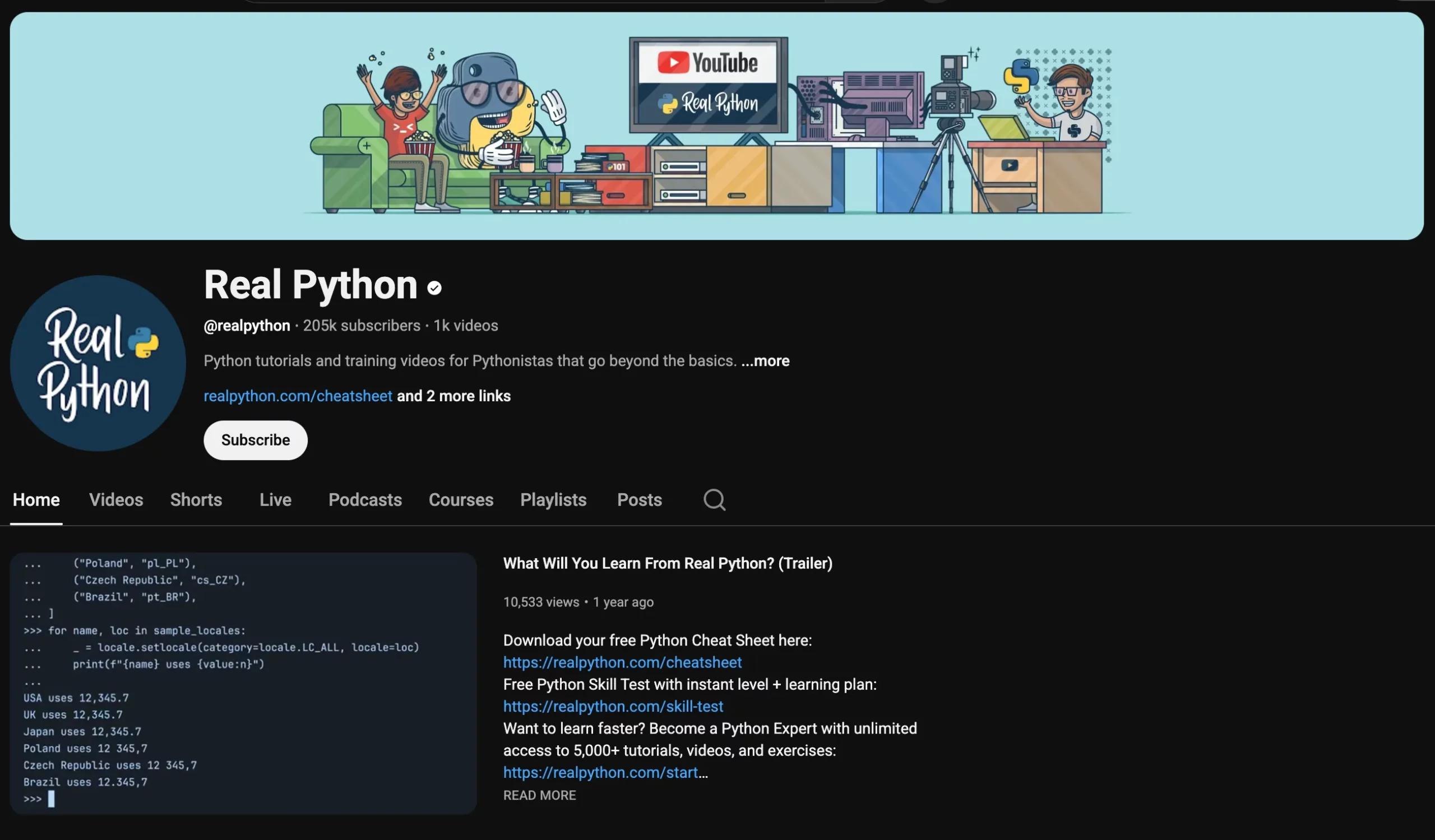
@RealPython | Focused Python concepts and best practices
This channel complements written Python learning well and focuses on clarity and correctness. If Python is the world map, then RealPython is on a world tour. The channel covers topics from fundamentals to abstract in Python. If you are learning the applicability of Python in your domain of choice, this channel would assist.
What makes this channel special?
- Short, focused Python concept videos
- Emphasis on best practices
- Good balance of theory and usage
- Great for reinforcing understanding
Ideal as a secondary learning resource.
Read More: Top 7 Free Python Courses with Certificates
Where to start?
Even though the end goal is clear—Learning Python! The path to reach there isn’t the same for everyone. Your starting point and learning style matter more than following a fixed order.
If you’re just starting out, channels that break things down slowly and clearly will help you build confidence. Already familiar with the basics, then project-driven or automation-focused channels will push your skills forward. If your attention span is short, concise videos work better than long lectures. And if you’re learning Python for career growth, structured, application-oriented content that provides a certification, will serve you best.
The idea isn’t to watch everything. It’s to pick the channel that fits where you are right now, and switch as your needs evolve.
The channels outlined should suffice for most audiences. If you’d like something specifically tuned for you, then you can check out Mentornaut.
Frequently Asked Questions
Q1. Is this list suitable for complete Python beginners?
A. Yes. Several channels focus on beginners, while others suit intermediate learners. The idea is to match your learning style and attention span rather than forcing everyone through the same starting point.
Q2. Do I need to follow all the channels to learn Python effectively?
A. No. You only need one or two channels that match how you learn best. The list exists to give options, not a mandatory sequence.
Q3. Are these channels useful for career-oriented Python learning?
A. Yes. Many channels focus on practical Python, projects, automation, and structured learning, which directly translate to real-world and job-oriented use cases.
Studying, evaluating, and explaining AI systems for over 6 years.
“𝘖𝘯𝘤𝘦 𝘮𝘦𝘯 𝘵𝘶𝘳𝘯𝘦𝘥 𝘵𝘩𝘦𝘪𝘳 𝘵𝘩𝘪𝘯𝘬𝘪𝘯𝘨 𝘰𝘷𝘦𝘳 𝘵𝘰 𝘮𝘢𝘤𝘩𝘪𝘯𝘦𝘴 𝘪𝘯 𝘵𝘩𝘦 𝘩𝘰𝘱𝘦 𝘵𝘩𝘢𝘵 𝘵𝘩𝘪𝘴 𝘸𝘰𝘶𝘭𝘥 𝘴𝘦𝘵 𝘵𝘩𝘦𝘮 𝘧𝘳𝘦𝘦. 𝘉𝘶𝘵 𝘵𝘩𝘢𝘵 𝘰𝘯𝘭𝘺 𝘱𝘦𝘳𝘮𝘪𝘵𝘵𝘦𝘥 𝘰𝘵𝘩𝘦𝘳 𝘮𝘦𝘯 𝘸𝘪𝘵𝘩 𝘮𝘢𝘤𝘩𝘪𝘯𝘦𝘴 𝘵𝘰 𝘦𝘯𝘴𝘭𝘢𝘷𝘦 𝘵𝘩𝘦𝘮.” — 𝖥𝗋𝖺𝗇𝗄 𝖧𝖾𝗋𝖻𝖾𝗋𝗍, 𝖣𝗎𝗇𝖾