Model Context Protocol (MCP) is quickly developing as a foundation for contextualizing and exchanging information among models. The future of AI is headed towards distributed multi-agent interaction and inference, and these initiatives of using MCP, are the first to create resource-efficient, sharing, and contextually relevant AI applications. In this article, we will explore MCP projects that all AI engineers should learn from or try experimenting with.
Table of contents
Here are the MCP projects that you could experiment with to hone your skills:
1. Multi-Agent Deep Researcher
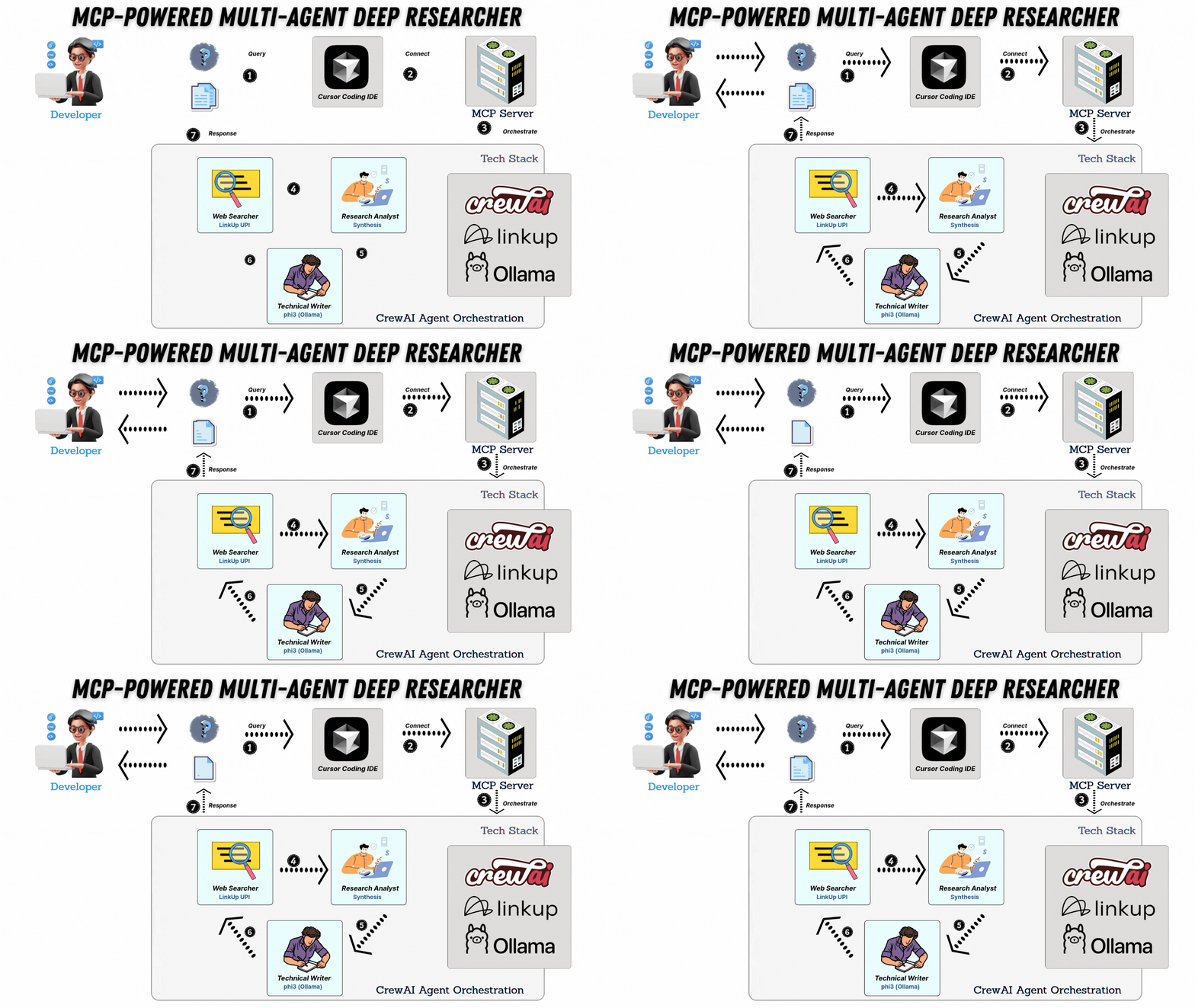
The Multi-Agent Deep Researcher project represents an amazing MCP-compliant research assistant that combines CrewAI for orchestration, LinkUp for deep web searching, and the phi3 model (which runs through Ollama) to synthesize and reason across information. The workflow is really cool, comprised of three themed agents: a Web Searcher, Research Analyst, and Technical Writer which work in sequence to provide you with a rich, organized answer to your query.
Key Features:
- MCP-compliant server with seamless integrations to other tools
- Fully modular, agentic flow for easy customization
- Local inference and synthetic writing using phi3
- Supports json-based api calls via
/research
If you’re an AI Engineer interesting in getting to know or working with multi-agent orchestration, MCP integration and developing autonomous research systems, then this might be the project for you to start with.
2. MCP Client Server using LangChain
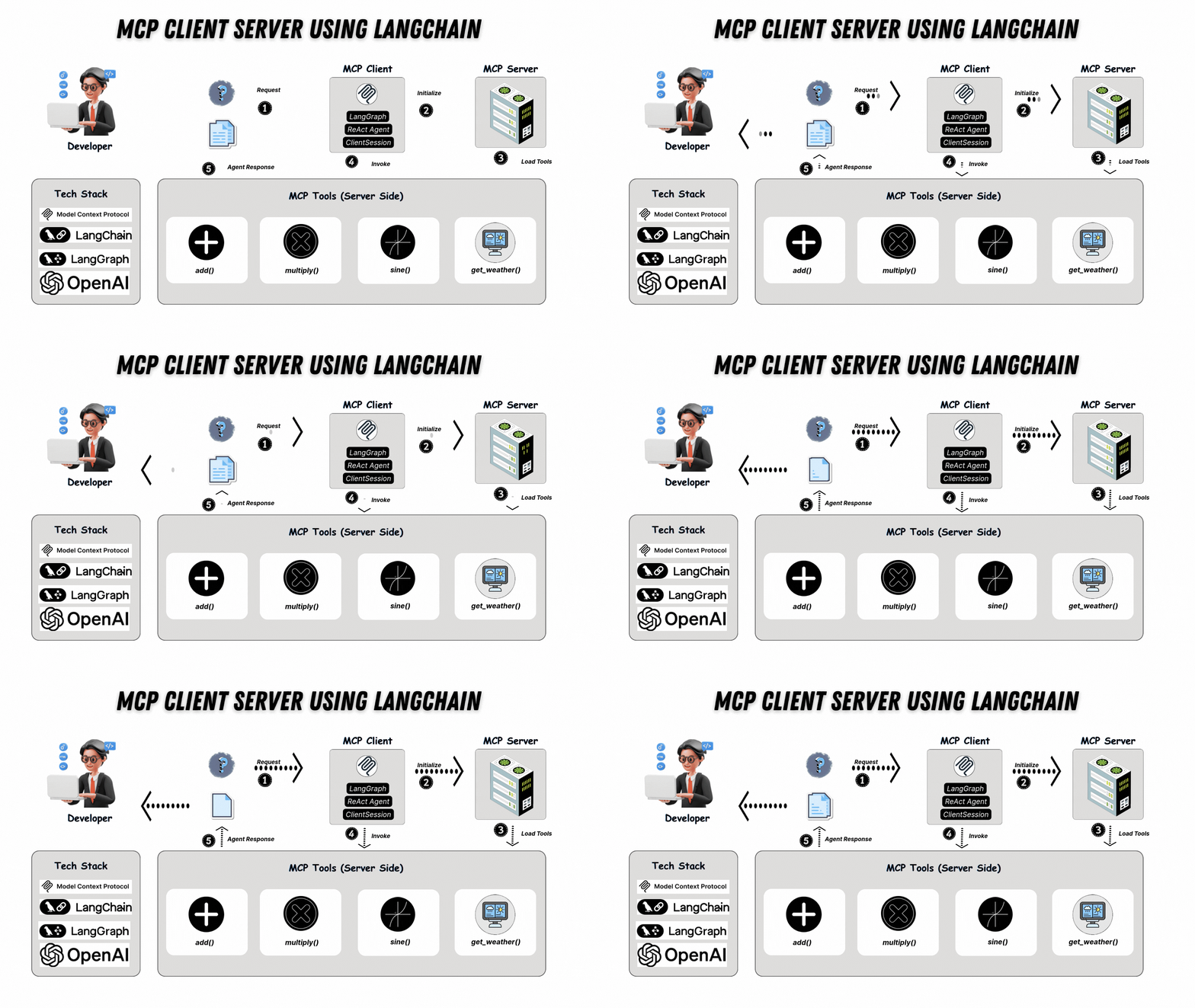
This project brings together LangChain’s orchestration capabilities with MCP’s flexible message passing to build a minimal MCP client-server setup. If you’re trying to understand how modular communication protocols and LLMs can cooperate, this is an excellent learning project.
Key Features:
- It provides us with step-by-step workflow of how we can setup MCP within the workflows of LangChain.
- It basically shows us how the client-server interacts with each other also.
- It provides us with a great starting point to experiment with the MCP Endpoints
Project Link: MCP Client Server using MCP
3. MCP-Powered Agentic RAG
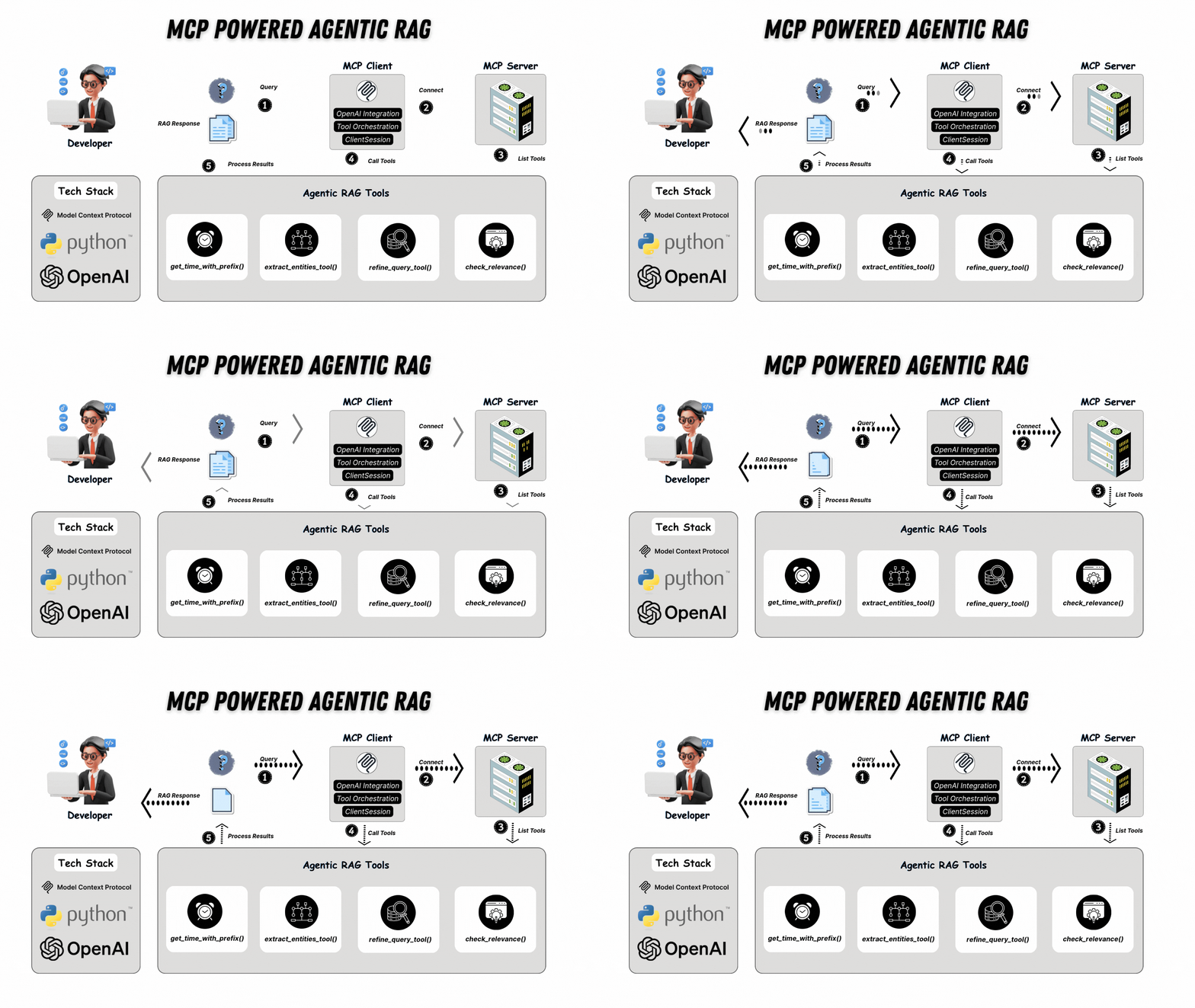
This project basically combines the advantages of Retrieval-Augmented Generation (RAG) with model agent framework using MCP. The agents work independently on focused functions such as retrieving and verifying information and generating data into useful context. This strategic division of work results in enhanced responses, clarity in output, logic and minimalizes the risk of errors or hallucinations.
Key Features:
- Using agent-level reasoning, it integrates RAG pipelines in an efficient way that produces responses that are much more reliable and contextual.
- It can be used for business or research purposes
- An amazing example of MCP orchestration that runs itself
Project Link: GitHub
4. Customised MCP Chatbot
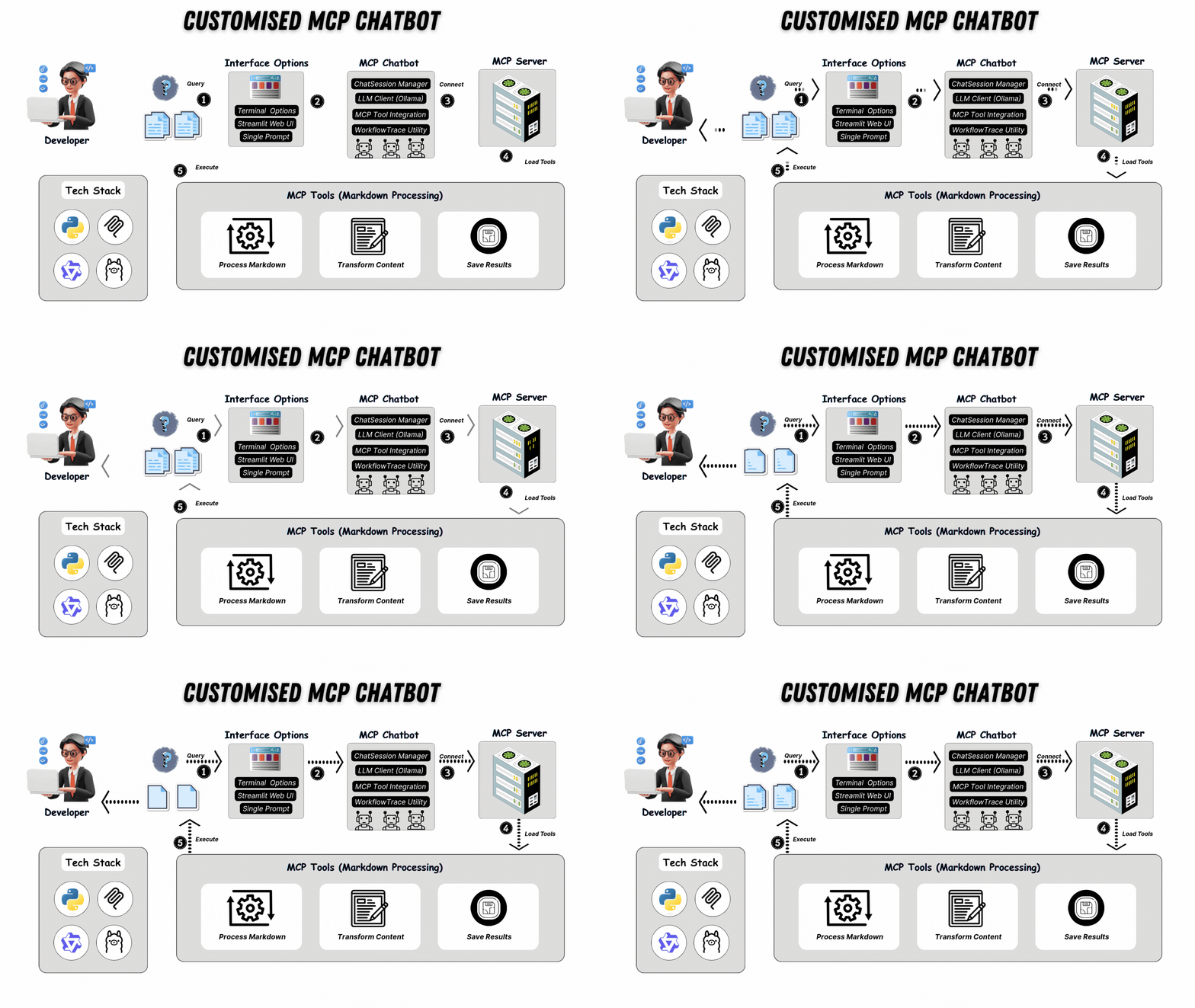
This project is designed for customisation, the chatbot is exclusively powered by MCP and allows you flexible integration via external APIs. It supports fine-grained memory, tool usage, and customization by domain.
Key Features:
- It has a modular architecture for a chatbot which is pretty easy to adapt
- By making use of MCP, it allows us to connect to knowledge bases
- It provides rich conversational memory for continuity of context
Project Link: GitHub
5. MCP Powered financial Analyst
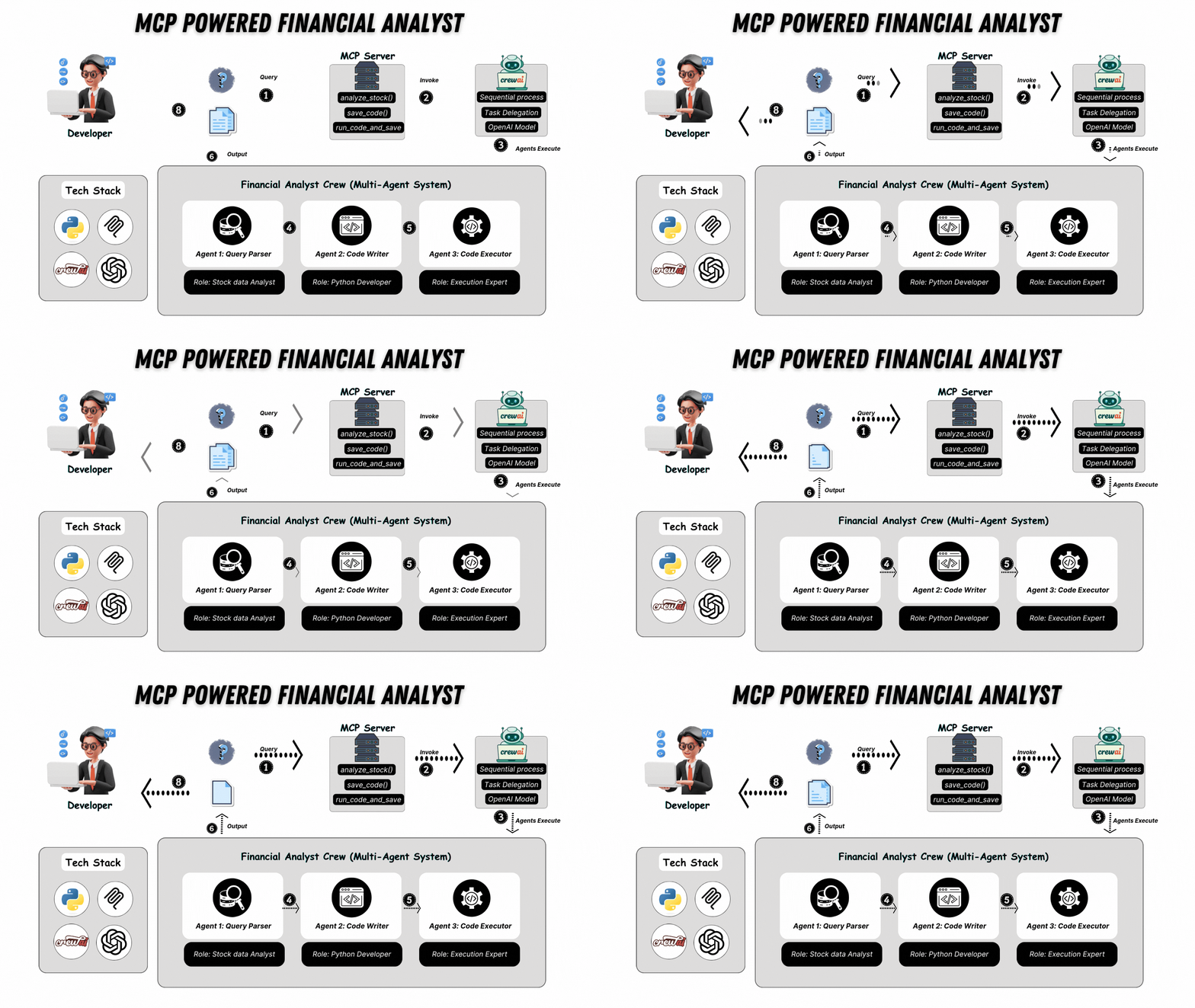
The project effectively illustrates how financial-type analytical activity can use MCP to facilitate LLM communicating with tools for real time financial data. It allows the financial data analyst to get context sensitive knowledge, risk summaries, and even generate accurate reports on demand.
Key Features:
- It provides real-time data pipeline with MCP integration
- Autonomous data querying and summarization
- It is especially great if you’re a FinTech AI engineer
Project Link: Building a MCP Powered Financial Analyst
6. MCP Powered Voice Assistant
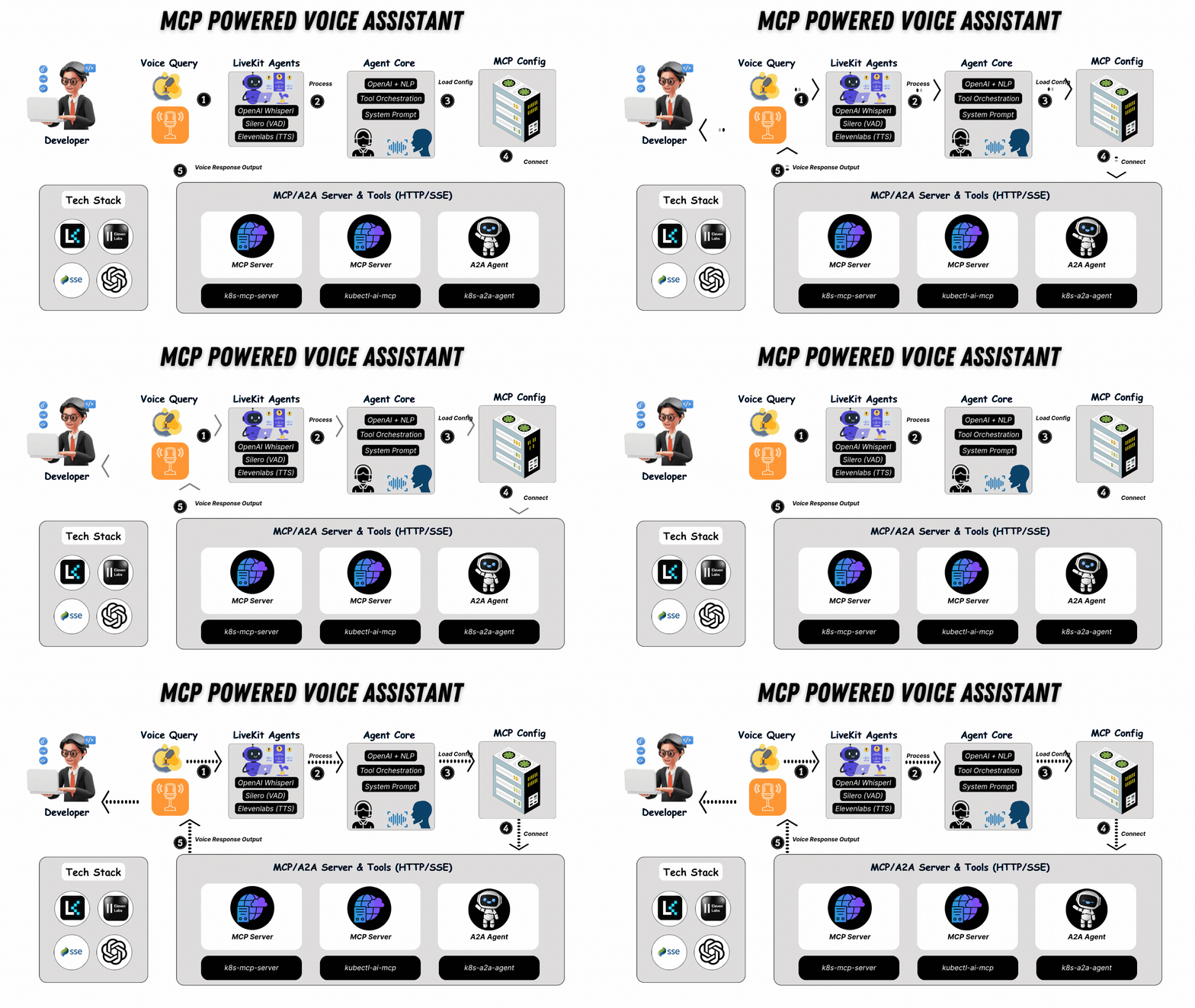
With the Voice MCP Agent, you can communicate with agents using voice commands through the MCP. Here the Voice commands are transformed from natural language into interactive context for AI models and tools. The main purpose of this agent is to provide an example of a speech-to-intent pipeline thanks to local MCP nodes.
Key Features:
- Local speech recognition and intent routing
- Multi-agent audio processing
- Excellent for smart assistant and robotics integration
Project Link: GitHub
7. Cursor MCP Memory Extension
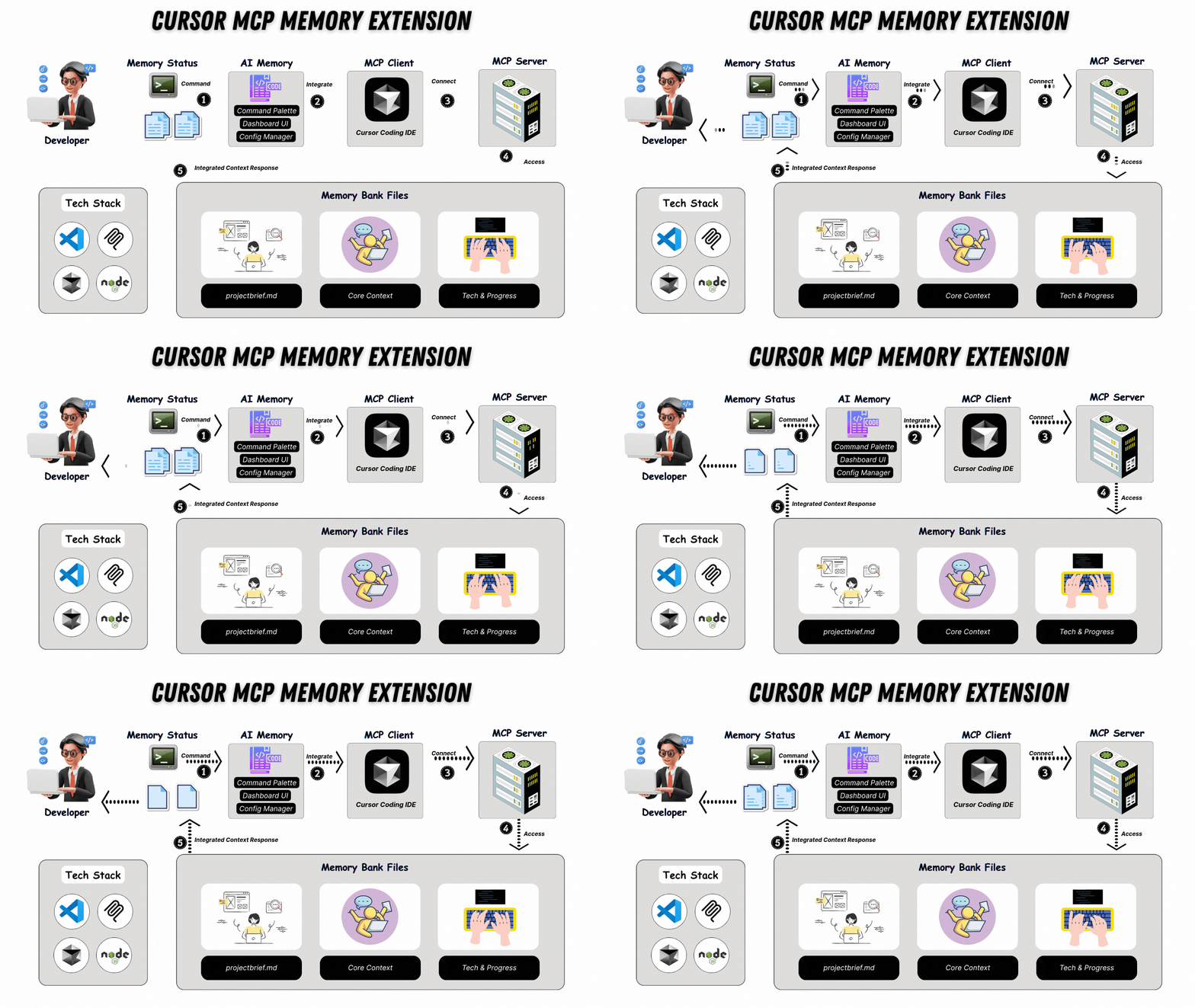
This innovative project enabled by MCP brings memory persistence into Cursor AI giving you a longer-term ability for contextual awareness when working with LLM-based coding copilots. It makes use of the MCP memory structure to keep memory in sync locally instead across sessions and tools.
Key Features:
- It allows recall and persistent memory for MCP agents
- At the IDE Level, it provides contextual intelligence
Project Link: GitHub
Summary
Here is a summary of the MCP projects listed in this article, along with their purpose and notable components:
| Project Name | Core Purpose | Notable Component |
| Multi-Agent Deep Researcher | Autonomous multi-agent research system | CrewAI, LinkUp, phi3 |
| MCP Client Server using LangChain | LangChain + MCP orchestration | LangChain |
| MCP-Powered Agentic RAG | Agentic RAG with context reasoning | Multi-agent pipeline |
| Customised MCP Chatbot | Personalized chatbot framework | Contextual memory |
| MCP Powered Financial Analyst | Finance automation and insights | Data adapters |
| MCP Powered Voice Assistant | Speech-driven multi-agent control | Voice interface |
| Cursor MCP Memory Extension | Persistent agent memory for Cursor IDE | Session persistence |
Conclusion
The MCP ecosystem is truly transforming the ways that AI systems can collaborate, orchestrate, and reason. From multi-agent collaboration to the production of on-device, local data, these projects illustrate how powerful MCP can become, and that you as an AI engineer can create modular, context-aware systems that can interoperate with different domains.
Frequently Asked Questions
Q1. What makes MCP important for AI engineers?
A. MCP gives models a common language to talk to tools, data sources, and other agents. It’s the backbone for scalable multi-agent systems, letting you build modular workflows where models coordinate instead of acting in isolation.
Q2. Do I need advanced infrastructure to experiment with MCP?
A. Not at all. Many MCP projects run locally with lightweight models or simple servers. You can start with small prototypes (like LangChain integration)and scale once you understand the workflow.
Q3. How does MCP differ from a standard API integration?
A. APIs connect systems, but MCP standardizes context sharing and tool interaction. Instead of one-off integrations, you get a protocol that lets different models and tools plug in and collaborate, making your pipelines more reusable and future-proof.
Data Science Trainee at Analytics Vidhya
I am currently working as a Data Science Trainee at Analytics Vidhya, where I focus on building data-driven solutions and applying AI/ML techniques to solve real-world business problems. My work allows me to explore advanced analytics, machine learning, and AI applications that empower organizations to make smarter, evidence-based decisions.
With a strong foundation in computer science, software development, and data analytics, I am passionate about leveraging AI to create impactful, scalable solutions that bridge the gap between technology and business.
📩 You can also reach out to me at [email protected]