I have reiterated it time and again. But let me mention it here once more – NotebookLM is one of the most powerful AI tools present today. If you already know of it, the reasons for this statement are obvious to you. In case you are unaware, know that NotebookLM can change the way you study, research, and work, forever. And just in case you have your doubts, allow me to clear them through and through in this article. How? We will explore some prompts that will turn your NotebookLM experience into a powerhouse of productivity.
The ideas behind these prompts are simple: be hyper-specific and get unprecedented results. They have been inspired by the ideas of fellow AI users like @godofprompt and @meeraitt on X. The prompts are meant for various use-cases. So find the one that is suitable for your needs and give it a try on NotebookLM today.
Also read: All About Google’s NotebookLM
Here are the prompts:
Table of contents
- Sample Data
- The “Essential Questions” Prompt
- The “Interesting & Surprising Insights” Prompt
- The “Source Gap” Prompt
- The Contradictions Prompt
- The Hidden Connections Prompt
- The Quiz/ Debate Prompt
- The Multilingual Podcast Prompt
- The Product Manager Prompt
- The School Teacher Prompt
- The Self-Improvement Prompt
- Conclusion
Sample Data
To test out the prompts within this article, we will upload a set of white papers on EVTOLs. Some context – EVTOLs are Electric Vertical Take-Off and Landing vehicles, which are widely considered to be the future of mobility. Essentially a modern version of helicopters, EVTOLs can take off and land vertically and are run completely on electricity. For further research, we will upload white papers by Uber, NASA, Porsche, and the International Civil Aviation Organisation on EVTOLs on NotebookLM and try out the prompts below.
To be a NotebookLM pro with these super prompts, check out the prompts and their results below.
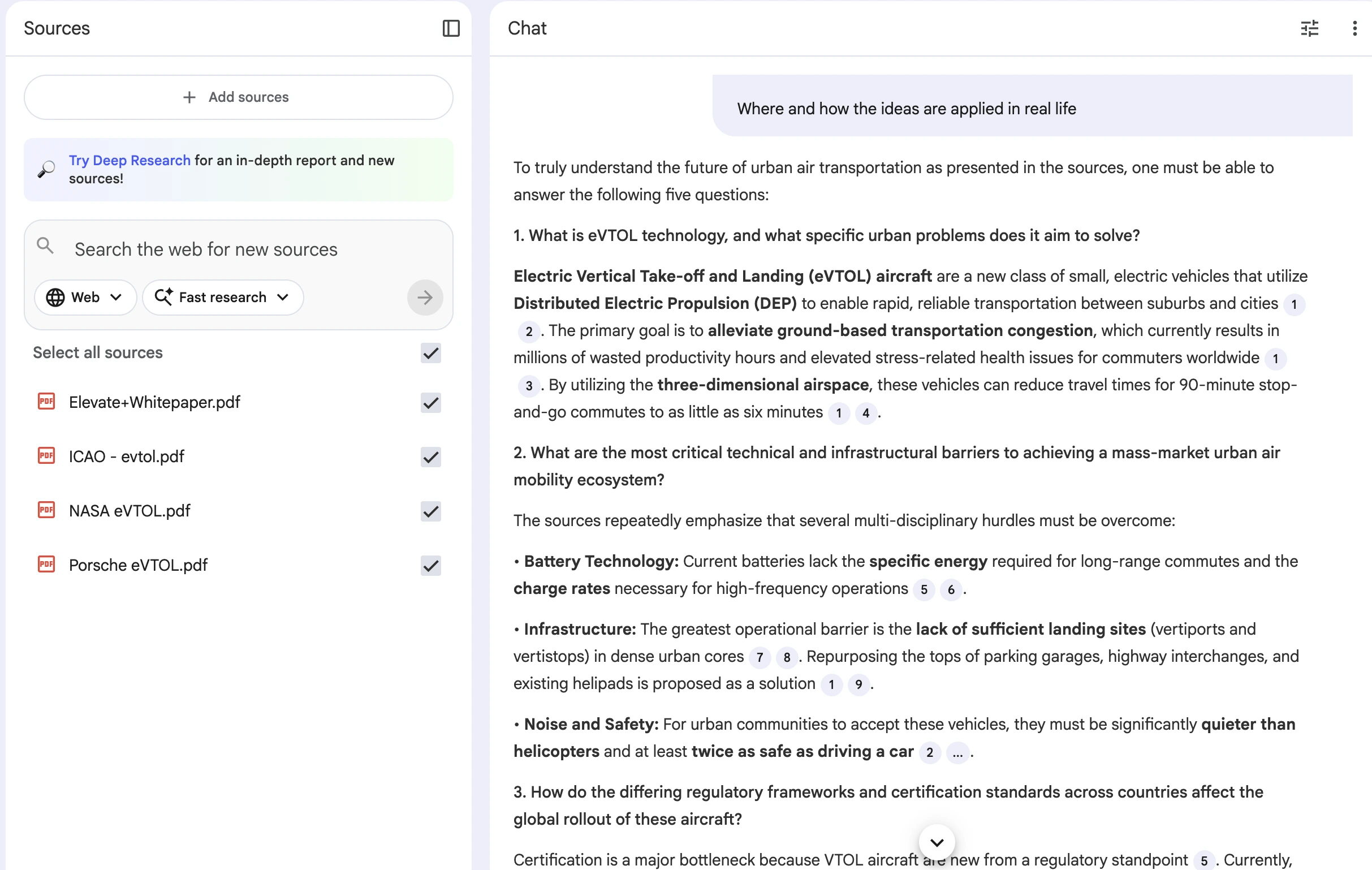
1. The “Essential Questions” Prompt
If you want clarity fast from a dense pack of material like PDFs, notes, articles, or research papers, this should be your go-to prompt. Instead of long summaries, it forces NotebookLM to identify the core questions that truly matter. The idea is to convey the core information in the form of questions that build a mental framework around the topic. Once you understand them, everything else falls into place.
Best for:
Among the top prompts, this one is especially powerful for studying, lecture preparation, or understanding unfamiliar and complex topics on NotebookLM.
Prompt:
Go through all my uploaded materials and identify the 5 most important questions
that someone must be able to answer to truly understand this topic.These questions should collectively capture the core meaning of the sources.
While forming the questions, consider:
- The main topics and definitions
- The key ideas that are emphasized repeatedly
- How different concepts relate to each other
- Where and how the ideas are applied in real life
Output:

2. The “Interesting & Surprising Insights” Prompt
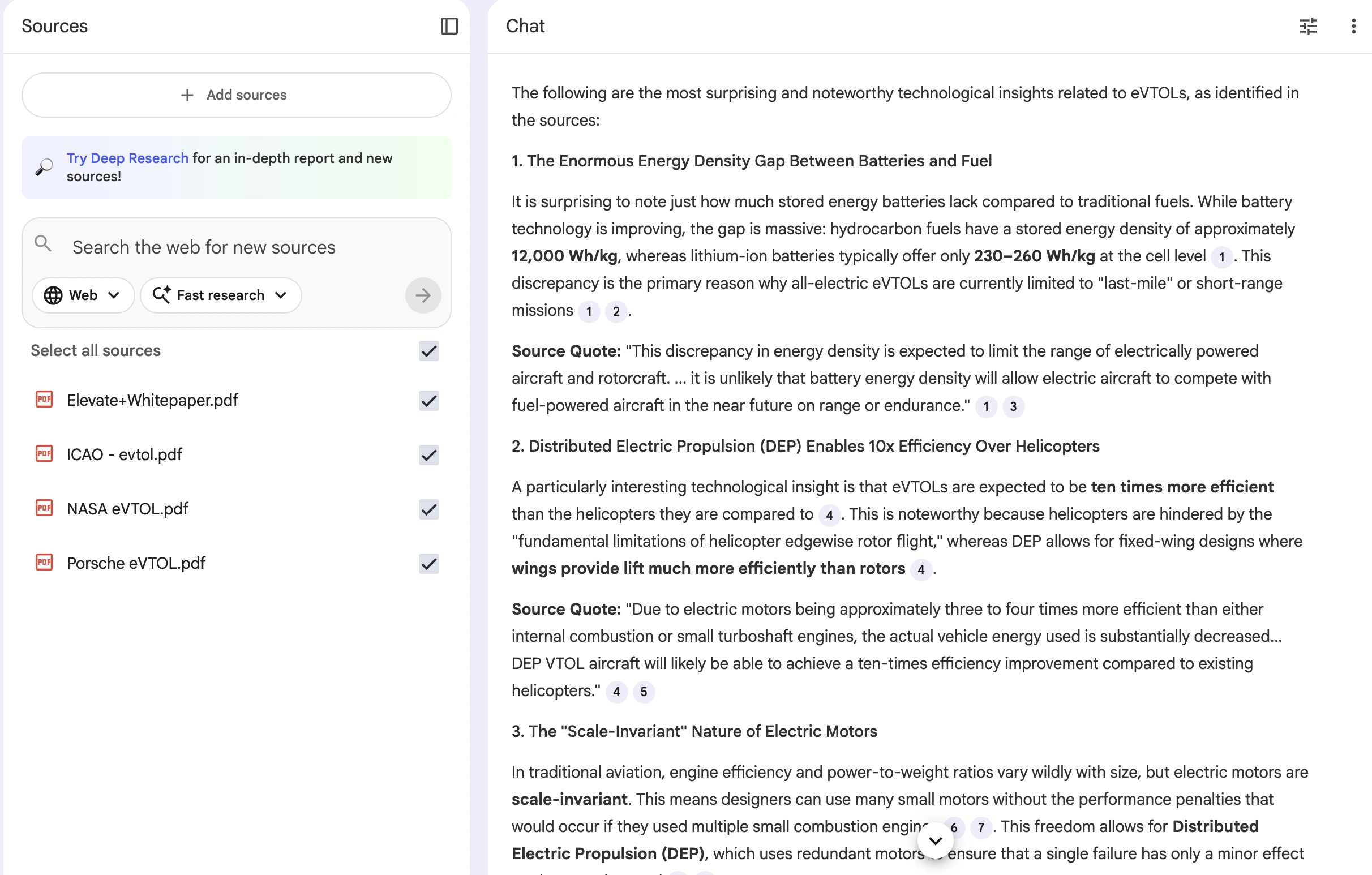
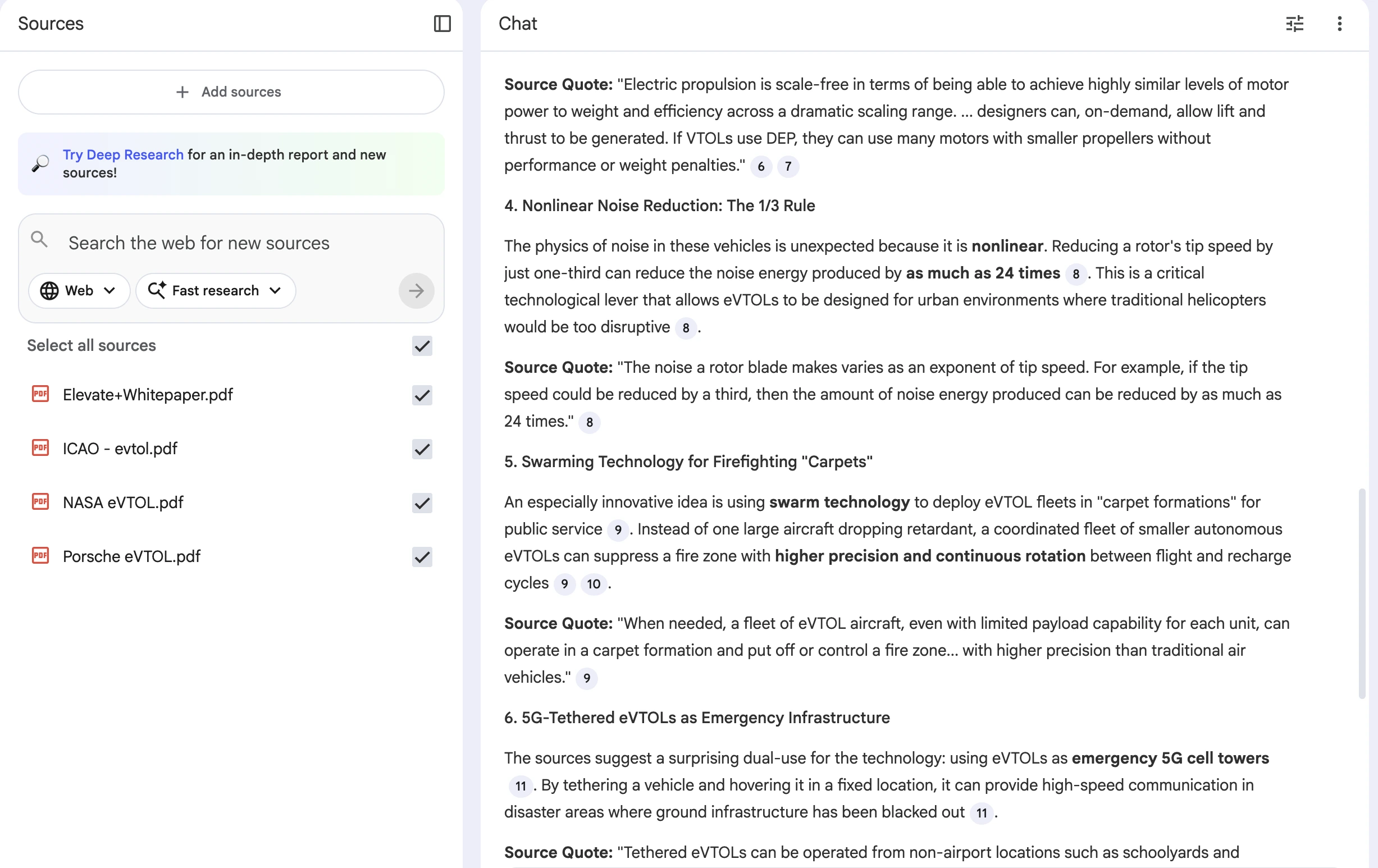
We tend to memorise better when the information being consumed sparks our interest. This is the mental hack being used in the prompt here. The idea behind it is to surprise ourselves with interesting tidbits around the topic, which help instantly memorise a core detail. The prompt is meant to help you uncover surprising facts, non-obvious insights, and quotable moments buried inside your sources. Hot tip: with light steering, you can even control the kind of surprises you want NotebookLM to focus on.
Best for:
This prompt is extremely useful for writers, researchers, and content creators looking for hooks, contrarian ideas, or fresh perspectives.
Prompt:
I am researching and writing about [TOPIC].
From all uploaded sources, identify the most surprising, unexpected,
or especially interesting facts, ideas, or insights related to this topic.For each insight:
- Explain why it is surprising or noteworthy
- Include direct quotes from the sources to support it
Focus specifically on [SPECIFIC ASPECT of the topic],
and avoid emphasizing [OTHER ASPECTS] unless absolutely necessary.
Output:

3. The “Source Gap” Prompt
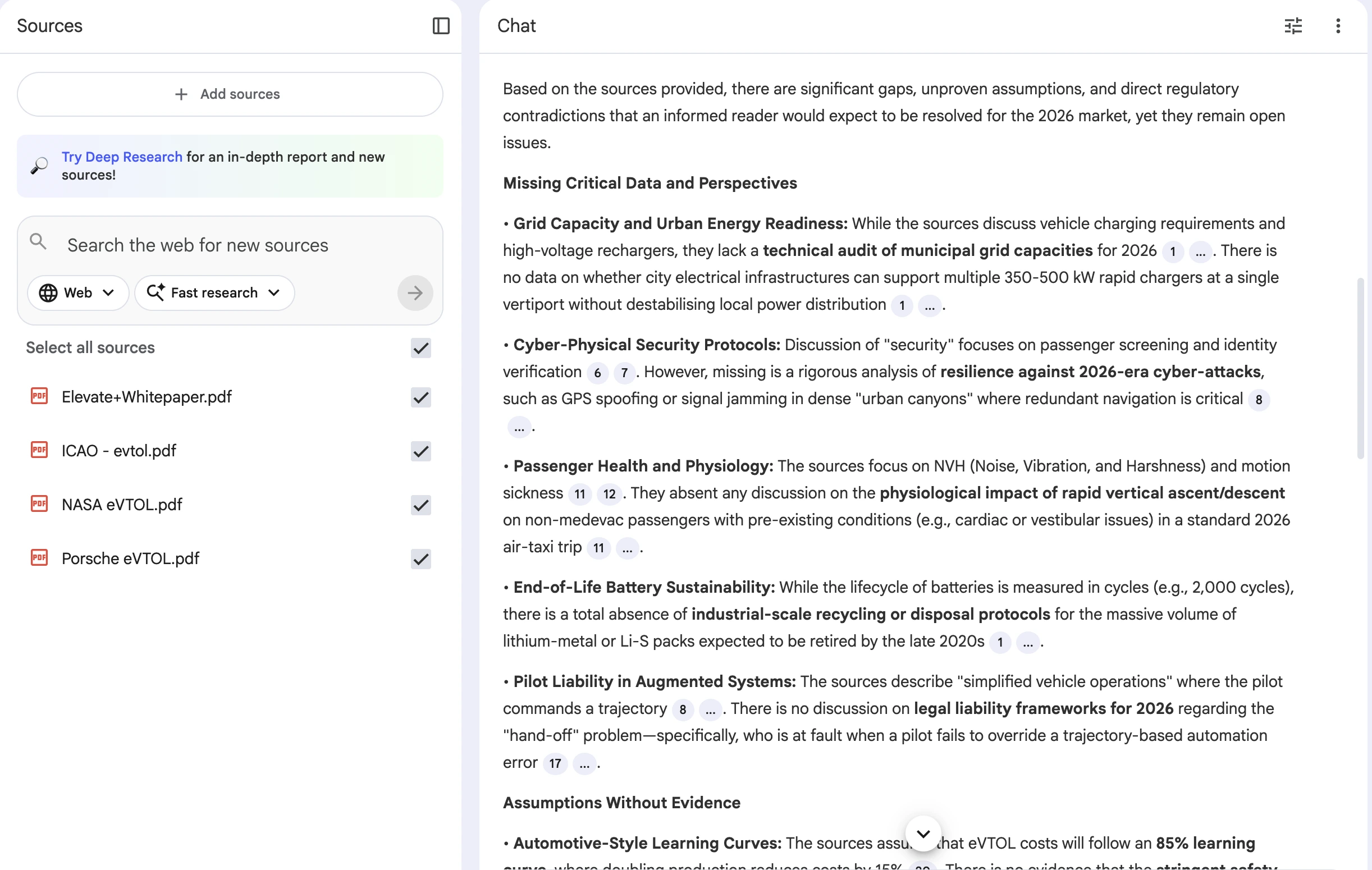
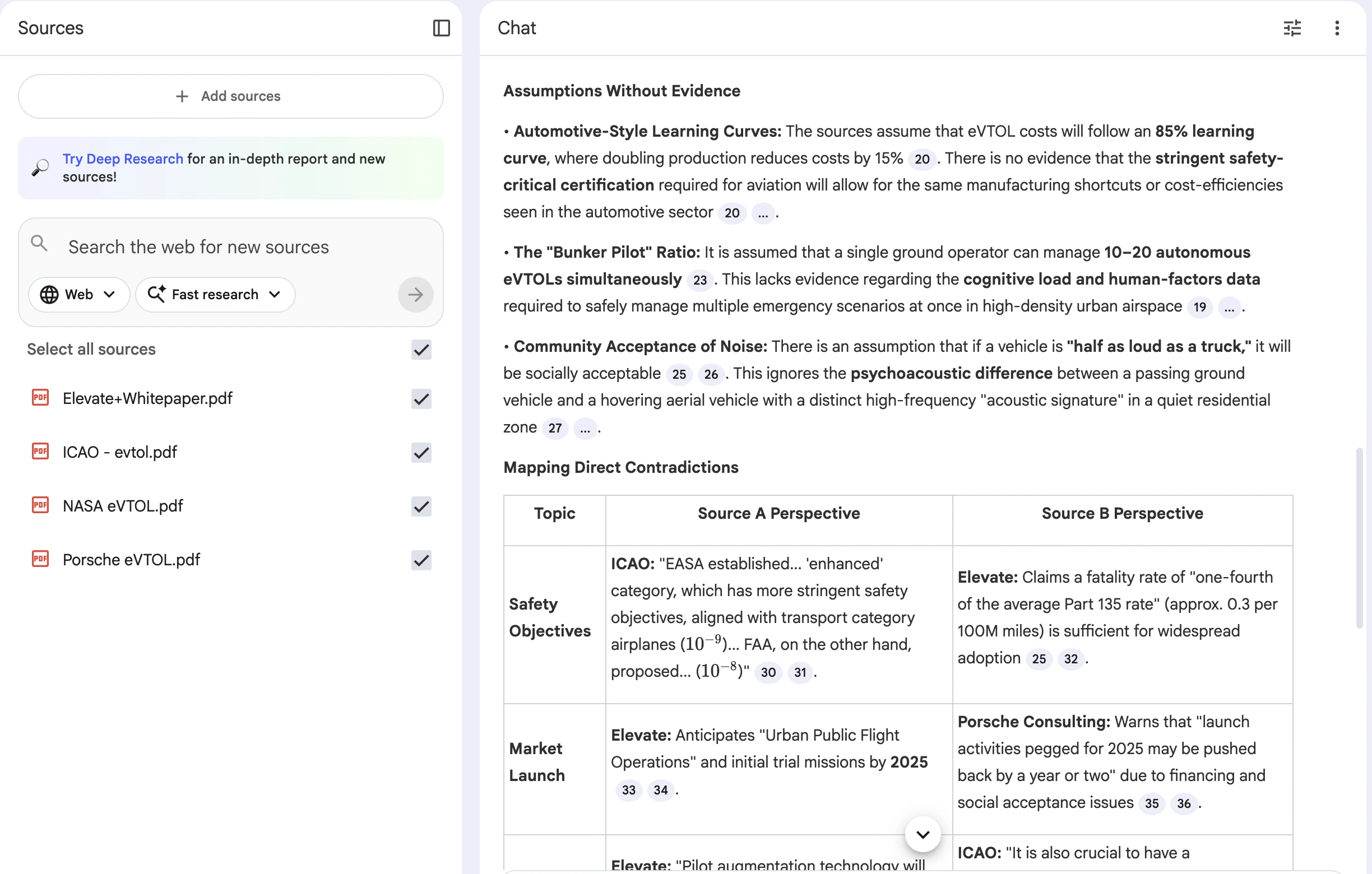
This prompt will take your research work to the next level. Instead of repeating the information within your sources, this prompt forces it to act like an auditor. NotebookLM checks “what is missing” within your sources, and where they make assumptions or disagree with each other. This is one of the most brilliant power hacks to know what is unknown.
Best for:
This NotebookLM prompt is ideal for market research, strategy decks, whitepapers, and future-oriented insights.
Prompt:
Review all the uploaded documents together and identify what is missing, not what is already covered.
I want to uncover the hidden gaps based on current industry standards for [TOPIC], especially in the context of 2026 market realities.
Specifically:
- Point out critical data, perspectives, or discussions that should be present but are absent
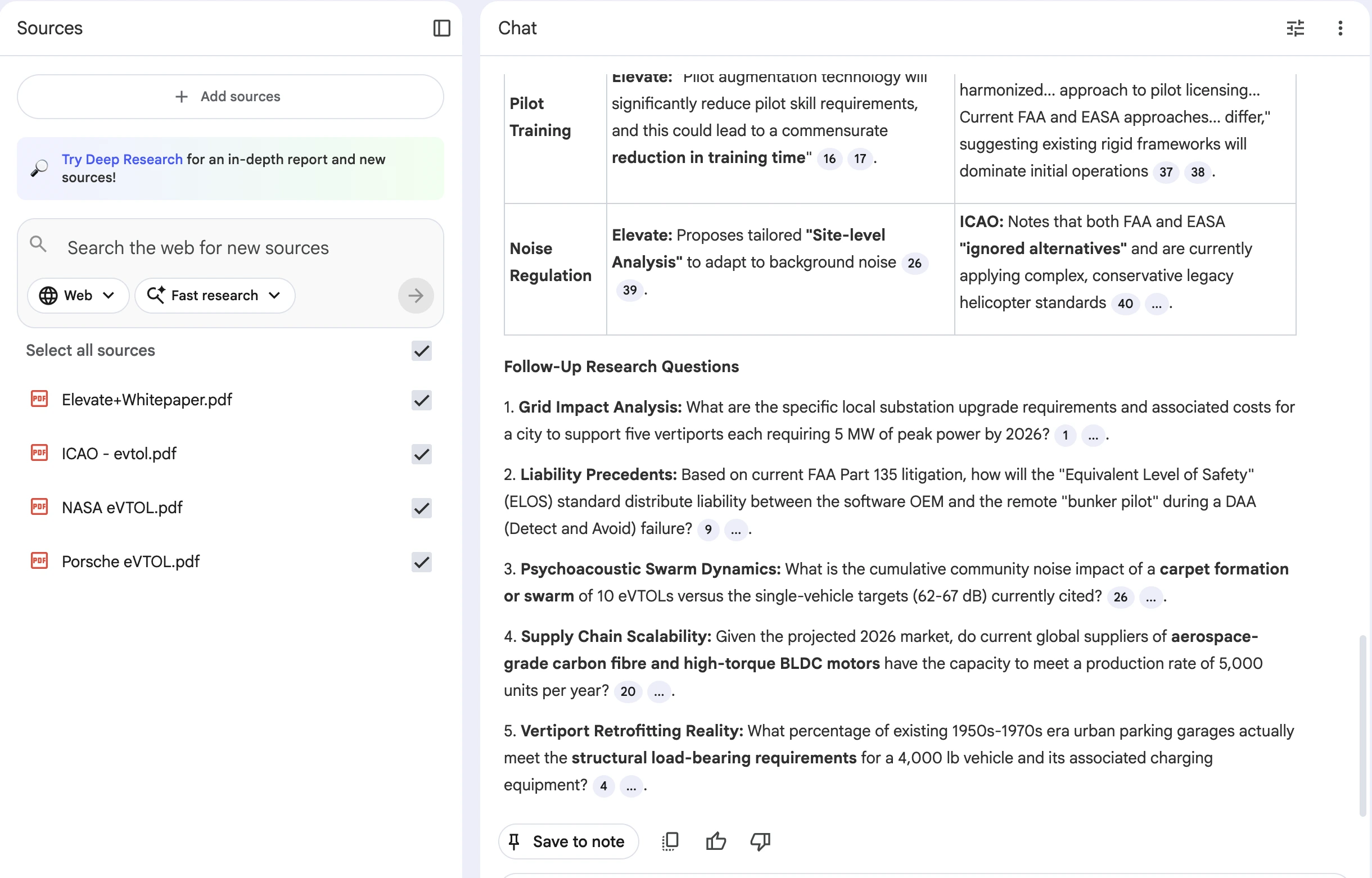
- Highlight where the sources make assumptions without clear evidence
- Clearly map contradictions by showing where Source A disagrees with Source B (use direct quotes)
- Suggest 5 precise follow-up research questions I should run in Deep Research Mode to close these gaps
Avoid generic summaries.
Base all contradictions on direct citations.
Focus on what an informed reader would expect but not find in these sources.
Output:
Also read: Prompt Engineering: Definition, Examples, Tips and More
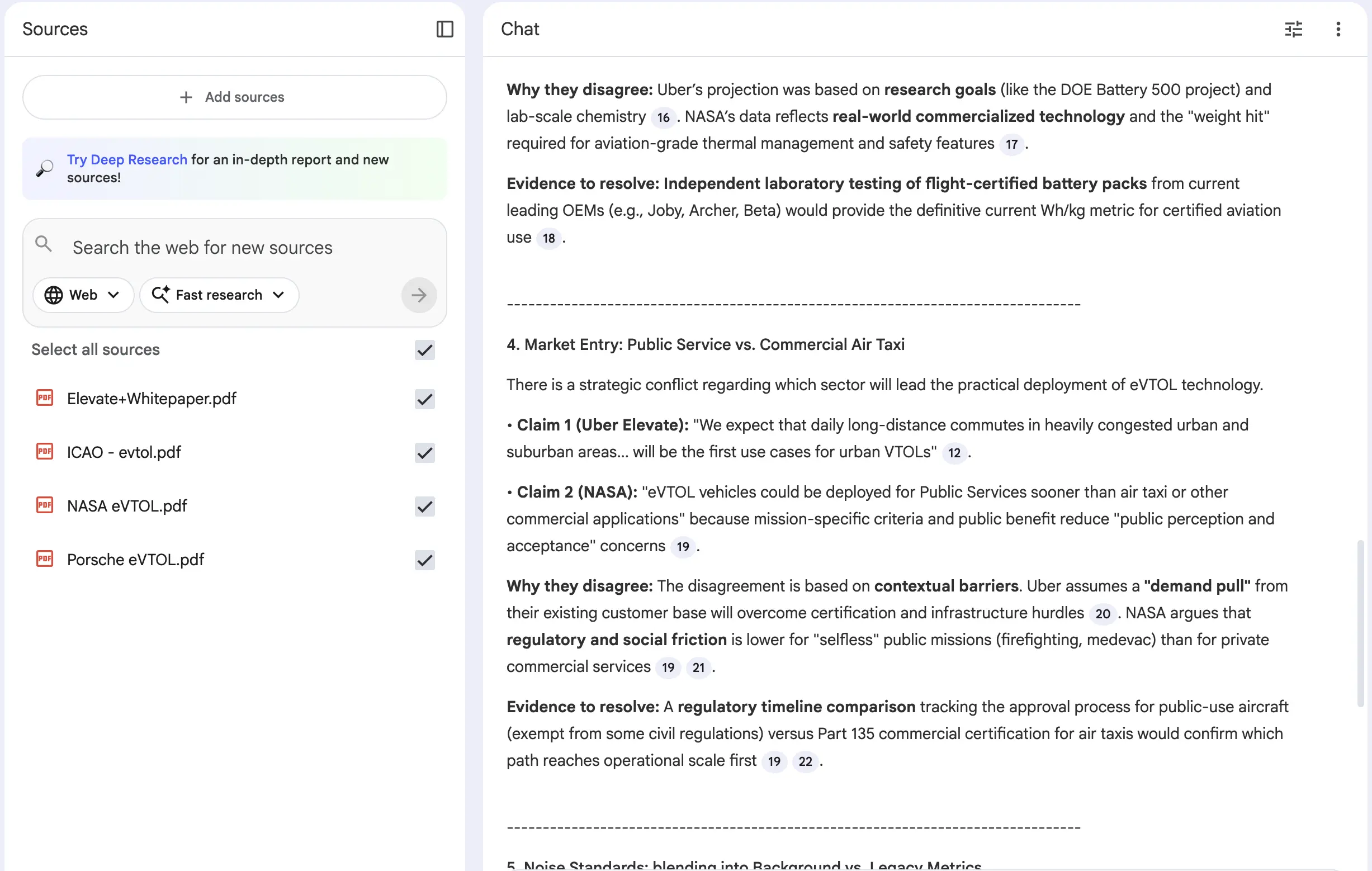
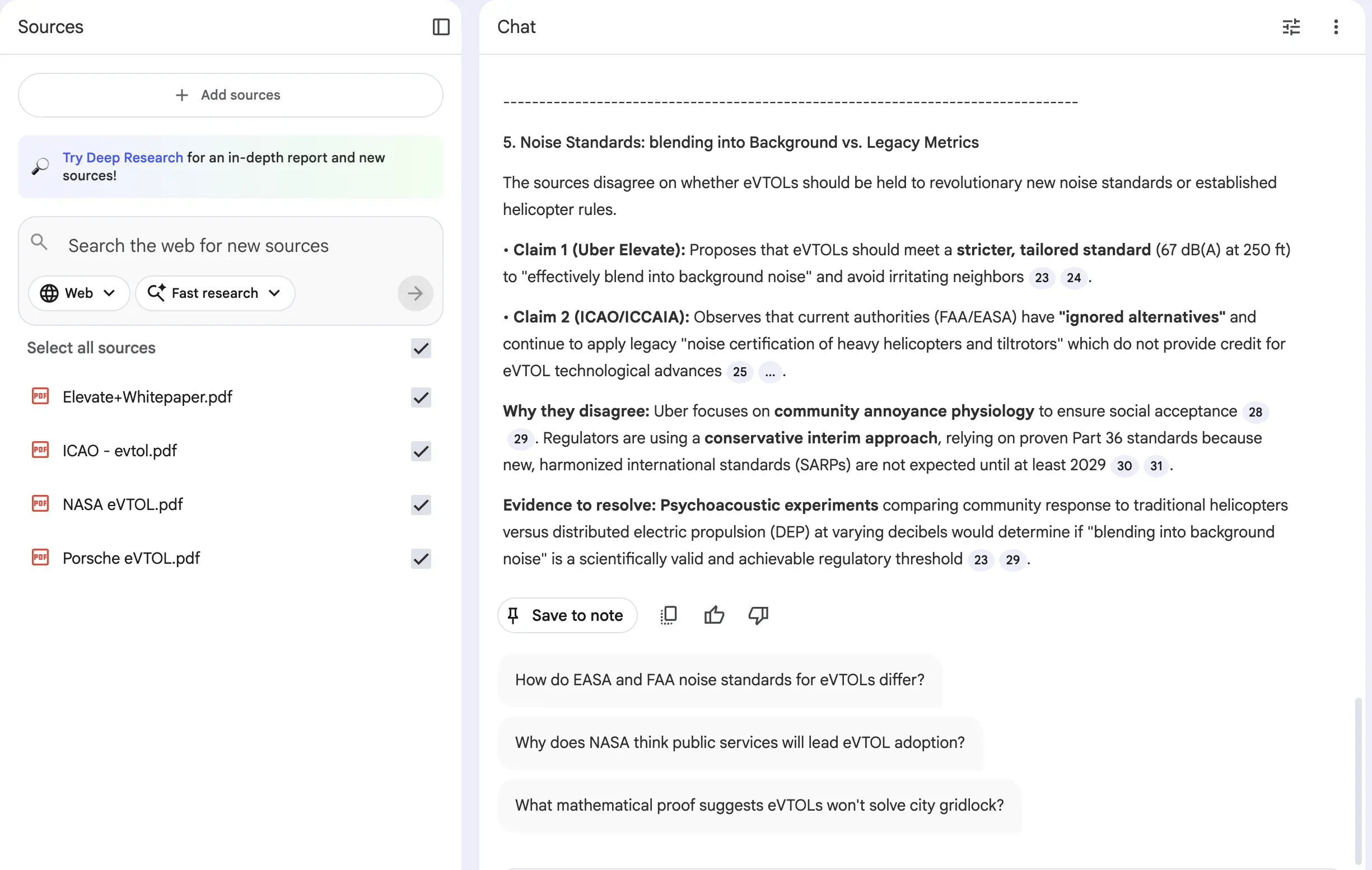
4. The Contradictions Prompt
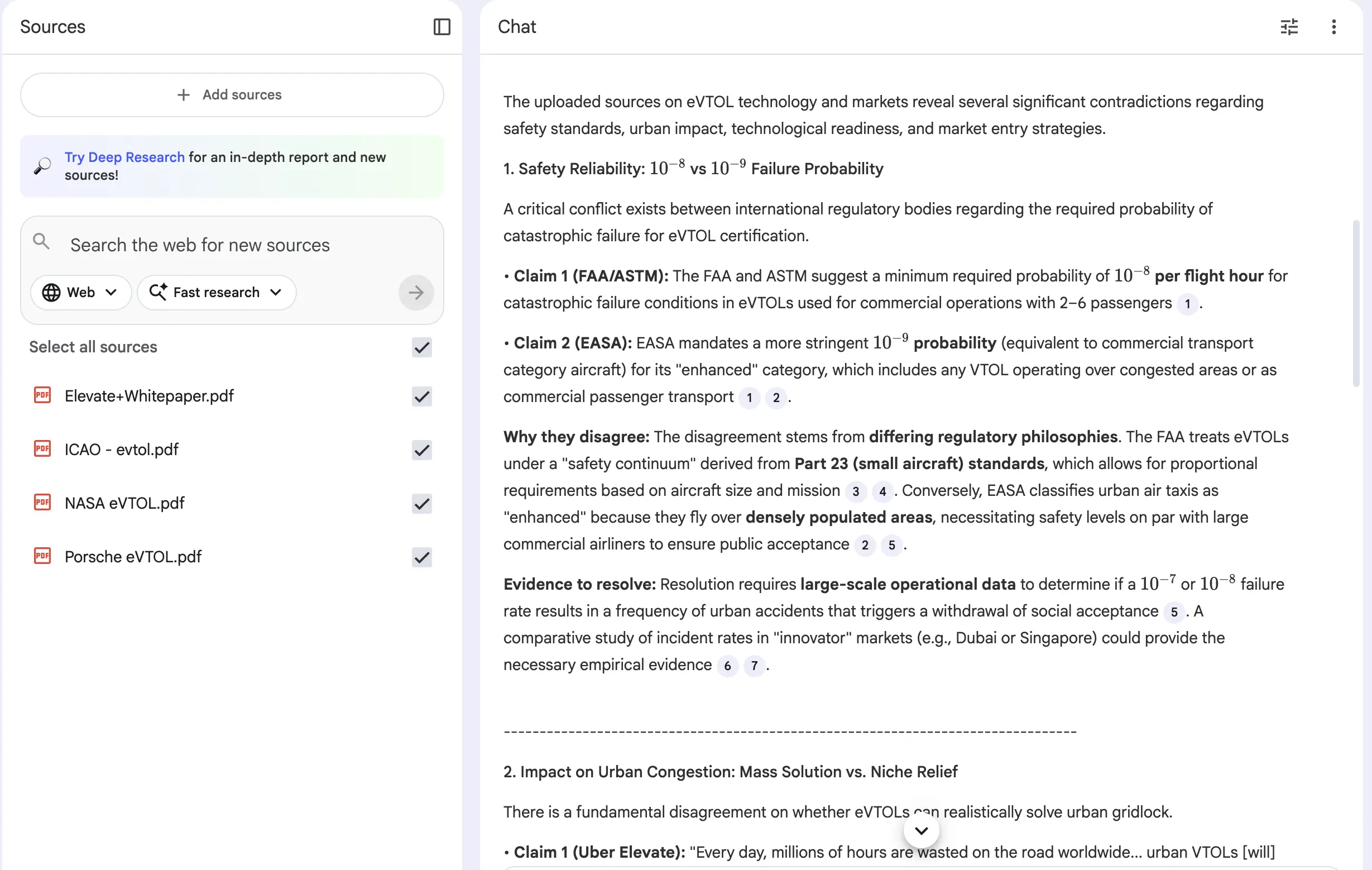
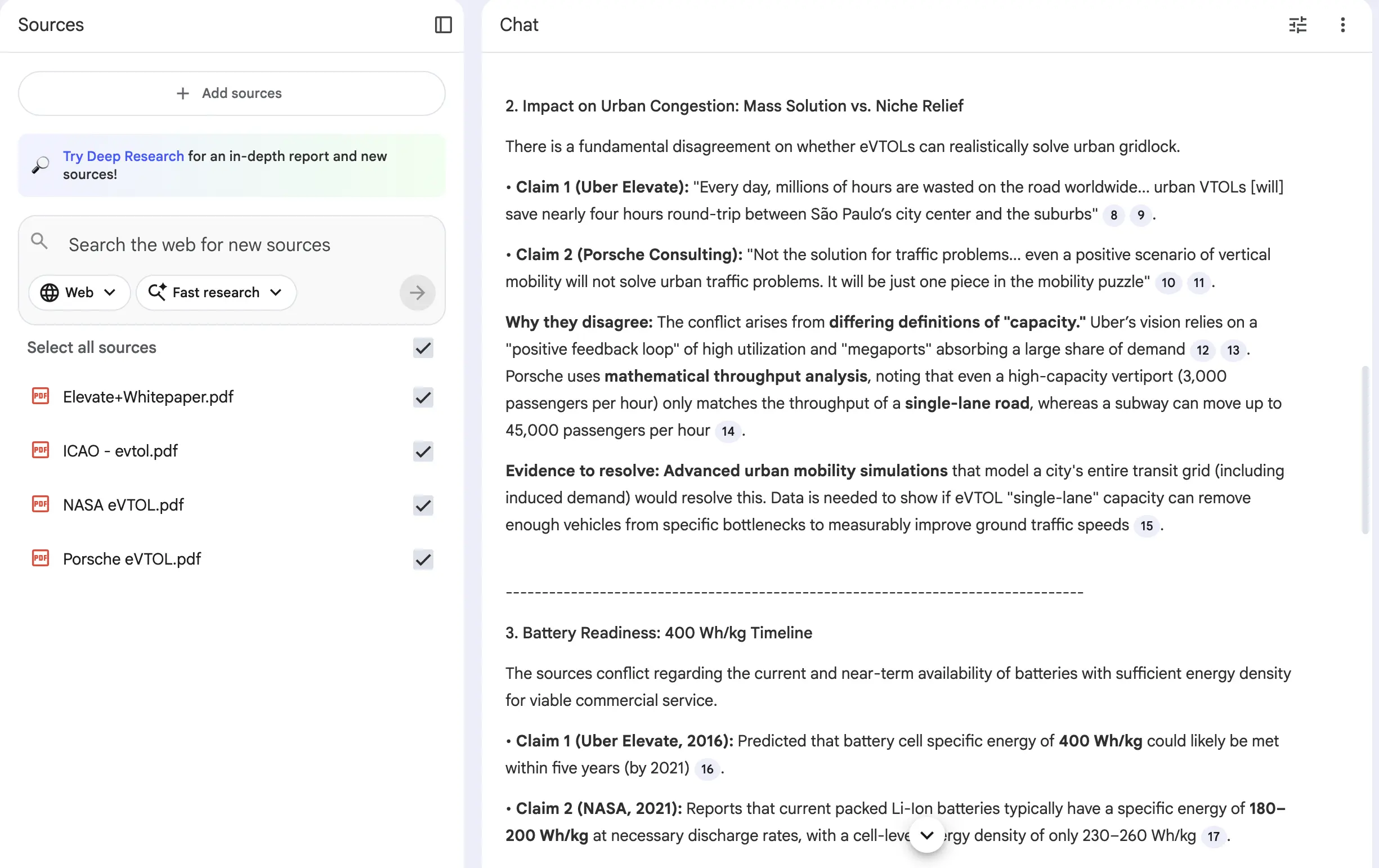
Want to prepare for a presentation in front of your bosses? This prompt will quickly become your best friend. One of the most powerful prompts for NotebookLM today, it forces the AI tool to catch contradictions within your uploaded material. It makes NotebookLM quickly sift through all the material and find all contradicting information, making both sides of the coin clear to you. In doing so, you gain unprecedented clarity and exposure to “the other side” as well.
Best for:
This prompt is perfect for literature reviews, research memos, investment theses, and any “what should we believe?” situation.
Prompt:
Across all uploaded papers on [TOPIC], identify the biggest contradictions or conflicting findings.
For each contradiction:
- Quote the specific claim from each side (with citations)
- Explain why they might disagree (differences in method, sample, timeframe, definitions, or context)
- Tell me what evidence would resolve it (what data, experiment, study design, or comparison is needed)
Do not summarise the papers.
Only focus on meaningful conflicts that change the conclusion or decision.
Output:
5. The Hidden Connections Prompt
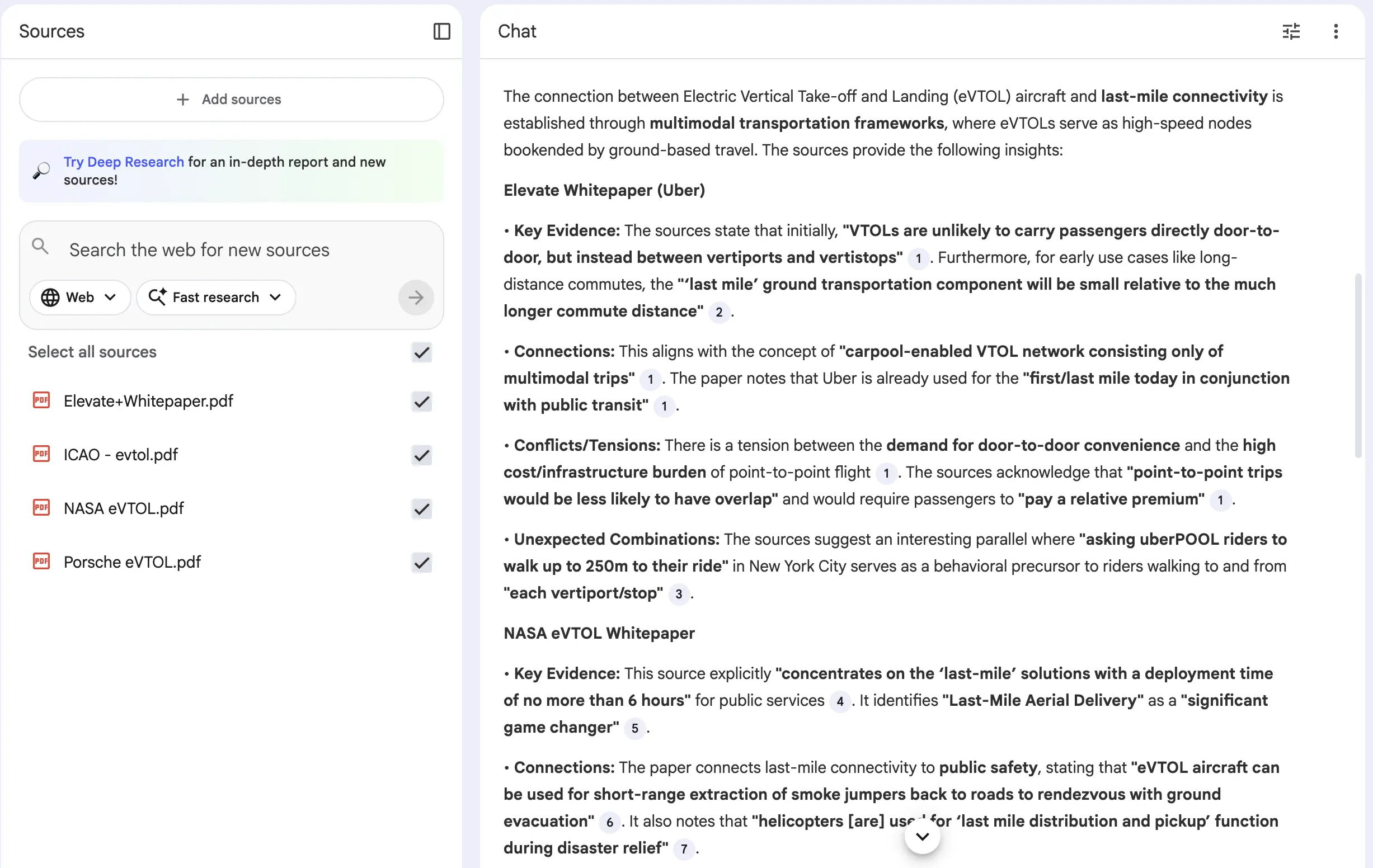
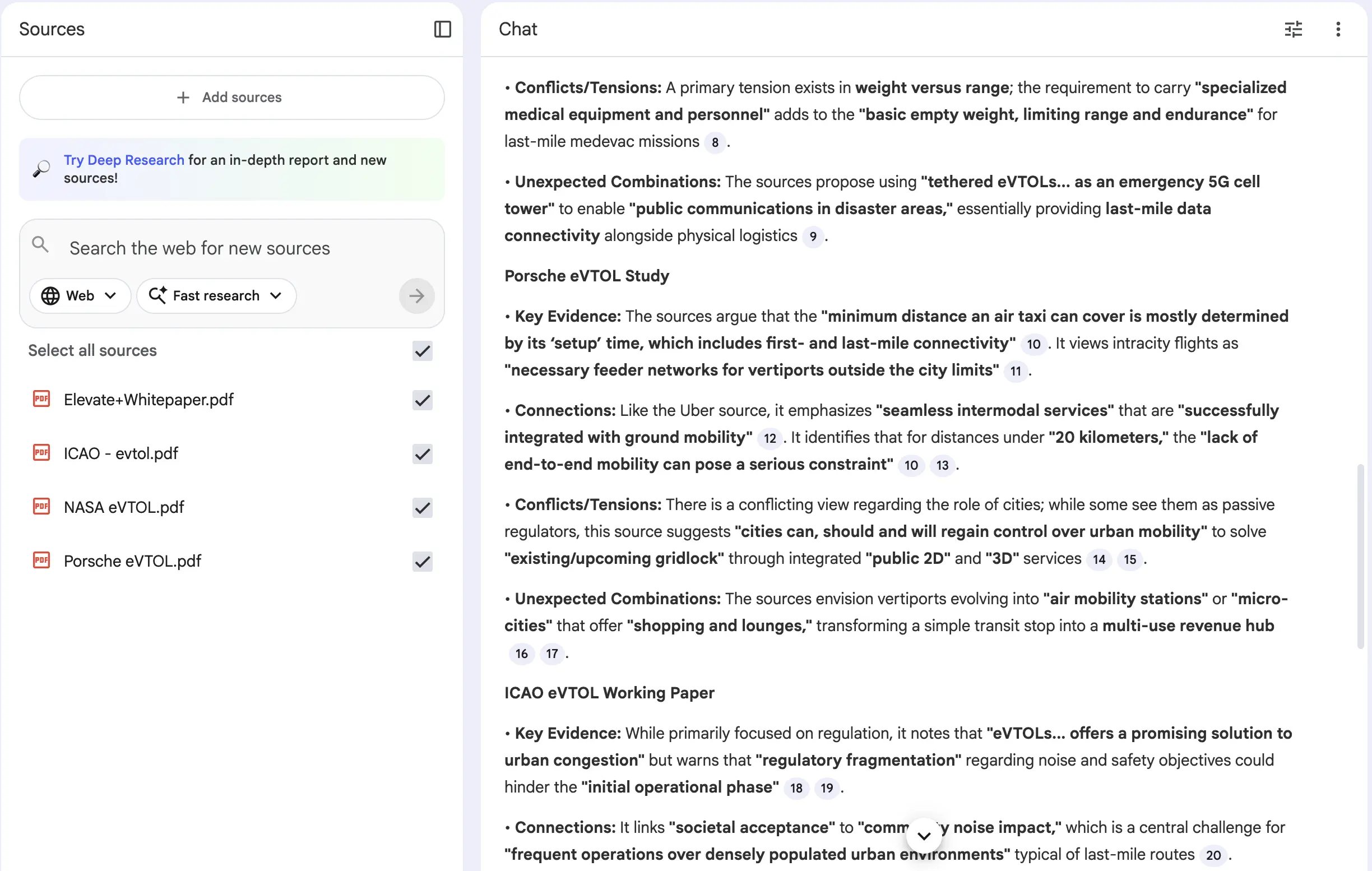
This prompt is your idea-generator when you’re trying to connect dots that aren’t obvious. In short, it helps you discover hidden bridges between two concepts. The best part: it still stays grounded, because it forces quotes, flags conflicts, and admits where the sources don’t fully support the connection.
Best for:
This prompt is useful for original writing, research ideation, product strategy, and building new frameworks.
Prompt:
Explore and synthesize the connection, even if abstract, between [TOPIC 1] and [TOPIC 2]
using all uploaded sources.For each relevant source:
- Quote the key evidence that relates to either topic
- Connect it to other relevant information from the materials
- Point out any conflicting viewpoints or tensions
- Highlight interesting or unexpected combinations of ideas
Then produce a clear summary that focuses only on how these two topics connect.
Ground every insight in direct quotes.
Clearly acknowledge gaps where the sources do not strongly support the connection.
Output:
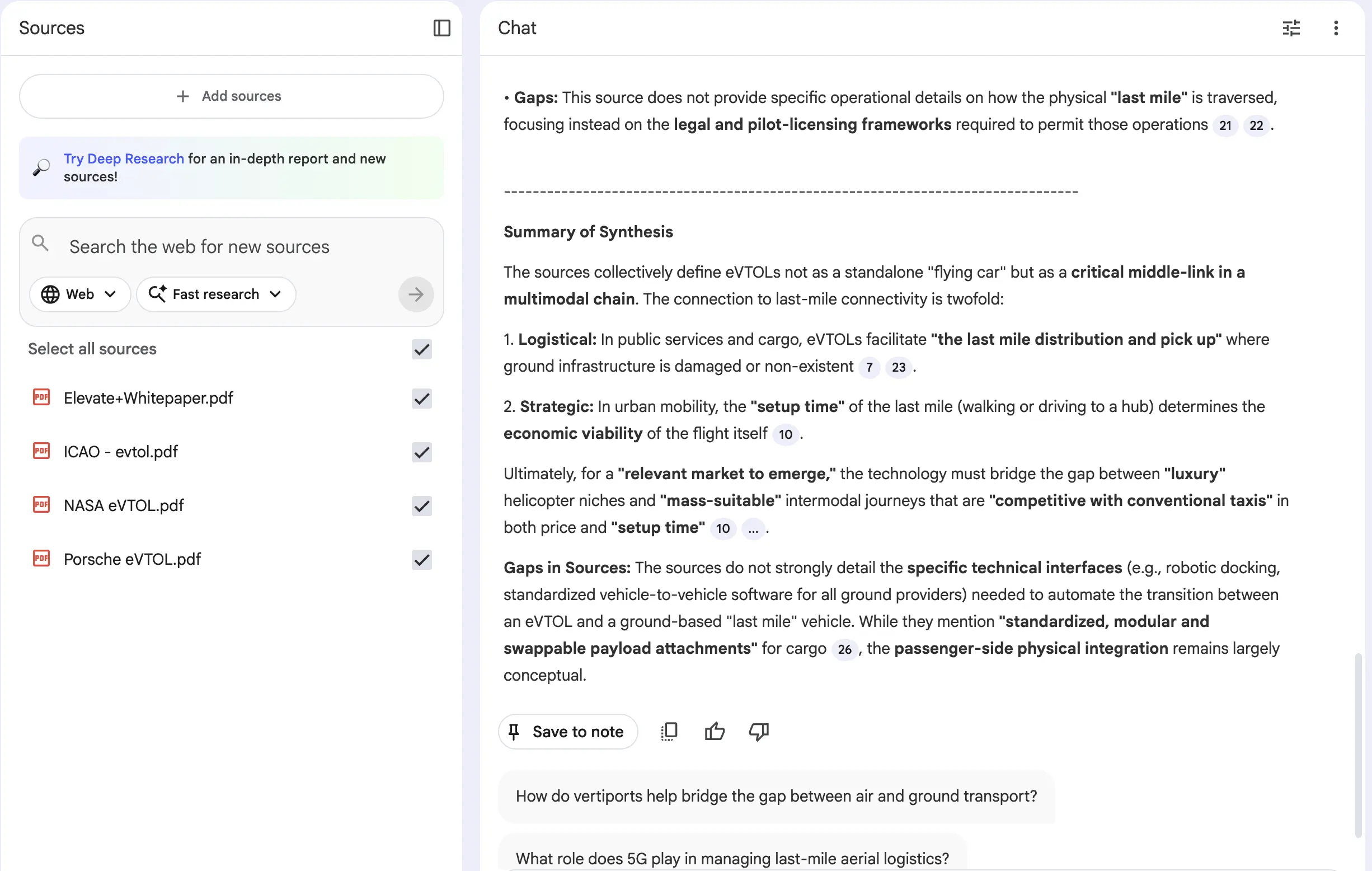
6. The Quiz/ Debate Prompt
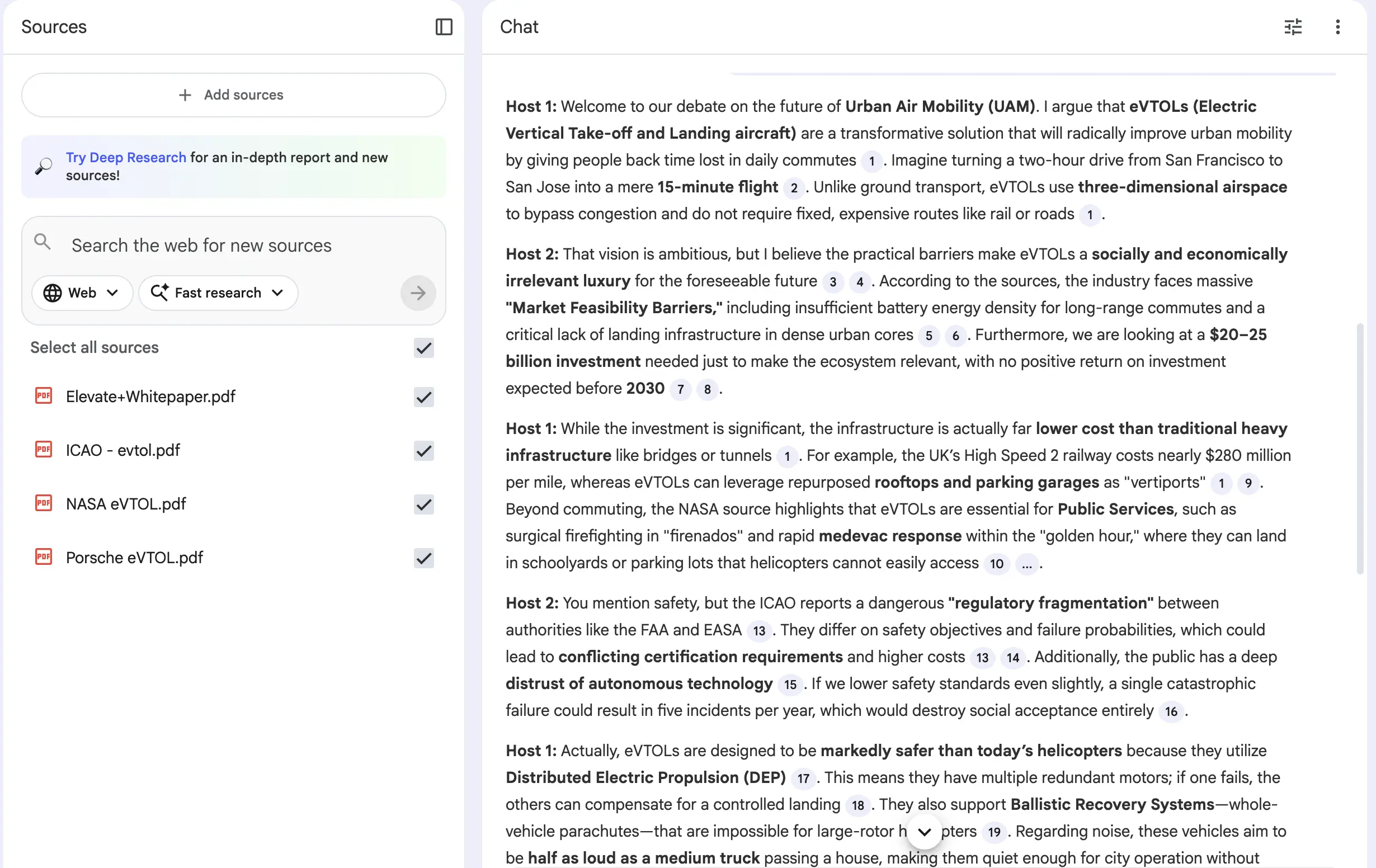
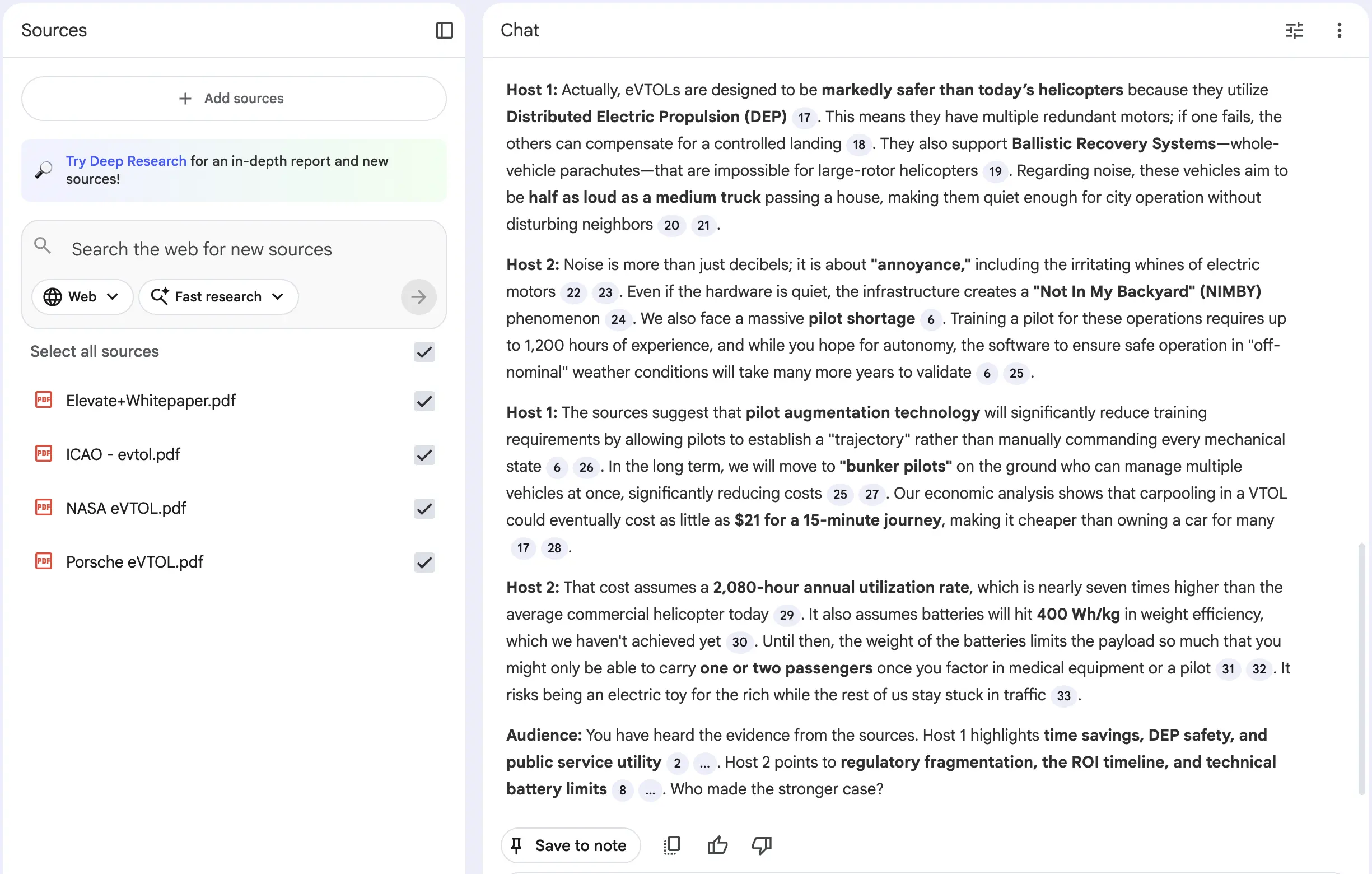
An interesting conversation or to-and-fro around a topic is always more captivating than reading a write-up on a piece of paper. This prompt plays on this hack and turns passive reading into active thinking. It forces NotebookLM to frame content as a quiz or a debate to help you test understanding, uncover weak spots, and explore opposing viewpoints. It is easy to figure out how the quiz format can reinforce recall. Similarly, the debate format sharpens critical reasoning and helps you widen your horizon by exposing you to opposing viewpoints.
Best for:
This prompt is brilliant for revision, group discussions, podcasts, and workshops.
Prompt:
Create an interactive discussion based on the uploaded sources about [TOPIC].
You can use either of these formats:
Option 1: Quiz Format
- Two hosts
- One host quizzes the other on [TOPIC]
- 10 questions total (mix of multiple-choice and True/False)
- The respondent should get some answers wrong
- Corrections must include short explanations grounded in the sources
- Share the final score at the end
Option 2: Debate Format
- Two hosts with opposing viewpoints on [TOPIC]
- Host 1 argues for [POSITION A]
- Host 2 argues for [POSITION B]
- They should challenge each other’s arguments using evidence from the sources
- Let the audience decide which side made the stronger case
Base all questions, answers, and arguments on the uploaded materials.
Avoid generic opinions or unsupported claims.
Output:
Also read: 7 Cool Google NotebookLM Features No One Told You
7. The Multilingual Podcast Prompt
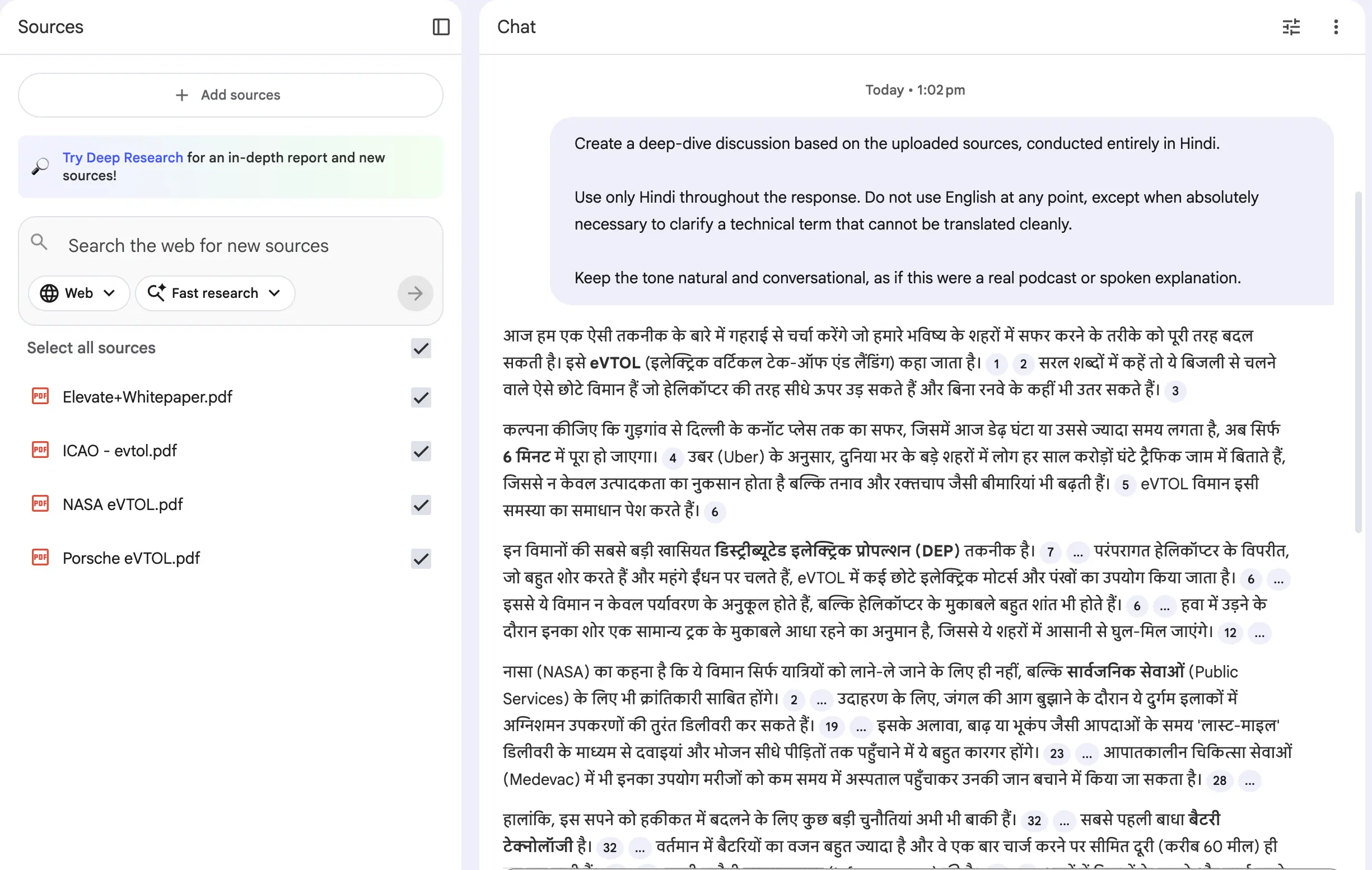
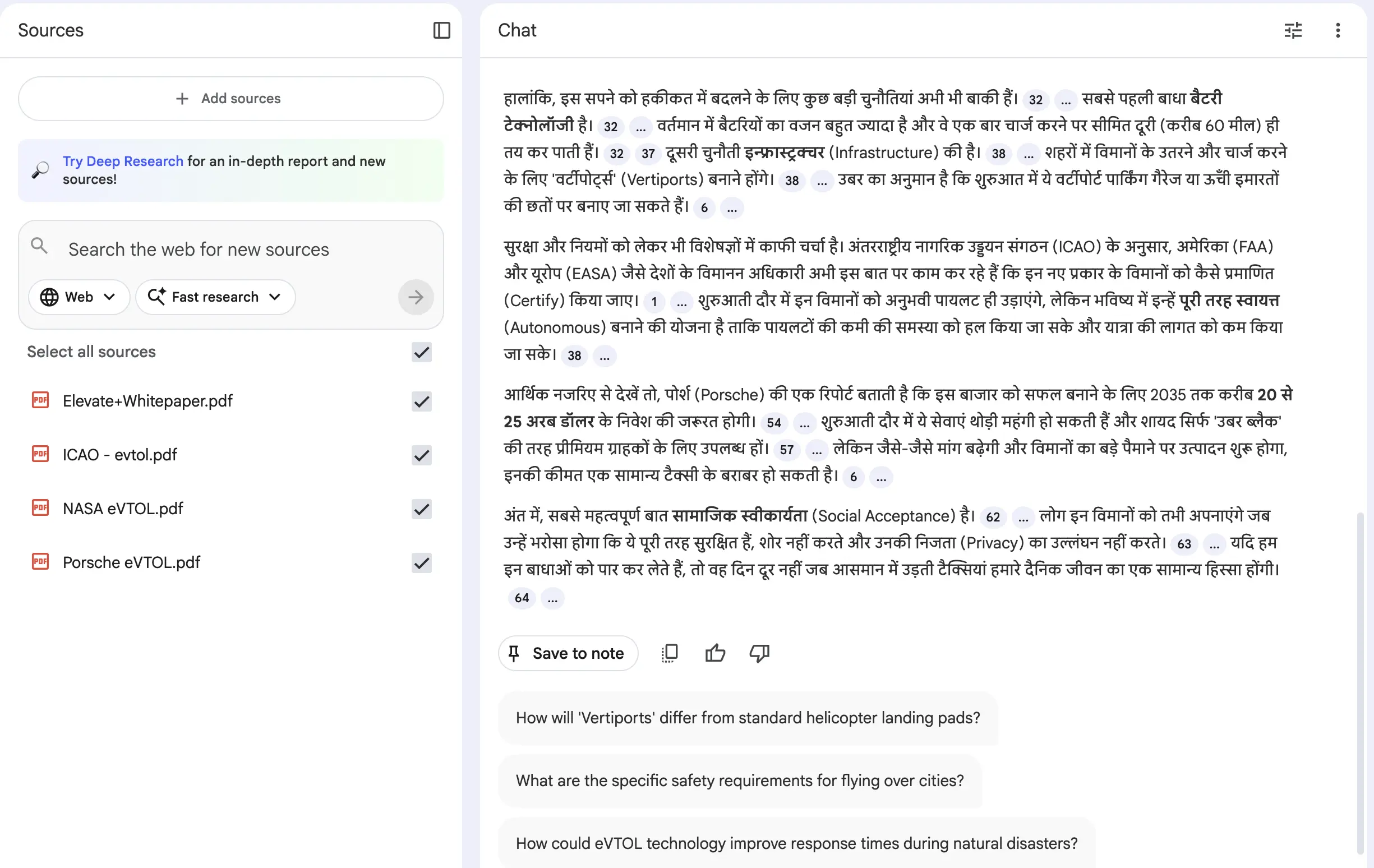
Need to learn a new language, or simply sharpen your vocabulary of it? Try this power hack on NotebookLM. It is meant to give you the information you want, in the language you want it. It forces NotebookLM to stay fully immersed in the language of your choice, rather than slipping back into English. The prompt is also useful when you want to consume or present information in a language you’re more comfortable with.
Best for:
Ideal for regional podcasts, vernacular explainers, and language learning through real technical or academic material.
Prompt:
Create a deep-dive discussion based on the uploaded sources, conducted entirely in [TARGET LANGUAGE].
Use only [TARGET LANGUAGE] throughout the response. Do not use English at any point, except when absolutely necessary to clarify a technical term that cannot be translated cleanly.
Keep the tone natural and conversational, as if this were a real podcast or spoken explanation.
Output:
8. The Product Manager Prompt
This one is for the professionals who want to cut through the fluff and get to the point pronto. The prompt is meant to extract important signals and highlight what actually impacts users and execution. The prompt is extremely effective when you’re dealing with critical documents and need decisions, not explanations.
Best for:
This is one of the most useful NotebookLM prompts and is perfect for roadmap planning, strategy reviews, and leadership summaries.
Prompt:
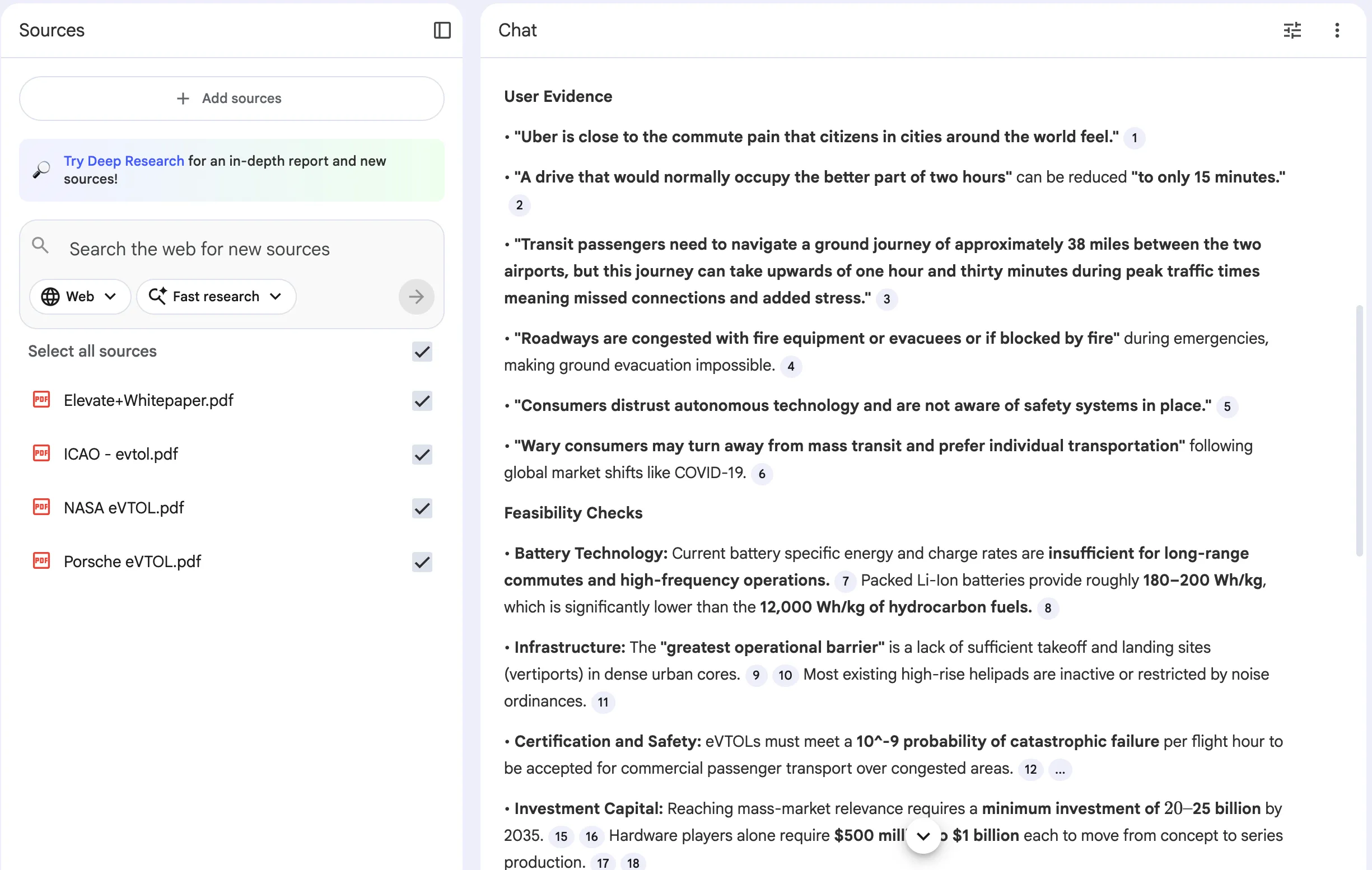
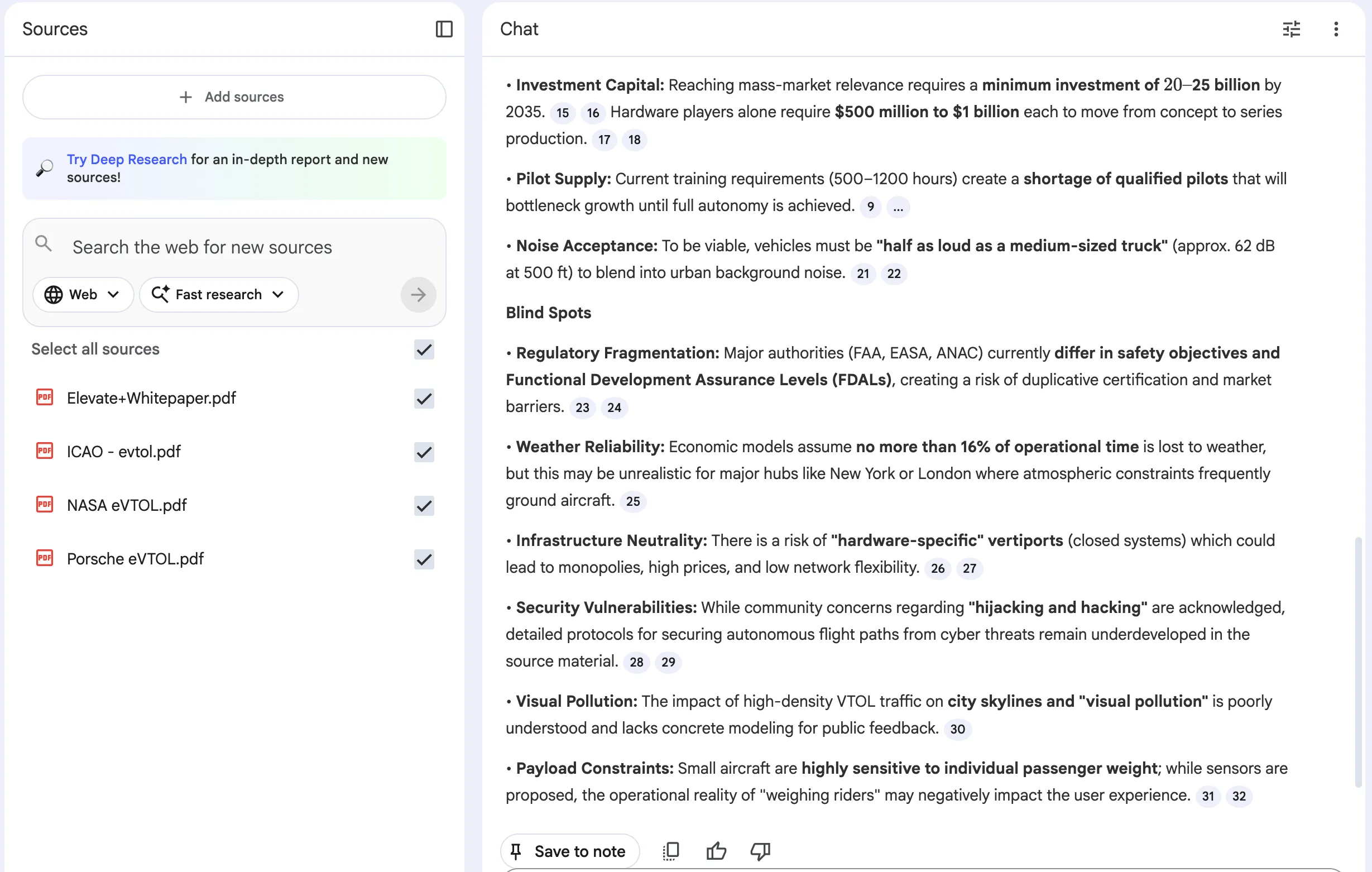
Review the uploaded documents as if you were preparing a decision memo for a senior product review.
Ignore fluff and commentary. Focus only on insights that affect real decisions. Summarise your findings in bullet points under these sections:
- User Evidence: Direct quotes that reveal real user problems, needs, or pain points
- Feasibility Checks: Technical, operational, or resource constraints mentioned
- Blind Spots: Important information or considerations that are missing from the sources
If my question or objective is vague, pause and ask me to clarify before making assumptions or drawing conclusions.
Output:
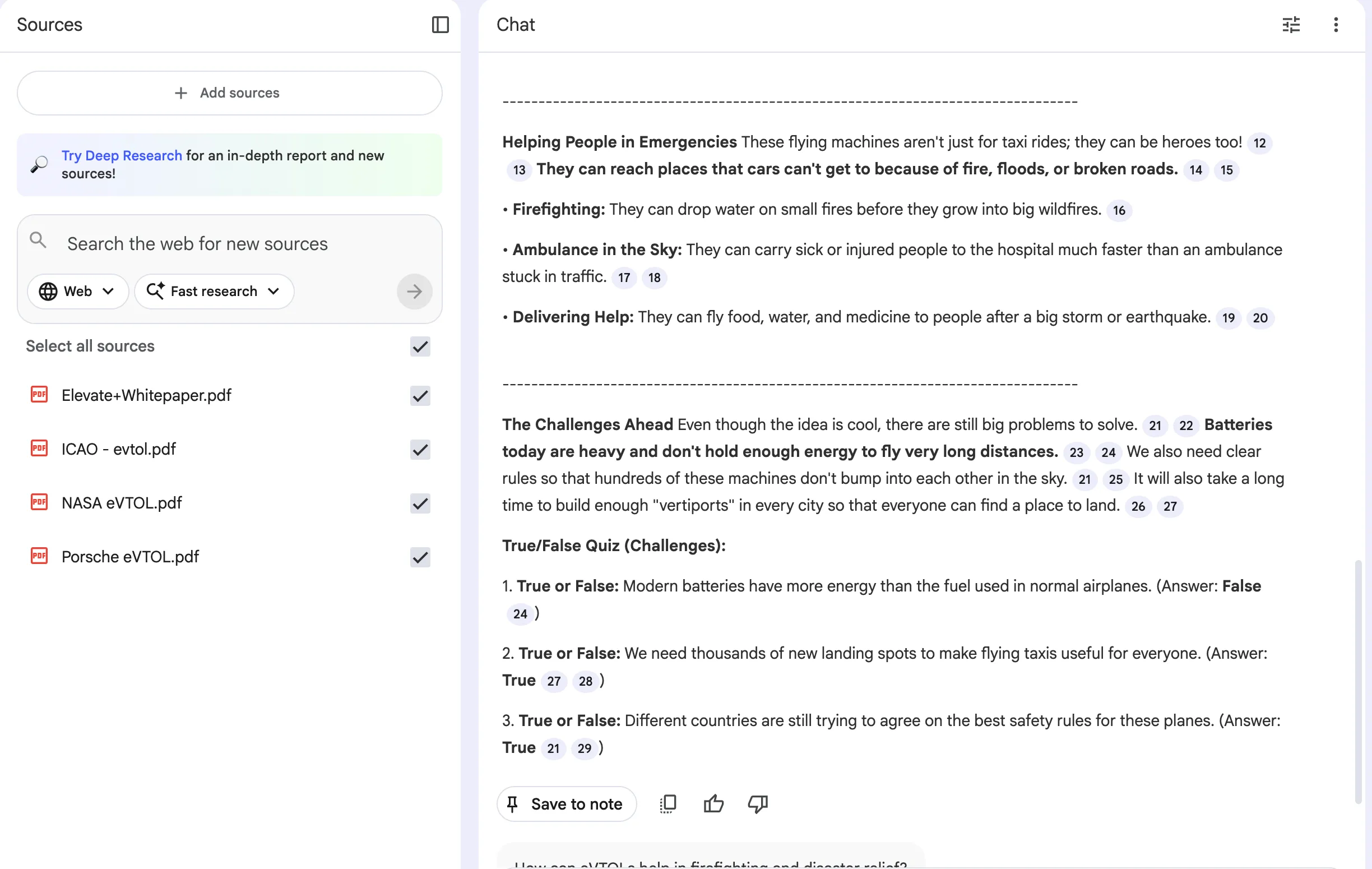
9. The School Teacher Prompt
If you truly wish to understand a topic, this prompt is for you. It forces NotebookLM to explain complex material as if teaching a 7th grader. In doing this, it exposes gaps in understanding and simplifies dense ideas without dumbing them down. The best part – it correlates every important point with a real-world scenario or example for further ease of learning.
Best for:
This prompt is ideal for learning a new topic, revising it, or explaining complex topics to unaware audiences.
Prompt:
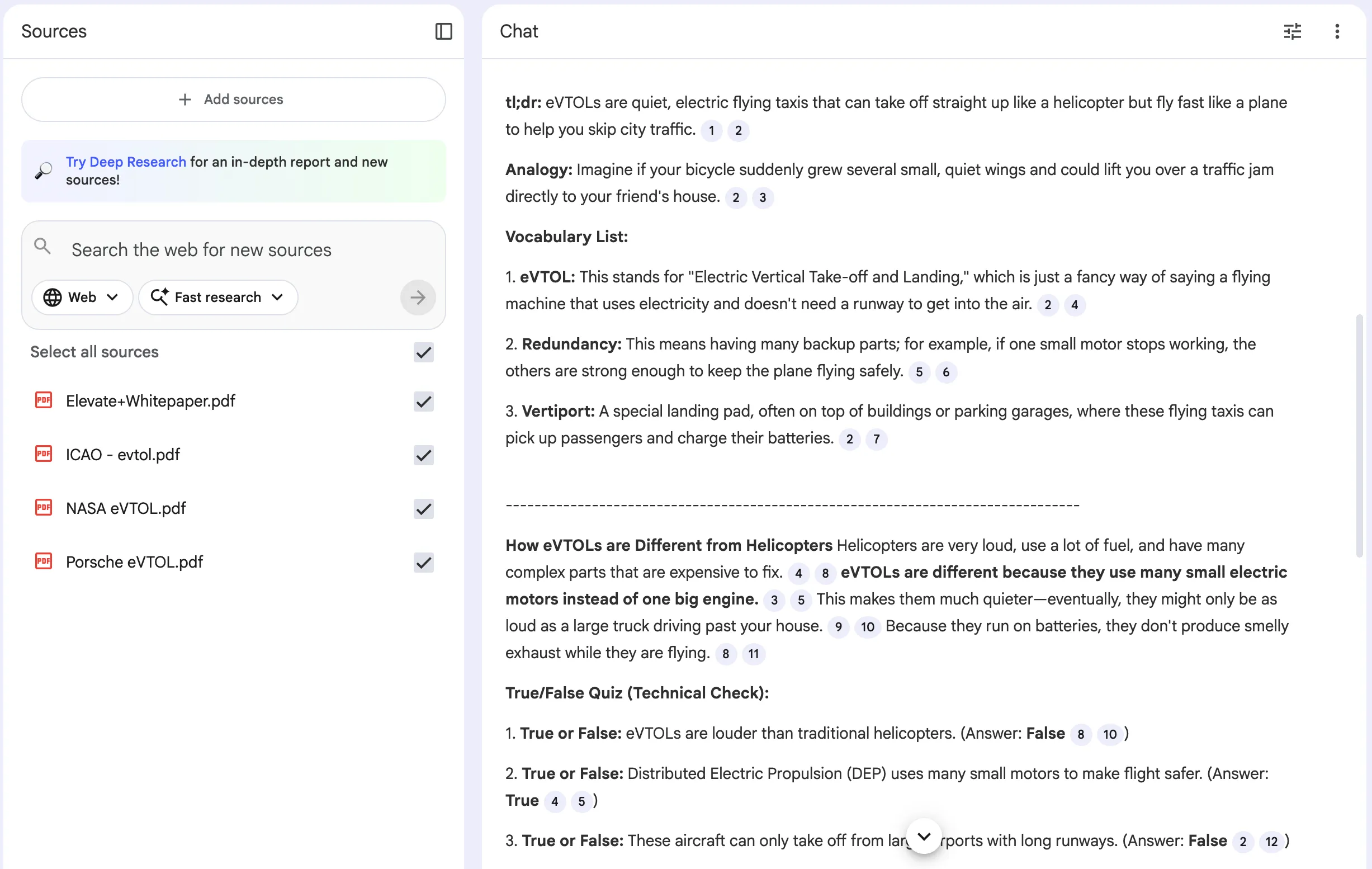
Explain the uploaded material as if you were teaching a curious 7th-grade student.
Use simple language and short sentences.
Do not assume prior knowledge.Structure every response like this:
- tl;dr: One clear sentence using very simple words
- Analogy: A real-world example or metaphor to explain the idea
- Vocabulary List: 3 difficult words, each explained in plain language
If any section is dense or technical, convert it into a short True/False quiz to make it easier to understand.
Output:
Also read: 7 Latest AI Drops by Google Will Make You a Powerhouse at Work
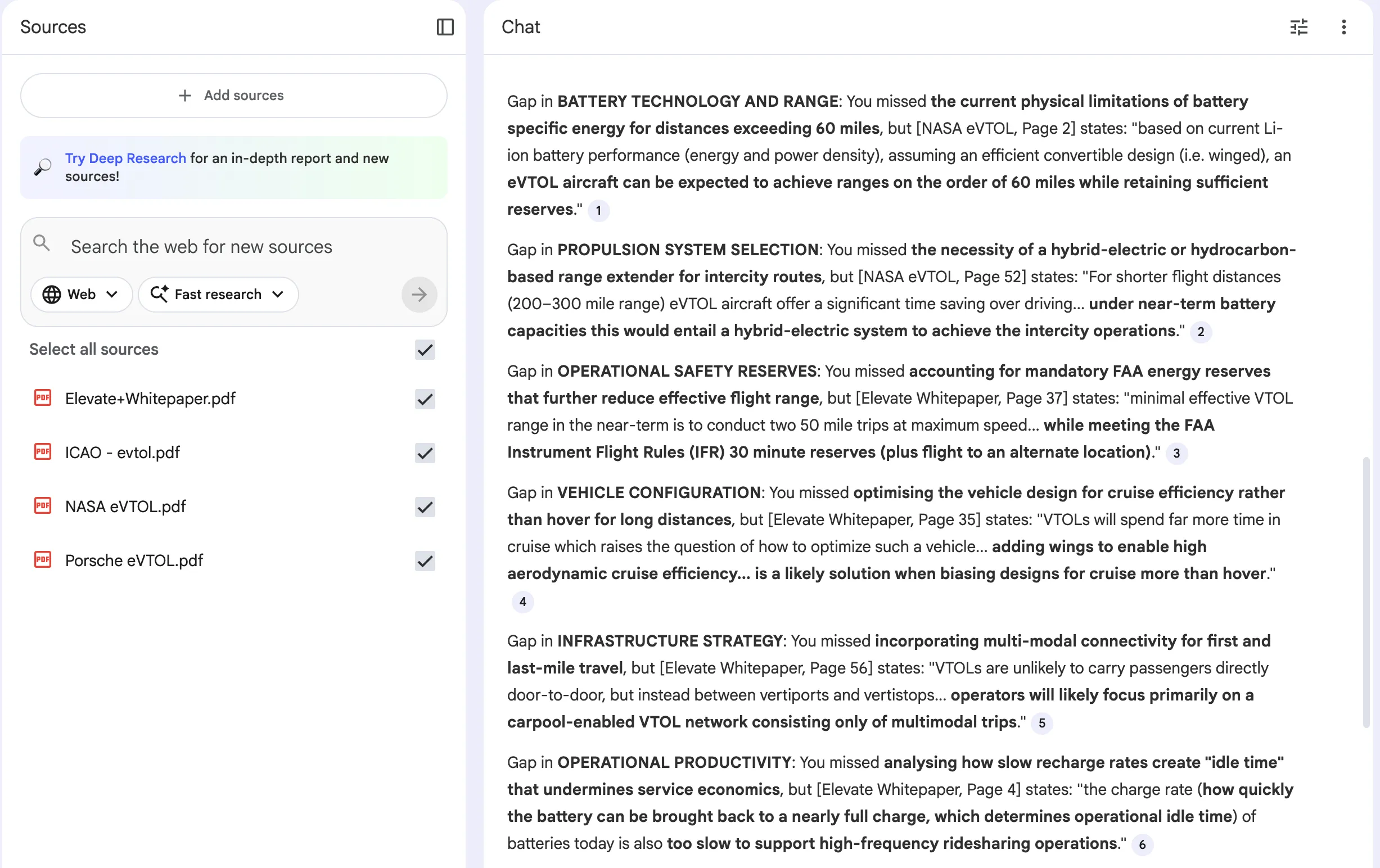
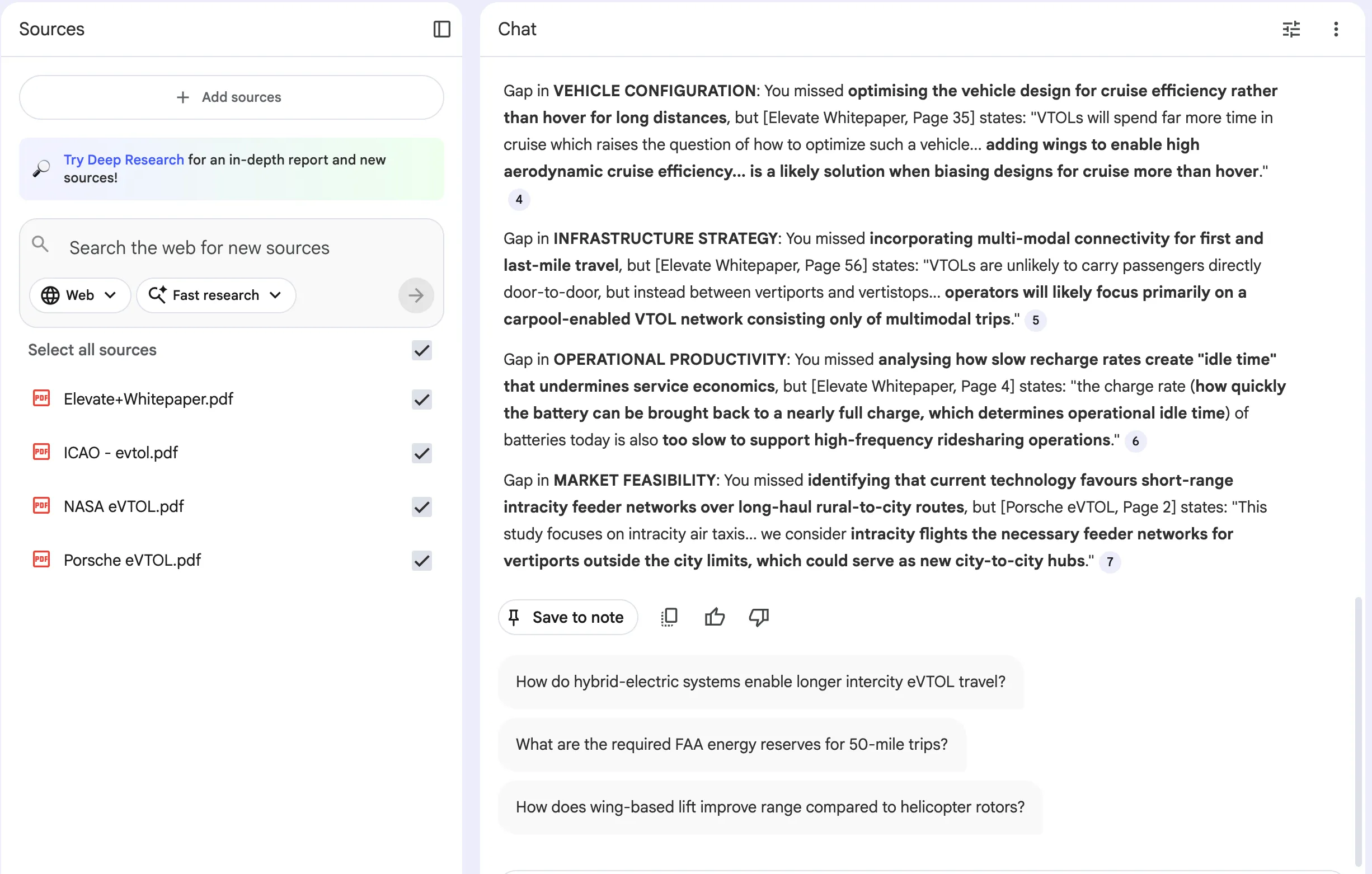
10. The Self-Improvement Prompt
They say constant self-improvement is the key to success. NotebookLM is now here to help with it, thanks to one simple prompt. This prompt is designed for moments when you tried, failed, and just want to know why. All logic, no motivational fluff. Instead of guessing what went wrong, NotebookLM compares your actions against proven material and shows you exactly where you deviated. For self-improvement, this works like a personal post-mortem.
Best for:
Use this prompt for learning skills, building habits, studying topics, or executing projects more effectively the next time.
Prompt:
I attempted something, and it didn’t work as expected. Analyze my attempt by comparing it directly with the uploaded materials.
Here are the details:
- Project: [WHAT I TRIED]
- My approach: [STEPS I TOOK]
- Result: [WHAT ACTUALLY HAPPENED]
- Expected outcome: [WHAT I THOUGHT SHOULD HAPPEN]
Now cross-reference my approach with the sources and identify:
- Methods or steps I did not follow (quote the sources directly)
- Important concepts I completely missed
- Prerequisites or foundations I skipped
Present the output in this format:
“Gap in [CONCEPT]:
You missed [STEP],
but [SOURCE, Page X] states:
‘[EXACT QUOTE]'”Focus on learning and improvement, not blame. Ground every gap in direct evidence from the sources.
Output:
Conclusion
With these super prompts at your behest, you can practically transform the way you learn/ research/ work with NotebookLM. Simply head on to NotebookLM, upload all your preferred material, and use it in a way you never have before. The best part, the entire process doesn’t cost you a single penny. Just a device, the internet, and the will to learn. That’s all.