The headline may sound extreme here. Of course, Claude is not replacing CFOs tomorrow morning. But with the debut of Claude’s new Financial Services Solution by Anthropic, it has clearly moved to a new direction in the world of finance, one where AI does way more than crunch numbers or explain stuff. Think specific financial tasks, like KYC screening, GL reconciliation, statement audit, and month-end closer. That’s right, these are the exact projects many teams spend weeks on, all done in a matter of minutes now.
The seemingly revolutionary abilities are not part of a new model. These are being embedded in the existing Claude model, helping it handle critical financial operations for sectors like “banking, insurance, asset management, and fintech.”
Just how? And how can the companies reap the benefits of it? Let us understand in detail here, starting with…
Table of contents
What are Claude Financial Services Solutions?
The new offering is Anthropic’s AI setup built specifically for finance companies. Anthropic describes it as a tool to help financial institutions improve how they serve markets and manage risk. In simple terms, it lets banks, insurers, asset managers, fintech firms, and investment teams use Claude inside their daily financial work. And not just for chatting, but for analysing data, preparing reports, checking risks, working on models, and making faster decisions.
The big idea is simple: finance teams deal with way too much data, too many documents, and too many repetitive workflows. Claude is being positioned as an AI layer that can sit on top of all this and help teams move from raw information to decisions faster. So instead of manually going through spreadsheets, reports, filings, emails, and market data, teams can use Claude to pull out what matters and turn it into usable work.
How it works
Don’t be thrown off by the giant mnemonic here. Here is the real truth – it is nothing but a set of agent templates that Anthropic has specifically made for financial services. These are just like custom AI agents e.g., CustomGPT. Whenever used, these will utilise Claude’s existing reasoning and agentic capabilities to handle a range of financial tasks.
But here is what makes Claude’s Financial Services Solutions really stand out:
Claude Financial Services Solutions: Highlights
Since Anthropic now wants Claude to sit inside real financial workflows, its new package positions Claude as a full-stack AI finance assistant. And here is what makes it quite appealing:
- Built Specifically for Finance Teams:
Claude Financial Services Solutions is built for finance-heavy work. Anthropic claims Claude can process data, run complex analysis, and generate models and reports “in minutes.” - Source-Attributed Answers:
Anthropic focuses heavily on verification. For this, Claude’s outputs are “source-attributed,” so finance teams can check the work before using it. This is important for banks, insurers, asset managers, and other regulated financial institutions where every major decision needs backing. - Compliance-Ready Setup:
Claude is also being positioned for regulated environments. Anthropic mentions SOC 2 and FedRAMP support, which makes it more useful for finance organisations where security, auditability, and compliance are non-negotiable. - Works Inside Excel and PowerPoint:
Now this is where the major shift will be most visible. While we used to work inside the Claude environment up until now, with the update, Claude will work inside existing finance tools. Anthropic claims Claude can work natively inside Excel and PowerPoint, where it can read formulas, edit slides, and process data. This matters a lot because finance teams already live inside spreadsheets and decks. - Connects With Financial Data Providers:
Continuing on its workflow integration, Claude can now even connect with financial data providers such as LSEG, FactSet, S&P Global, and Morningstar. This gives finance teams access and insights to the kind of market data, research, benchmarks, and financial intelligence they already use for analysis. - Enterprise Deployment Support:
Since this is an enterprise product and not just a finance chatbot, Anthropic is offering a dedicated FSI solutions team, deployment across AWS, Google Cloud, and Azure, and partnerships for large-scale rollout. In simple terms, Claude is being packaged for companies that need AI inside serious financial operations.
These highlights already position Claude Financial Services Solutions as a solid product for any financial institution that uses AI in its workflow. However, its worthiness can only be mapped after a look at the key features that it brings to the table.
Claude Financial Services Solutions: Key Features
Here are the features that make the new Claude package truly stand apart.
1. Agent Templates with Flexible Deployment
These are the showstoppers. Claude now comes with agent templates for finance workflows such as pitch books, credit memos, KYC screening, and fund accounting. In simple terms, these are ready-made AI workflows that finance teams can use instead of building everything from scratch. Anthropic says these templates are available as plugins in Claude Cowork and Claude Code, and also as a cookbook for Claude Managed Agents.
2. Claude for Microsoft 365
This is one of the most useful parts of the product. Claude can work inside the tools finance teams already use every day. A team can build or refine a model in Excel, convert the analysis into a PowerPoint deck, write the memo in Word, and prepare a morning brief in Outlook. So Claude is not sitting separately in a chat window anymore. It is now inside your actual finance workflow.
3. Claude Cowork
Claude Cowork has been a huge hit ever since its launch. Meant for delegation, teams can give it large tasks such as pulling data, drafting reports, or organising files. Anthropic describes this as a way to let users review and refine work rather than build everything from scratch. That matters because the real time saving in finance does not come from one answer. It comes from reducing the repetitive preparation work before analysis even begins.
4. Claude Code
Claude Code is Anthropic’s coding agent that works in the terminal. For finance companies, this can help with software development, internal tools, and legacy system updates. This is useful because many banks and financial institutions still depend on old systems that are difficult to modernise quickly. Claude Code jumps in here as a way to build, fix, and ship projects faster.
5. Platform Integration
Claude can also be integrated directly into custom financial systems. This includes trading platforms, risk systems, KYC tools, and underwriting applications. This is where Claude moves way beyond being a productivity assistant. It can become part of the company’s own software stack and help teams build AI agents for specific internal workflows.
6. Pitch Materials for Investment Bankers
Claude can help investment bankers build pitch books, comps tables, and CIMs directly inside PowerPoint and Excel. But the important point is control. Claude can assist with analysis, formatting, and first drafts, while bankers still make the final calls on narrative, valuation, positioning, and deal logic. So it does not replace investment banking judgment. It simply reduces the manual work around preparing the material.
Claude Financial Services Solutions: Use cases
Companies are already using the new Claude Financial Services Solutions across tasks. Here are some examples of the same:
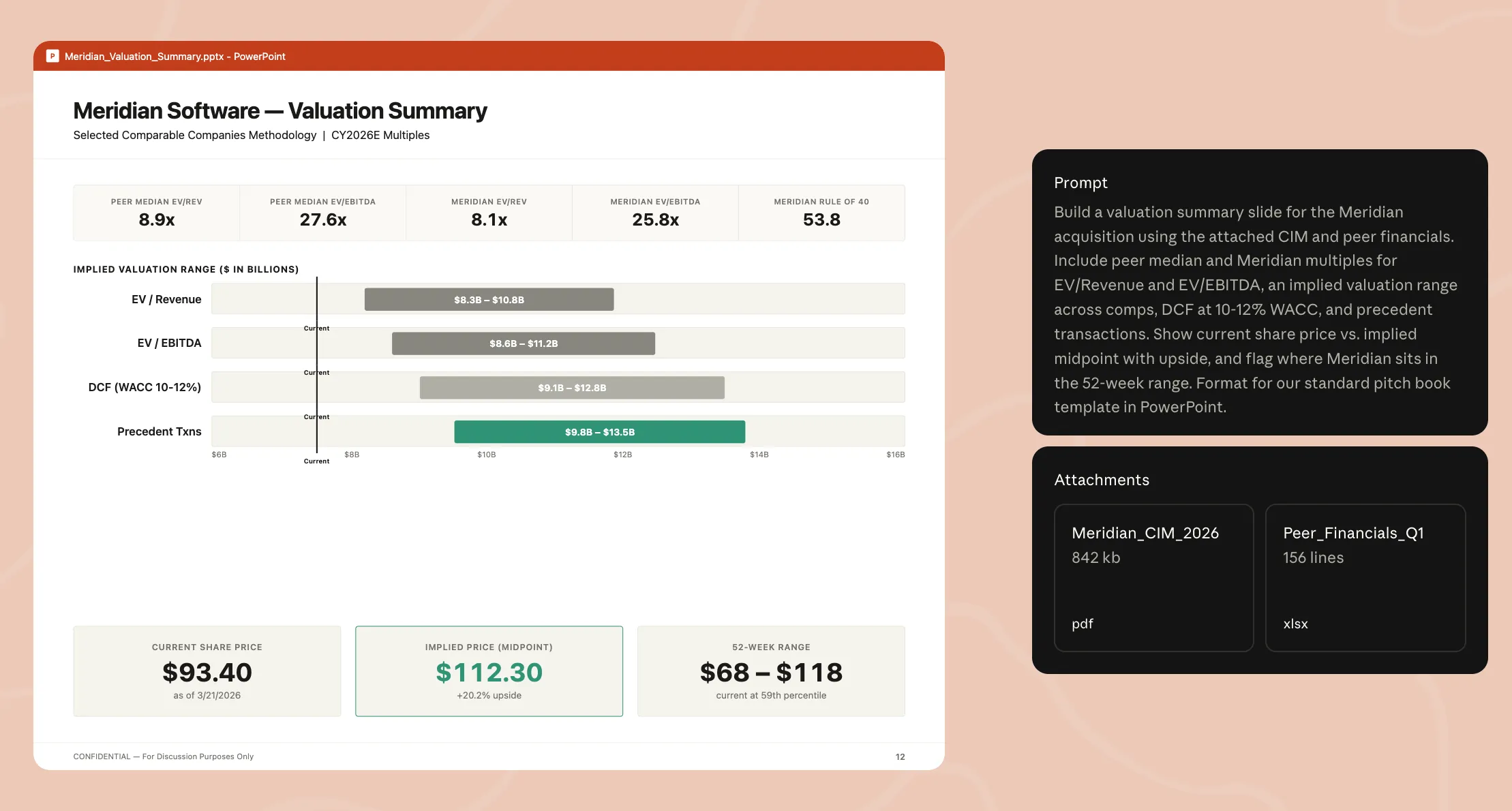
1. Investment Banking
Claude is helping investment bankers build pitch books, comps tables, valuation summaries, and CIMs inside PowerPoint and Excel, while bankers control the final story and valuation calls.
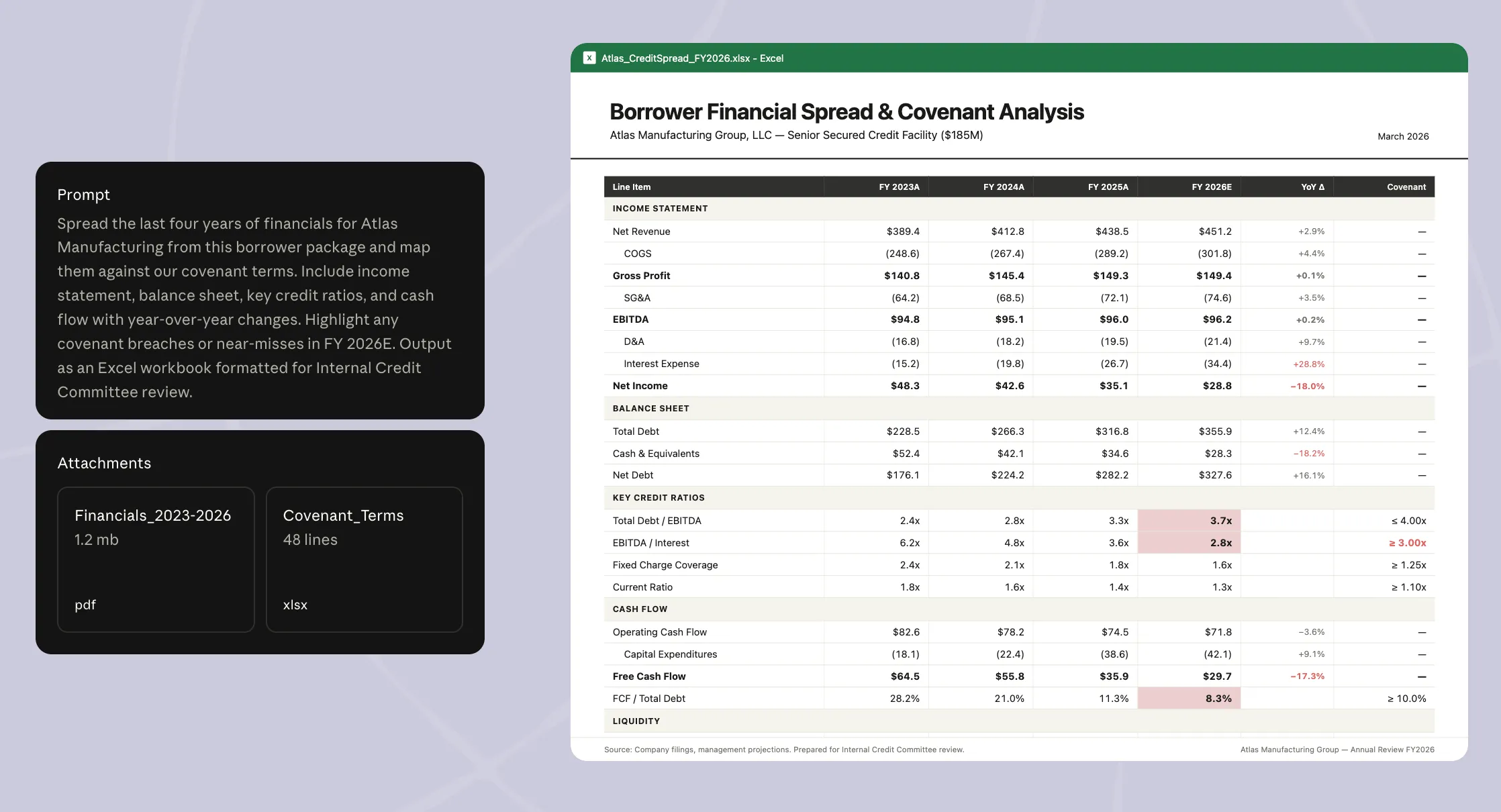
2. Commercial Banking
For commercial bankers, Claude can draft credit memos, spread borrower financials, calculate ratios, and flag covenant breaches or near-misses for credit committee review.
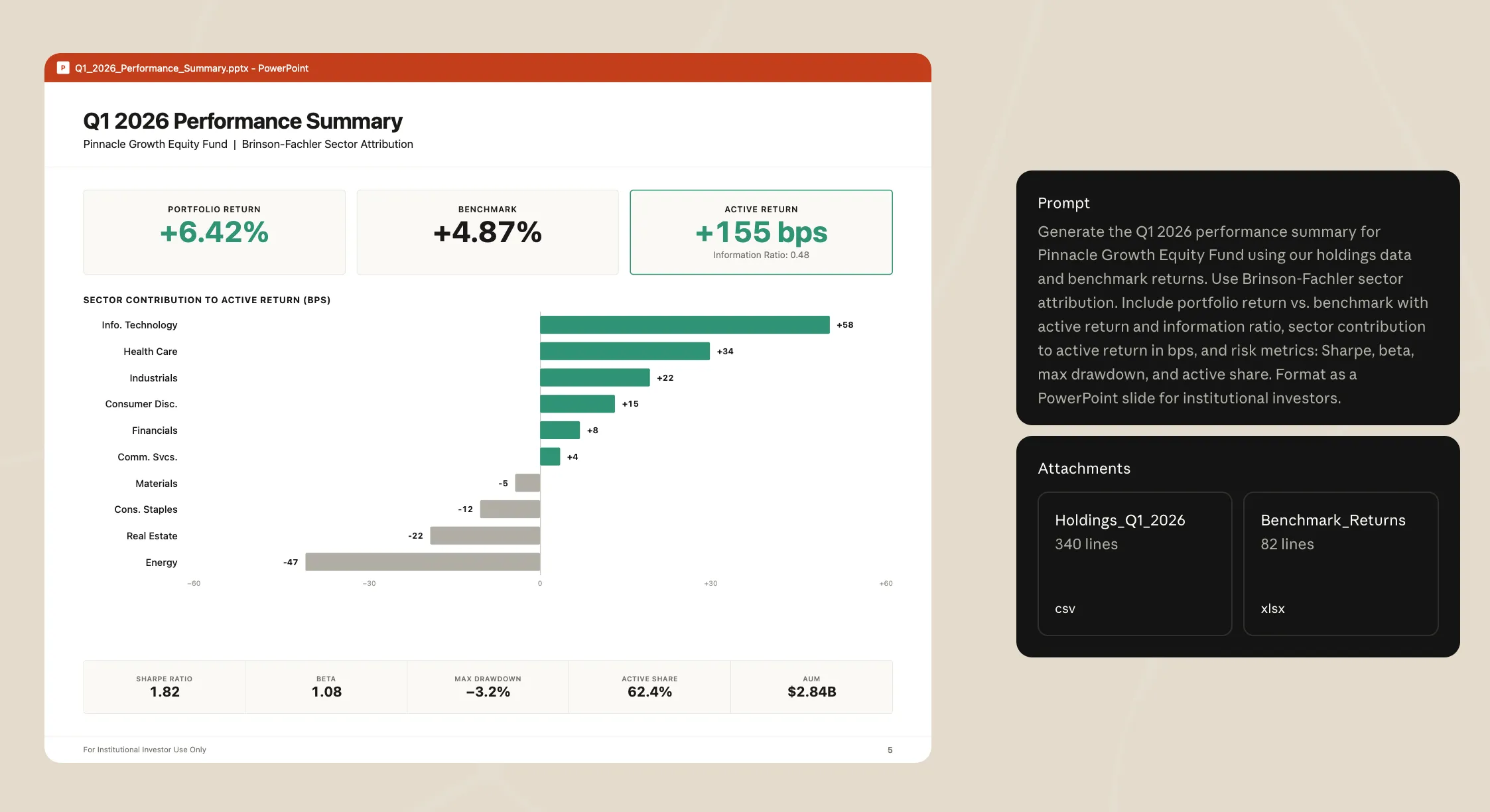
3. Asset Management
Asset managers can use Claude to prepare IC memos, performance decks, portfolio reviews, attribution summaries, and risk metrics using holdings and benchmark data.
4. Insurance
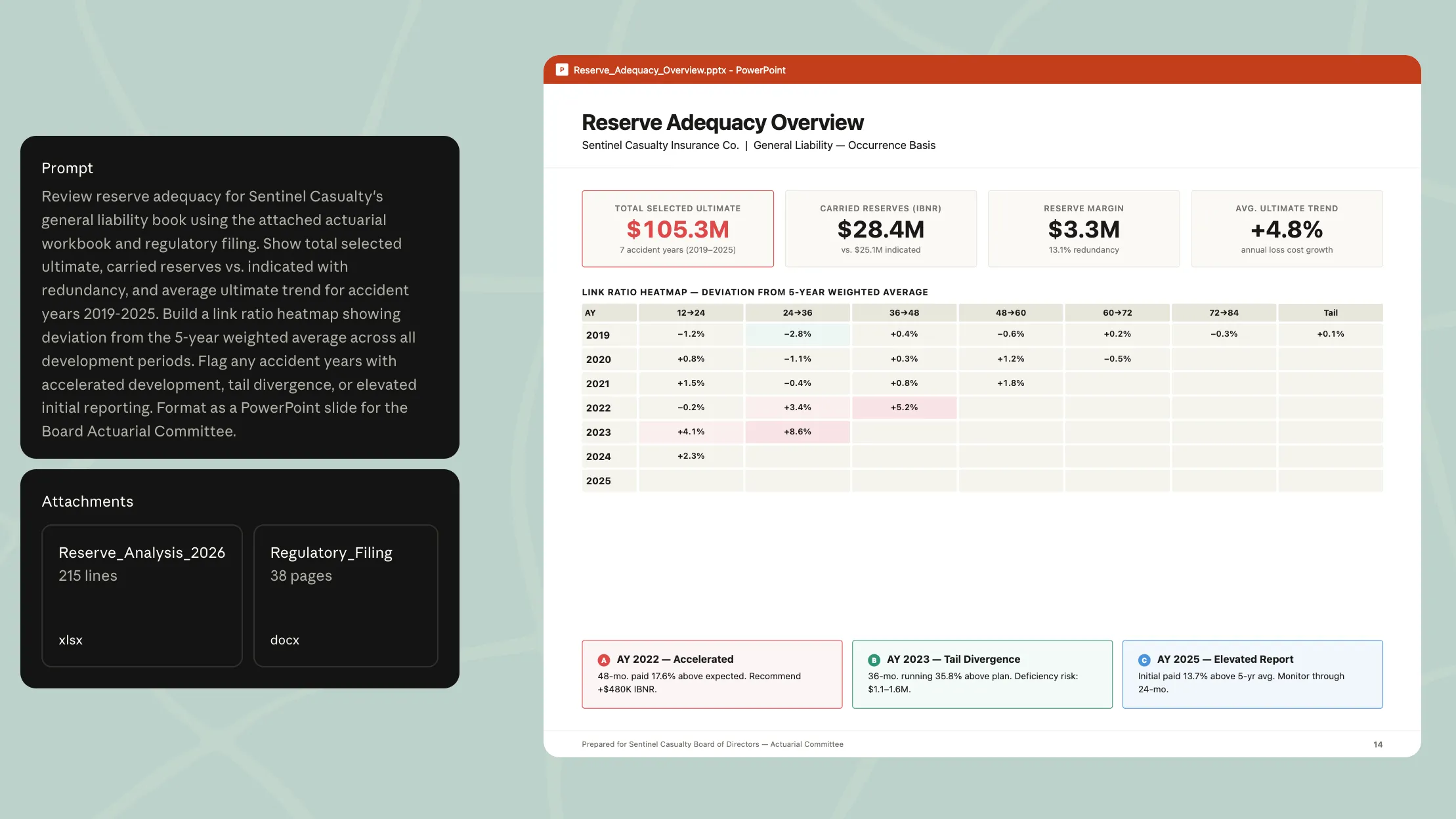
Insurance teams can use Claude to review actuarial workbooks, validate formulas, analyse reserve adequacy, flag anomalies, and draft regulatory filing narratives.
Conclusion
Claude Financial Services Solutions is a clear example of where enterprise AI is clearly headed.
Not towards another chatbot that gives generic answers, but towards AI systems that sit inside actual business workflows. For finance teams, that means working across Excel models, PowerPoint decks, credit memos, KYC checks, portfolio reports, underwriting documents, and internal risk systems.
Just think about it once. Once deployed, this simple solution can drastically reduce the heavy manual work around finance. So, the days of manually collecting data, reading documents, preparing drafts, checking formulas, building reports, and turning analysis into usable outputs may just be over.
For banks, insurers, asset managers, and investment teams, this could become a major productivity layer. But the final judgement still stays with humans. Claude may prepare the work faster, but finance teams still need to verify the numbers, question the assumptions, and make the actual decisions.
So yes, the title sounds bold.
But with this launch, Claude is no longer just answering finance questions. It is trying to become part of how financial work actually gets done.