Python is expected to continue dominating in 2026 due to its simplicity and extensive ecosystem. From AI and data science to automation and scripting, Python empowers developers to solve real-world problems quickly. It’s clean, human-readable syntax and huge ecosystem of libraries for AI/ML, data science, web, etc. This lets beginners learn quickly and experts work productively, and projects are the best way to learn, practice, and showcase skills. In fact, Python is ubiquitous in cutting-edge fields, from AI models using TensorFlow/PyTorch to analyzing large datasets with Pandas. Whether you aim to build web apps, crunch data, or automate your workflow, Python skills are essential. In this article, we’ll highlight ten GitHub repositories packed with projects and resources to enhance your Python journey.
Table of contents
- Why Learn Python?
- Top GitHub Repositories for Python Projects
- 1. practical-tutorials/project-based-learning
- 2. Avik-Jain/100-Days-Of-ML-Code
- 3. trekhleb/learn-python
- 4. garimasingh128/awesome-python-projects
- 5. vinta/awesome-python
- 6. TheAlgorithms/Python
- 7. xresearch/qxresearch-event-1
- 8. amaiAmazing-Python-Scripts
- 9. Mrinank-Bhowmick/python-beginner-projects
- 10. Asabeneh/30-Days-Of-Python
- Overall Summary
- Conclusion
- Frequently Asked Questions
Why Learn Python?
Python remains the most popular programming language in 2026. According to recent surveys, it powers machine learning, data pipelines, web applications, and even cloud automation. Its gentle learning curve makes it easy to pick up, while professionals rely on it to build production-grade systems.
Here are the key reasons behind Python being the powerhouse language it is:
- Powerful Libraries: Python has libraries for everything. Like TensorFlow, PyTorch, Scikit-learn for AI/ML; Pandas, NumPy, Matplotlib for data; Django, Flask for web; and many more. These let you solve complex problems with minimal code.
- Easy Learning Curve: Python’s syntax is concise and close to English. You can start writing meaningful programs quickly without complex syntax. This means faster learning and fewer bugs for beginners.
- Broad Applicability: From startups to tech giants, Python is the go-to language for new fields. It powers data analysis in finance, scientific research, automation scripts for DevOps, and backend systems. Major platforms like Instagram, Pinterest, and Dropbox use Python at scale.
- Automation and Productivity: Python excels at writing scripts to perform tasks. Tools like Ansible use Python under the hood, and beginners can easily write small scripts to save time, e.g,. batch file handling, web scraping, etc.
- Community and Growth: Python’s community constantly adds new libraries. In 2026, it “continues to grow stronger”, so learning it now keeps you prepared for the future.
Top GitHub Repositories for Python Projects
Below are key GitHub repos that provide practical Python learning through projects and code examples. Each repository includes a variety of scripts or tutorials to try out. Why It Matters explains what you gain from it.
1. practical-tutorials/project-based-learning
This GitHub repository covers hands-on tutorials across multiple programming languages, with many advanced Python projects standing out. It covers everything from beginner tasks to advanced applications like AI, APIs, and data analysis. It’s essentially a giant index of hands-on tutorials: for Python, it links to building web apps (Flask/Django), bots, ML projects, etc. The repository is organized by language and topic, so you can jump into projects like building a Flask microblog, making a Reddit bot in Python, or even a simple blockchain.
Why is it important:
- Promotes learning by doing, helping you build real-world projects instead of just theoretical knowledge.
- Acts as a primary resource with tutorials spanning beginner to advanced levels for Flask, Django, ML, bots, blockchain, etc.
- Encourages practical application and contribution, letting you fork, practice, and even add your own tutorials.
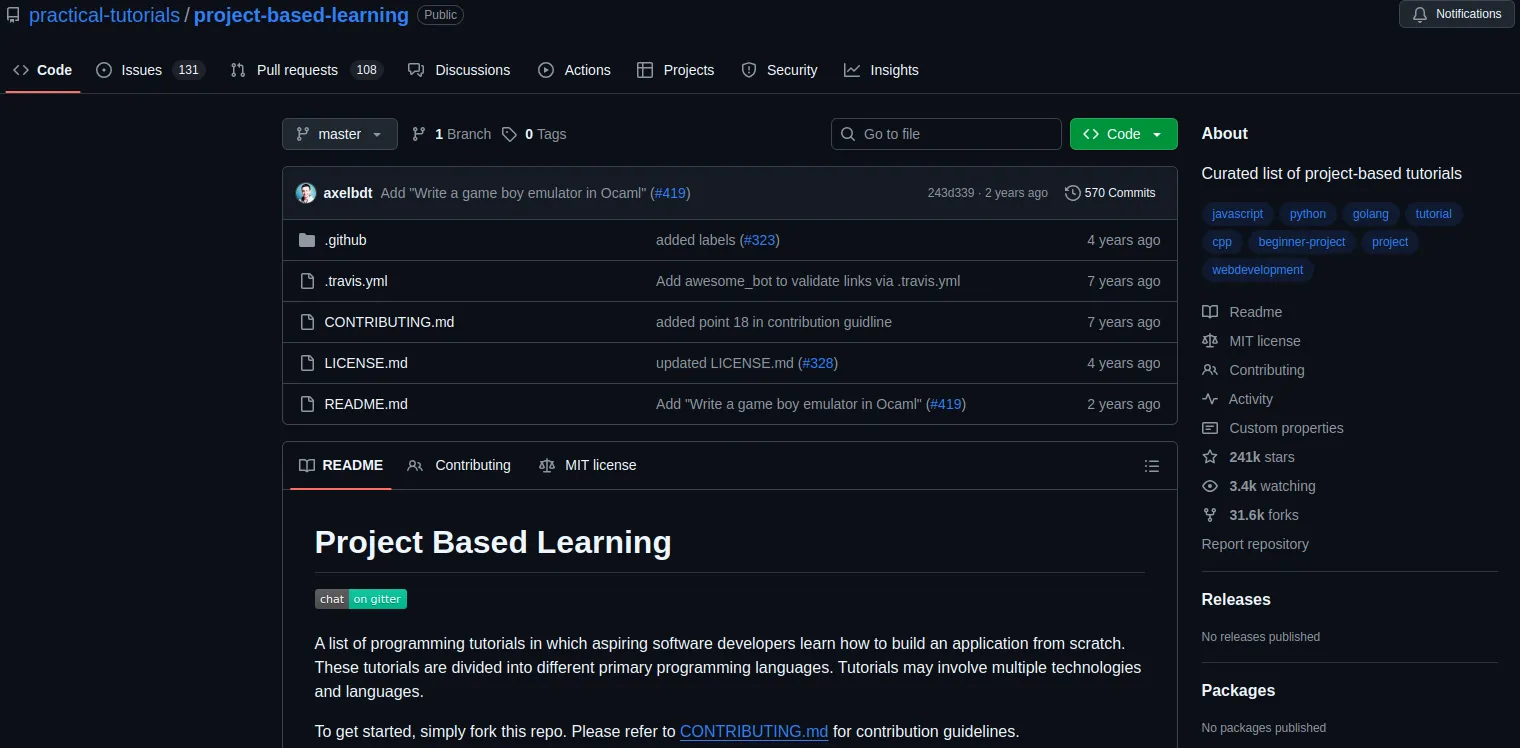
GitHub Link: practical-tutorials/project-based-learning
2. Avik-Jain/100-Days-Of-ML-Code
This repository is inspired by the #100DaysOfCode movement. This repository provides a 100-day roadmap for mastering machine learning using Python. Each “day” features a short project or concept (regression, classification, clustering, etc.) with code and often an infographic. The README shows daily summaries and links to code notebooks for topics like logistic regression, SVM, neural networks, and more. It’s structured as bite-sized lessons.
Why is it important:
- Provides a structured daily roadmap to master ML step by step, making complex topics manageable.
- Ensures hands-on practice by coding core ML algorithms in Python, such as regression, SVM, neural nets, etc.
- Builds discipline and consistency through the 100-day challenge format.
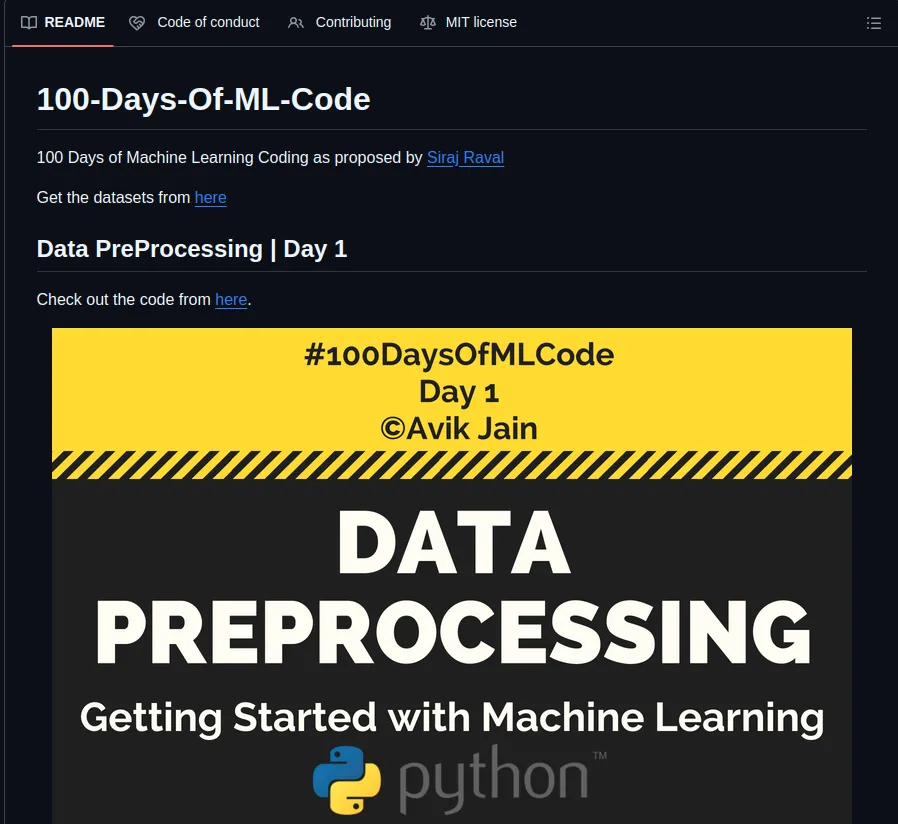
GitHub Link: Avik-Jain/100-Days-Of-ML-Code
3. trekhleb/learn-python
This repository is a collection of Python examples covering core concepts, syntax, and problem-solving. It is excellent for absolute beginners. It is a “playground and cheatsheet” for Python, organized by topic. It’s a collection of Python scripts split into logical sections for lists, dictionaries, loops, etc. Each with code examples, explanations, and assertions. You can run or modify these scripts to see how Python constructs work. The repository acts as an interactive tutorial; every topic has commentary and test functions that demonstrate expected outputs.
Why is it important:
- Acts as a quick reference and debugging aid, making it easy to recall syntax and patterns during real projects.
- Encourages active experimentation, since every script can be modified and re-run to instantly test understanding.
- Covers not just syntax but also problem-solving patterns, helping learners move from basics to applying Python effectively.
- Serves as a lightweight practice ground, ideal for brushing up on Python before interviews or new projects.
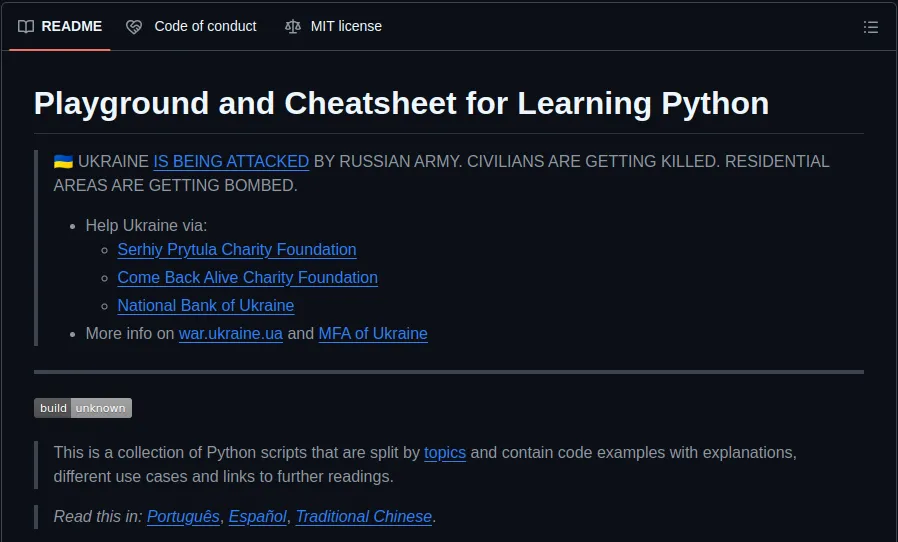
GitHub Link: trekhleb/learn-python
4. garimasingh128/awesome-python-projects
This GitHub repository contains a collection of “awesome” Python projects for beginners. This includes text games, ML demos, web scrapers, etc. It lists dozens of mini-projects with code like a Twitter bot, calculator, hangman game, stock predictor, and more. The emphasis is on practical scripts that a beginner can read and extend.
Why is it important:
- Offers a low-barrier entry point for learners to explore coding without needing heavy theory first.
- Helps beginners identify their area of interest in Python automation, ML, web, games, etc., before diving deeper.
- Serves as a ready-to-use inspiration bank for student projects, hackathons, or portfolio building.
- Being part of an open-source learning contest fosters collaboration and shows how coding communities support newcomers.
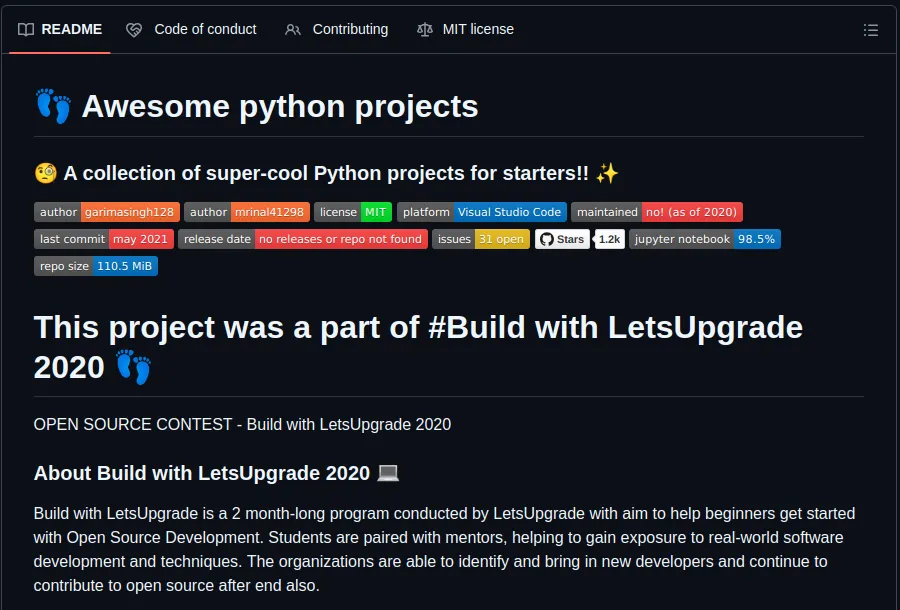
GitHub Link: garimasingh128/awesome-python-projects
5. vinta/awesome-python
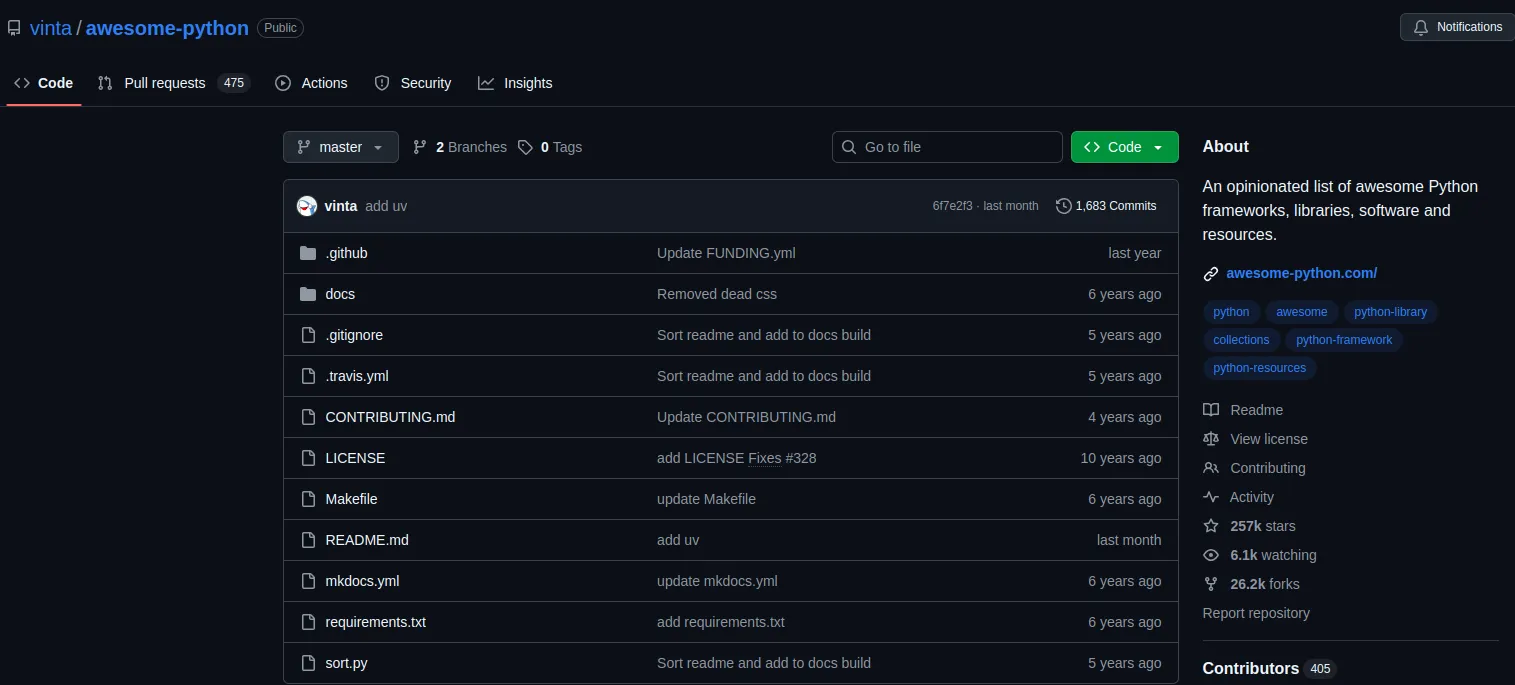
This is an opinionated list of awesome Python frameworks, libraries, software, and resources. It is one of the classic “awesome” lists, with categories like web frameworks, data science, dev tools, etc. It’s an index with links to thousands of advanced Python projects on GitHub across all domains, such as AI, web, testing, games, etc.
Why is it important:
- Acts as a trustworthy starting point when evaluating libraries, since the list is community-vetted and widely recognized.
- Saves time by reducing trial-and-error, pointing directly to reliable, widely used Python tools.
- Encourages continuous learning, as updates keep you aware of new and trending libraries.
- Serves as a reference hub for building specialized projects, from research prototypes to production-grade apps.
GitHub Link: vinta/awesome-
6. TheAlgorithms/Python
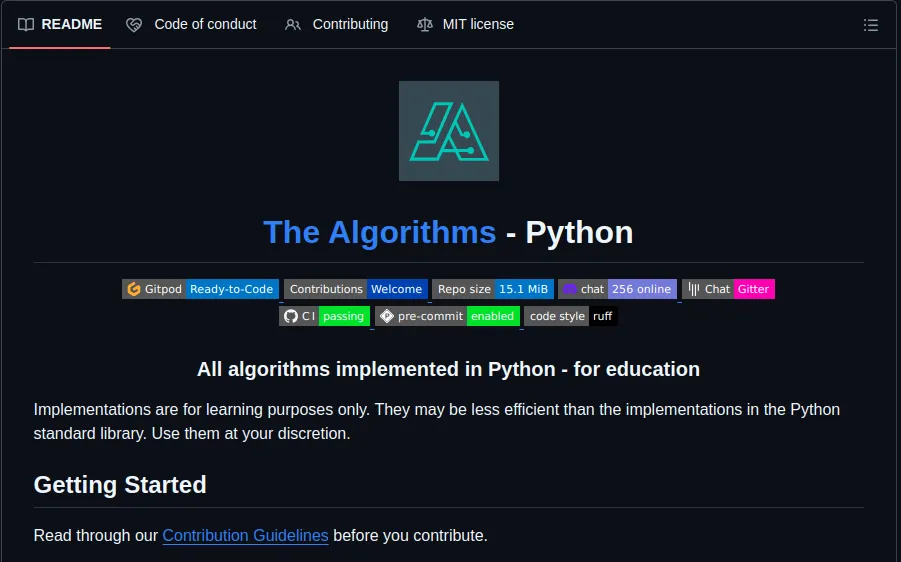
This library contains a collection of algorithms and data structure implementations in Python. This repository has code for math algorithms, sorting, graph algorithms, ciphers, and more, all written in Python. The tagline is literally “All Algorithms implemented in Python”. You’ll find ready implementations of classic algorithms such as Dijkstra, quicksort, and neural nets organized by category.
Why is it important:
- Serves as a practical supplement to textbooks, letting you see theoretical algorithms translated into working Python code.
- Encourages open-source collaboration, with contributors worldwide adding improvements and new algorithms.
- Provides a consistent coding style and test coverage, making it easier to learn best practices alongside algorithms.
- Useful as a reference library for quickly integrating algorithmic solutions into academic or real-world projects.
GitHub Link: TheAlgorithms/Python
7. xresearch/qxresearch-event-1
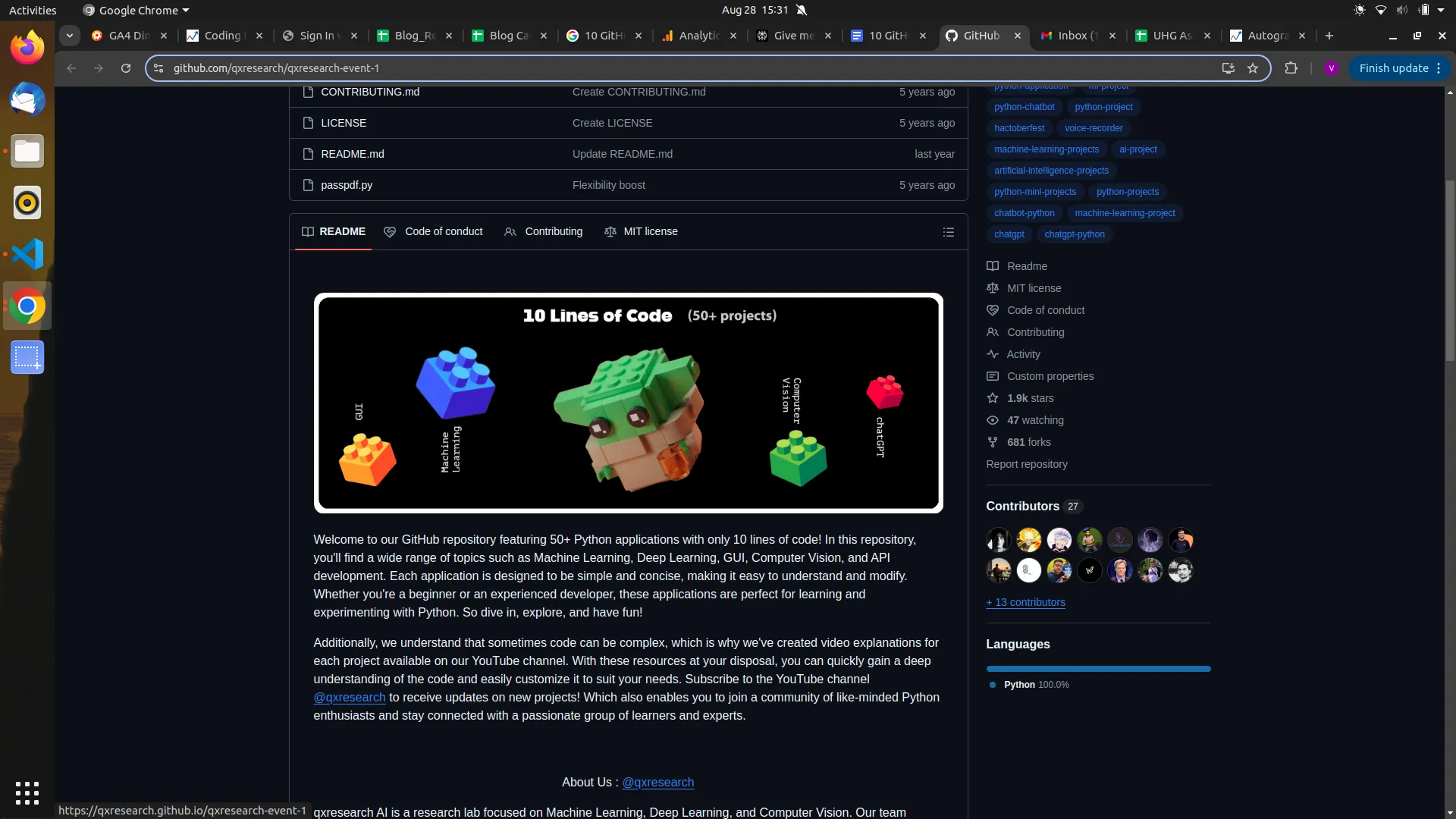
This repository hosts Python-based projects developed during hackathons and research events. It includes a unique set of 50+ ultra-simple Python applications, each done in about 10 lines of code. These cover various topics such as Machine Learning examples, web scraping, GUI apps, CV, APIs, etc., in concise scripts. It contains 50+ Python applications such as a voice recorder, a password generator, a calendar GUI, etc.
Why is it important:
- Each script is highly approachable, lowering the barrier for beginners to try out coding without feeling overwhelmed.
- Encourages creativity and tinkering, since short programs can be easily modified to build something new.
- Includes video walkthroughs, making it easier for visual learners to follow along and understand the logic.
- Provides quick exposure to multiple Python domains in a very short time, helping learners discover what excites them most.
GitHub Link: qxresejarch/qxresearch-event-1
8. amaiAmazing-Python-Scripts
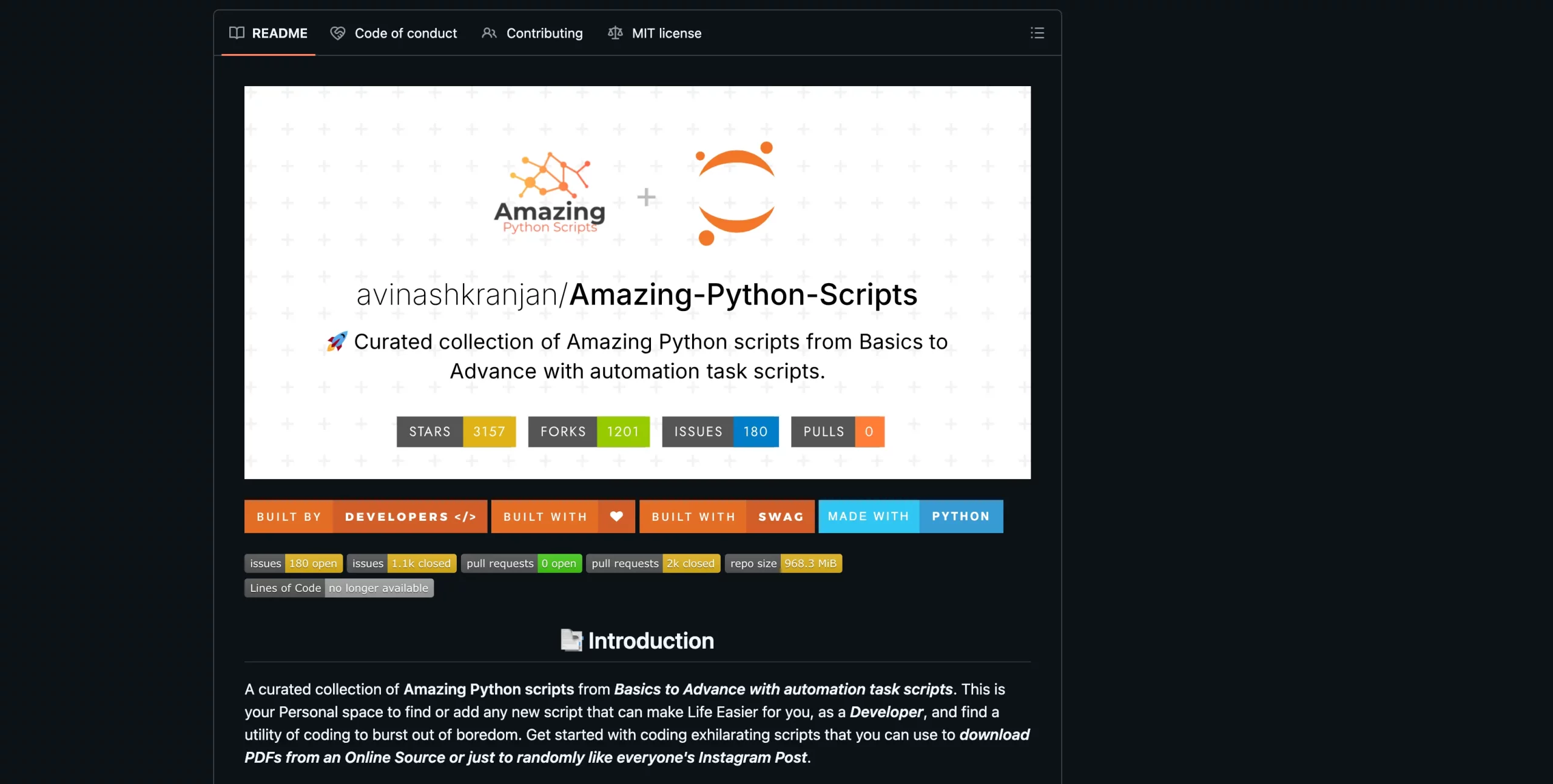
This library contains a curated collection of Python scripts ranging from basic to advanced automations. It is a space for scripts “to make life easier” on tasks like PDF downloaders, image processing, GUI games, system monitors, Twitter bots, etc. The repository is filled with dozens of small script projects, each in its own folder, e.g., “Image-to-art”, “Weather App”, “Snake Game”, etc.
Why is it important:
- Provides ready-to-run scripts, so learners can instantly see results without complex setup.
- Acts as a gateway to real-world Python, exposing you to APIs, GUI toolkits, and file handling in practical contexts.
- Encourages forking and customization, letting you tweak existing scripts to fit personal or professional needs.
- Builds confidence by showing how small, standalone projects can deliver useful automation solutions.
GitHub Link: Amazing-Python-Scripts
9. Mrinank-Bhowmick/python-beginner-projects
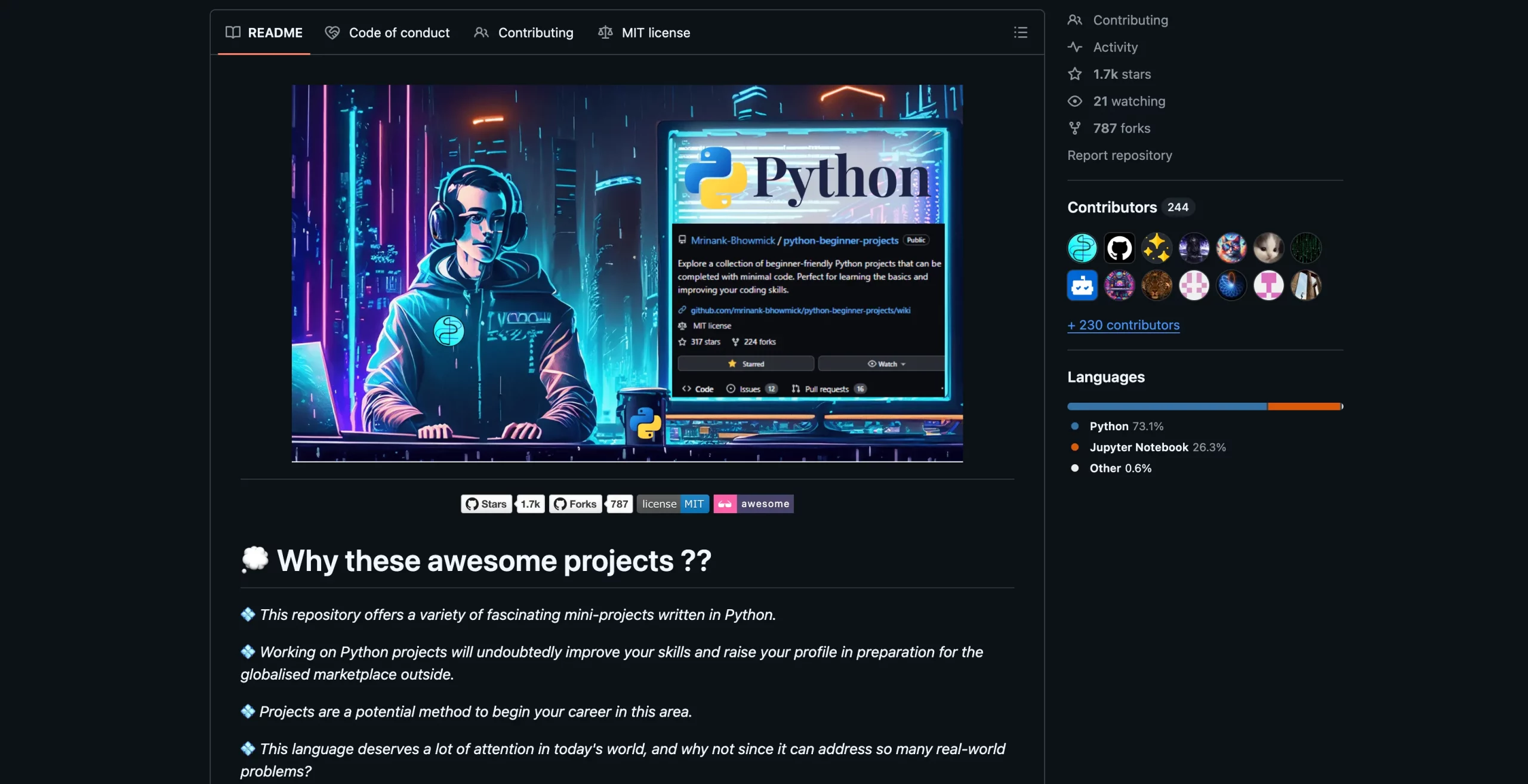
This repository contains a collection of beginner-friendly Python projects that use minimal code. It contains a variety of fascinating mini-projects useful for learning basics. It contains simple apps like games Hangman, Tic-Tac-Toe, utilities like email sender, BMI calculator, and small tools like image compressor, QR code generator, etc, each under the projects/ folder.
Why is it important:
- Offers well-commented code, enabling learners to quickly understand logic flow and best practices without requiring prior depth in Python.
- Functions as a progressive learning resource, where projects gradually introduce more complexity, fostering incremental skill development.
- Provides an accessible platform for experimentation and modification, allowing learners to adapt existing mini-projects into personalized applications.
- Serves as a confidence-building repository, giving beginners tangible outcomes that reinforce both conceptual understanding and applied programming skills.
GitHub Link: python-beginner-projects
10. Asabeneh/30-Days-Of-Python
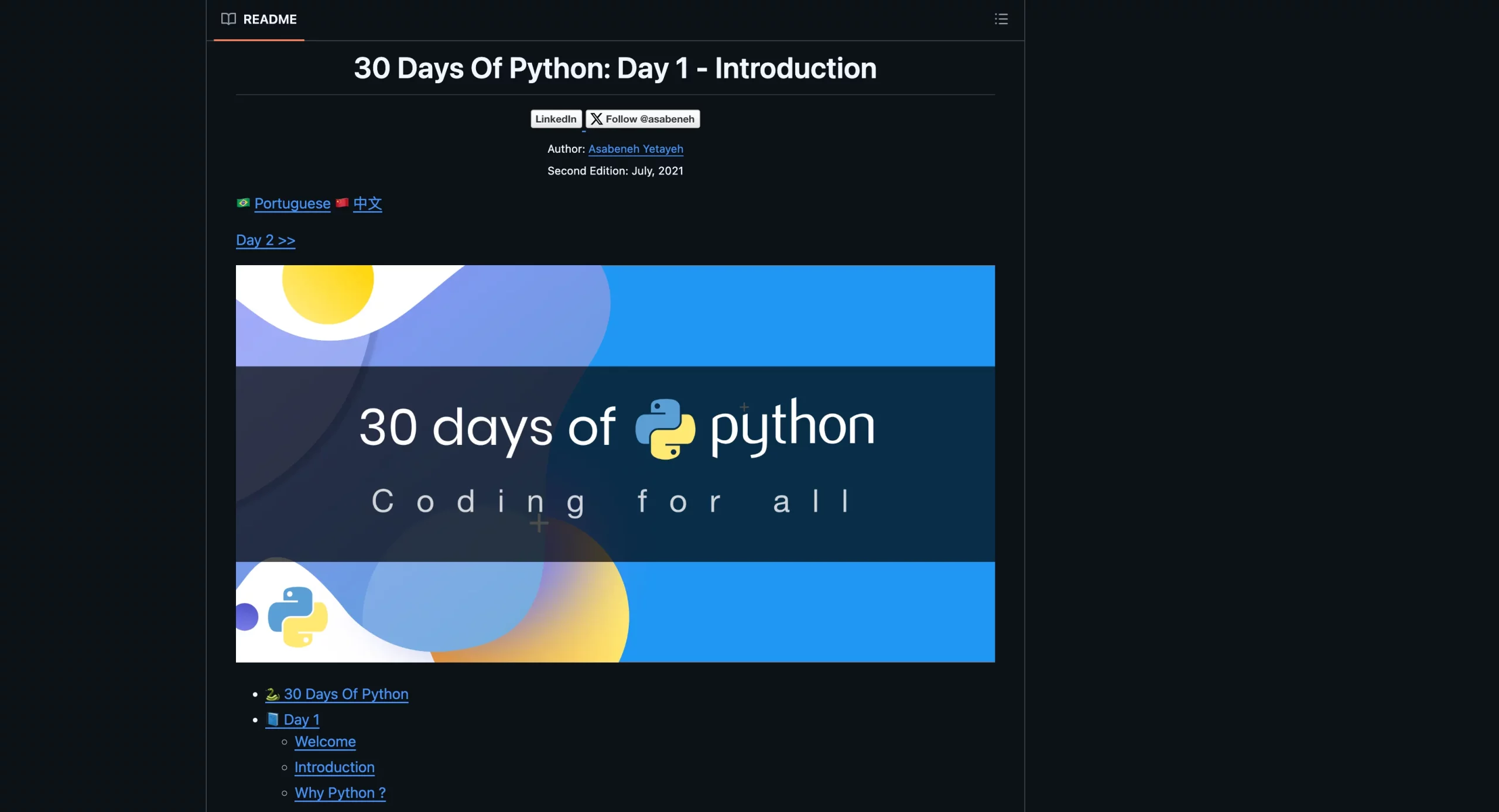
It contains: A 30-day structured Python challenge by Asabeneh Yetayeh. It breaks down Python learning into 30 daily topics like variables, loops, functions, web scraping, data analysis, etc. Each day’s section includes explanations and exercises, effectively forming a step-by-step tutorial. There are also linked video lessons. It’s a guided curriculum packaged in a repo.
Why is it important:
- Provides a disciplined, day-by-day roadmap, helping learners stay consistent and avoid overwhelm.
- Combines theory with hands-on exercises, ensuring concepts are not just read but actively practiced.
- Includes video lessons alongside written material, catering to both visual and text-based learning styles.
- Recognized and trusted by a large community, making it a reliable path for self-learners.
GitHub Link: 30-Days-Of-Python
Overall Summary
Here’s a summary of all the GitHub repositories we’ve covered above for a quick preview.
| Repository | Why It Matters | Stars |
|---|---|---|
| practical-tutorials/project-based-learning | Project-based tutorials across languages with hands-on learning | 241k |
| Avik-Jain/100-Days-Of-ML-Code | Structured 100-day ML coding challenge | 48.0k |
| trekhleb/learn-python | Interactive Python cheatsheet and examples | 17.2k |
| garimasingh128/awesome-python-projects | Collection of beginner Python projects | 1.2k |
| vinta/awesome-python | Curated list of Python libraries/resources | 257k |
| TheAlgorithms/Python | Implementations of algorithms in Python | 204k |
| qxresearch/qxresearch-event-1 | 50+ mini Python apps (very concise scripts) | 1.9k |
| avinashkranjan/Amazing-Python-Scripts | Curated Python automation and fun scripts | 3.2k |
| Mrinank-Bhowmick/python-beginner-projects | Beginner-friendly small Python projects | 1.7k |
| Asabeneh/30-Days-Of-Python | Step-by-step 30-day Python learning challenge | 48.9k |
Conclusion
Mastering Python benefits almost every tech career, and real coding practice is the best way to learn effectively. These repositories provide hands-on material, from challenge-based learning paths to collections of engaging projects. By exploring them, you’ll strengthen coding skills, expand problem-solving abilities, and experience Python’s versatility across multiple domains.
Whether you’re a student or a professional, these projects will sharpen your skills and fuel creativity. Each repository offers unique opportunities for learning, experimentation, and inspiration. Engaging with these resources ensures practical knowledge that translates directly into real-world applications. Happy coding and enjoy building projects that make your learning journey both productive and exciting.
Frequently Asked Questions
Q1. Why should I learn Python in 2026?
A. Python remains the most popular language due to its simplicity, versatility, and massive ecosystem across AI, data science, web, and automation.
Q2. What makes Python beginner-friendly?
A. It’s clean, English-like syntax helps beginners write useful programs quickly without complex setup or steep learning curves.
Q3. How does Python help professionals?
A. It powers production systems in AI, web apps, automation, and data pipelines, making it indispensable for both startups and big tech.
Q4. Which repository is best for beginners?
A. trekhleb/learn-python and Mrinank-Bhowmick/python-beginner-projects are excellent for absolute beginners due to simple, well-explained examples.
Q5. What if I want structured learning?
A. Avik Jain’s 100-Days-Of-ML-Code and Asabeneh’s 30-Days-Of-Python provide clear day-by-day roadmaps for consistent progress.
Hello! I'm Vipin, a passionate data science and machine learning enthusiast with a strong foundation in data analysis, machine learning algorithms, and programming. I have hands-on experience in building models, managing messy data, and solving real-world problems. My goal is to apply data-driven insights to create practical solutions that drive results. I'm eager to contribute my skills in a collaborative environment while continuing to learn and grow in the fields of Data Science, Machine Learning, and NLP.