Researchers today can draft entire papers with AI assistance, run experiments faster than ever, and summarise literature in minutes. Yet one stubborn bottleneck remains: creating clear, publication-ready diagrams. Poor diagrams look unprofessional and can obscure ideas and weaken a paper’s impact. Google now seems to have a solution to this – and it is called ‘PaperBanana.’
From model architectures to workflow pipelines, publication-ready visuals still demand hours in PowerPoint, Figma, or LaTeX tools. Plus, not every researcher is a designer. This is where PaperBanana enters the picture. Designed to turn text descriptions into clean, academic-ready visuals, the system aims to automate one of the most time-consuming parts of research communication. Instead of manually drawing figures, researchers can now describe their methods and let AI handle the visual translation.
Here, we explore PaperBanana in detail, what it promises, and how it helps researchers in general.
Table of contents
What is PaperBanana?
At its core, PaperBanana is an AI system that converts textual descriptions into publication-ready academic diagrams. Instead of manually drawing workflows, model architectures, or experiment pipelines, users can describe their method in plain language to PaperBanana. It instantly generates a clean, structured visual suitable for research papers, presentations, or technical documentation.
Unlike general AI image generators (check out the top ones in 2026), PaperBanana is designed specifically for scientific communication. It understands the conventions of academic figures, which are clarity, logical flow, labeled components, and readability. With this, it ensures that the outputs focus on a professional look rather than a decorative sight.
Google says that the system can generate a range of visuals, including methodology diagrams, system pipelines, statistical charts, concept illustrations, and even polished versions of rough sketches. In short, by focusing on accuracy and structure, PaperBanana streamlines how researchers present complex ideas visually.
But this use-case can understandably position it very close to an AI image generator.
So how is it Different from AI Image Generators?
At first glance, it might seem like PaperBanana is just another AI image generator. After all, it even shares a very similar name to the famous NanoBanana, also by Google. And the fact that tools like DALL·E, Midjourney, and Stable Diffusion can also create stunning visuals from text prompts adds to the similarity.
But understand this – scientific diagrams are not art.
They demand precision, logical structure, correct labels, and faithful representation of processes. This is where traditional AI image generators fall short.
PaperBanana is designed with accuracy at its core. Instead of “drawing” what looks right, it focuses on what is structurally and scientifically correct. It preserves relationships between components, maintains logical flow, and ensures that labels and annotations reflect the described methodology.
For charts and plots, it goes a step further. It generates visuals through code-based rendering to ensure numerical correctness rather than approximate visuals.
In short:
- Typical AI Image generators optimize for aesthetics.
- PaperBanana optimizes for accuracy and clarity.
That distinction makes all the difference in academic and technical communication.
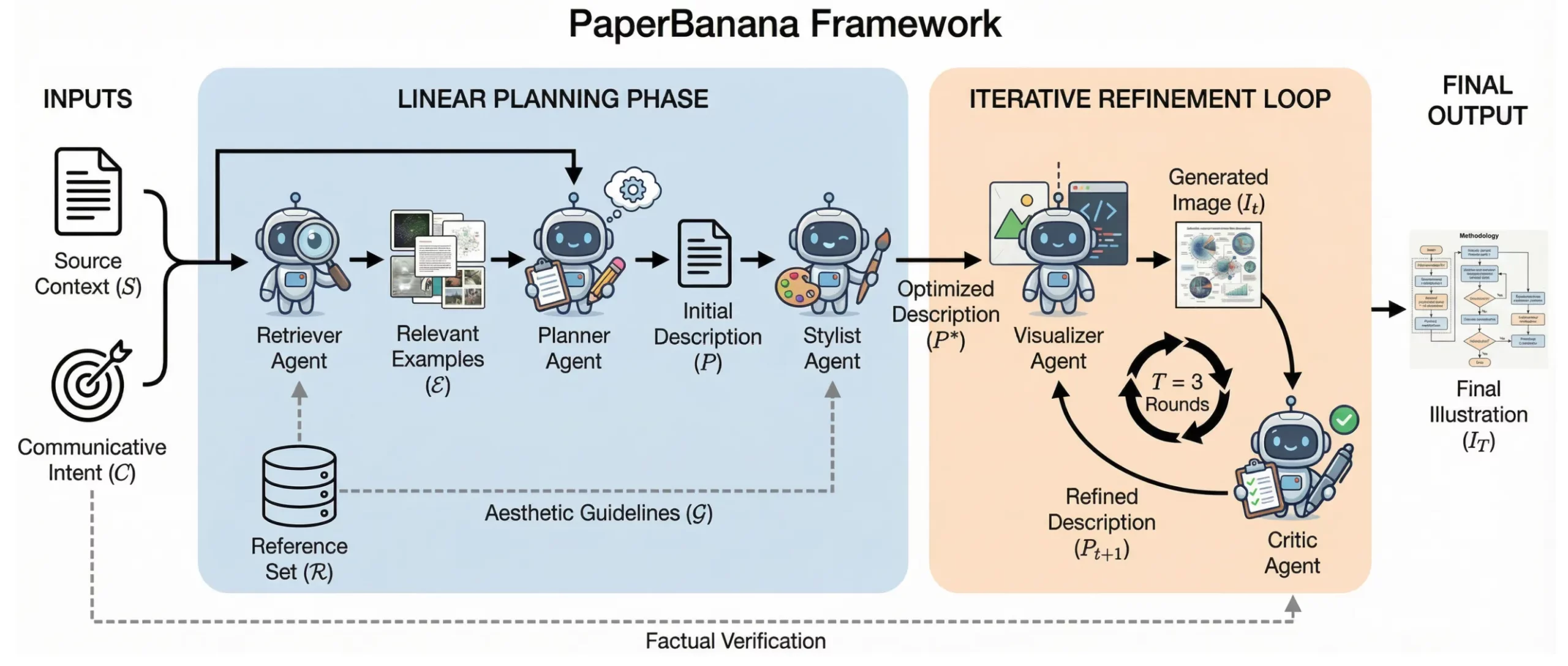
How PaperBanana Works
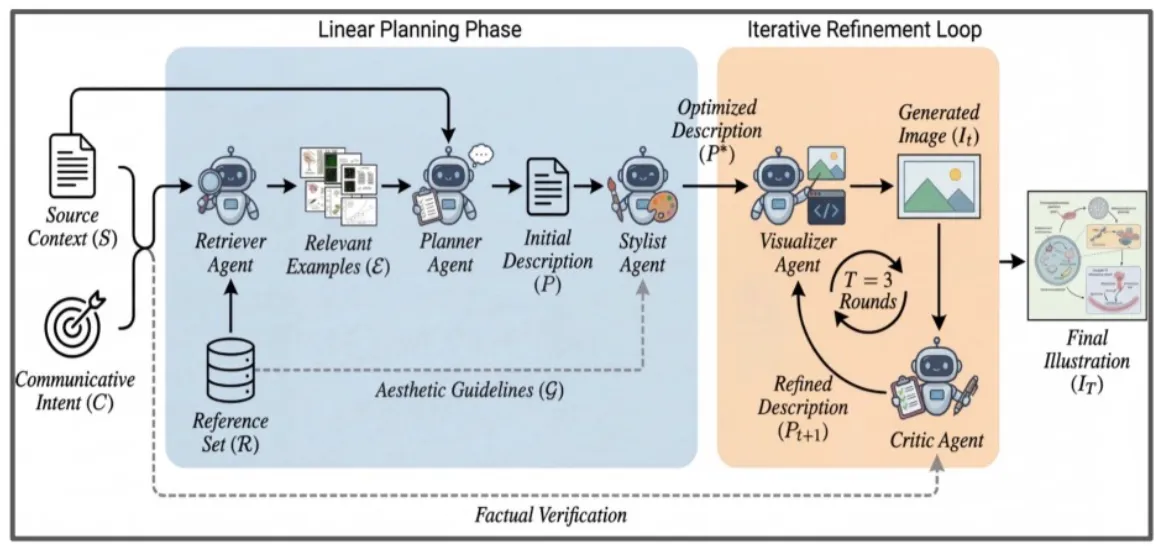
PaperBanana works like a five-agent team, not a single “generate image” model. These five agents work in two different phases after receiving two types of inputs from the users. The input types are –
Source Context (S): your paper content/method description
Communicative Intent (C): what you want the figure to communicate (e.g., “show the training pipeline”, “explain the architecture”, “compare methods”)
From there, PaperBanana runs in two phases:
1) Linear Planning Phase (Agents build the blueprint)
- Retriever Agent pulls relevant reference examples (E) from a reference set (R) — basically: “What do good academic diagrams like this usually look like?”
- Then the Planner Agent converts your context into an initial diagram description (P) — a structured plan of what should appear in the figure and how it should flow.
- Next, the Stylist Agent applies academic aesthetic guidelines (G) learned from those references, and produces an optimized description (P*). This is where it starts looking like a clean, publication-style figure—not a random infographic.
2) Iterative Refinement Loop (Agents improve it in rounds)
- Now the Visualizer Agent turns that optimized description into an actual output:
– either a generated diagram/image (Iₜ)
– or executable code (for plots/charts) - Then the Critic Agent steps in and checks the output against the source context for factual verification (are labels right? is the flow correct? did anything get invented?). Based on the critique, the system produces a refined description (Pₜ₊₁) and loops again.
This runs for T = 3 rounds (as shown), and the final result is the final illustration (Iₜ).
In one line: PaperBanana doesn’t “draw” — it plans, styles, generates, critiques, and refines like a real academic figure workflow.
Benchmark Performance
To evaluate its effectiveness, the authors introduced PaperBananaBench, a benchmark built from real NeurIPS paper figures, and compared PaperBanana against traditional image generation approaches and agentic baselines.
Compared to direct prompting of image models (“vanilla” generation) and few-shot prompting, PaperBanana significantly improves faithfulness, readability, and overall quality of diagrams. When paired with Nano-Banana-Pro, PaperBanana achieved:
- Faithfulness: 45.8
- Conciseness: 80.7
- Readability: 51.4
- Aesthetic quality: 72.1
- Overall score: 60.2
For context, vanilla image generation methods scored dramatically lower in structural accuracy and readability, while human-created diagrams averaged an overall score of 50.0.
The results highlight PaperBanana’s core strength: producing diagrams that are not only visually appealing but structurally faithful and easier to understand.
Examples of PaperBanana in Action
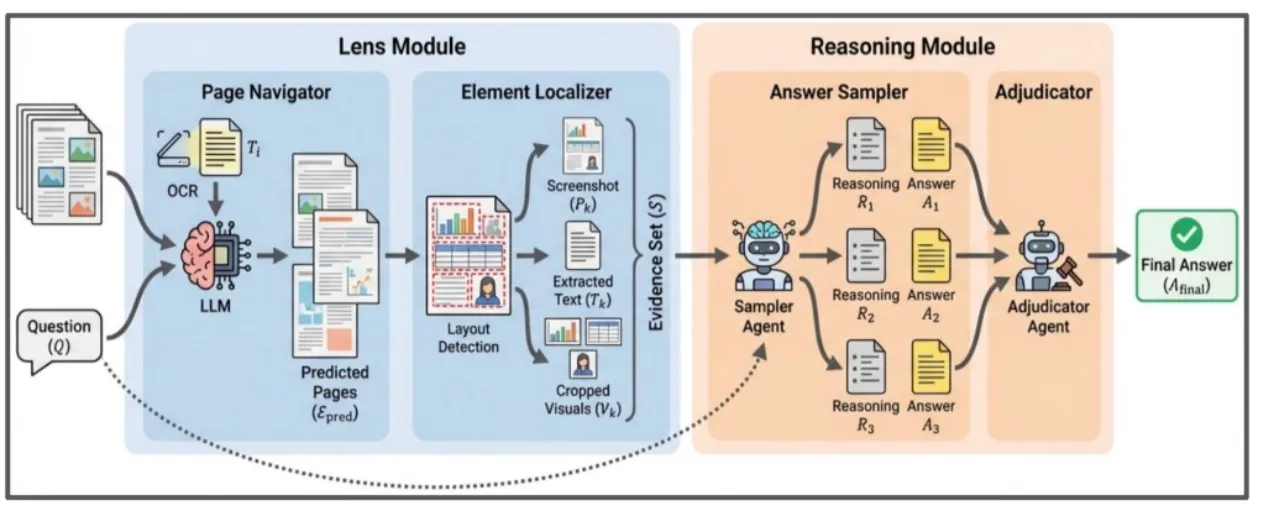
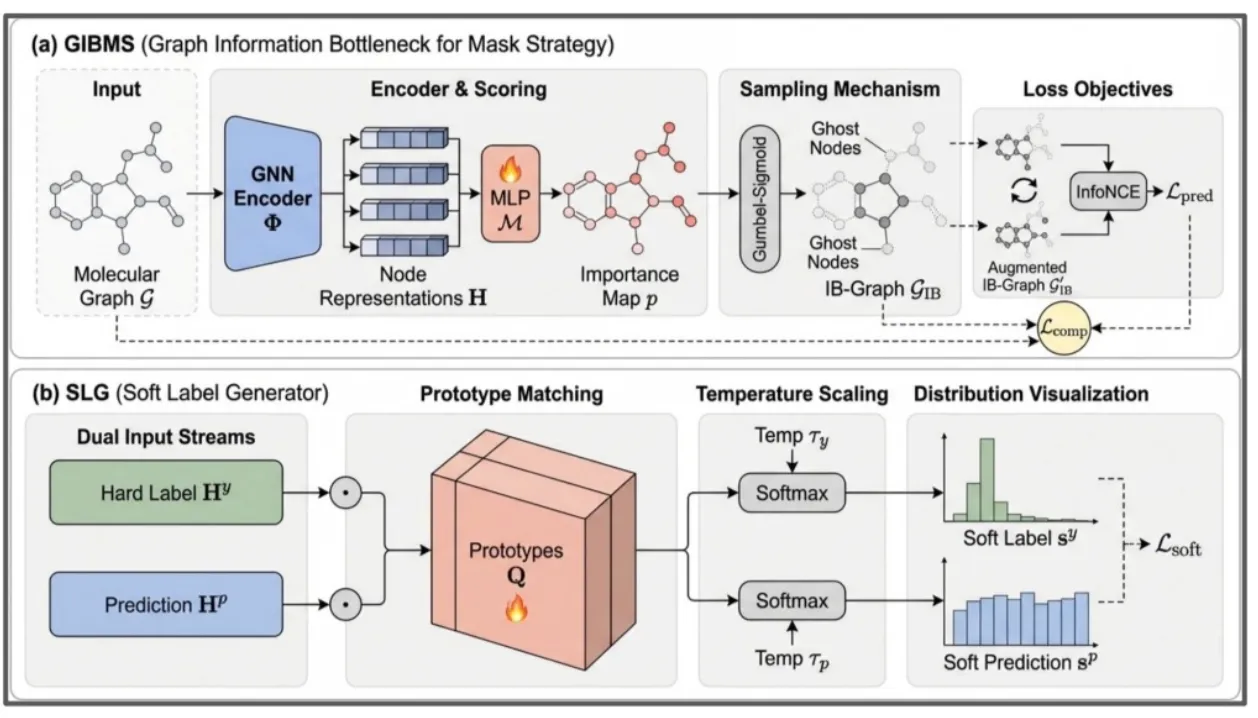
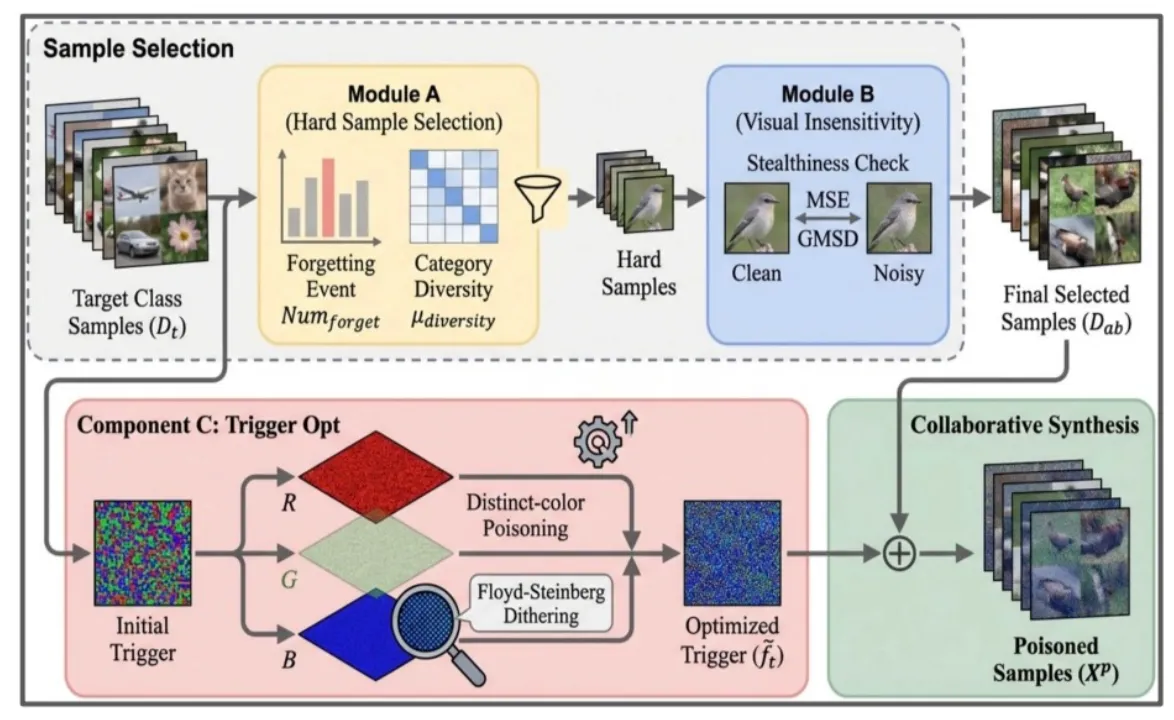
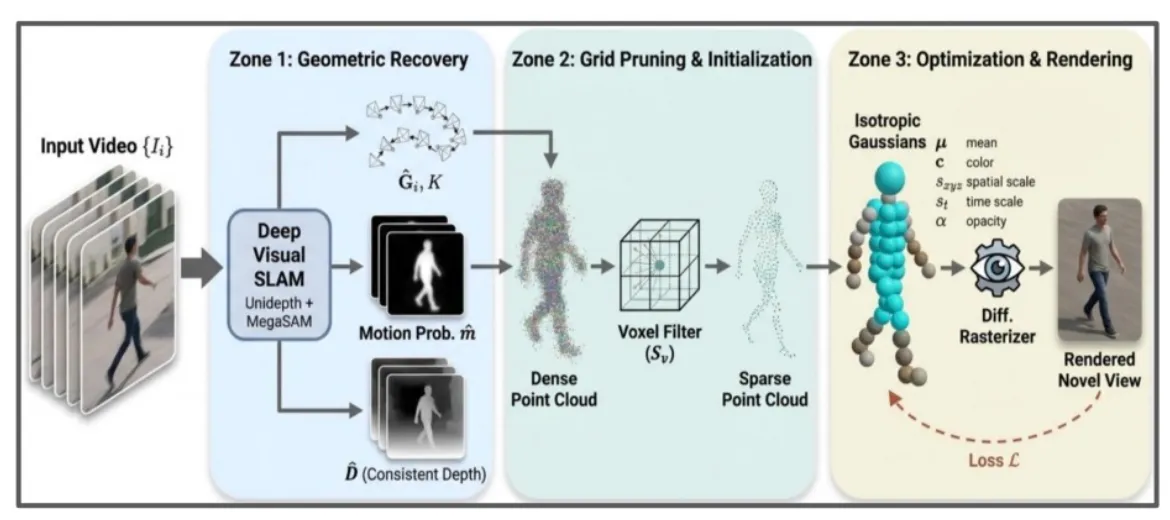
To understand the real impact of PaperBanana, it helps to look at what it actually produces. The research paper showcases several diagrams generated directly from method descriptions, illustrating how the system translates complex workflows into clean, publication-ready visuals.
From model pipelines and system architectures to experimental workflows and conceptual diagrams, the outputs demonstrate a level of structure and clarity that closely mirrors figures found in top-tier conference papers.
Below are a few examples generated by PaperBanana, as shared within the research paper:
Methodology Diagrams
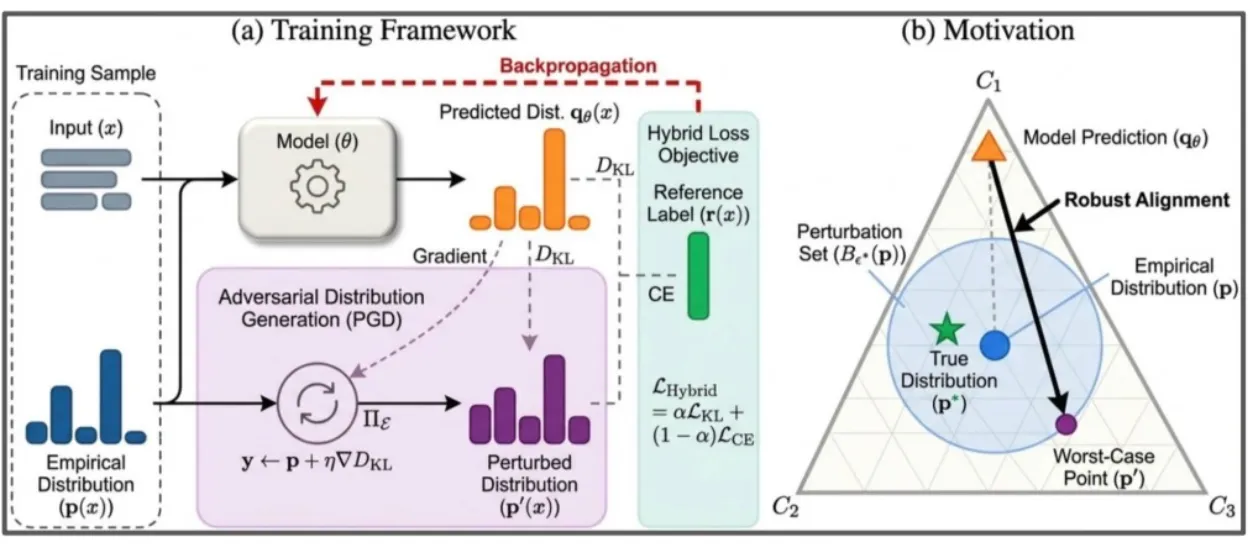
Statistical Plots
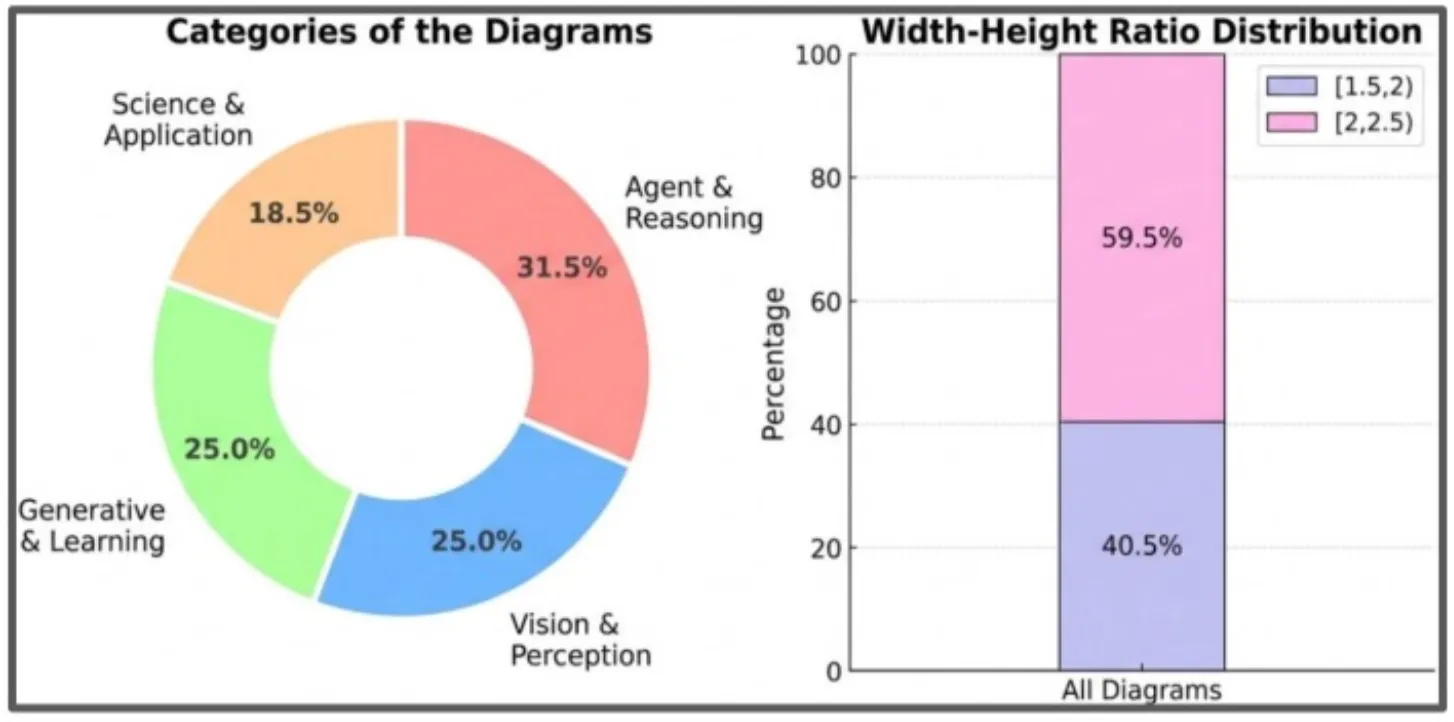
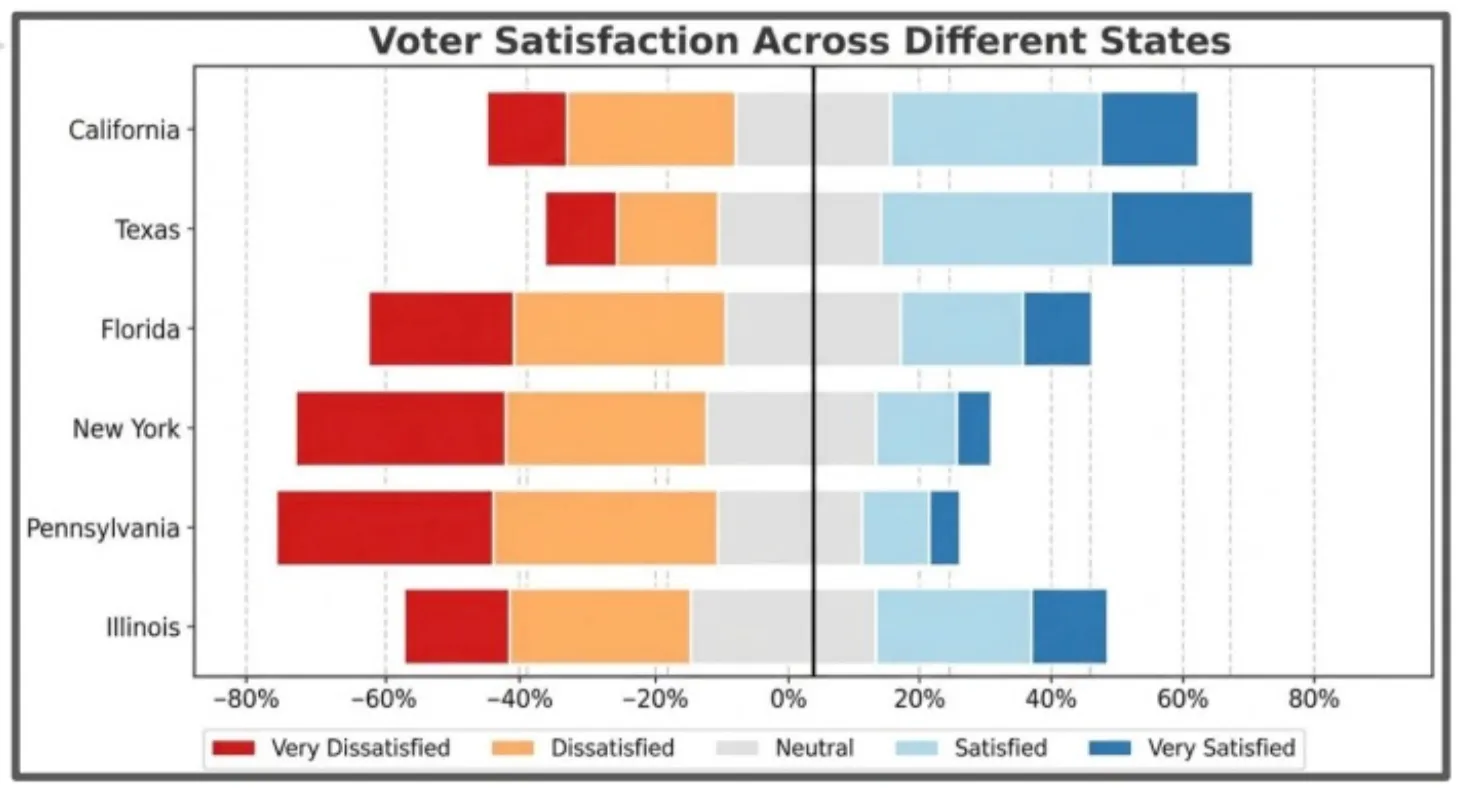
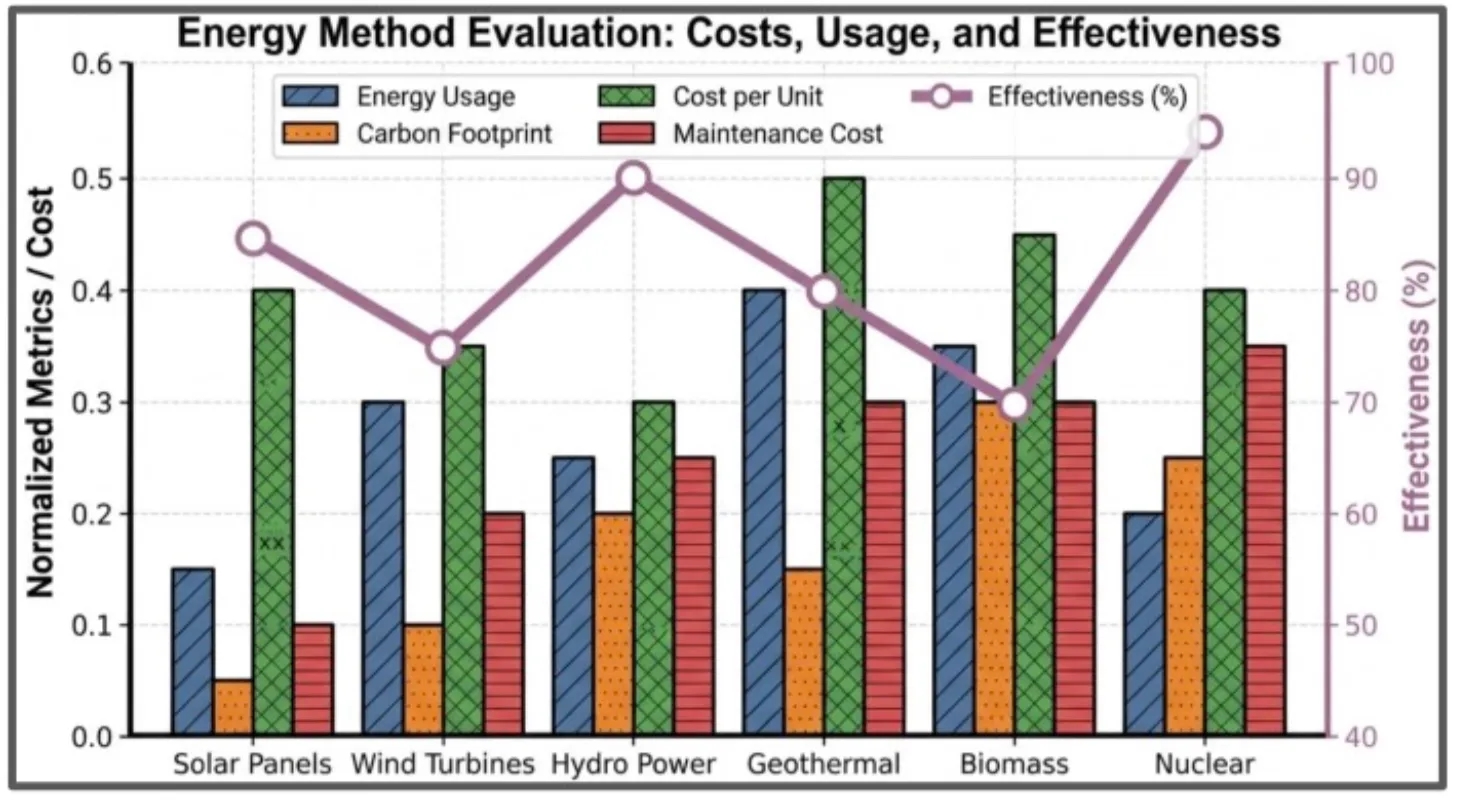
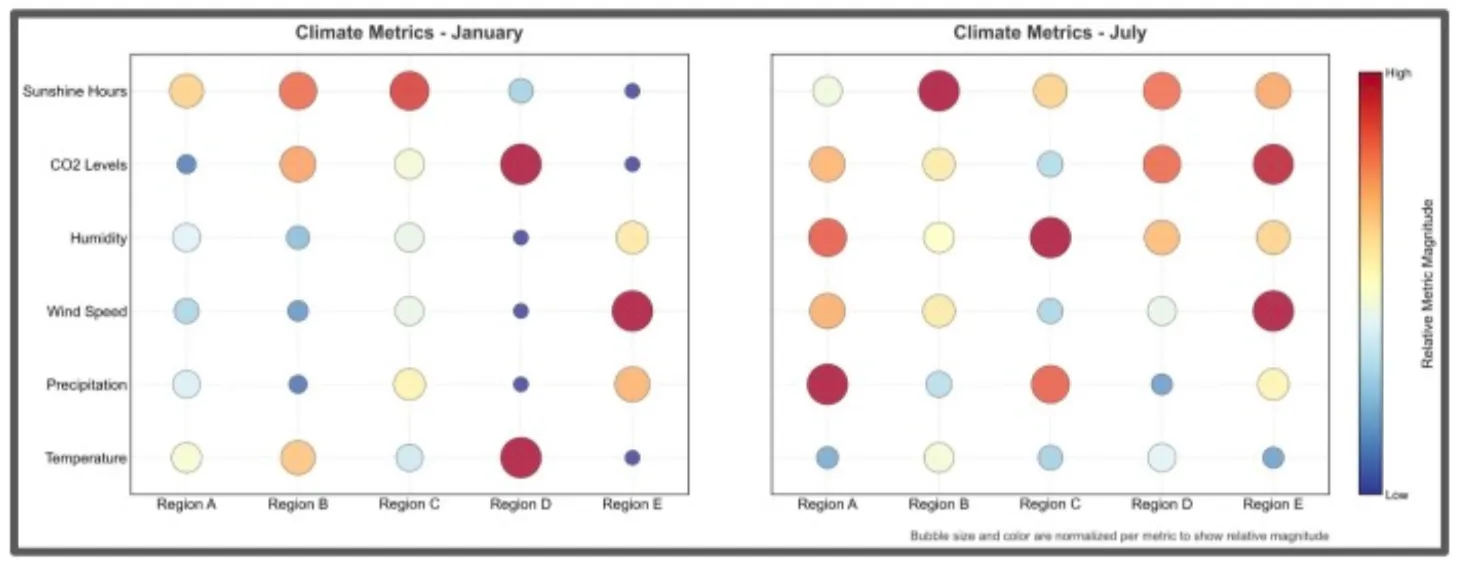
Aesthetic Refinement
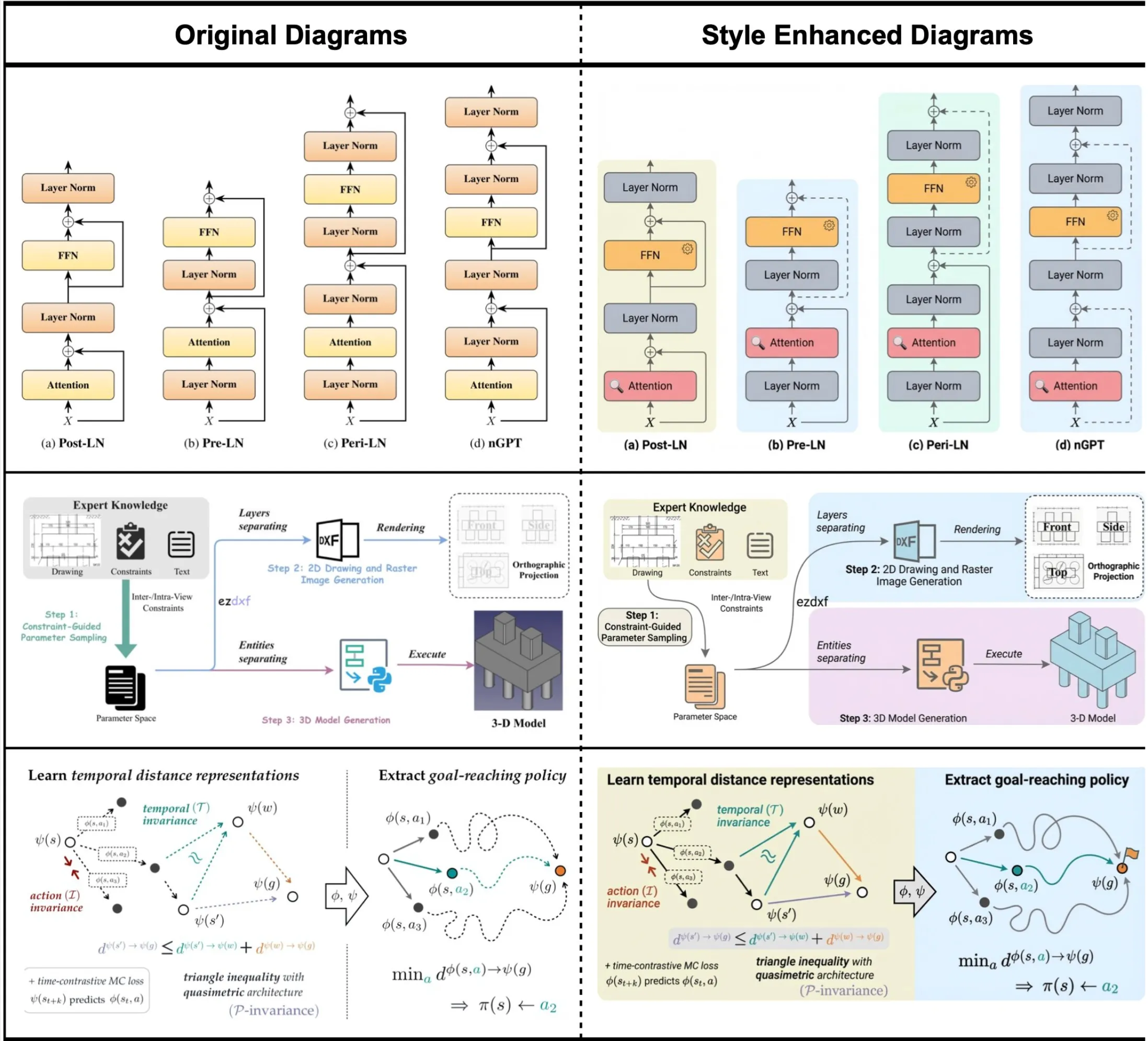
Image and content source: Google’s PaperBanana Research Paper
Conclusion
PaperBanana tackles a surprisingly stubborn problem in modern research workflows in a pretty novel manner. The idea of combining retrieval, planning, styling, generation, and critique into a structured pipeline seems a very smart one indeed. And the fact that it produces diagrams that prioritize accuracy, clarity, and academic readability over mere visual appeal proves its worth.
More importantly, it signals a broader shift. AI is no longer limited to helping write code or summarise papers. It is beginning to assist in scientific communication itself. As research workflows become increasingly automated, tools like PaperBanana could remove hours of manual effort while improving how ideas are presented and understood.