For different learning styles, goals, and comfort levels, finding a course that matches how you learn is HARD. Some people need visuals. While others wanna jump straight into code. Some need structure, others need flexibility. And many learners just want proof of effort at the end in the form of a certificate.
This list is built with that in mind. A list of free ML courses, each for a different type of learner, so you can stop forcing yourself into the wrong format and start learning in a way that works for you. From the classroom lover to the hermit, this article got everyone covered.
Table of contents
1. For a certificate with recognition!
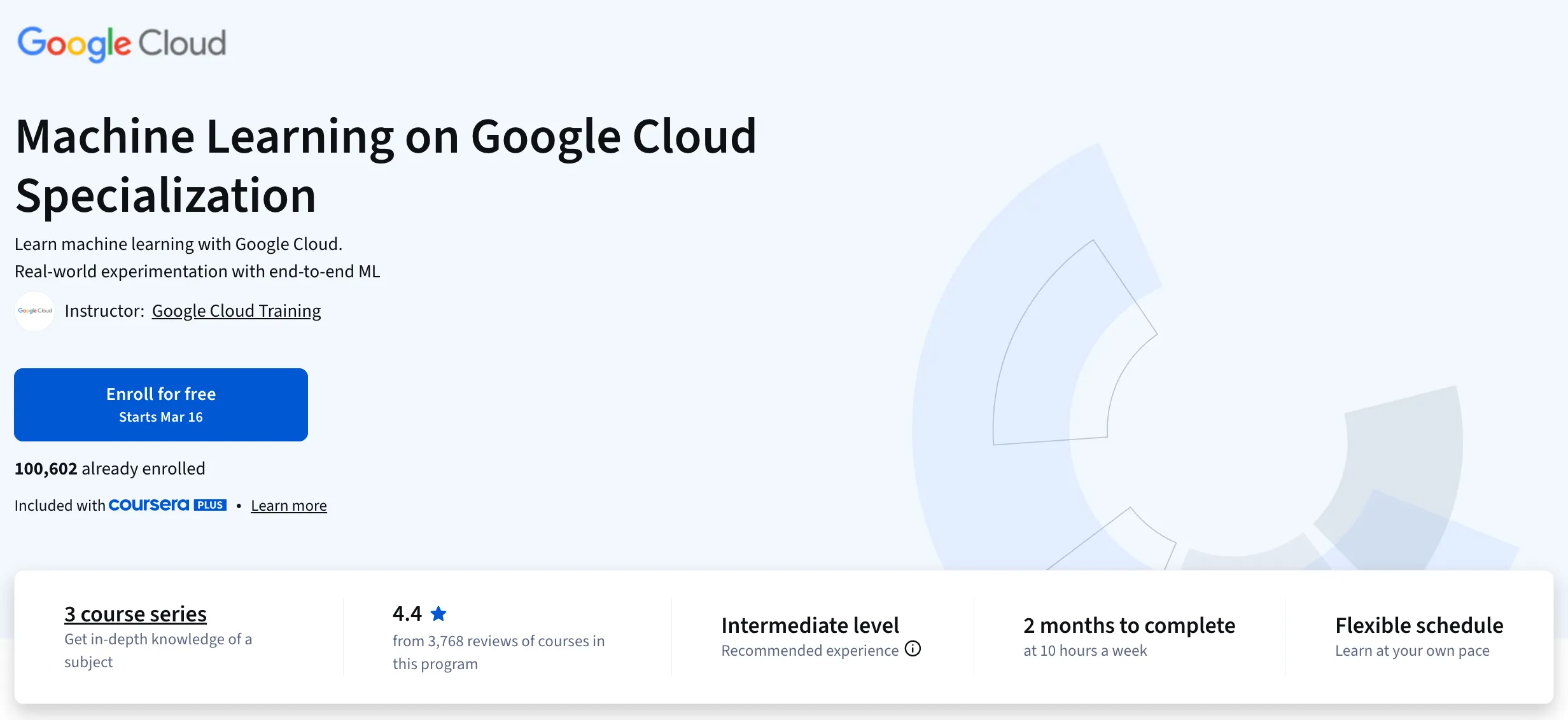
Machine Learning on Google Cloud – Google Cloud | ML with real production systems
This course is for those learner interested in having big names in their CV. Instead of treating ML as purely academic theory, the course focuses on how models are built, trained, and deployed in production environments.
What makes this course special?
- Designed by Google Cloud engineers
- Covers real production ML workflows
- Strong introduction to cloud-based ML systems
- Certificate available via Coursera financial aid
Best for learners who want ML training backed by Google.
2. For practical, hands-on learning
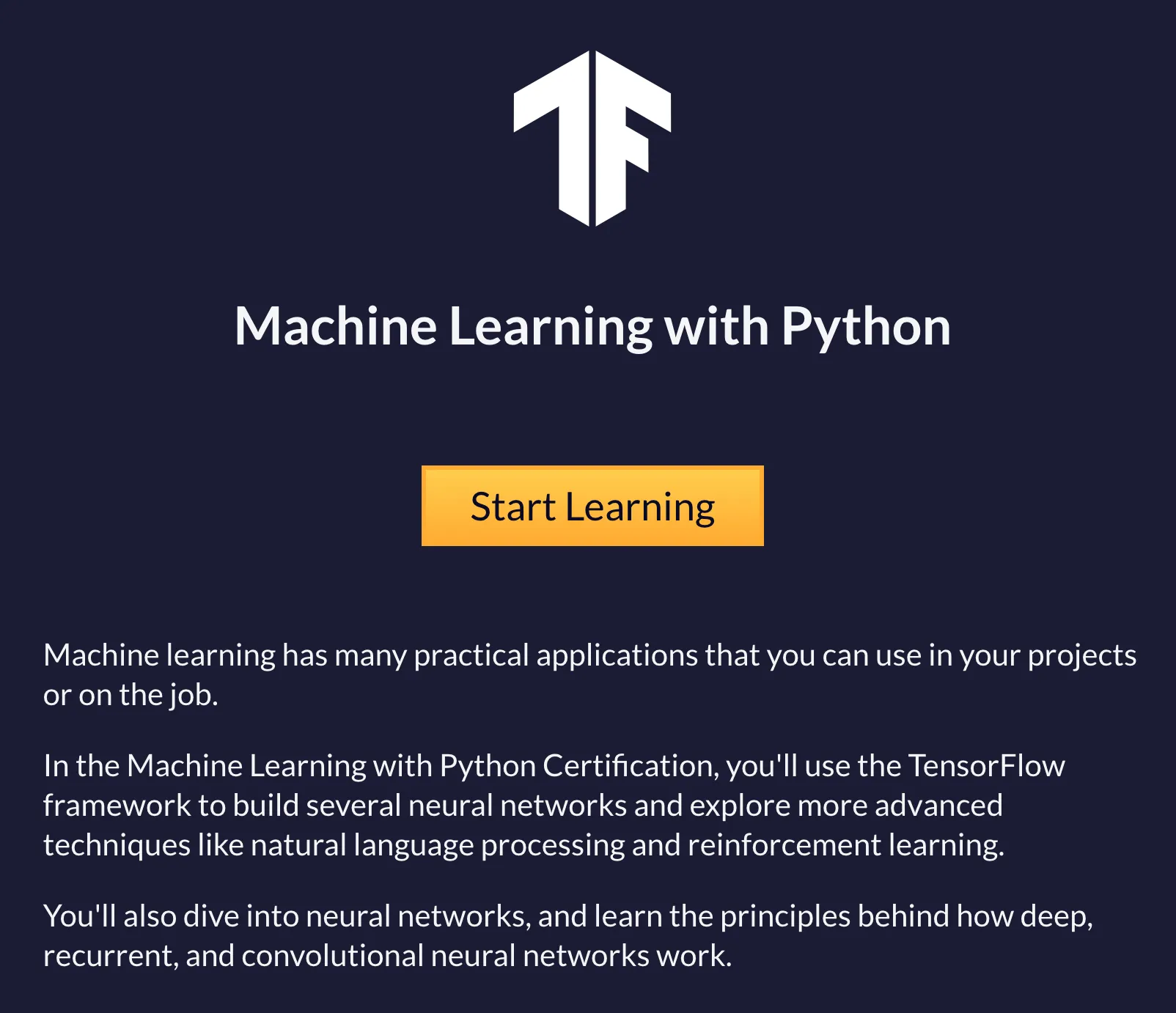
Machine Learning with Python – freeCodeCamp | Learn ML by building real models.
freeCodeCamp takes a hands-on approach to this ML problem. Instead of theoretical lectures, the curriculum introduces concepts through coding exercises and projects. You’ll work with Python and libraries like TensorFlow and NumPy, building models while learning how they work.
What makes this course special?
- Strong project-based learning
- Real Python machine learning workflows
- Neural networks and NLP projects
- Free certificate on completion
Best for learners who prefer learning by building things.
3. For working on real-life problems
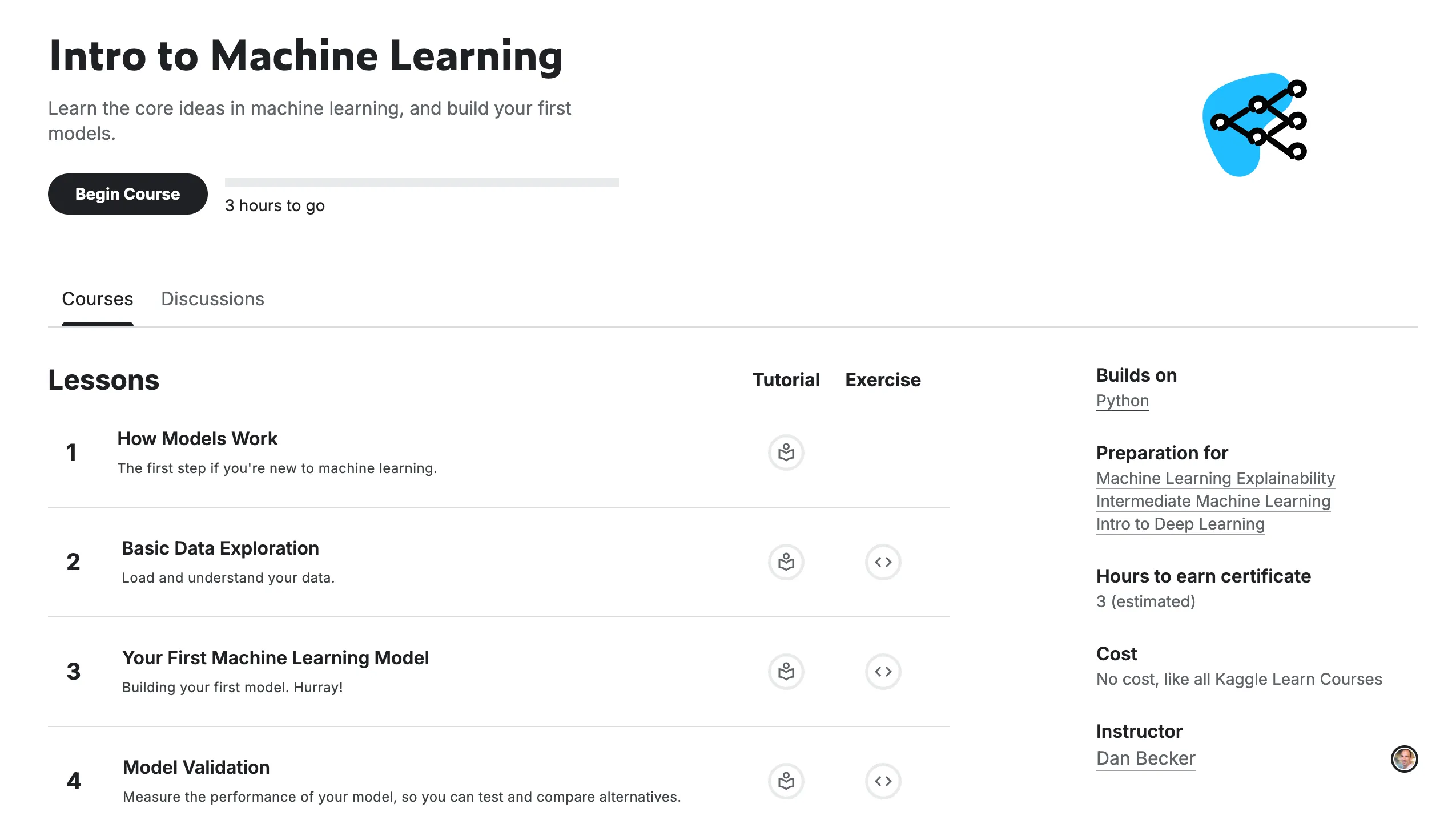
Intro to Machine Learning – Kaggle | Learn ML through real datasets
Kaggle’s machine learning micro-course is short, focused, and very practical. Each lesson introduces a concept and then immediately asks you to apply it using real datasets. Because the exercises run directly inside Kaggle’s environment, learners can experiment with models without worrying about setup.
What makes this course special?
- Beginner-friendly lessons
- Real datasets for practical knowledge
- Interactive coding environment
- Credible Certificate
Ideal for learners who want quick and practical ML experience.
4. For structured career learning
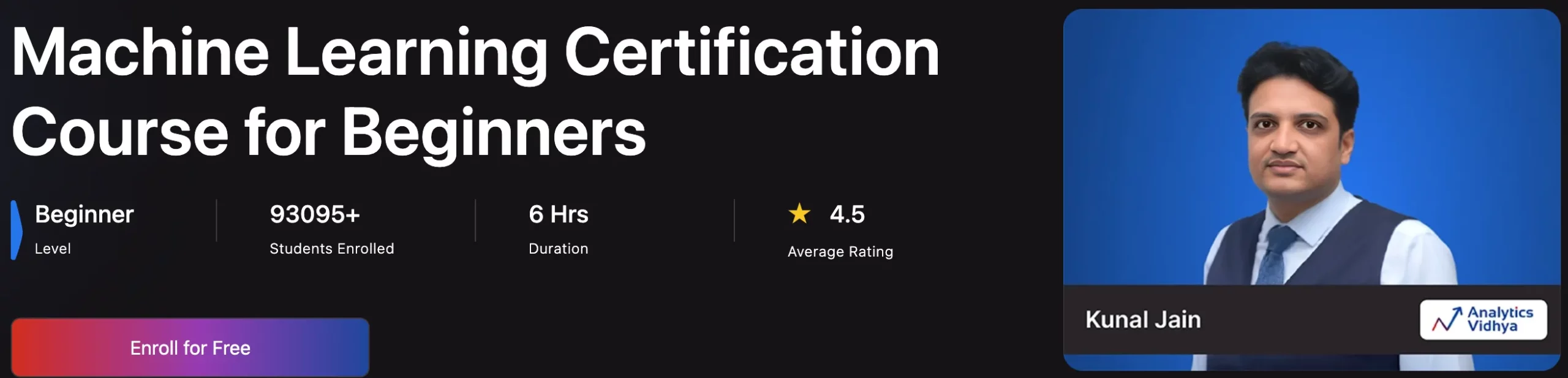
Machine Learning Course for Beginners – Analytics Vidhya | ML designed for data careers
This course approaches ML from a data science perspective. Instead of focusing purely on algorithms, it explains how machine learning fits into real workflows. Concepts are introduced gradually with practical examples and industry-focused explanations.
What makes this course special?
- Beginner-friendly ML roadmap
- Data science-focused curriculum
- Practical examples of model building
- Free certificate upon completion
Perfect for learners aiming to move into data science or machine learning roles.
Bonus: If you want a playlist supplementing the content of the course, refer to the following video:
5. For learners exploring enterprise ML tools
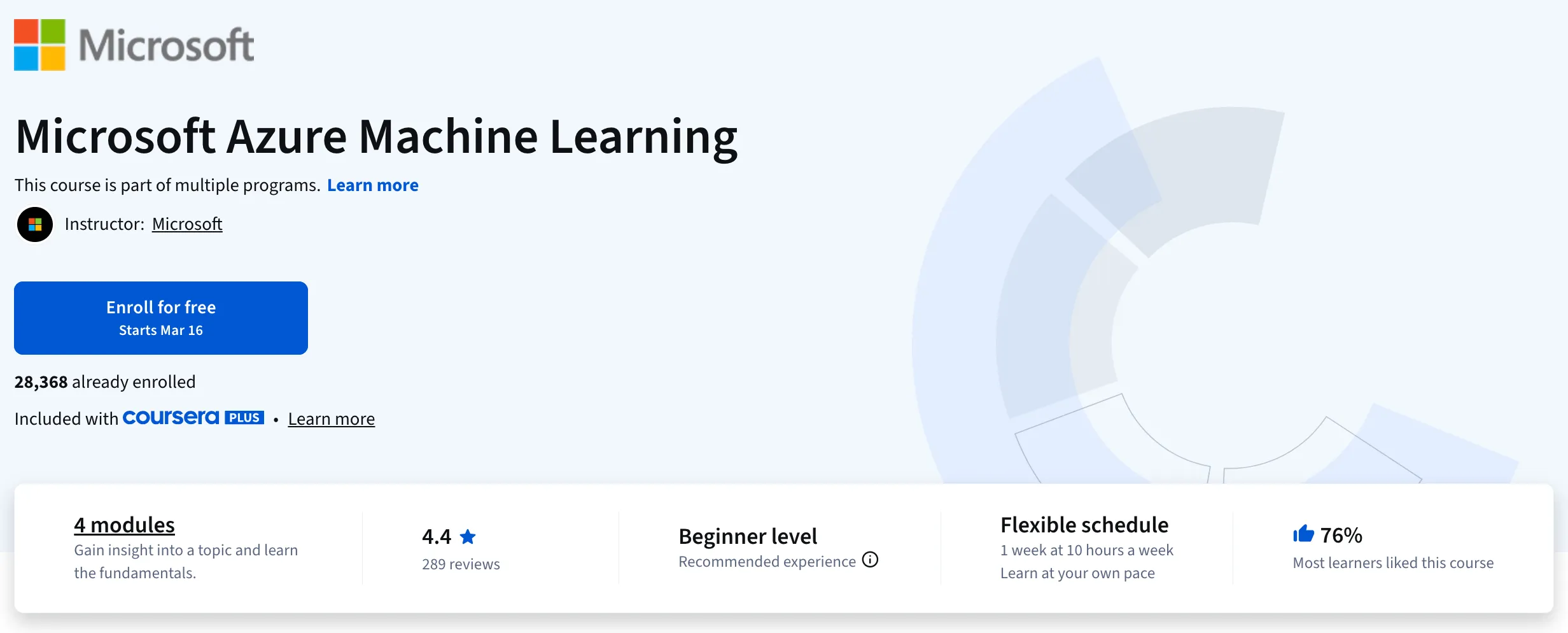
Microsoft Azure Machine Learning – Microsoft | ML fundamentals through the Azure ecosystem
Microsoft’s course introduces machine learning while demonstrating how models are built and deployed using Azure services. The curriculum focuses on model training, evaluation, and deployment while exposing learners to cloud-based ML tools used in industry.
What makes this course special?
- Direct training from Microsoft
- Exposure to Azure ML tools
- Practical examples of model deployment
- Certificate available upon completion
Best for learners interested in cloud-based machine learning systems.
6. For learning ML with Python ecosystems
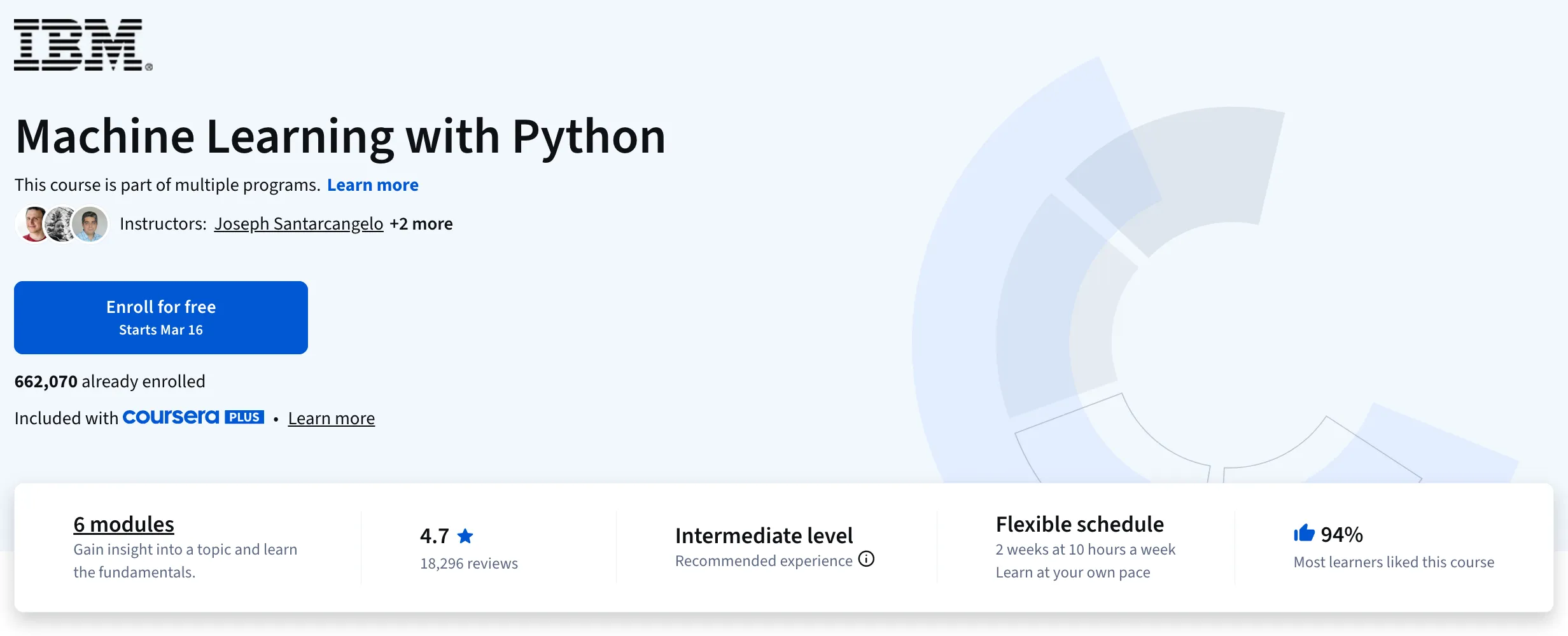
Machine Learning with Python – IBM | Apply ML techniques using Python
This course focuses on implementing machine learning algorithms using Python and popular data science libraries. The focus is on application of ML, and the course strives to create industry-ready candidates.
What makes this course special?
- Python-based machine learning training
- Clear explanations of common algorithms
- Practical ML examples and exercises
- Certificate available through the platform
Best suited for learners preparing for ML development roles.
7. For the fundamentals
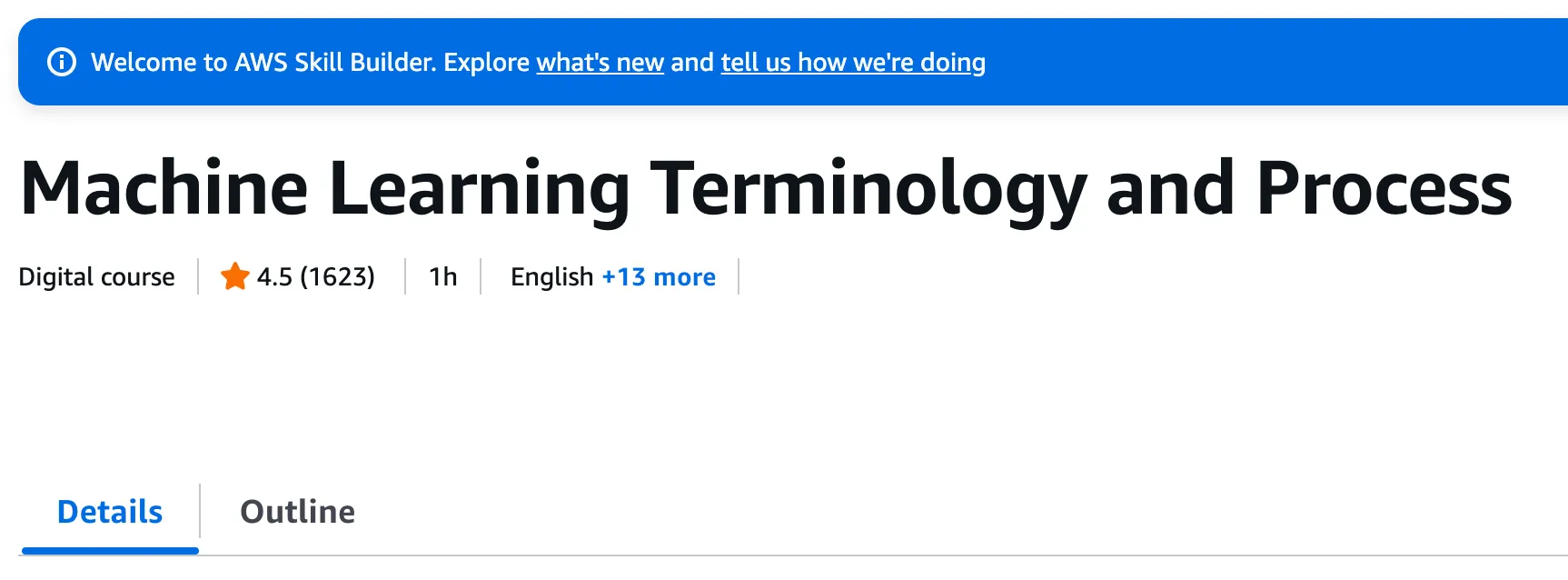
Machine Learning Terminology and Process – AWS | Understand build of ML systems
Amazon’s training introduces the key concepts behind machine learning systems, focusing on the fundamentals. Instead of working on models and stuff, this course provides a strong foundation for you to build your ML journey on.
What makes this course special?
- Training created by AWS
- Covers ML workflows used in production
- Clear explanation of ML terminology and processes
- Certificate available through AWS Skill Builder
Best for learners who want to understand how machine learning systems operate in real environments.
Final Thoughts
There’s no single best way to learn machine learning. But the following guide might assist you in making that choice:
If you want hands-on experience, freeCodeCamp and Kaggle are excellent starting points. If you want a credible certificate backing your learning, Microsoft, Google, and AWS provide strong credibility. And if your goal is a career in data science or AI, Analytics Vidhya’s course provides a friendly introduction to the field.
Choose one that matches how you learn best and build from there.
Frequently Asked Questions
Q1. Are these machine learning courses really free?
A. Yes. All courses listed can be accessed for free, and most provide certificates or completion badges through their learning platforms.
Q2. Which machine learning course is best for beginners?
A. Kaggle’s Intro to Machine Learning and freeCodeCamp’s Machine Learning with Python are both excellent beginner-friendly starting points.
Q3. Can I learn machine learning without programming experience?
A. Yes, but programming eventually becomes important. Many beginner courses introduce machine learning concepts before requiring deeper coding knowledge.
Studying, evaluating, and explaining AI systems for over 6 years.
“𝘖𝘯𝘤𝘦 𝘮𝘦𝘯 𝘵𝘶𝘳𝘯𝘦𝘥 𝘵𝘩𝘦𝘪𝘳 𝘵𝘩𝘪𝘯𝘬𝘪𝘯𝘨 𝘰𝘷𝘦𝘳 𝘵𝘰 𝘮𝘢𝘤𝘩𝘪𝘯𝘦𝘴 𝘪𝘯 𝘵𝘩𝘦 𝘩𝘰𝘱𝘦 𝘵𝘩𝘢𝘵 𝘵𝘩𝘪𝘴 𝘸𝘰𝘶𝘭𝘥 𝘴𝘦𝘵 𝘵𝘩𝘦𝘮 𝘧𝘳𝘦𝘦. 𝘉𝘶𝘵 𝘵𝘩𝘢𝘵 𝘰𝘯𝘭𝘺 𝘱𝘦𝘳𝘮𝘪𝘵𝘵𝘦𝘥 𝘰𝘵𝘩𝘦𝘳 𝘮𝘦𝘯 𝘸𝘪𝘵𝘩 𝘮𝘢𝘤𝘩𝘪𝘯𝘦𝘴 𝘵𝘰 𝘦𝘯𝘴𝘭𝘢𝘷𝘦 𝘵𝘩𝘦𝘮.” — 𝖥𝗋𝖺𝗇𝗄 𝖧𝖾𝗋𝖻𝖾𝗋𝗍, 𝖣𝗎𝗇𝖾