Looking to buy the best laptop to get into software development? You would’ve realized by now how hard it is to stay up to date with the latest hardware and the ever-increasing application requirements. This article is here to elucidate that for you, by listing the best laptops under ₹1.5 lakhs that the market has to offer for AI engineers. We’ll conclude by outlining the metrics that differentiate a good laptop from a great laptop, to help you make your choice in the future.
Table of contents
- 1. Lenovo Legion 5 2024 13th Gen
- 2. Acer Predator Helios Neo 16S
- 3. MSI Katana 15
- 4. Lenovo LOQ 15IRX9
- 5. Acer Nitro V 15 ANV15-52
- 6. Apple MacBook Air 13 (M2, 2022)
- 7. ASUS TUF Gaming F15 (FX608JMR)
- 8. HP OMEN 16 (16-xf0059AX)
- 9. Dell G15 5530
- 10. Lenovo Smartchoice LOQ
- What Makes a Laptop Good for Development?
- Things Not Taken into Consideration
- Conclusion
- Frequently Asked Questions
Here are the best AI laptops to buy in 2025:
1. Lenovo Legion 5 2024 13th Gen
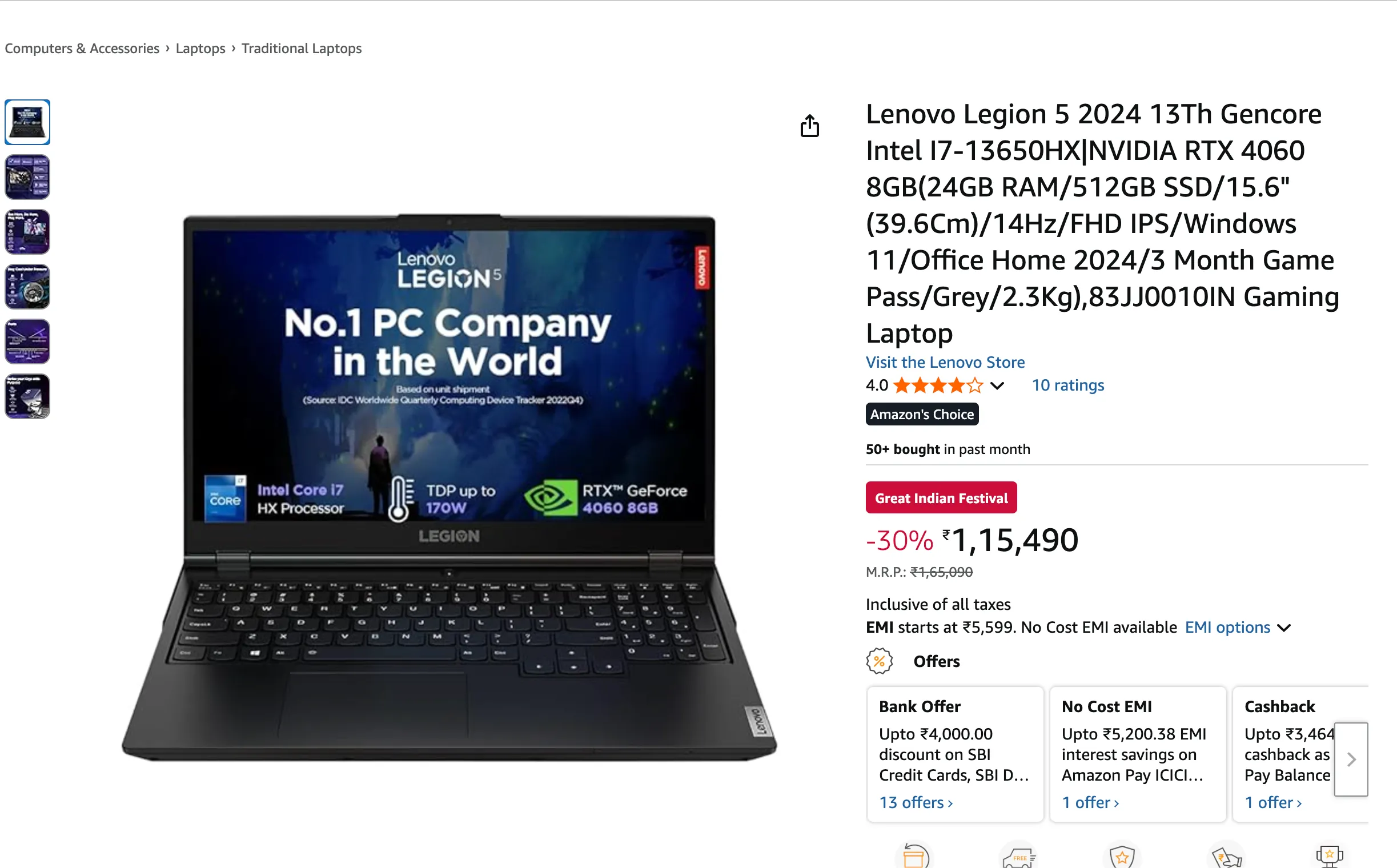
If you want CUDA work to run close to desktop pace, this Legion’s HX CPU plus RTX 4060 combo holds frequency under sustained load thanks to the thick chassis and cooling. Stable clocks = stable epoch times. Easy daily driver for PyTorch/TensorRT on Windows + WSL2 or Linux.
- CPU: Intel i7-13650HX (14 Cores)
- GPU: RTX 4060 8 GB 140 W
- RAM: 24 GB DDR5
- Storage: 1 TB PCIe 4
- Price: ₹1,15,490
- Buy: Amazon
2. Acer Predator Helios Neo 16S
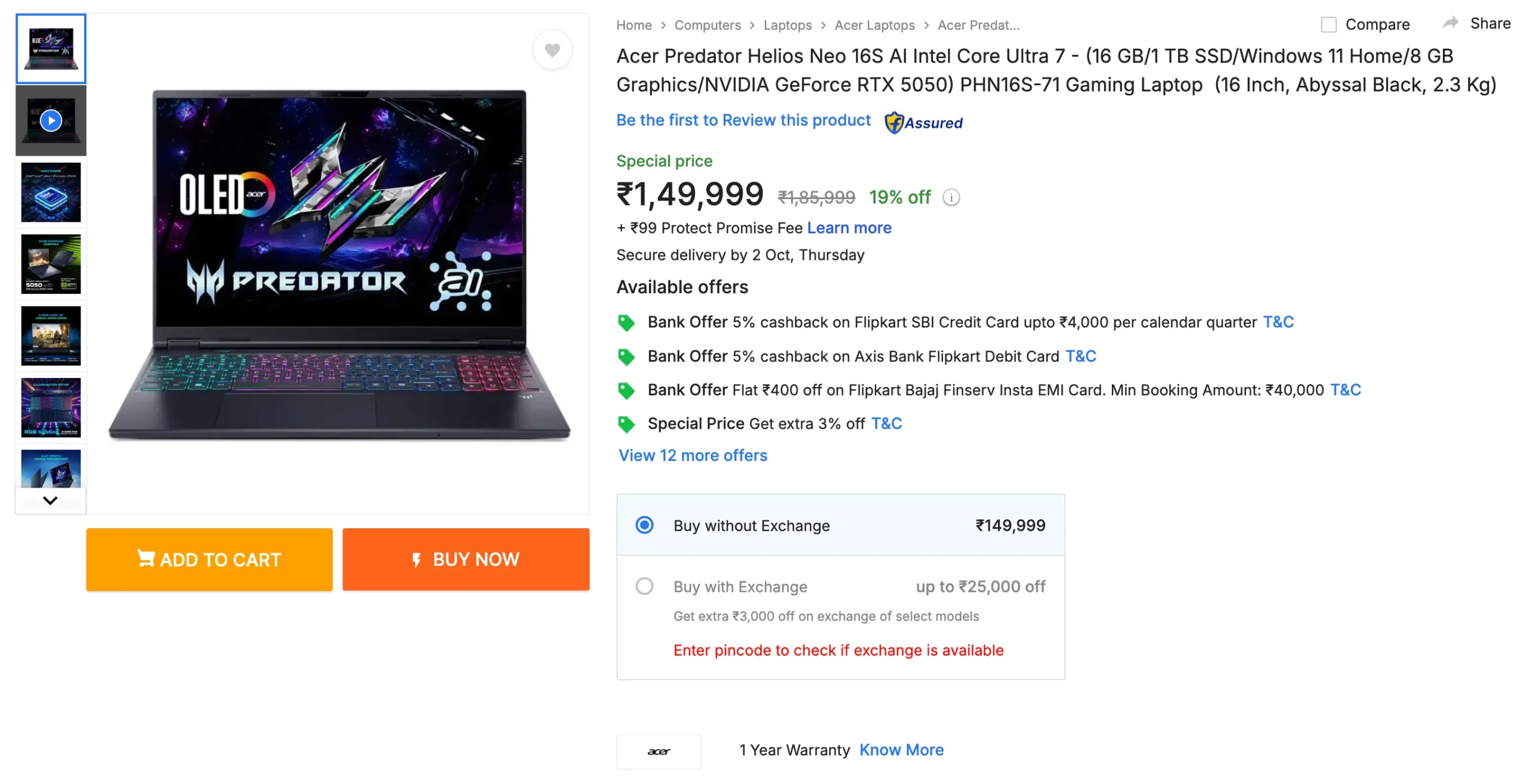
Core Ultra CPU helps with mixed CPU/GPU pipelines, and the MUX/Advanced Optimus path keeps data off the iGPU when you need pure CUDA throughput. The chassis can handle long training runs without tanking clocks, and the high-res panel is great for code + tensorboard side-by-side.
- CPU: Intel Ultra 7 (20 Cores)
- GPU: RTX 5050 8 GB 130W
- RAM: 16 GB DDR5
- Storage: 1 TB
- Price: ₹1,49,999
- Buy: Flipkart
3. MSI Katana 15
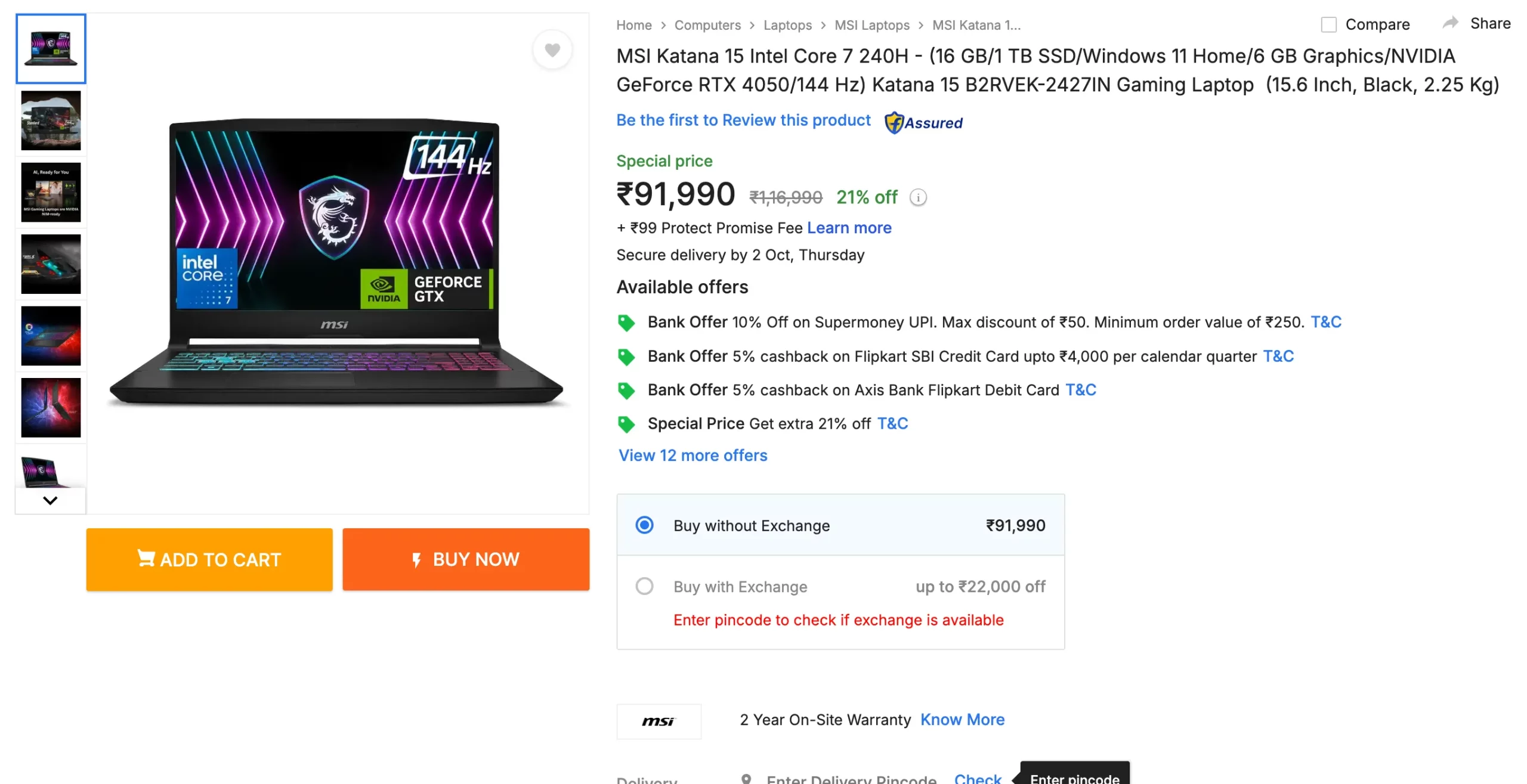
Good pick if you commute but still want a real 4050. Two SODIMMs and two M.2 slots mean you can bump RAM to 32–64 GB and add a scratch SSD for datasets. Cooler Boost 5 isn’t quiet, but it holds up for long compiles and fine-tunes.
- CPU: i7-12650H
- GPU: RTX 4050 8 GB ~100 W
- RAM: 16 GB DDR5
- Storage: 1TB SSD + spare M.2
- Price: ₹91,990
- Buy: Flipkart
4. Lenovo LOQ 15IRX9
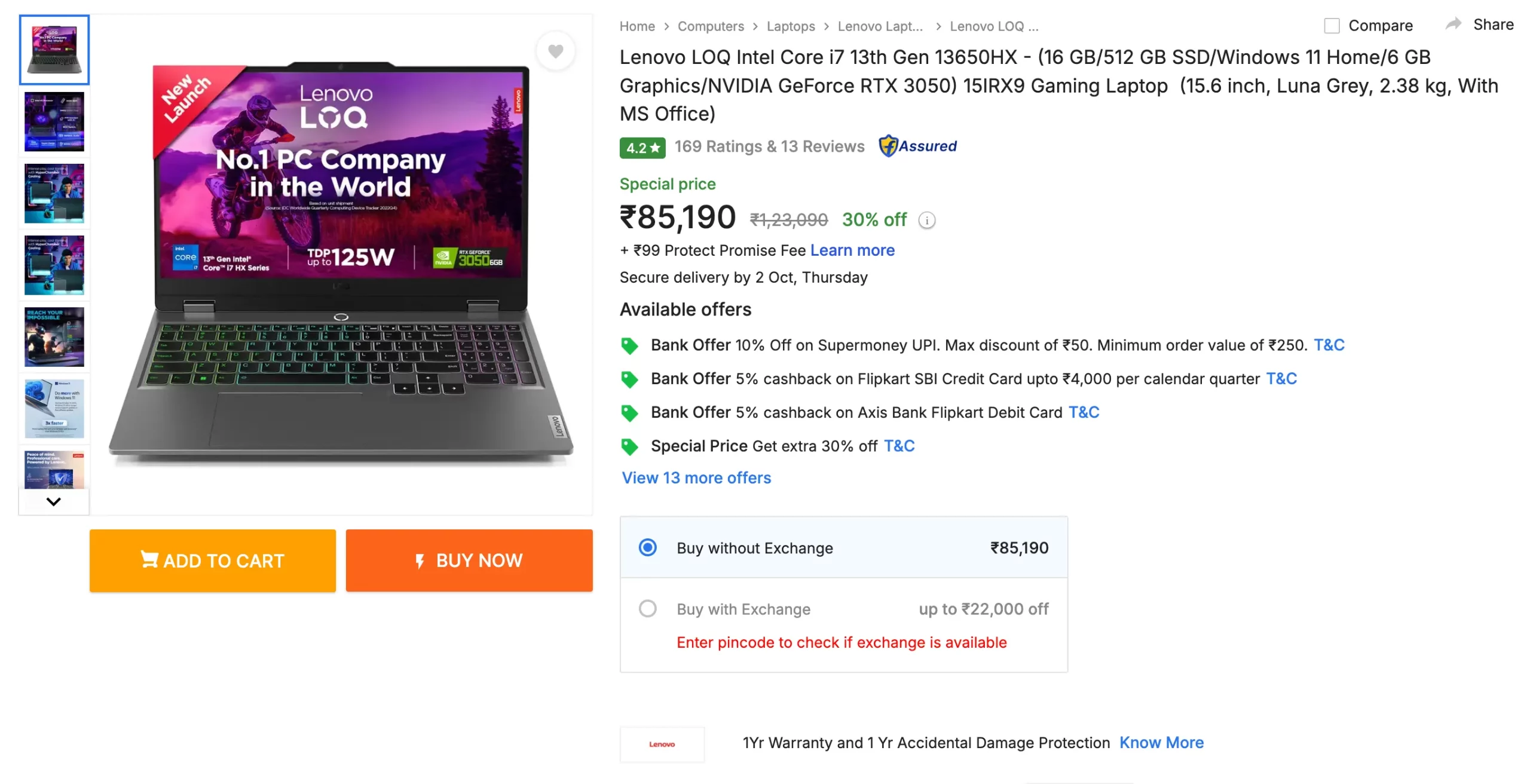
Entry ticket for students/labs that still need a dedicated GPU. Lenovo’s LOQ cooling (Hyper Chamber) and MUX options keep the 3050 useful for prototyping, classical CV, and 3B-ish quantized LLMs. Not a 7B trainer, but a very capable learning box.
- CPU: i7-13650HX
- GPU: RTX 3050 6 GB 95W
- RAM: 16 GB DDR5
- Storage: 512 GB SSD
- Price: ₹85,190
- Buy: Flipkart
5. Acer Nitro V 15 ANV15-52
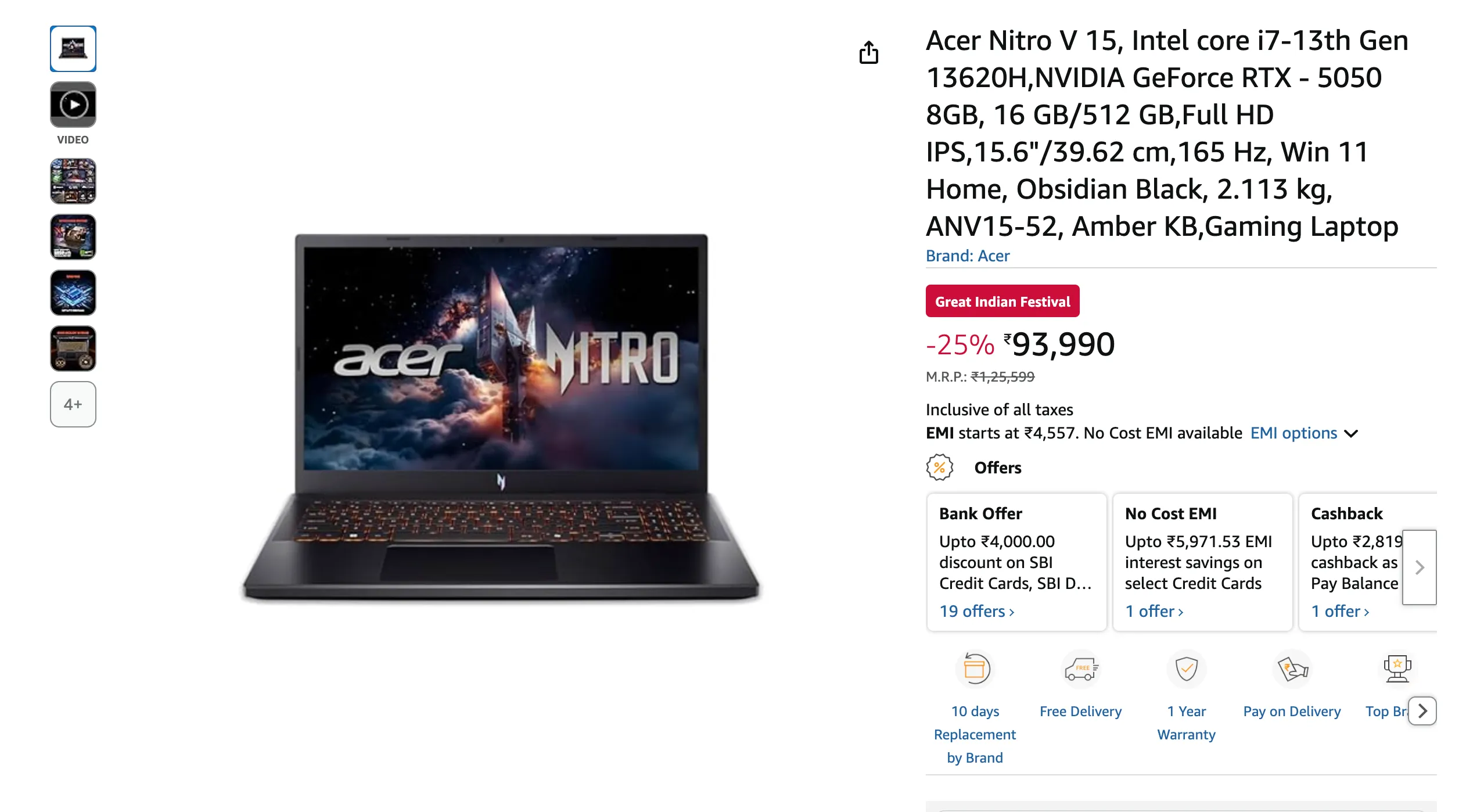
The RTX 5050 8 GB variant is the cheapest way to keep modern CUDA and drivers happy in 2025. Fine for diffusion at modest resolutions, LoRA fine-tunes, and tabular/vision workloads; upgrade RAM to 32 GB if you juggle big dataloaders.
- CPU: i5-13420H (8C)
- GPU: RTX 5050 8 GB 130 W
- RAM: 16 GB DDR5
- Storage: 512 GB PCIe 4
- Price: ₹94,990
- Buy: Amazon
6. Apple MacBook Air 13 (M2, 2022)
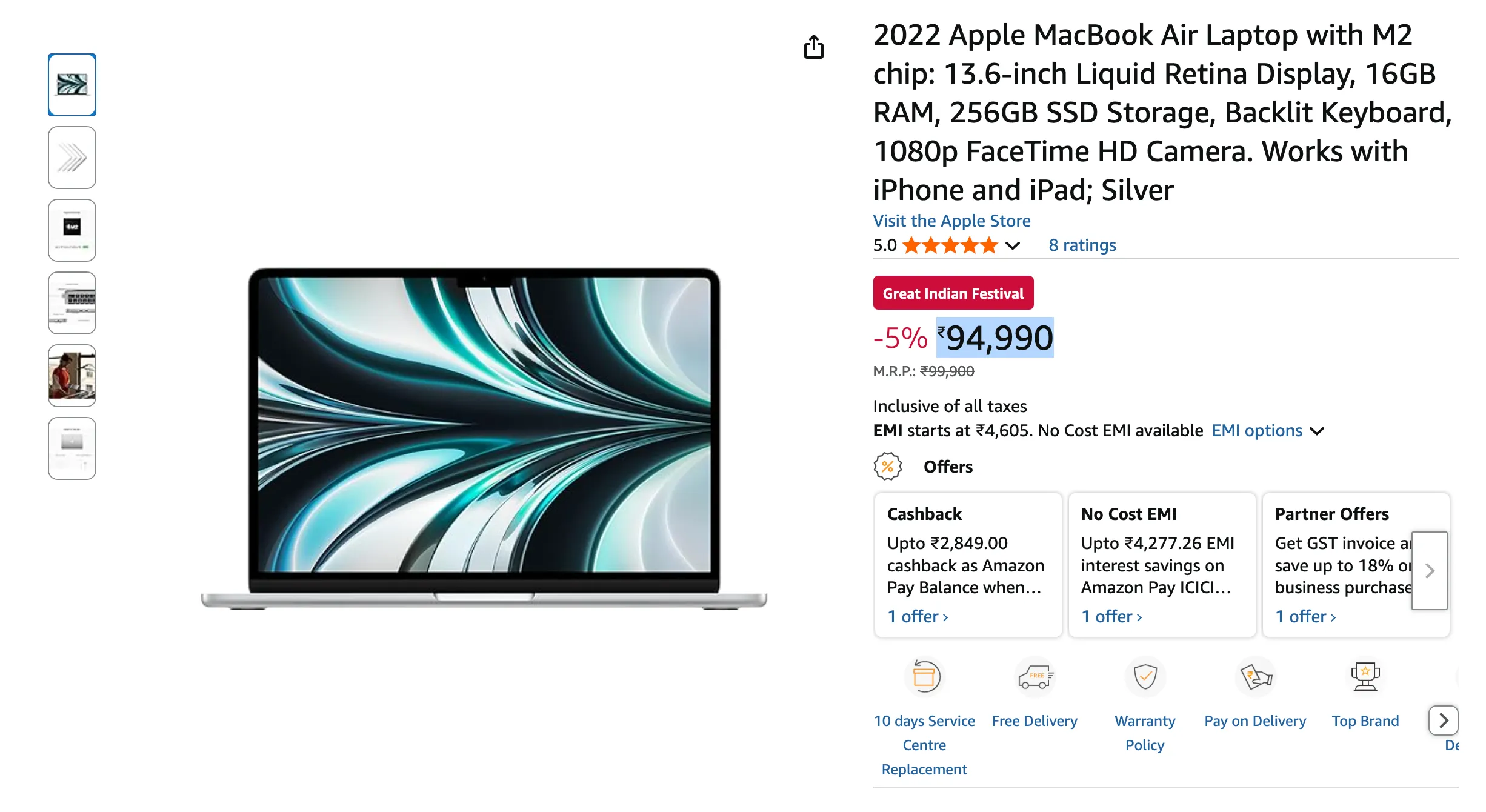
No CUDA, but hear me out: for data wrangling, notebooks, and on-device prototyping, the MPS backend accelerates PyTorch on the integrated GPU with excellent battery life. Great “build and test on plane power” machine. Paired with Apple’s ecosystem, it is a go-to for those wanting to stay within the Apple ecosystem while working.
- CPU: Apple M2 8-core
- GPU: Integrated (8-core)
- RAM: 8 GB unified
- Storage: 256 GB SSD
- Price: ₹94,990
- Buy: Amazon
7. ASUS TUF Gaming F15 (FX608JMR)
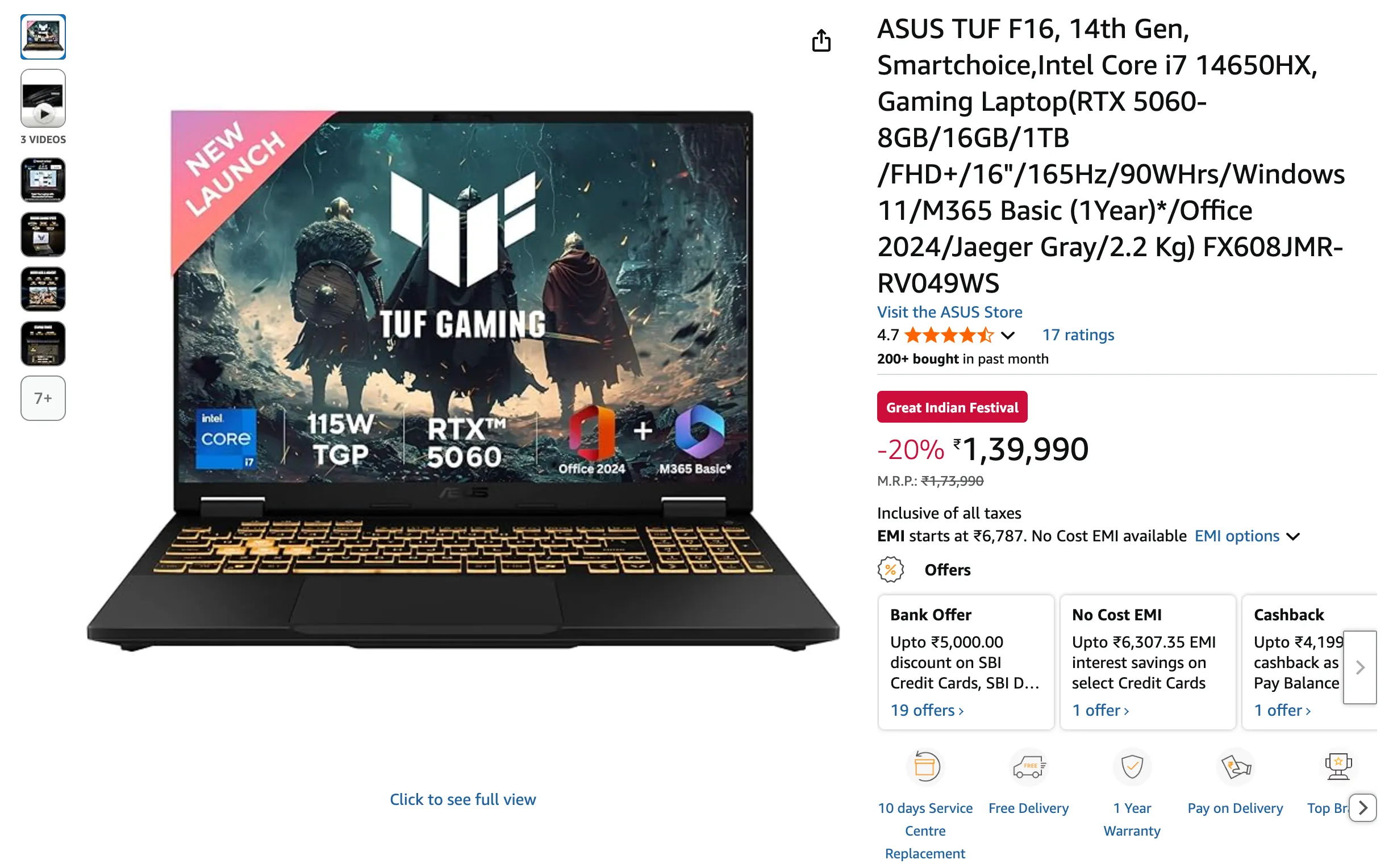
This is the “F16,” not F15. RTX 5060 (115 W max) plus a 90 Wh battery and a MUX + Advanced Optimus path make it a surprisingly serious training laptop. Plenty of airflow, and TB4 helps if you hang a fast external NVMe for datasets.
- CPU: i7-14650HX 2.2 GHz (16 Cores)
- GPU: RTX 5060 8 GB (140 W)
- RAM: 16 GB
- Storage: 1 TB SSD
- Price: ₹1,39,990
- Buy: Amazon
8. HP OMEN 16 (16-xf0059AX)
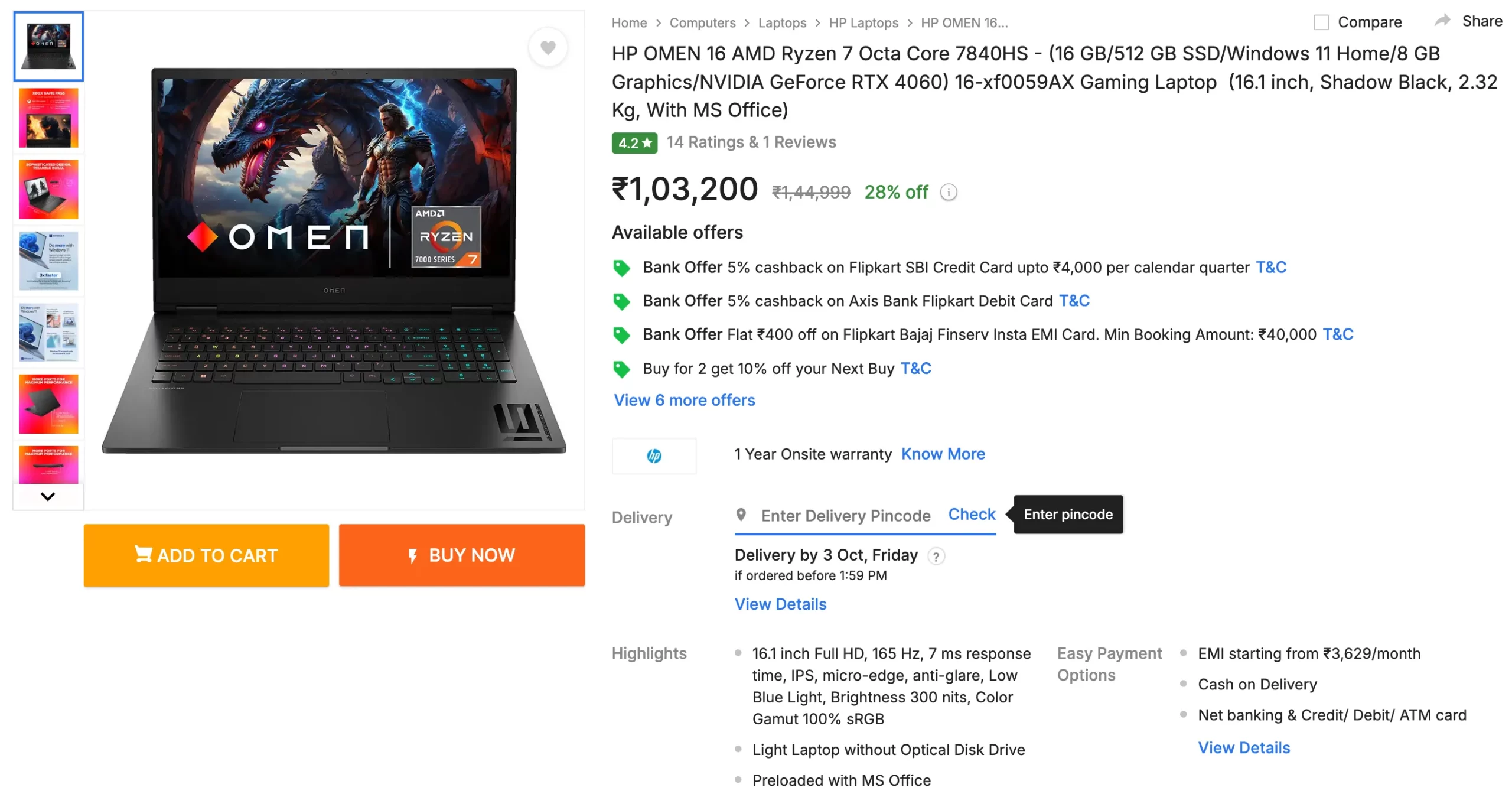
Ryzen 7 + RTX 4060 with a mature thermal design. The 16.1-inch 165 Hz panel and decent port layout make it a solid dev daily driver; good choice if you want calmer acoustics through long epochs.
- CPU: Ryzen 7 7840HS (8 Cores)
- GPU: RTX 4060 8 GB
- RAM: 16 GB
- Storage: 512 GB SSD
- Price: ₹1,03,200
- Buy: Flipkart
9. Dell G15 5530
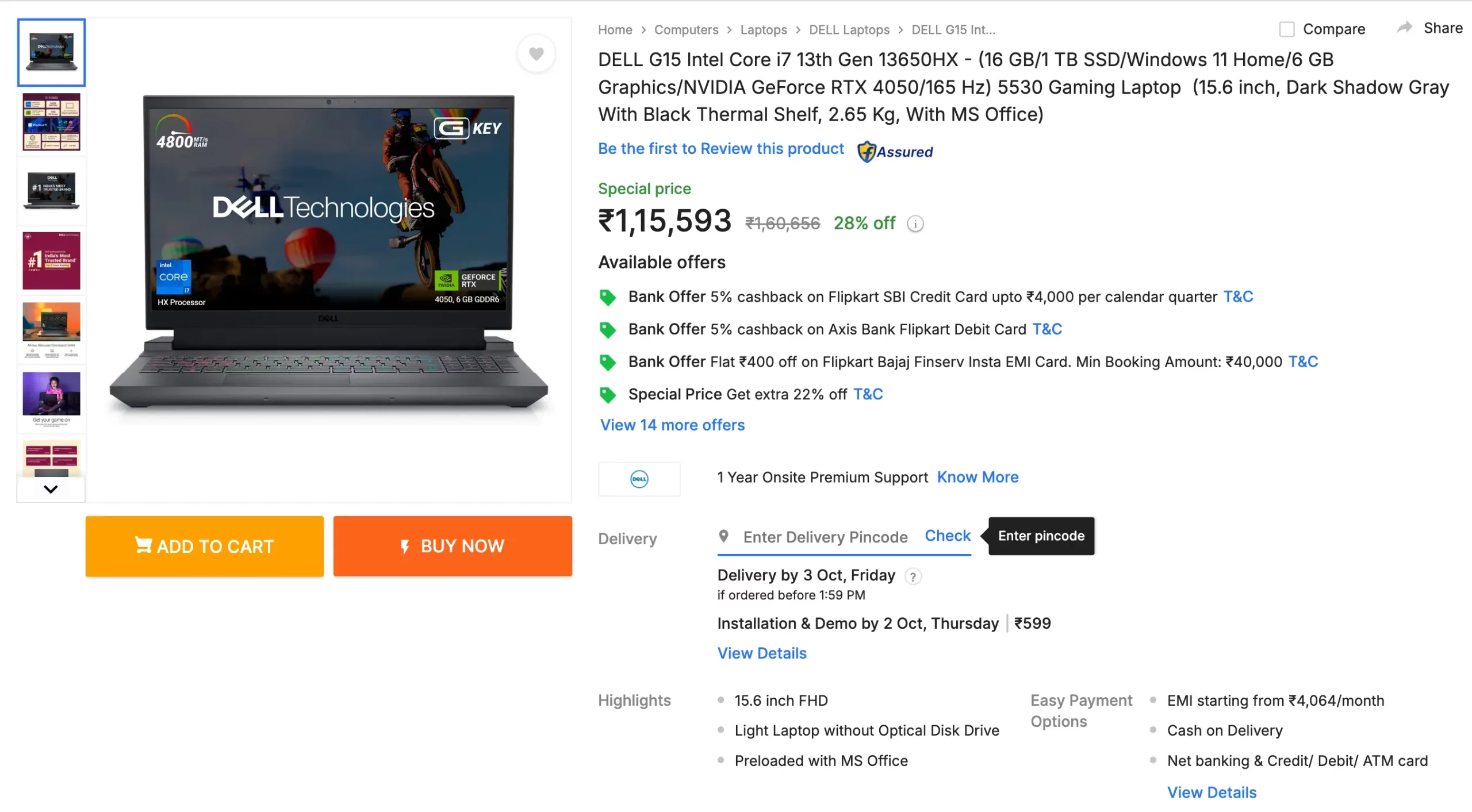
Barebones-sensible, serviceable thermals, and easy upgrades. The 4050 + i7-13650HX combo compiles fast, and the chassis can take a beating in a backpack. A practical pick for coding days and weekend training runs.
- CPU: i7-13650HX
- GPU: RTX 4050 6 GB
- RAM: 16 GB
- Storage: 1 TB SSD
- Price: ₹1,15,593
- Buy: Flipkart
10. Lenovo Smartchoice LOQ
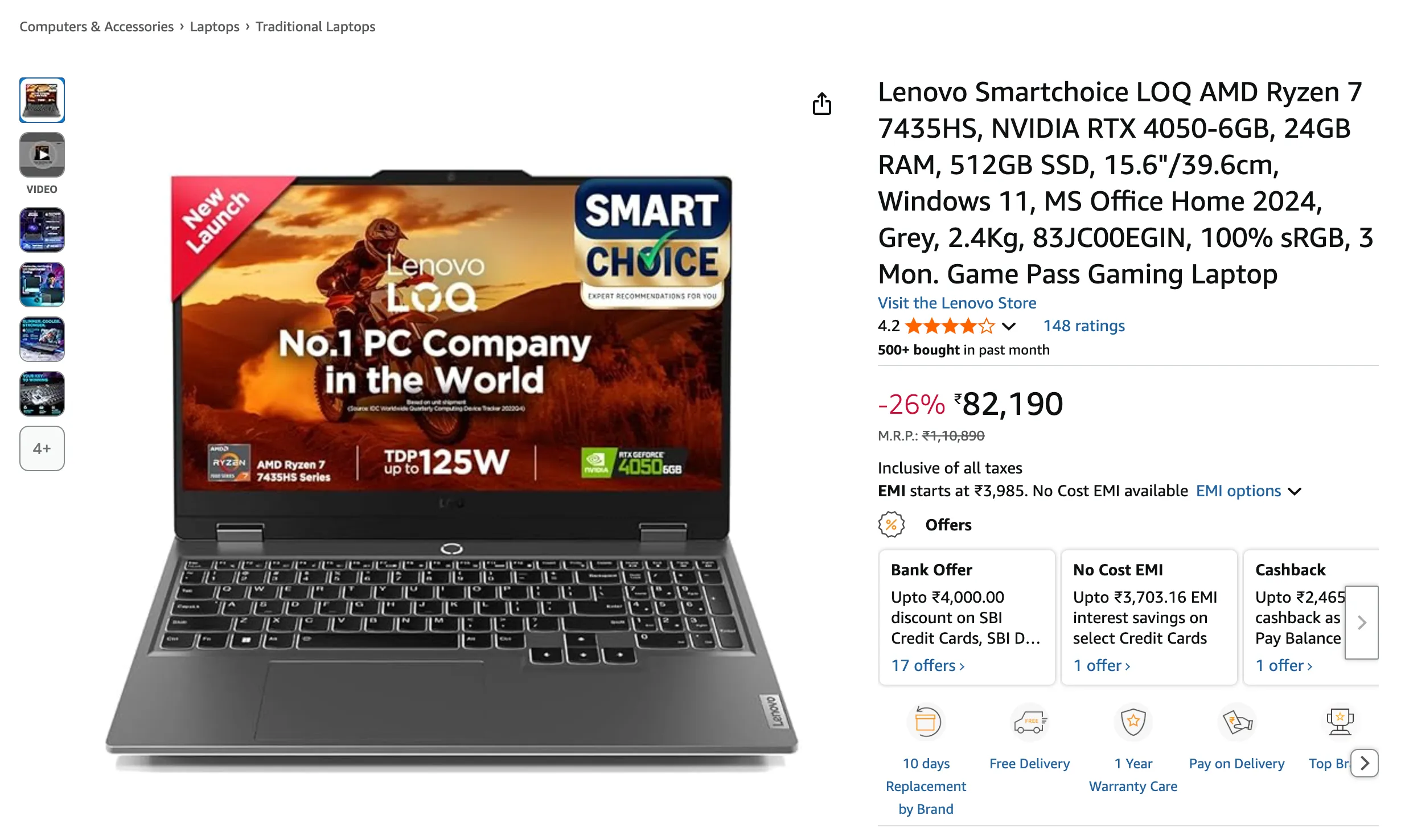
Budget RTX 4050 rig with 24 GB memory out of the box on common India SKUs. Good for Kaggle, diffusion tinkering, and fine-tuning smaller models without swapping yourself to death. Add another NVMe for datasets and you’re set.
- CPU: Ryzen 7 7735HS
- GPU: RTX 4050 6 GB
- RAM: 24 GB
- Storage: 512 GB SSD
- Price: ₹82,190
- Buy: Amazon
What Makes a Laptop Good for Development?
Here are a few things to keep in mind while selecting your laptop:
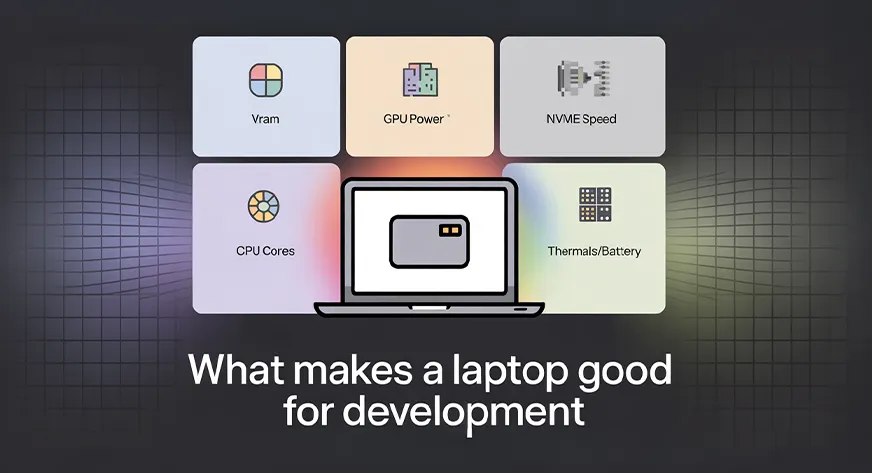
Plenty of video-memory headroom
AI frameworks store weights, gradients, and activation tensors on the GPU. Once VRAM is full, the runtime spills to system RAM, cutting speed by 5-10× and eating PCIe bandwidth. Aim for at least 50% more memory than your largest model+batch combo; int-4 quantisation halves the footprint but still needs scratch space for intermediate results.
Wide, fast system memory
Training scripts pre-fetch the next batch while the GPU crunches the current one. Dual-channel DDR5 (or unified Apple memory) feeds the CPU at ≥ 70 GB/s⁻¹; single-channel or slow DDR4 halves that rate and leaves CUDA cores idle. 16GB is today’s floor and works only if you shut every other app and accept smaller batches.
Sustained GPU power budget
Advertised “boost” clocks last seconds; long epochs run minutes. A card allowed to pull 90-110 W keeps 90 % of its peak frequency after the fans spin up; anything under 80 W drops to 60-70 % and adds hours to convergence. Check reviews that log thirty-minute stress, not three-minute benchmarks. This is the reason why the framerate reduces drastically once the power source changes to a battery from the mains.
NVMe storage with real throughput
Loading a 200 GB image set from a 500 MB/s SATA drive takes six minutes; from a 5 GB/s PCIe 4.0 drive it takes forty seconds. Faster storage also hides the swap penalty when you occasionally burst past RAM. Multiple M.2 slots let you add cheap bulk storage later without throwing away the original SSD.
CPU cores that outrun the data loader
The loader decompresses, resizes, tokenises, and queues batches. Eight modern cores at ≥ 3 GHz can saturate four GPU workers; six older cores become the bottleneck, and GPU utilisation falls to 60-70 %. More cores also speed up multi-threaded compiles (CUDA, TensorFlow custom ops).
Thermals and battery realism
A hot GPU clocks down; a small battery dies in forty minutes. Vapour-chamber heat-pipes and 85 Wh cells keep you training through a long workshop or flight. Thin-and-light is fine for inference; training rigs need thickness for airflow.
Based on the above metrics, the previous list has been curated.
Things Not Taken into Consideration
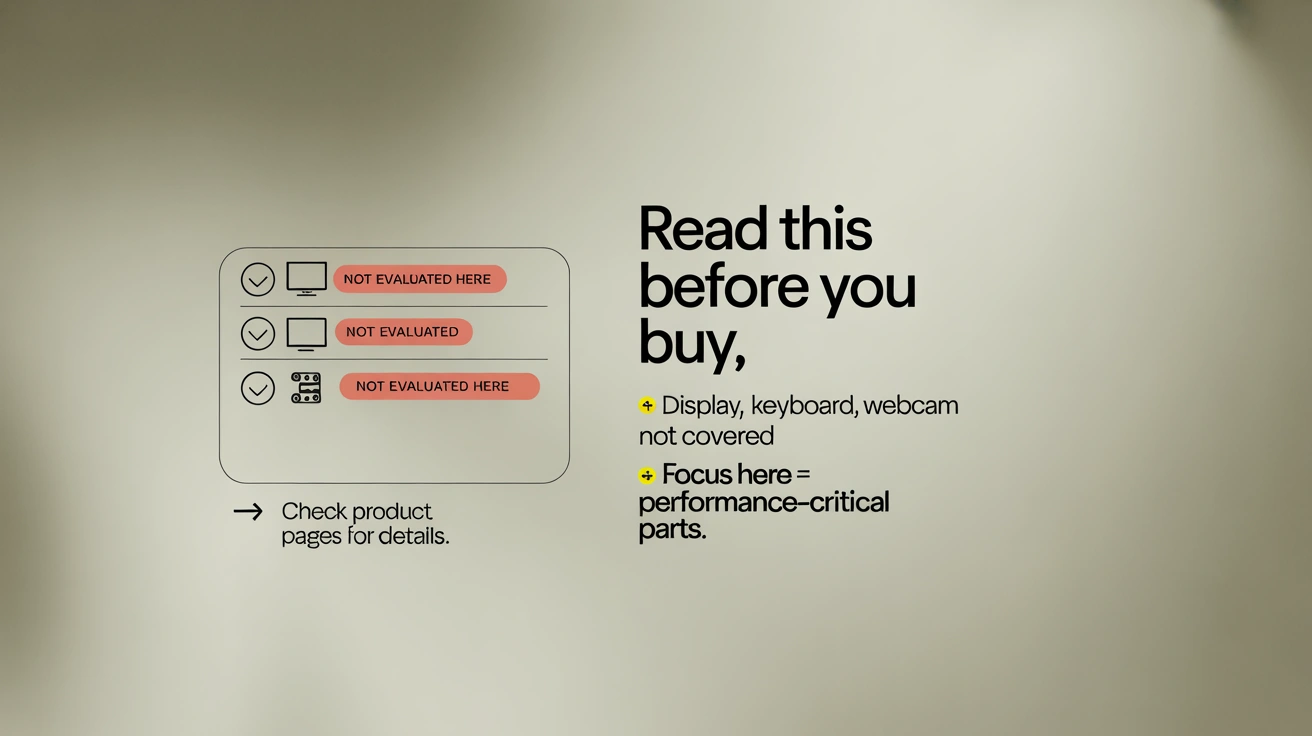
Some of you might be thinking: But what about the display? There are some specifications, like the display/panel type, keyboard type, etc., that haven’t been covered due to their limited or no effect on development. The hardware components given emphasis here are the ones that have the most impact on performance. The remaining components may or may not have an impact on your experience, so please take note of the detailed descriptions of the products before the purchase.
Also, we didn’t go for flagship or upper-end models like Alienware, ROG, etc., as their cost far exceeds their utility. Therefore, the focus was on the laptops that provided the best value for money, while fulfilling the purpose.
Conclusion
So there you have it, 10 solid machines that will not blink when you feed them a chunky dataset, and will not cook themselves the second your training loop starts breathing. Pick the one that feels kind in your backpack and gentle on your bank account. Remember, the best AI laptop is not the shiniest spec sheet; it is the one that keeps your code alive while you sip cheap coffee at two in the morning, staring at a stubborn loss curve. Upgrade when you must, but do not wait for perfect. Perfect is whatever lets you ship the model tomorrow. Close this tab, hit buy, and go build something that scares you a little.
Frequently Asked Questions
Q1. How much VRAM do I need?
A. Aim for 50% more than your model+batch footprint. 8 GB runs tiny or int4 models; 12–16 GB is comfortable for 7–13B; more VRAM prevents RAM spill and PCIe thrash. When VRAM fills, training can slow 5–10×.
Q2. Is 16 GB RAM enough?
A. Barely. 32 GB is the real floor for smooth work. Use dual-channel DDR5 to keep >70 GB/s memory bandwidth. With 16GB, you’ll close apps, shrink batches, and hit swap more often.
Q3. Why care about GPU TGP?
A. Sustained power, not peak clocks, sets throughput. A 90–110 W GPU holds near-peak frequency through long epochs. Under ~80 W, it sags to 60–70%, stretching training time and fan noise.
Q4. Do I need NVMe PCIe 4.0?
A. Yes. ~5 GB/s NVMe loads datasets in seconds and softens swap hits. Two M.2 slots let you add cheap bulk storage later without tossing the original drive.
Q5. Do CPU cores matter for AI?
A. Very. Your dataloader decompresses, augments, tokenizes, and queues batches. Eight modern cores at ~3 GHz can keep four GPU workers fed; weaker CPUs become the bottleneck, and GPU utilization falls.
I specialize in reviewing and refining AI-driven research, technical documentation, and content related to emerging AI technologies. My experience spans AI model training, data analysis, and information retrieval, allowing me to craft content that is both technically accurate and accessible.