We’re living through the leap from “AI that answers” to “AI that acts.” In the next twelve months, autonomous agents might schedule your doctor visits, negotiate your online purchases, and maybe even write the first draft of your resume. The good news? The people building the rockets are giving away the blueprints, at least, for now.
Below is a hand-picked flight path of free courses that take you from “I’ve heard of AI agents” to “I just deployed one in production,” no credit card, no paywall, no secret handshake.
Table of contents
- Hugging Face – AI Agents Course
- DeepLearning.ai – Multi-AI Agent Systems with CrewAI
- Analytics Vidhya – AI Agents Learning Path
- DeepLearning.ai – AI Agents in LangGraph
- Coursera – AI Agents & Agentic AI in Python
- Coursera – Agentic AI: A Primer for Leaders
- IBM – Unleashing the Power of AI Agents
- Google Cloud Skills Boost – Vertex AI Agent Builder
- Microsoft Learn – Develop AI agents on Azure
- Anthropic – Model Context Protocol (MCP) Quickstart
- NVIDIA – Building RAG Agents for LLMs
- Analytics Vidhya – GenAI Learning Path
- DeepLearning.AI – Vibe Coding 101 with Replit
- Google Cloud Training – Gen AI Agents: Transform Your Organization
- AgentAcademy.ai – “Understanding Agentic AI”
- Conclusion
- Frequently Asked Questions
1. Hugging Face – AI Agents Course
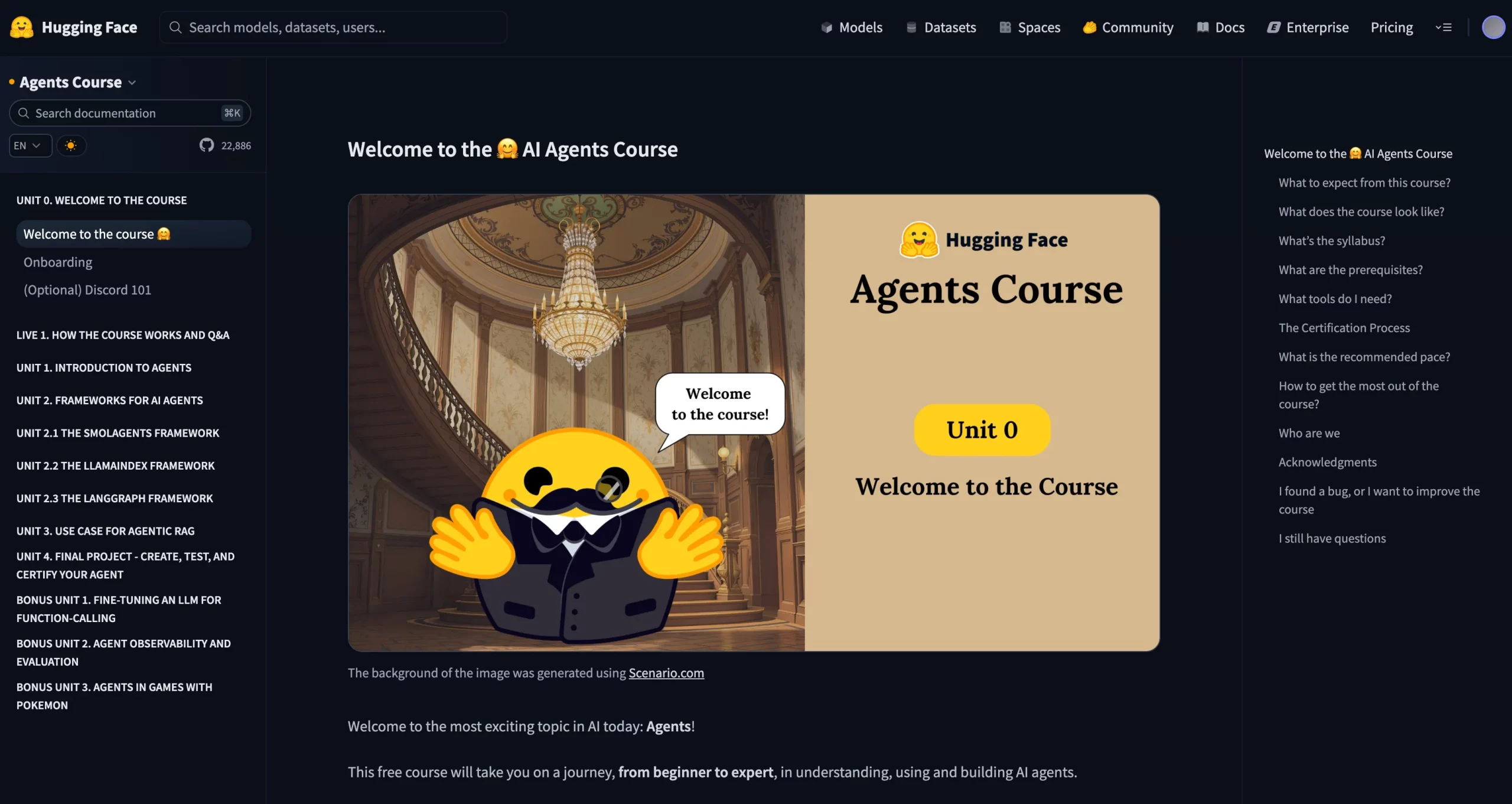
You’ll build agents that think and act, in the form of Pokémon-style battlers, smolagents, and multi-step research bots. You’ll experiment with tool-calling, dynamic memory, and debugging loops, all inside a gamified playground. Expect to deploy your first agent to Hugging Face Spaces and watch it spar with others.
- What is covered: Smolagents, Llamaindex, LangGraph frameworks, and dynamic memory, multi-step reasoning, debugging loops, and agent deployment on Hugging Face Spaces.
- Certificate: Free verified certificate
- Cost: Free
- Length: 4–6 hours
- Link: HuggingFace
2. DeepLearning.ai – Multi-AI Agent Systems with CrewAI
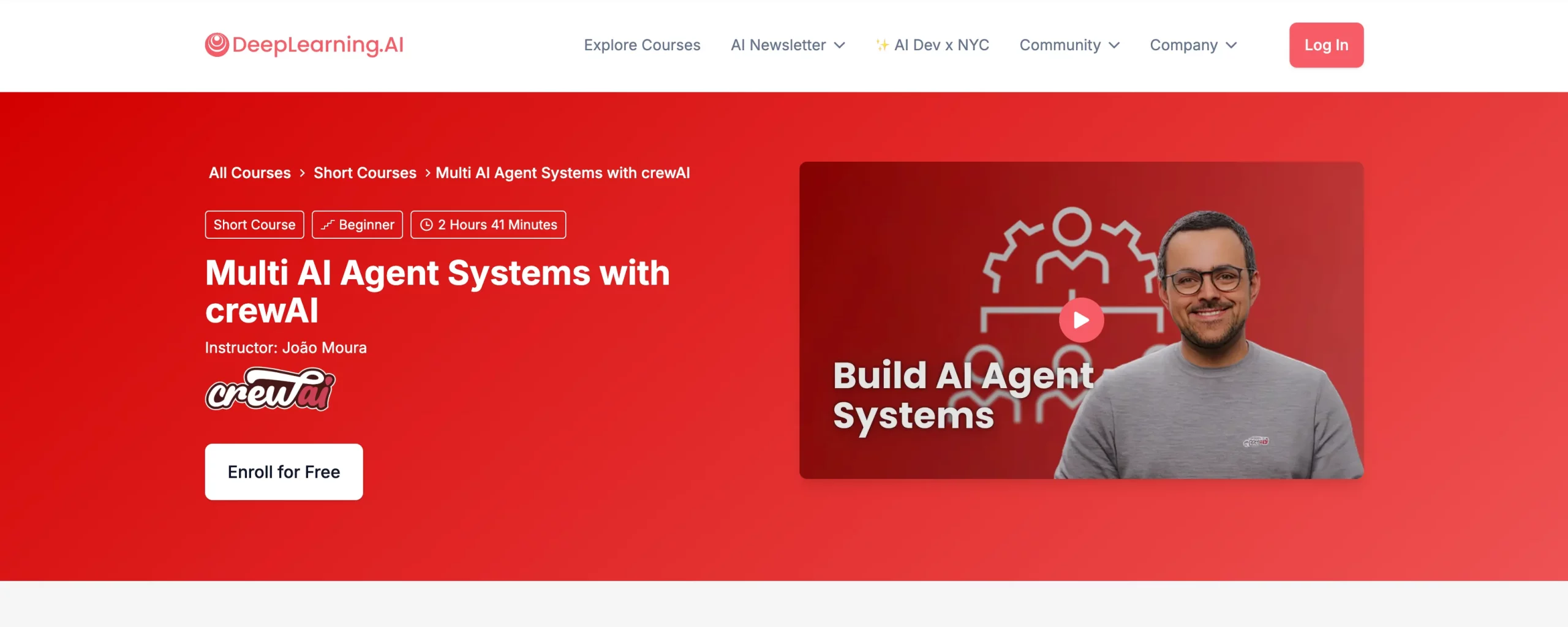
You’ll spin up a mini-workforce: a writer, reviewer, and translator who finish a 10-page report while you grab coffee. CrewAI handles orchestration; you focus on designing agent roles, personalities, and collaboration logic. It’s the most fun you’ll have building something actually useful in a single afternoon.
- What is covered: Designing multi-agent workflows, defining roles, personality tuning, collaboration logic, and real-time orchestration.
- Certificate: Shareable DeepLearning.ai certificate
- Cost: Free
- Length: 3 hours
- Link: Deeplearning.ai
3. Analytics Vidhya – AI Agents Learning Path
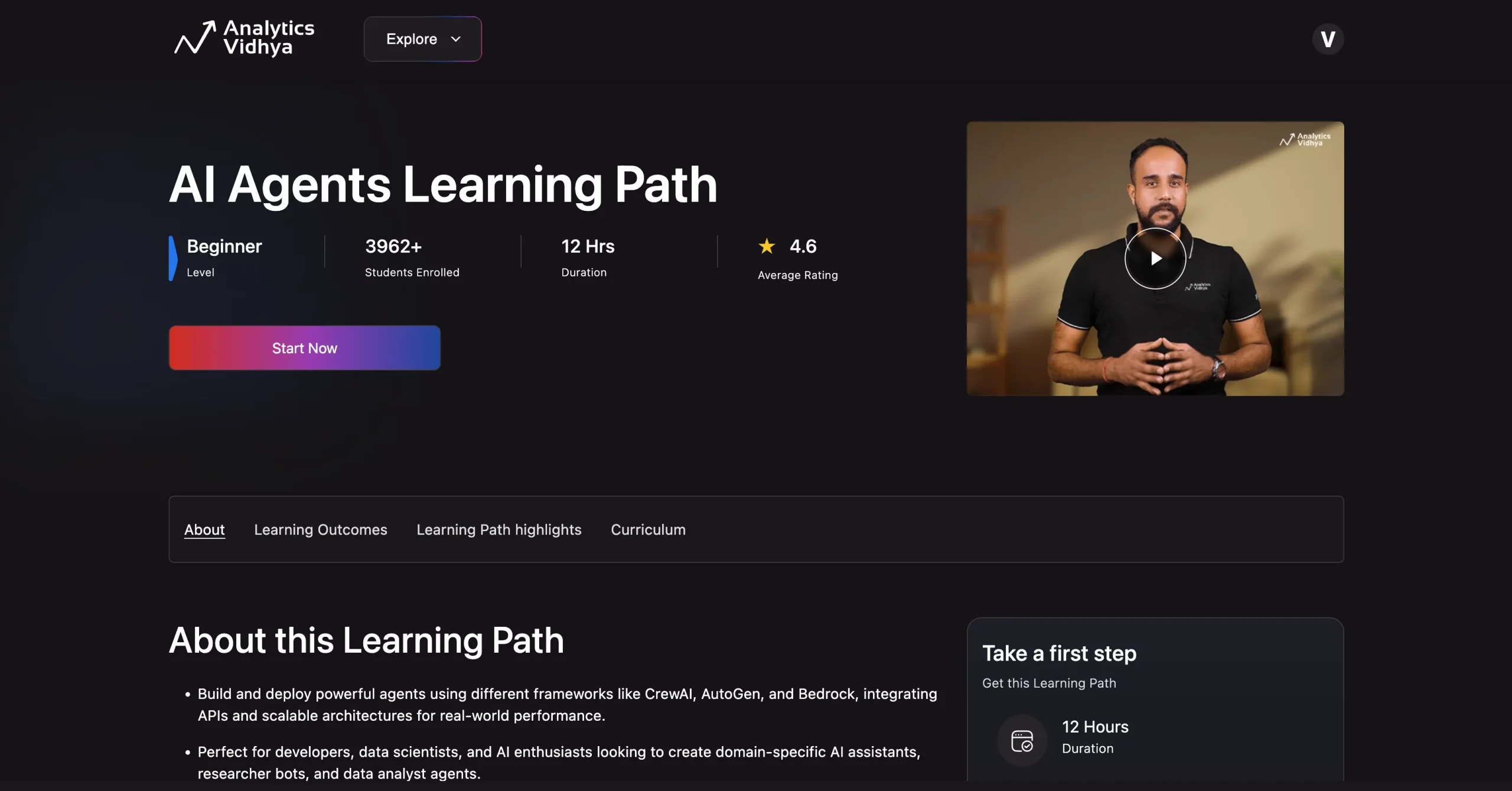
You’ll learn how retrieval, reasoning, and action fuse into one workflow. Then, watch agents debate and fact-check each other in real time. It’s approachable but not watered down, with Colab notebooks that make each step click. By the end, you’ll have a working multi-agent RAG pipeline you can demo.
- What is covered: RAG systems, reasoning pipelines, agent debates, fact-checking workflows, and production-ready agent deployment.
- Certificate: Free digital certificate
- Cost: Free
- Length: 12 hours
- Link: Analytics Vidhya
4. DeepLearning.ai – AI Agents in LangGraph
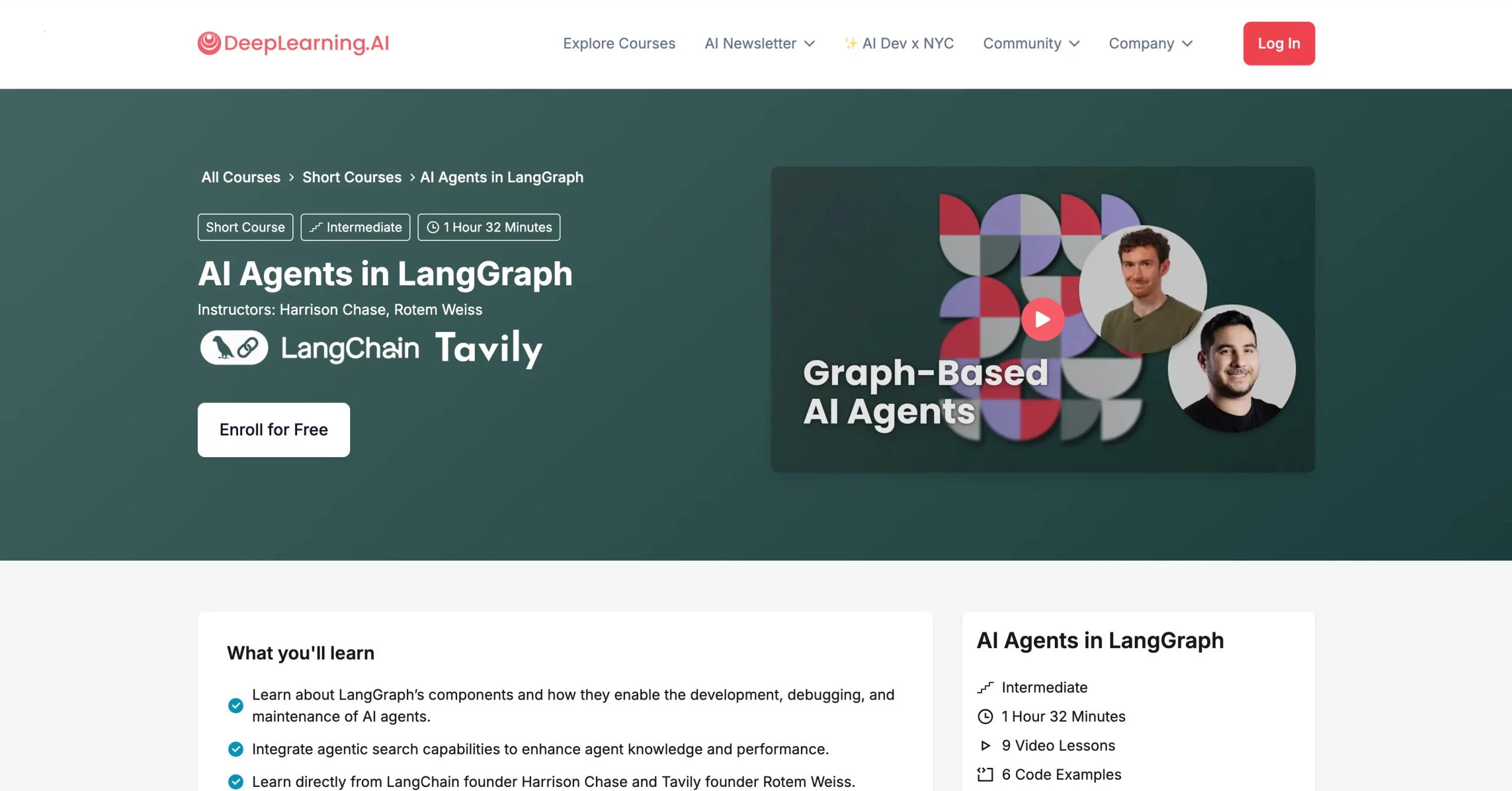
LangGraph introduces cyclic reasoning—agents that reflect, retry, and learn from failure. You’ll build a looped state machine, connect APIs, and run full workflows. It’s the logical sequel to CrewAI and will change how you think about LLM memory and iteration.
- What is covered: Cyclic reasoning, state machines, reflection loops, error handling, and workflow orchestration using LangGraph.
- Certificate: Free completion proof
- Cost: Free
- Length: 2–3 hours
- Link: DeepLearning.ai
5. Coursera – AI Agents & Agentic AI in Python
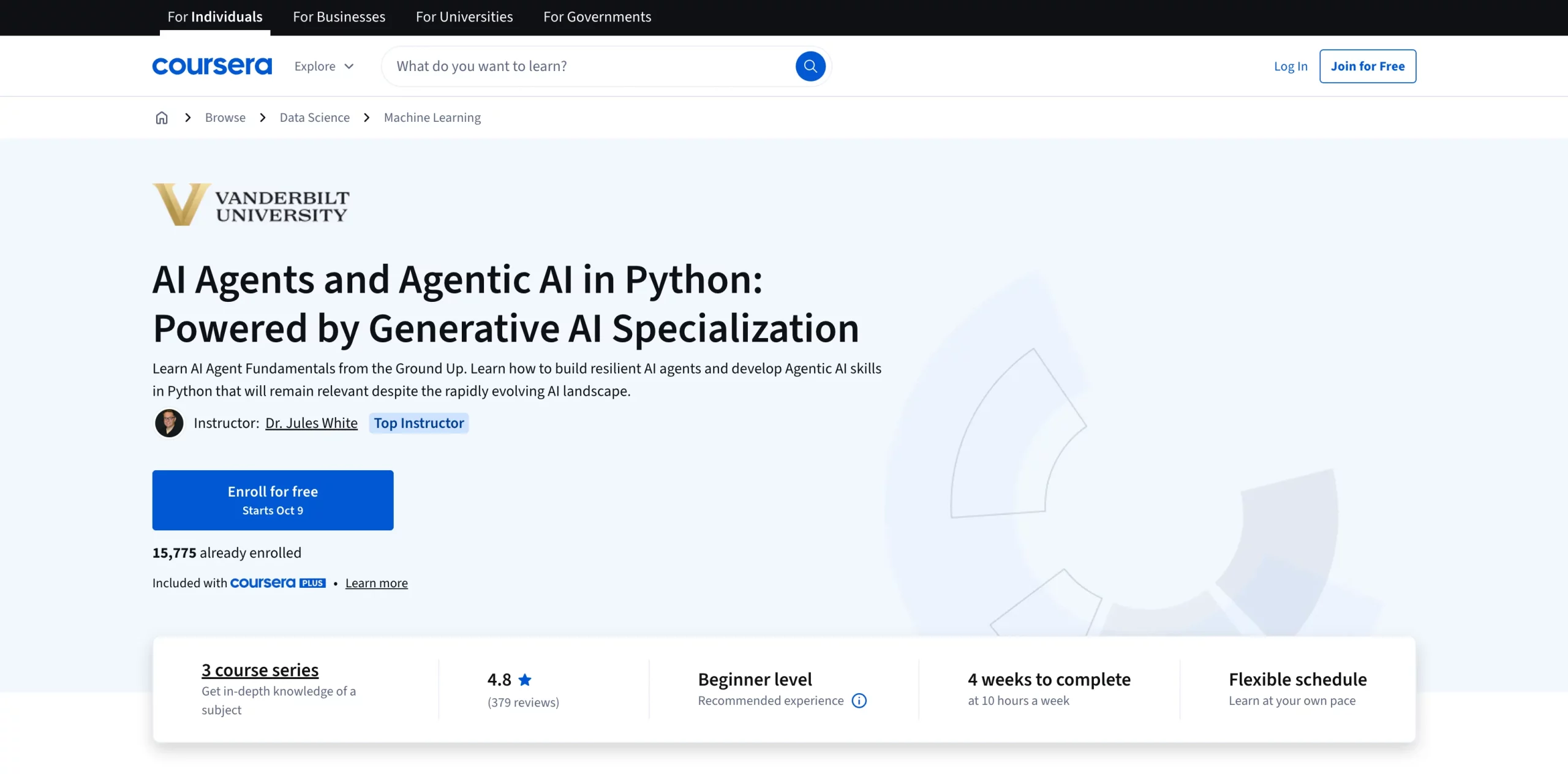
A straight-up coding sprint: you’ll implement reasoning, memory, and tool-use from scratch. Each step builds toward a fully functional command-line agent. No fluff, just Python and clarity.
- What is covered: Coding, reasoning, memory, and tool-use from scratch to build a complete command-line AI agent.
- Certificate: Free project certificate
- Cost: Free with a Coursera account
- Length: 2 hours
- Link: Coursera
6. Coursera – Agentic AI: A Primer for Leaders
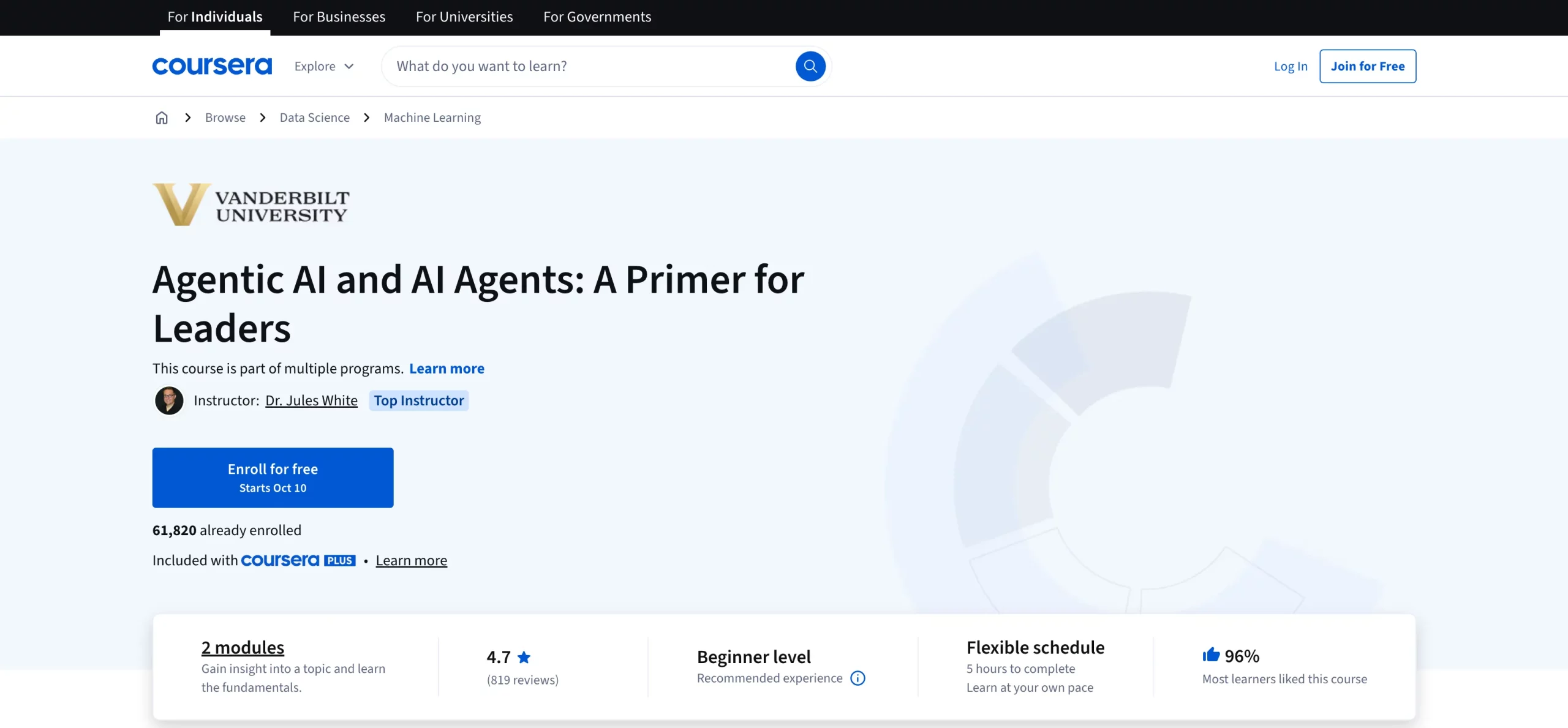
For business decision-makers, not developers. You’ll prototype a Slack-based custom GPT for your team, then learn how to plan adoption, ROI, and governance. It’s where technical literacy meets executive pragmatism.
- What is covered: Building Slack-based custom GPTs, planning ROI, governance, and team adoption of AI agents.
- Certificate: Optional paid certificate (~₹3k)
- Cost: Free to audit
- Length: 10 hours
- Link: Coursera
7. IBM – Unleashing the Power of AI Agents
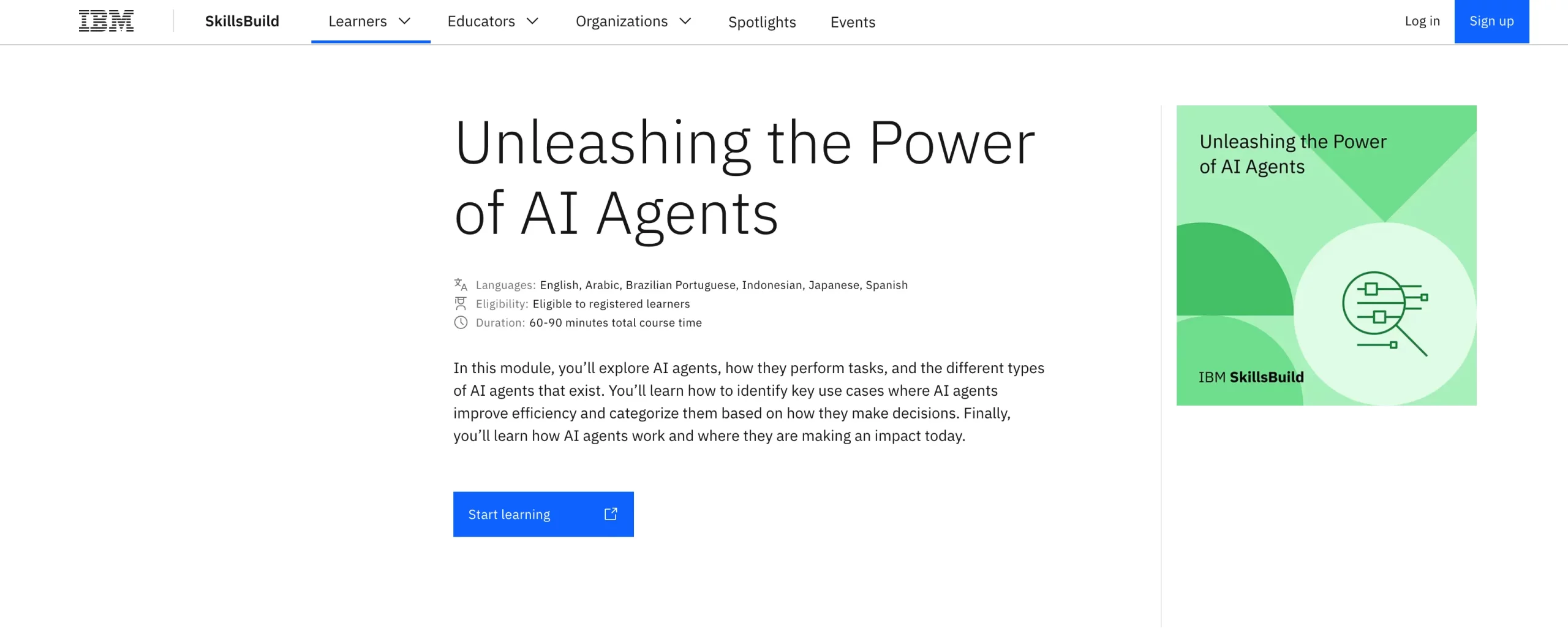
If you want to go hands-on with serious production tools, this one’s perfect. IBM’s open course walks you through building a LangChain-powered agent that can pull data from APIs, use memory, and respond contextually like a real assistant. You’ll integrate OpenAI’s models, manage prompts, and finish by deploying your agent on the cloud. The labs are structured and easy to follow — ideal for developers who want to ship, not just learn.
- What is covered: Constructing LangChain-powered agents, API integration, contextual memory, and cloud deployment using OpenAI models.
- Certificate: Free IBM SkillsBuild badge
- Cost: Free
- Length: 4–5 hours
- Link: Skillsbuild
8. Google Cloud Skills Boost – Vertex AI Agent Builder
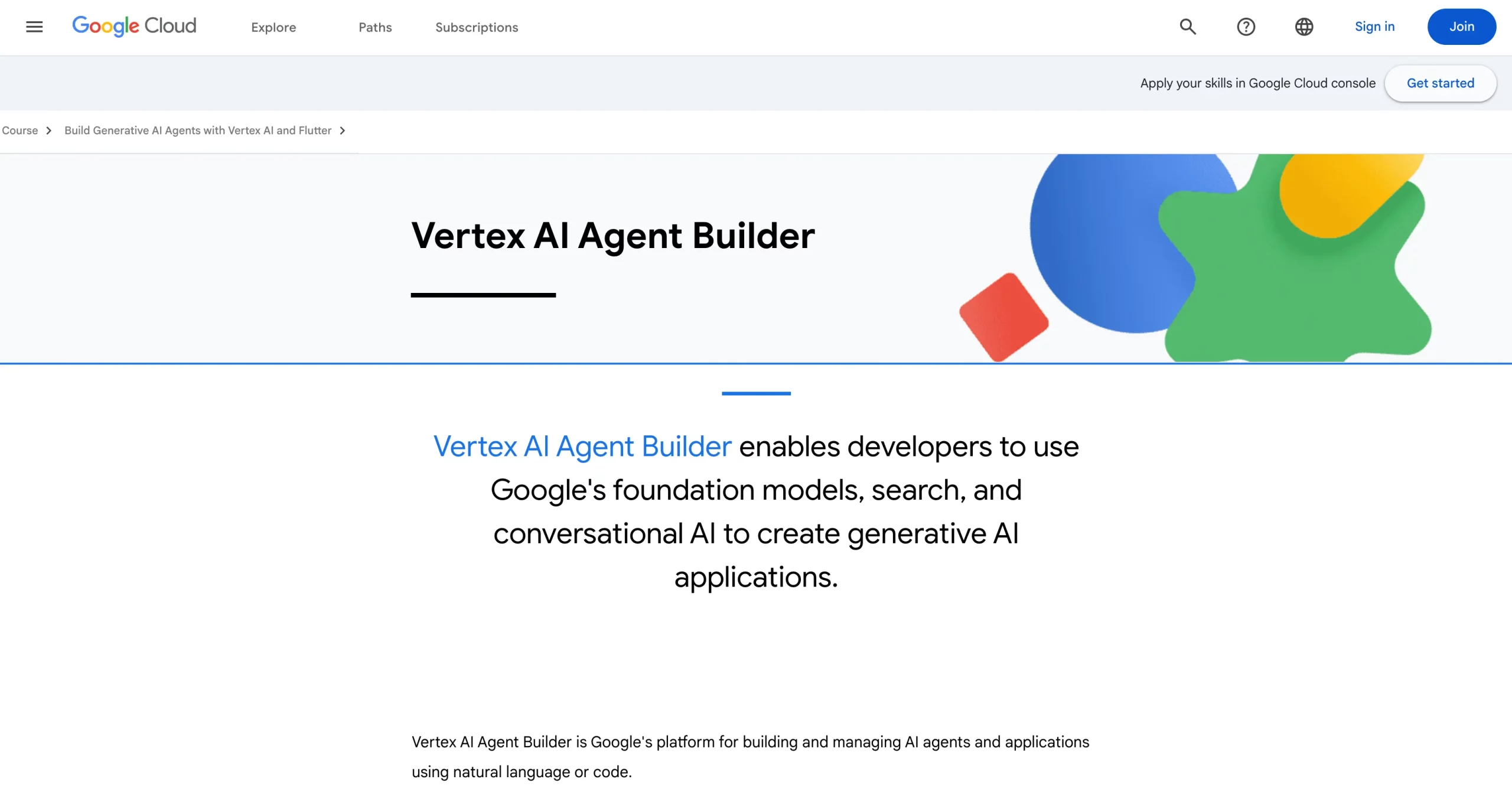
You’ll build a RAG agent that queries Drive files, answers org-specific questions, and serves results through Vertex endpoints. Clean UI, zero DevOps headaches, enterprise-grade tooling—great for those curious about production setups.
- What is covered: Building enterprise-grade RAG agents, querying Drive data, and deploying through Vertex endpoints.
- Certificate: Google Cloud badge
- Cost: Free (uses lab credits)
- Length: 3–4 hours
- Link: CodeLabs
9. Microsoft Learn – Develop AI agents on Azure
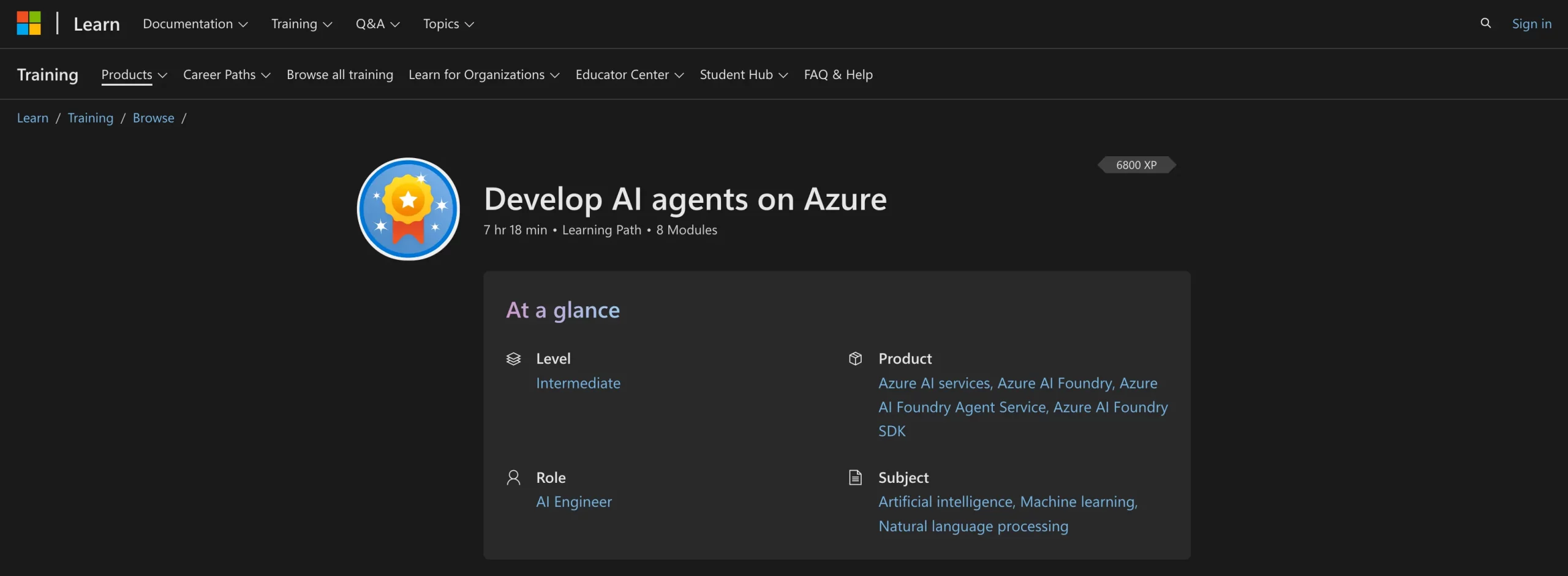
This course shows you how to build AI agents using Microsoft’s open-source Semantic Kernel framework — basically the “CrewAI of .NET.” You’ll learn how to create autonomous, memory-aware agents that plan, reason, and execute multi-step goals. It’s equal parts code and design, covering prompt chaining, skill plugins, and safe orchestration with OpenAI models. By the end, your agent will handle real-world tasks directly from a simple app.
- What is covered: Creating autonomous agents with Semantic Kernel, prompt chaining, skill plugins, and safe orchestration.
- Certificate: Free Microsoft Learn achievement badge
- Cost: Free
- Length: ~7 hours
- Link: MicrosoftAI
10. Anthropic – Model Context Protocol (MCP) Quickstart
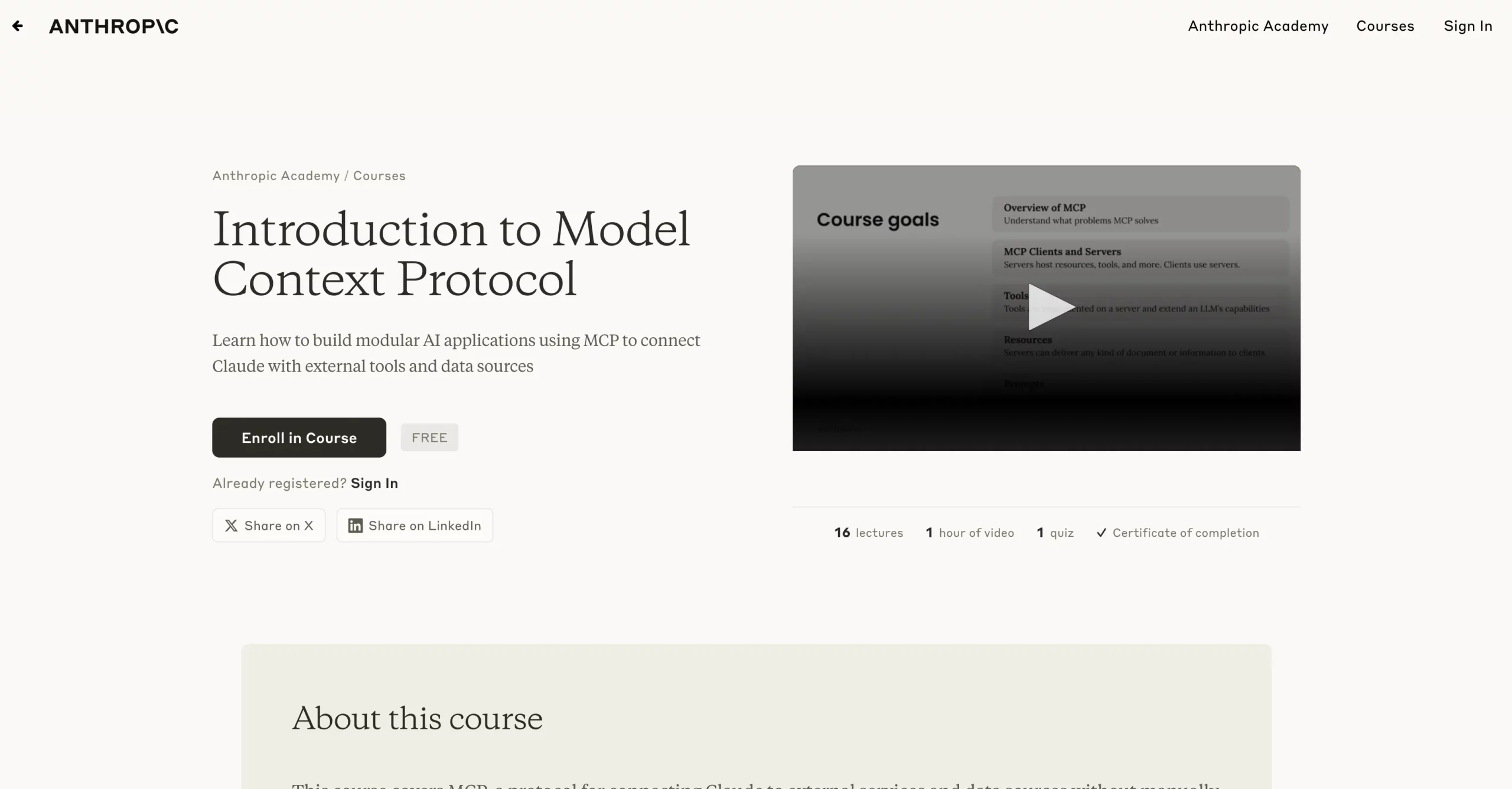
Wire Claude into your workspace—Slack, GitHub, local folders—and teach it to act safely within defined contexts. You’ll grasp how MCP turns a chat model into an operational assistant with guardrails.
- What is covered: Connecting Claude to apps like Slack and GitHub, managing context safely, and defining secure action scopes.
- Certificate: None
- Cost: Free
- Length: 90 minutes
- Link: Anthropic
11. NVIDIA – Building RAG Agents for LLMs
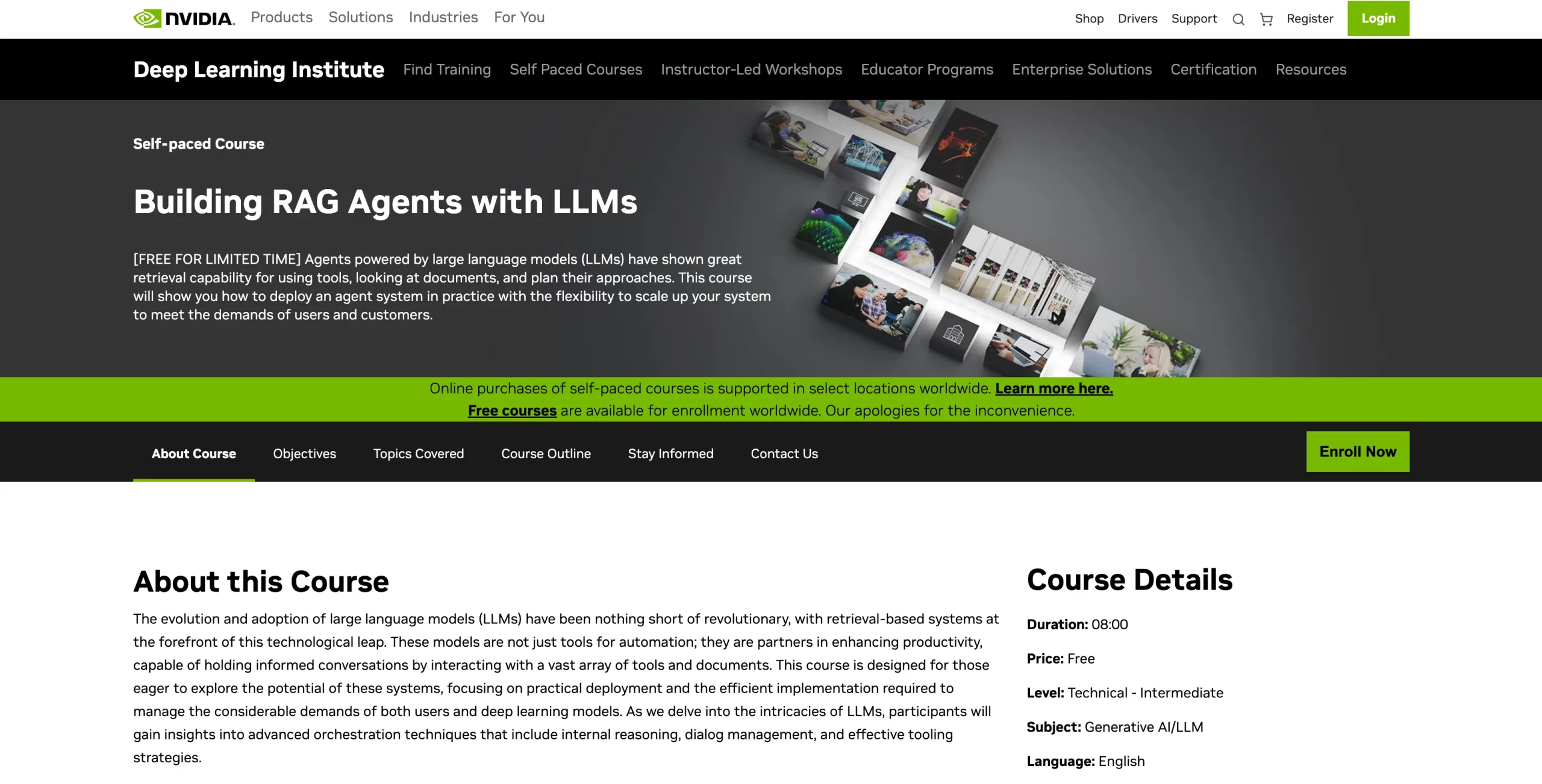
This course gets into GPU-accelerated retrieval and containerized deployment. You’ll build and benchmark high-speed RAG agents, then ship them via Kubernetes. Perfect for anyone eyeing scale or MLOps roles.
- What is covered: GPU-accelerated retrieval, benchmarking, containerization, and Kubernetes deployment for scalable RAG agents.
- Certificate: NVIDIA digital badge
- Cost: Free
- Length: 4–6 hours
- Link: Nvidia
12. Analytics Vidhya – GenAI Learning Path
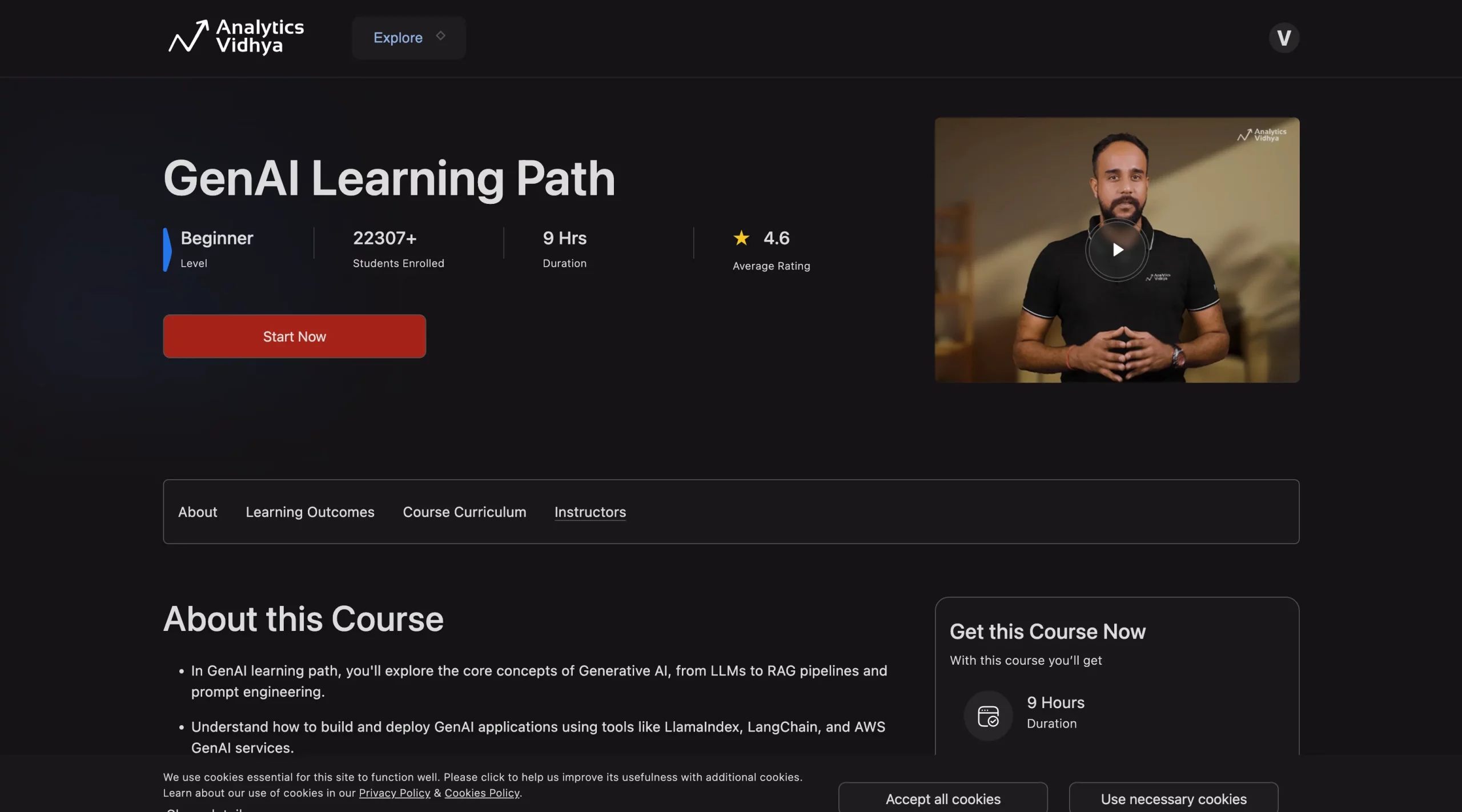
Where theory meets practicality. You’ll containerize a LangChain-based agent, integrate CI/CD, and push it live with monitoring hooks. It’s a crash course in taking toy agents and turning them into maintainable services.
- What is covered: Containerizing LangChain agents, setting up CI/CD pipelines, and deploying production-grade GenAI systems.
- Certificate: Free AV certificate
- Cost: Free
- Length: ~9 hours
- Link: AnalyticsVidhya
13. DeepLearning.AI – Vibe Coding 101 with Replit
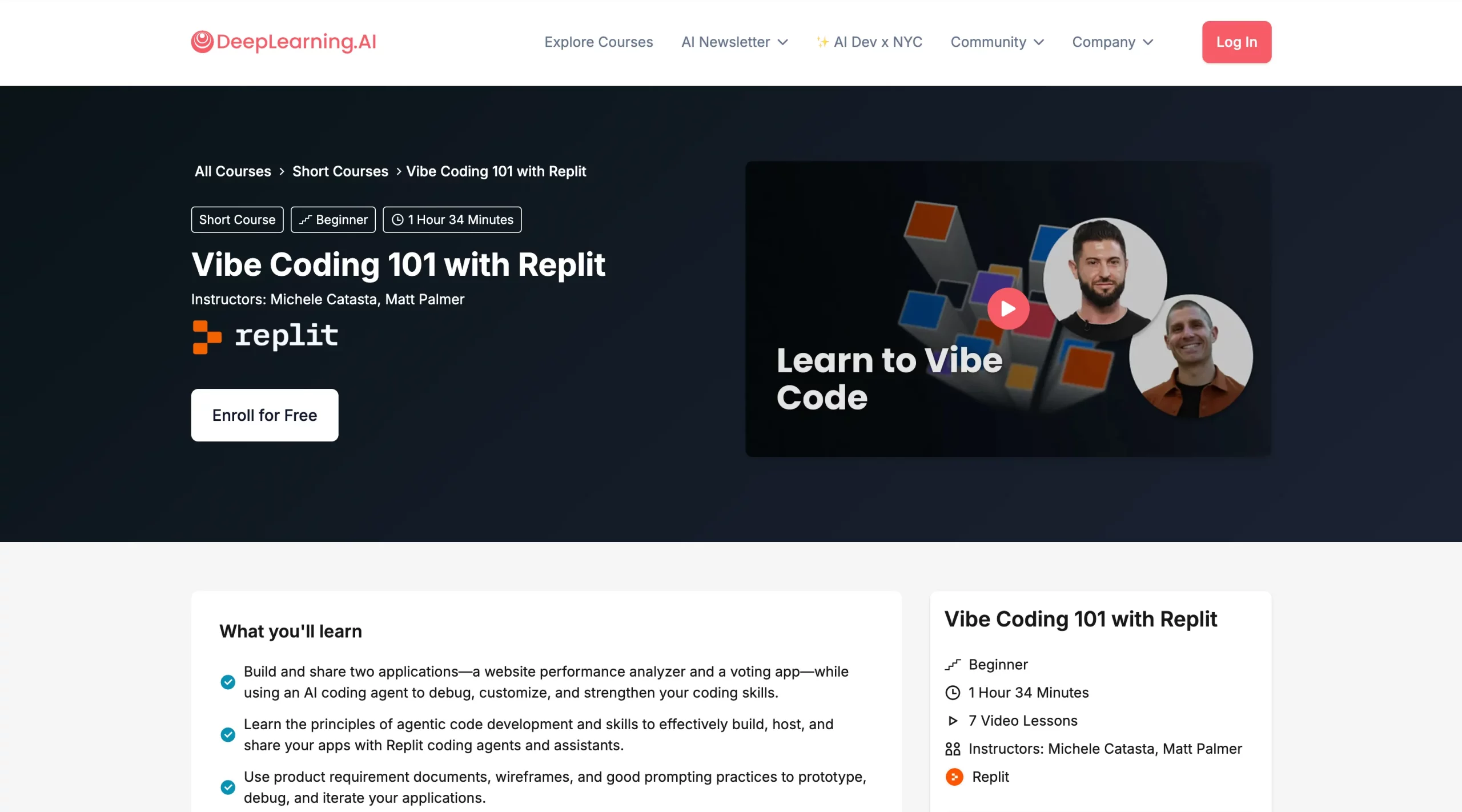
Describe an idea, and an AI co-developer builds, debugs, and deploys it in your browser. You’ll learn how agentic dev environments collaborate with humans. It’s oddly satisfying, like watching autocomplete grow a backbone.
- What is covered: Using AI co-developers for code generation, debugging, and deploying apps directly in the browser.
- Certificate: Free
- Cost: Free
- Length: 2 hours
- Link: Deeplearning.ai
14. Google Cloud Training – Gen AI Agents: Transform Your Organization
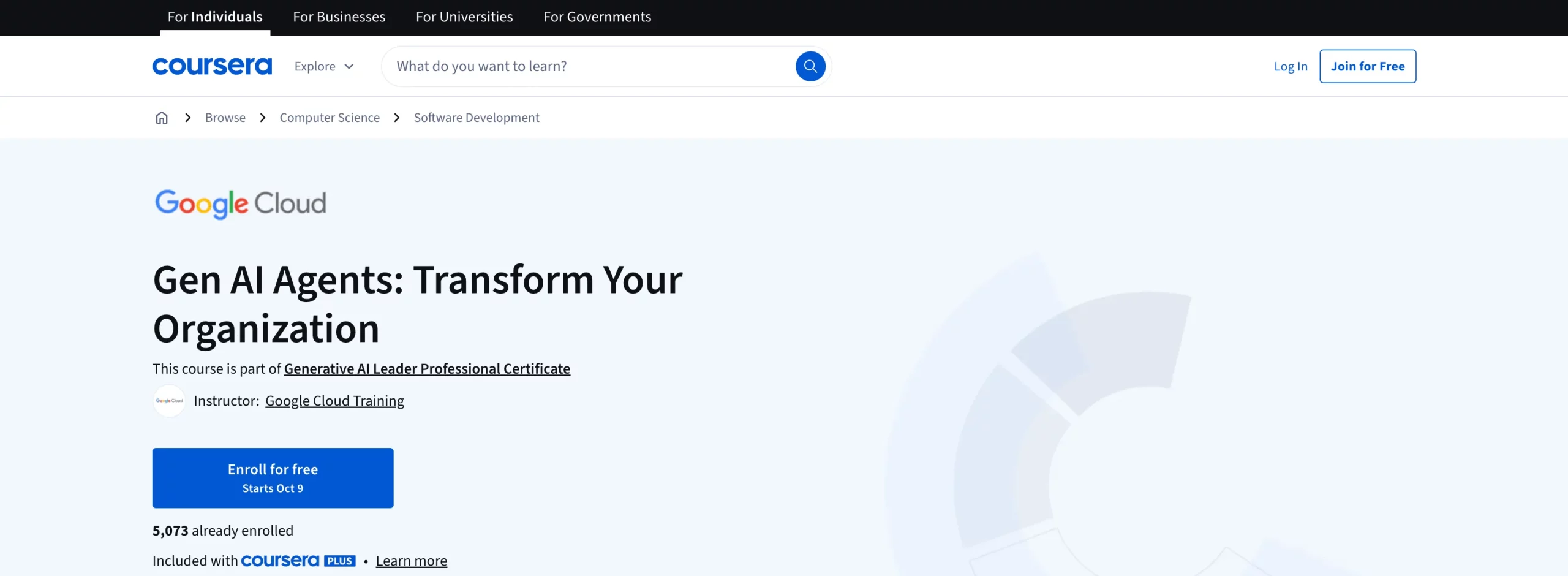
Learn how to define, build, and deploy generative-AI agents in practical settings. You’ll cover components like models, reasoning loops, tool-use, and how to combine them to create meaningful agents that solve real business problems. You will also learn how to lead or manage a transformation involving these agents.
- What is covered: Designing, building, and deploying generative-AI agents for business transformation and leadership integration.
- Certificate: Free
- Cost: Free to enroll (audit)
- Length: ~5 hours
- Link: Coursera
15. AgentAcademy.ai – “Understanding Agentic AI”
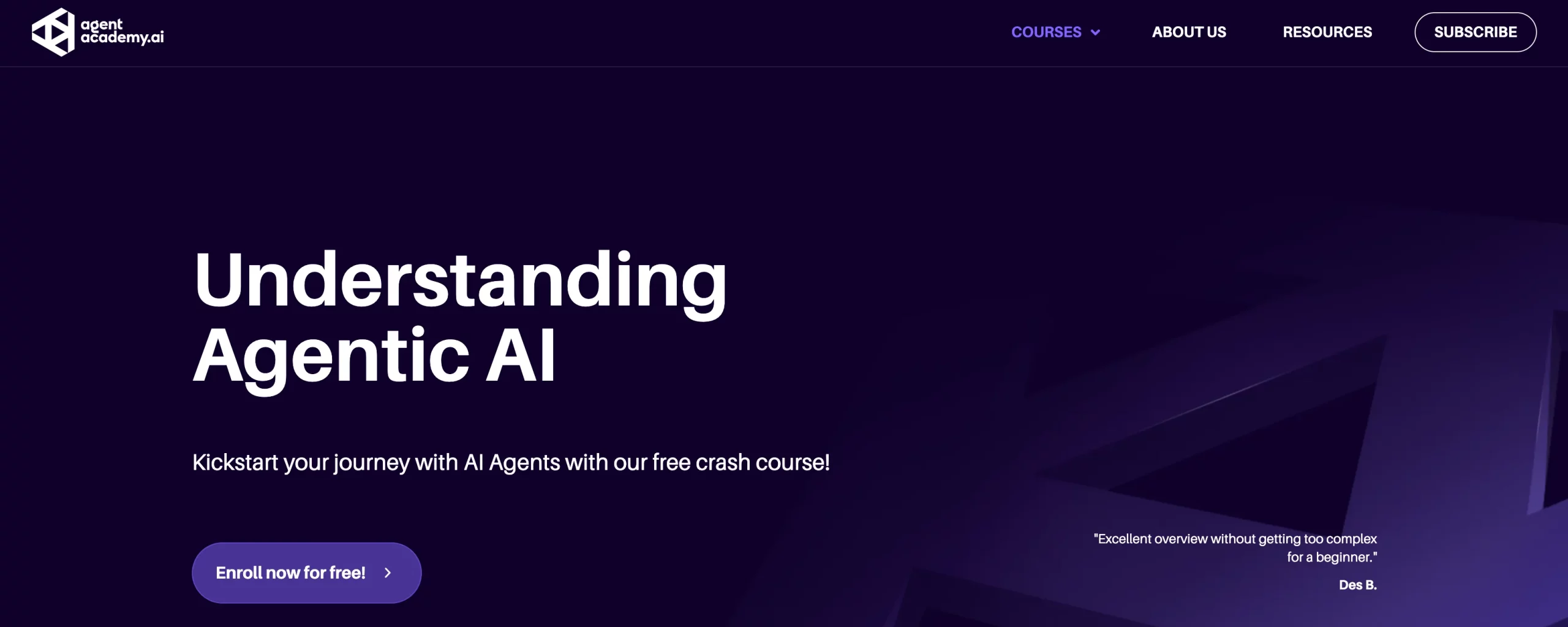
What you’ll do: A free crash-course that gives you the foundations of agentic AI (agents that act + plan + reason), aimed at business & technical folks. You’ll learn core components, typical workflows, and how to evaluate/build lightweight agents in enterprise settings.
- What is covered: Foundations of agentic AI, planning, reasoning, workflows, and lightweight agent evaluation for enterprises.
- Certificate: Shareable certificate upon completion
- Cost: Free
- Length: 1-2 hours (self-paced)
- Link: AgentAcademy
If your brain’s in “analysis paralysis”, ignore it. Pick whichever one sounds fun—maybe the hands-on Hugging Face battles, the advanced Analytics Vidhya builds—and block a single weekend.
Learners who ship a small working agent within 48 hours of their learning are 4 times more likely to keep going. Momentum compounds faster than any LLM parameter count. Just pick one and get going.
Conclusion
The agentic wave is still ankle-high; in six months, it’ll be overhead. The only ticket in is curiosity and the willingness to hit Run on a Colab notebook at 2 a.m. Close this tab, open any link above, and let your first agent Slack you “Job done.”
When that message pings, you’ll know that the future isn’t something you wait for. It’s something you prompt.
Frequently Asked Questions
Q1. What’s the main focus of this list?
A. It’s a curated set of free, hands-on courses that teach you how to build, deploy, and manage AI agents—from no-code prototypes to production-grade systems.
Q2. Are these courses really free?
A. Yes. All listed courses can be audited or accessed fully for free, with optional paid certificates on Coursera programs.
Q3. Do I need coding experience to start?
A. Not necessarily. Courses like Analytics Vidhya’s Applied Agent Systems or Hugging Face’s Agents Course are beginner-friendly and require no heavy coding background.
Studying, evaluating, and explaining AI systems for over 6 years.
“𝘖𝘯𝘤𝘦 𝘮𝘦𝘯 𝘵𝘶𝘳𝘯𝘦𝘥 𝘵𝘩𝘦𝘪𝘳 𝘵𝘩𝘪𝘯𝘬𝘪𝘯𝘨 𝘰𝘷𝘦𝘳 𝘵𝘰 𝘮𝘢𝘤𝘩𝘪𝘯𝘦𝘴 𝘪𝘯 𝘵𝘩𝘦 𝘩𝘰𝘱𝘦 𝘵𝘩𝘢𝘵 𝘵𝘩𝘪𝘴 𝘸𝘰𝘶𝘭𝘥 𝘴𝘦𝘵 𝘵𝘩𝘦𝘮 𝘧𝘳𝘦𝘦. 𝘉𝘶𝘵 𝘵𝘩𝘢𝘵 𝘰𝘯𝘭𝘺 𝘱𝘦𝘳𝘮𝘪𝘵𝘵𝘦𝘥 𝘰𝘵𝘩𝘦𝘳 𝘮𝘦𝘯 𝘸𝘪𝘵𝘩 𝘮𝘢𝘤𝘩𝘪𝘯𝘦𝘴 𝘵𝘰 𝘦𝘯𝘴𝘭𝘢𝘷𝘦 𝘵𝘩𝘦𝘮.” — 𝖥𝗋𝖺𝗇𝗄 𝖧𝖾𝗋𝖻𝖾𝗋𝗍, 𝖣𝗎𝗇𝖾