Imagine this scenario: you’ve just read a brilliant research paper with a cutting-edge algorithm, but it will take you weeks of boring code development to implement the research, or maybe you’ve thought of a brilliant web app but have not developed the frontend skills necessary to create it. What if I told you that there is a platform that will do all of this for you, automatically?
DeepCode is the platform for us. This is not your everyday code assistance tool, but an open source AI platform that creates projects from start to finish! Built by the Data Intelligence Lab at HKU, DeepCode is a fully-functional multi-agent system that takes in academic papers and outputs working code without writing any code, creates beautiful web interfaces from plain English, and builds fragments of backend code from very simple descriptions.
Table of contents
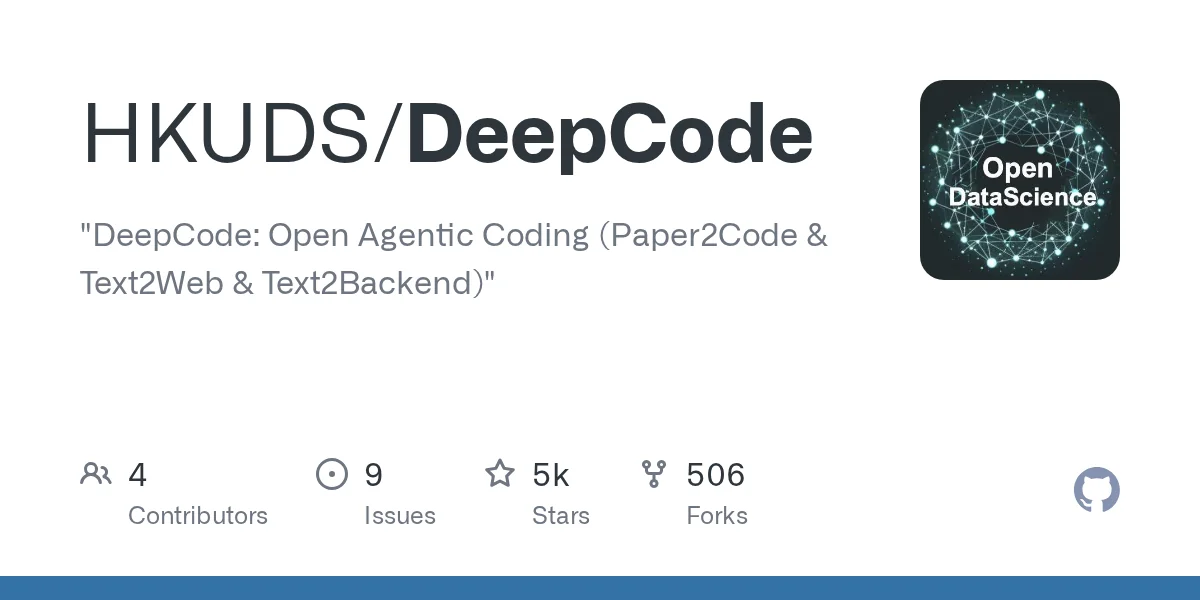
What is DeepCode?
DeepCode is, in essence, your AI development team in a box. It’s like having a senior developer, a research scientist, and a system architect in one single smart platform. The system uses several specialized AIs, also known as agents, that work together to comprehend, hear your requirements, and produce complete working code.
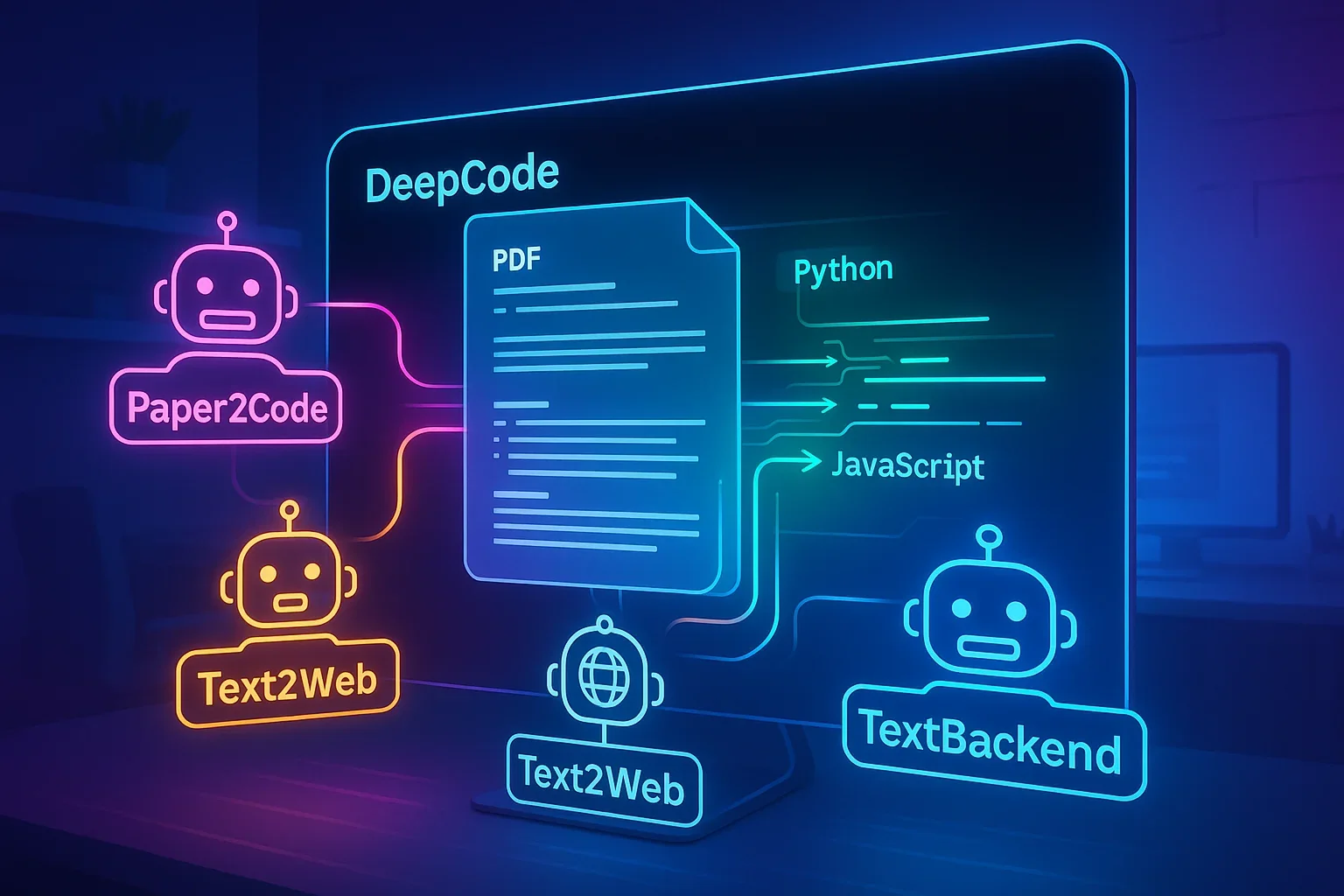
The other big advantage of DeepCode is the Multi-Modal construct. Regardless of whether you feed it academic works, natural language descriptions, or URLs, it can parse and interpret and generate the corresponding code, which is completely phenomenal.
At present, it handles three primary use cases that can be run in parallel:
- Paper2Code: convert research papers and algorithms into working implementations
- Text2Web: build frontend web applications from textual descriptions
- Text2Backend: create server-side applications and APIs from requirements
The bonus – it is completely open-source. It has both CLI and web interfaces, so users can run it from a visual or command line interface.
Key Features of DeepCode
There are three standout features of DeepCode:
Have you ever wondered how long it takes to implement a complex algorithm from a research paper? Usually weeks, sometimes months. DeepCode radically changes this process.
1. PaperCode: From Research to Reality
The Paper2Code implements state-of-the-art document parsing to derive the algorithmic logic and mathematical models from academic documentation. One important distinction of our system is that it does not instantaneously code an assembled listing of code snippets; it has learned concepts and created an optimized implementation with the same computational complexity characteristics.
Here are some of the impressive capabilities:
- Able to handle multi-modal documents that include complex mathematical representations
- Keeps the efficiency and correctness of the original algorithm
- Appropriately generates data structures, following best practices
- Generates a proper test suite for confirming the implementation is adequate
2. Text2Web: Plain English to Beautiful Interfaces
Building an entire website may seem daunting, especially for the frontend of a web project, and while DeepCode’s Text2Web solution can’t solve every web problem, it can help to eliminate the frontend development gap by building web interfaces from a plain English description.
DeepCode’s system understands the modern patterns of web development and, with the following examples, implements a functional interface and responds with:
- responsive designs in HTML, CSS, and JavaScript
- interaction points and user experience flows
- the best visual design practices in accordance with the designs that never go out of style
And the best part is that it is not generating just static mock-ups, but instead you will be getting working, interactive web applications that you can deploy.
3. Text2Backend: Server-Side Made Easy
Backend development requires many decisions to be made as you consider architecture, databases, APIs, and scalability. DeepCode’s Text2Backend capability is able to take your written high-level requirements and convert them into complete server-side solutions. DeepCode excels at:
- Designing scalable architecture patterns
- Setting up database schemas and relationships
- Creating RESTful APIs with best-practice error handling
- Implementing authentication and security
- Generating documentation
Multi-Agent Architecture of DeepCode
The platform consists of seven agents with varying responsibilities:
- Central Orchestrating Agent, or Project Manager: This agent is responsible for the coordination of the entire project. It makes high-level decisions regarding the execution of the project workflow and exploits project resources as needed based on the project complexity and its component tasks.
- Intent Understanding Agent: This agent’s task is to carry out a deep semantic analysis of user requirements. It is very capable of resolving vague human communication and converting it to articulate development specifications that can be executed.
- Document Parsing Agent: This agent specializes in processing technical documents and research papers. It can examine academic papers to extract algorithms and methodologies to define specifications for implementation.
- Code Planning Agent: This agent works on architectural design and optimization of the technology stack. It maintains programming standards in code and can develop modular structures for PML implementations by automatically selecting digital design patterns.
- Code Reference Mining Agent: This agent is designed to find compatible repositories and frameworks using intelligent search algorithms. It will analyze code bases to determine organizational compatibility and then provide recommendations based on statistical metrics.
- Code Indexing Agent: This agent will create comprehensive knowledge graphs of the code bases it discovers, and it will maintain semantic links between components in the code base to preserve the representation of related technical specifications, thus providing intelligent retrieval capabilities.
- Code Generation Agent: The complete piece that takes all the discovered content and implements it into a procedure code implementation. It takes component functional specifications and creates code files for implementation, assembling the components of the entire implementation and creating the associated testing suite.
Core Techniques of DeepCode
DeepCode utilizes Model Context Protocol, or MCP, as the standard protocol for connecting tools and services. Our standardization allows AI agents to reliably communicate with external systems, and through that interface, we can achieve powerful automation. DeepCode features multiple MCP servers for various purposes:
- Brave Search: for real-time information retrieval
- Filesystem Operations: for local file and directory access and navigation
- GitHub: for cloning repositories and accessing GitHub code
- Document Processing: for exporting PDF and DOCX files to Markdown
- Code Execution: for testing and validating Python
Also, they make use of Abstract Syntax Tree (AST) analysis to determine the correctness of code a property testing for testing coverage. This allows us to ensure the code that is produced by our system is not only syntactically correct, but functionally correct too.
Getting Started with DeepCode
The process to get started with DeepCode is pretty straightforward. You have two options, which are the direct installation and the API Key Configuration.
Step 1: Direct Installation (Recommended)
Install the package using the following command:
pip install deepcode-hkuDownload configuration files using:
curl -O https://raw.githubusercontent.com/HKUDS/DeepCode/main/mcp_agent.config.yaml
curl -O https://raw.githubusercontent.com/HKUDS/DeepCode/main/mcp_agent.secrets.yaml
Step 2: API Key Configuration
DeepCode uses API keys for its AI and search capabilities, and you will want to edit mcp_agent.secrets.yaml with your own values:
- OpenAI for GPT models (
api_keyandbase_url), - Anthropic for Claude models (
api_key), - Brave Search for web search (optional, but best to configure),
The configuration is not limited to API sources provided by final endpoints, and can be configured to use existing OpenAI-compatible endpoints and not the official APIs. Once it’s configured, you can access it either via the web interface, which is recommended for beginners, or via the CLI Interface. The CLI provides more control and is perfect for CI/CD Integration.
Project Walkthroughs with DeepCode
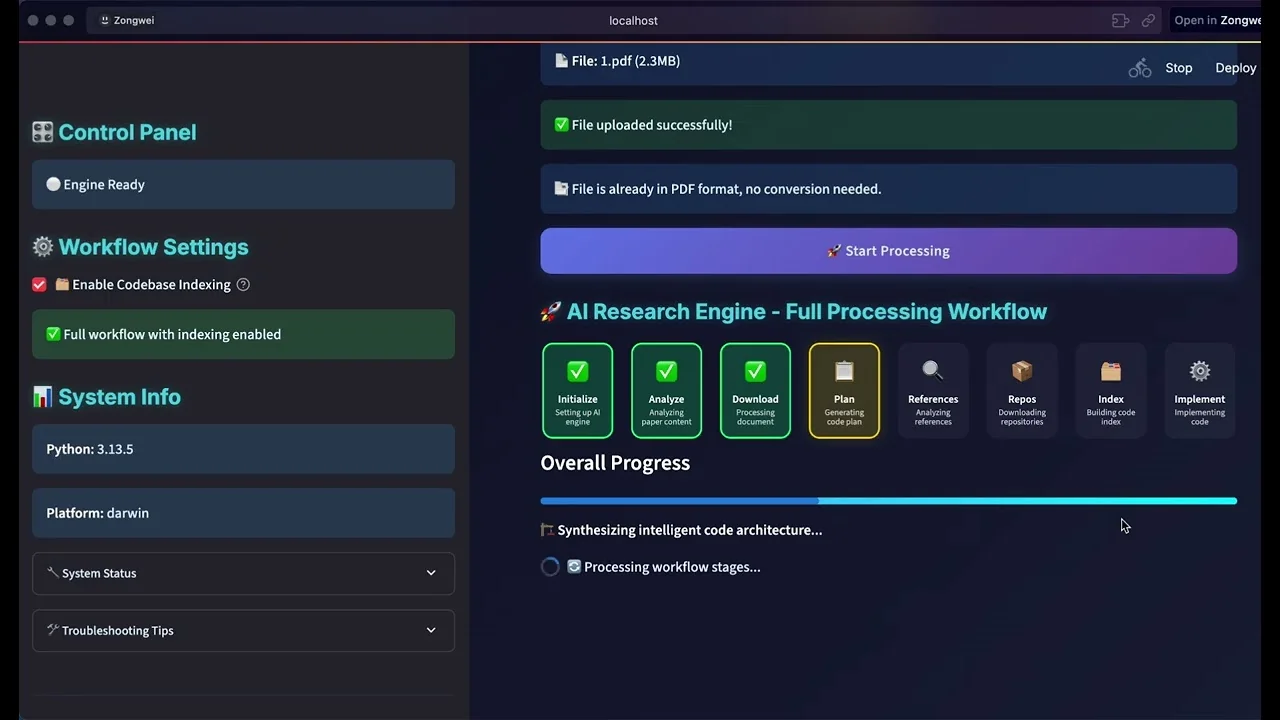
1. DeepCode for Paper2Code – Research to Implementation
Input: Upload ML research article (PDF)
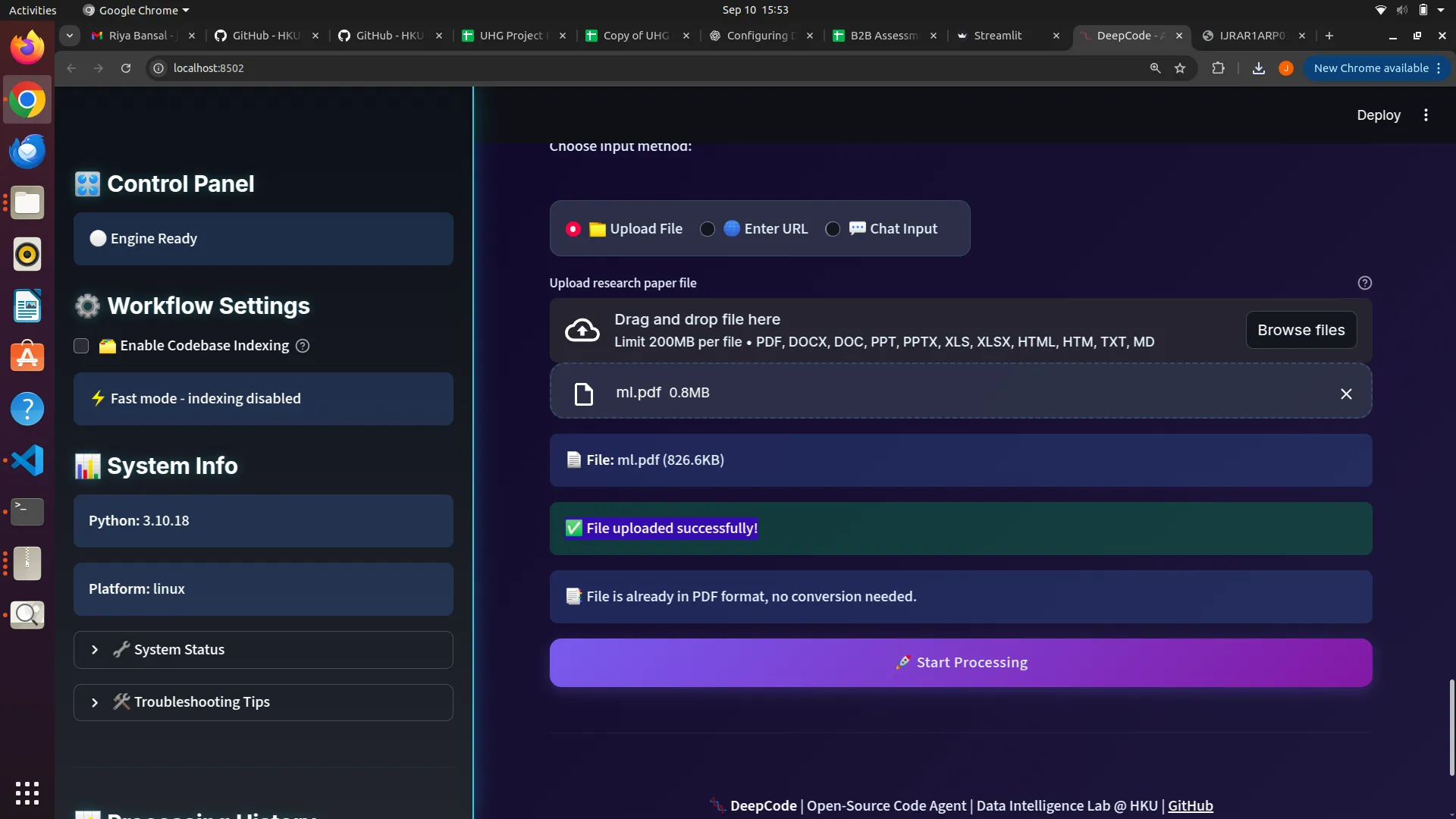
Process:
- Automatic parsing of mathematical equations and algorithms
- Architecture planning and code structure design
- Whole implementation generation with tests
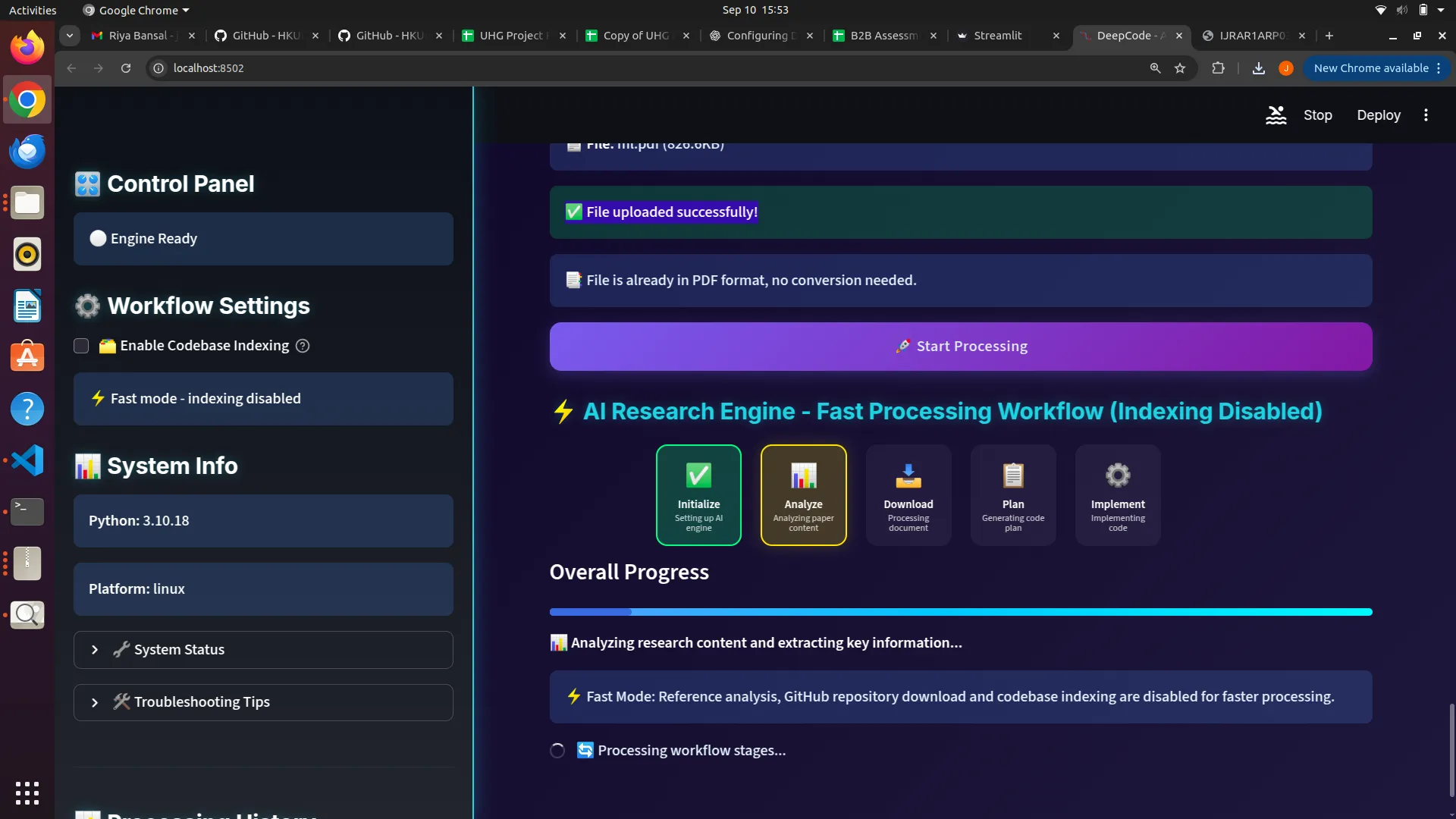
Output: Production Python code, unit tests, documentation
Time taken: 10 minutes (instead of 40+ hours manually)
2. DeepCode for Text2Web – Idea to Web App
Input: “Build a sales dashboard with interactive charts and a dark mode.”
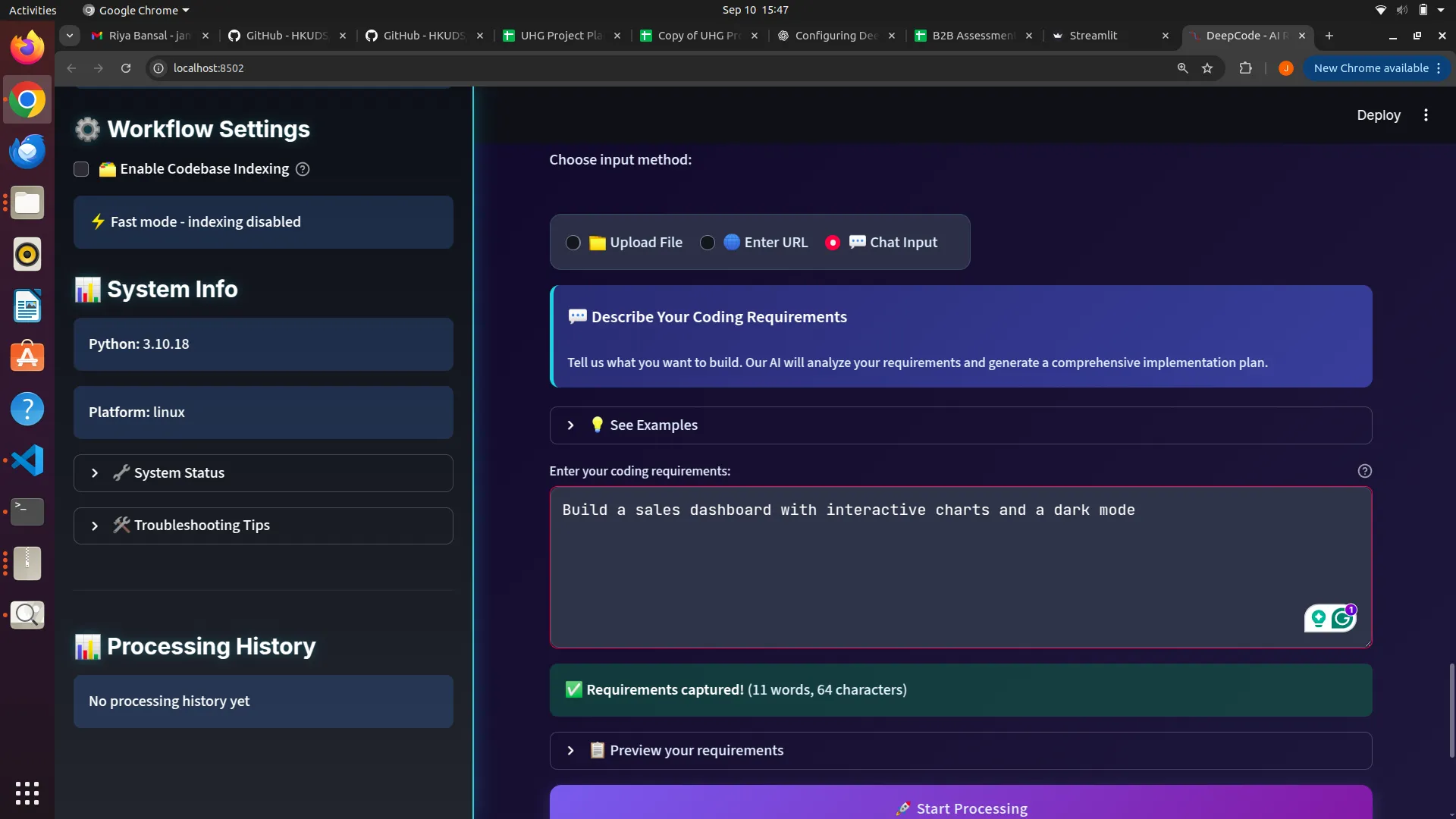
Process:
- Requirement analysis and UI/UX planning
- Responsive and accessibility implementation
- Interactive functionality and animations
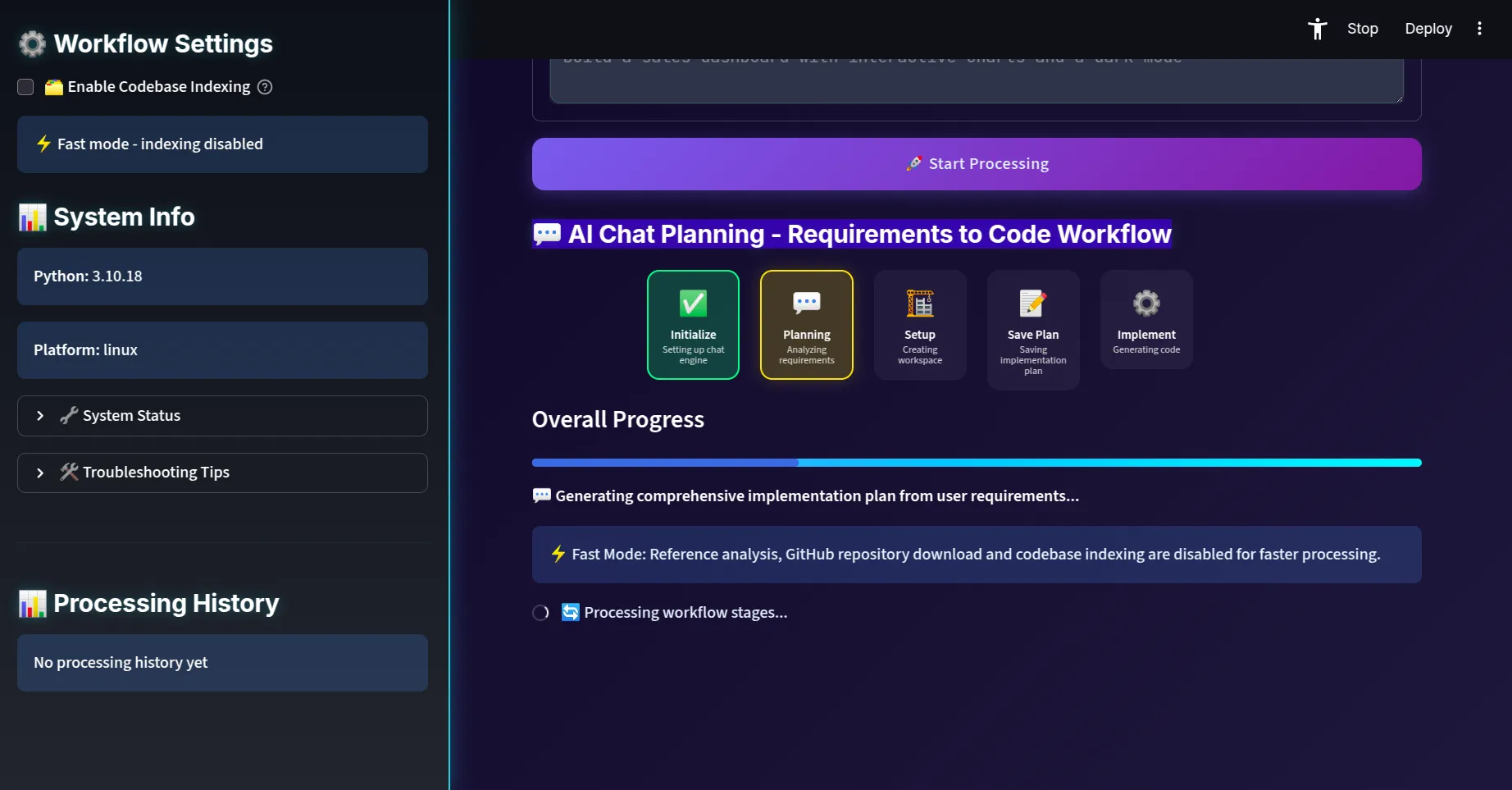
Output: Functional web application with contemporary features
Time Taken: 5 minutes (instead of days of development)
3. DeepCode for Text2Backend – Description to API
Input: “Build REST API for task management with authentication”
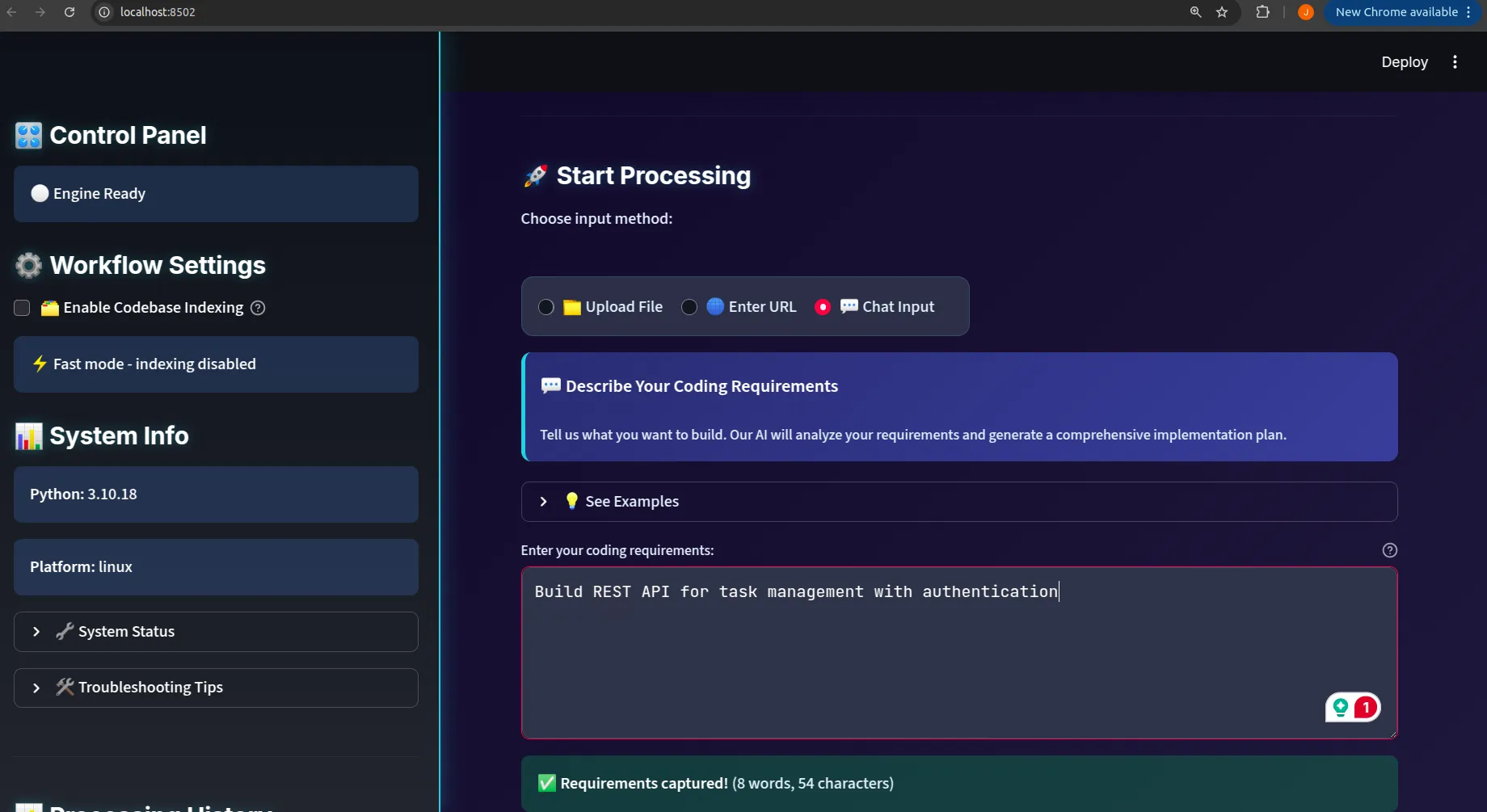
Process:
- Database schema and api endpoint design
- Security and authentication implementation
- Docker configuration and deployment settings
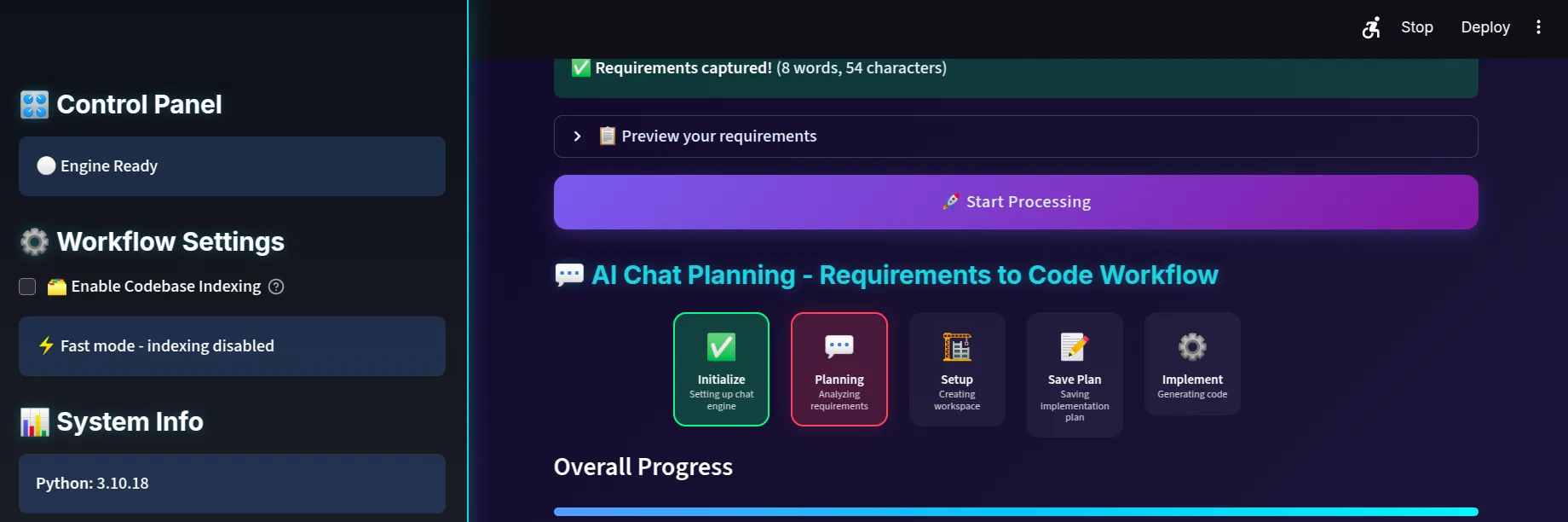
Output: Enterprise-ready backend with documentation
Time Taken: 8 minutes (versus weeks of back-end development)
DeepCode: Advantages vs Disadvantages
| Advantages | Disadvantages |
| Time Savings: Weeks of dev or 40+ hrs of research impl reduced to minutes. | API Dependence: Ongoing costs, outage risks, data exposure, and internet reliance. |
| High-Quality Consistency: Generates structured, readable code with error handling, docs, and tests. | Learning Curve: Setup, debugging, and multi-agent workflows can overwhelm novices. |
| Democratized Development: Enables non-technical researchers, helps juniors learn, lets small teams build complex systems. | Generated Code Limits: Needs customization, review for edge cases, and performance tuning. |
| Multi-Domain Intelligence: Draws from research, industry best practices, multiple languages, and optimization techniques. | Context & Scale Limits: Token limits restrict very large projects, papers, or domain depth. |
| Open Source Benefits: Community-driven features, roadmap, templates, tutorials, and extensibility. | External Service Dependence: More failure points, version mismatches, latency, and config overhead. |
Conclusion
DeepCode is a giant step forward in automatic code generation. It’s not just another AI coding assistant – it is an entire ecosystem and understands the entire software development lifecycle from research to deployment. The multi-agent nature (using problem-solving agents) really reinforces the ability of AI systems to work together toward solving more complex problems. Putting Paper2Code, Text2Web, and Text2Backend in a single platform is really impressive for its range of uses on various types of projects.
It’s easy to forget that DeepCode is a tool that offers considerable support to human developers, but is unlikely to replace them entirely. The AI-generated code is a great starting point, but human oversight, adjustment, customization, and domain knowledge are essential to create production systems. While DeepCode is still relatively young, it also has great potential. As new AI models continue to improve and as the multi-agent architecture is refined, we expect to see even bigger leaps in capabilities over the next few releases.
Read more: Best AI Coding Assistants of 2025
Frequently Asked Questions
Q1. What is DeepCode?
A. DeepCode is an open-source AI platform that generates full projects from research papers or plain text. It includes Paper2Code, Text2Web, and Text2Backend to handle academic implementations, frontend apps, and backend systems.
Q2. How does Paper2Code work?
A. Paper2Code parses research papers, extracts algorithms, and creates optimized code with test suites, ensuring correctness and efficiency in minutes instead of weeks.
Q3. Can DeepCode build full web apps?
A. Yes. Text2Web turns plain English descriptions into responsive, interactive web applications with HTML, CSS, JavaScript, and accessibility standards.
Data Science Trainee at Analytics Vidhya
I am currently working as a Data Science Trainee at Analytics Vidhya, where I focus on building data-driven solutions and applying AI/ML techniques to solve real-world business problems. My work allows me to explore advanced analytics, machine learning, and AI applications that empower organizations to make smarter, evidence-based decisions.
With a strong foundation in computer science, software development, and data analytics, I am passionate about leveraging AI to create impactful, scalable solutions that bridge the gap between technology and business.
📩 You can also reach out to me at [email protected]