Humans have a knack for finding novel uses for anything popular. With AI now in the headlines in publications the world over, it wasn’t long before humans would find a weird way of using it. And lo and behold, a host of AI tools have now come up that go from strange to “well, that’s just about the weirdest thing I’ve ever heard.” Here, let me list down some of the AI tools that rank the highest in this “weird-o-meter.”
Buckle up, as this is not your ordinary list that you can just walk through and try your hand at simultaneously (like this one – 15 Ways to Make Money with AI). These weird AI tools will make you scratch your head on one question: Was this even needed? So if you are ready to wonder what humanity is doing with all this computational power, let’s begin.
Table of contents
Weird AI Tools #1 – The Head Scratchers
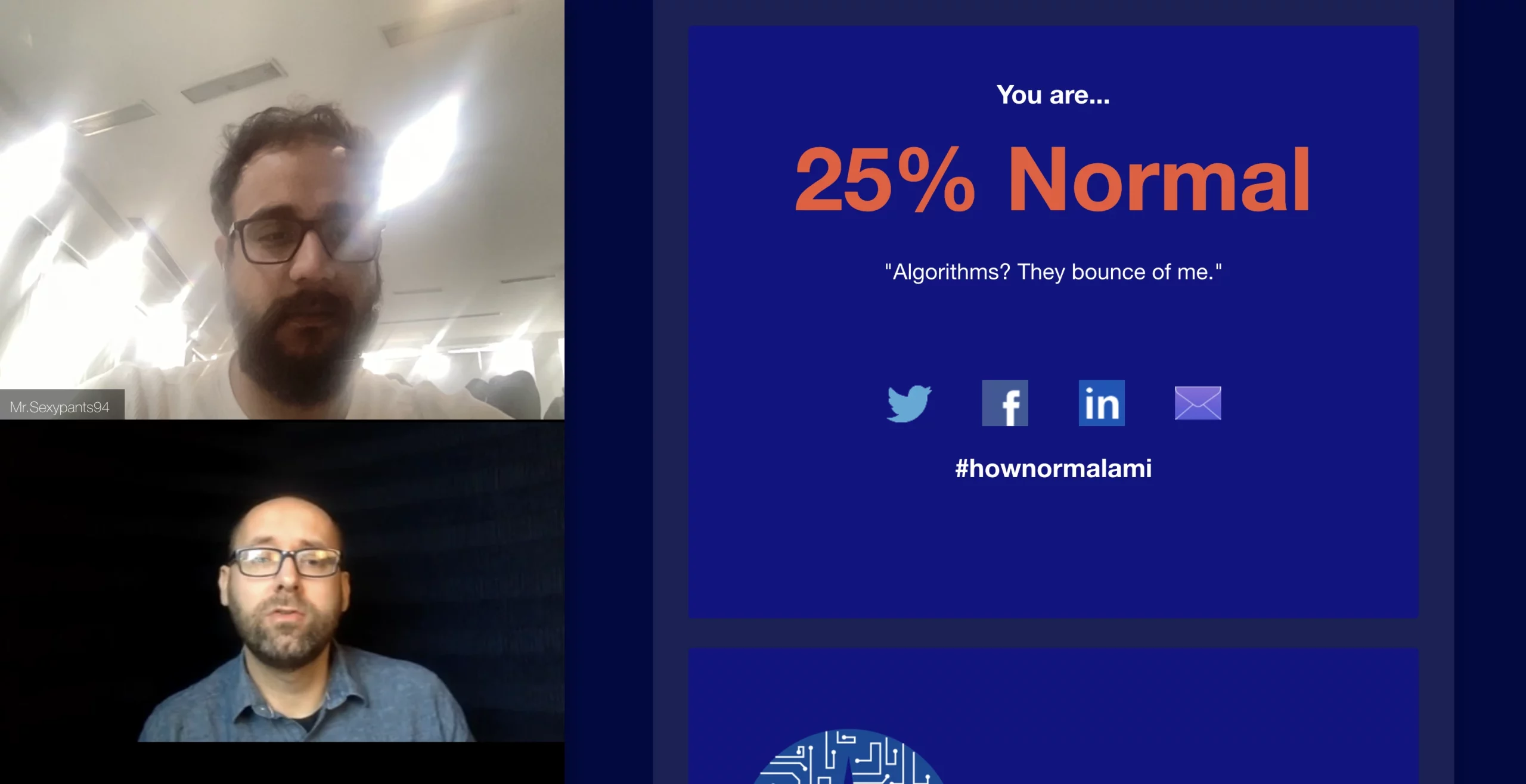
1. How Normal Am I?
Ever wondered how normal you are? Well, if you ask that question to the humans around you, chances are their answers will reflect bias. Your mom may call you the sweetest child on Earth, while your close buddy may simply call you an evil genius. So why not have an AI that gives an unbiased opinion?
In steps ‘How Normal Am I?,’ Created with support from the European Union, this tool uses a series of artificial intelligence algorithms to judge several aspects about you. Once you begin, it starts a sort of show that captures your face in real-time. The first step judges the “beauty” of your face on a scale of 1-10. Much like the world’s first AI model beauty pageant worked, the AI tool compares your face to the tens of thousands of photos it was trained on to deliver this score.
It then goes on to judge your age, whether you lie about it or not, your gender, and your BMI analysis, and, weirdly enough – the number of years you have left to live, basically your life expectancy. The AI tool even jokes about (or so I hope) taking your face print, and shares your most dominant expression and attention span, all by recording your face, as well as your cursor movements on the screen.
The whole journey through one of the most weird AI tools is an experience that enlightens you on the present surveillance systems (like eye in the sky). The project is meant to raise awareness on the increasing surveillance and the right to privacy. Note that access to your camera is necessary for using the tool, but they claim to collect no personal data whatsoever.
Access: https://www.hownormalami.eu/
Weirdest Part: How it calculated the life expectancy based on my facial features, location, and associated factors.
2. Praygen (on ZeroBot)
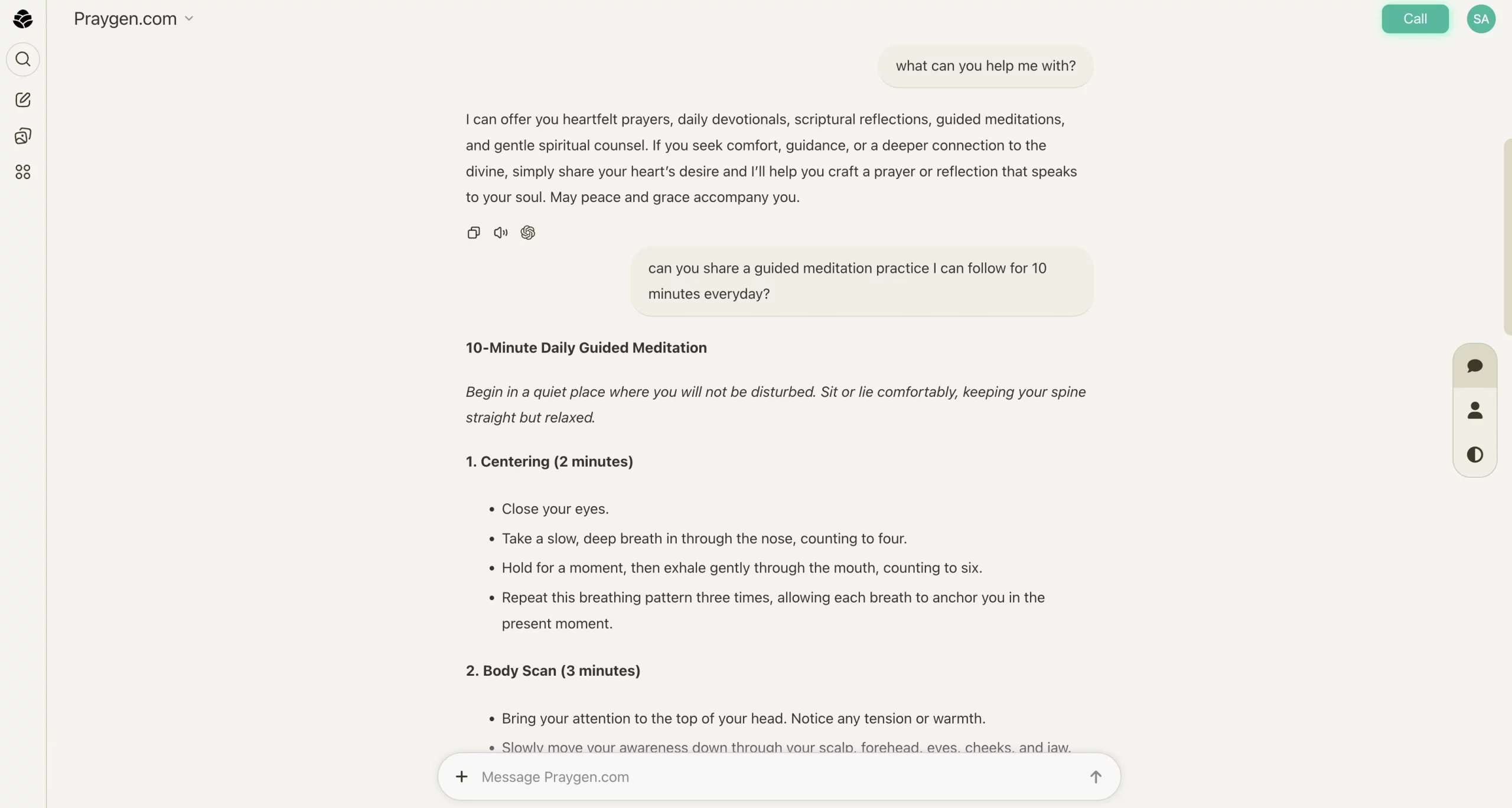
If history is anything to go by, humans have found some way or another to inculcate religion in every new trend. AI is no exception. On those lines, Praygen is an assistant on Zerobot, much like GPTs in ChatGPT (learn how to make your own), that lets you generate prayers and offers “spiritual counsel.” Consider it an encyclopedia of all (or most) religions in the world, that cites verses from holy scripture of your choice to answer your queries. It proves to be useful for those wanting to know and understand more about a religion, or use that information for practical religious practices.
Note that I cannot personally verify the accuracy of this information for obvious reasons. Though in my little use of the AI tool, the generic information seems to be quite accurate. What’s more, it can prove to be quite helpful for those wishing to be more spiritual in life through basic meditation and spiritual practices.
Access: https://www.zerobot.ai/a/a-afS06buAZ-praygen?ref=praygen
Weirdest Part: It is an AI tool for religion. Need I say more?
3. Giftruly
I may have occasionally asked ChatGPT for help with great gift ideas. But never in a million years could I have thought of a dedicated AI tool for that. Giftruly is my reality check. It is an AI-powered app that asks for some basic information before going on to suggest the perfect gift idea to you.
Just let it know who the gift is for, their age, relationship, price range, occasion, and interests, and the AI tool will give you a list of gift ideas that best fit the bucket. So no more head scratching when trying to find the ideal gift for your loved ones.
Access: https://giftruly.com/gift-finder/
Weirdest Part: Just ask it for weird ideas, and you will definitely be surprised by the AI tool’s suggestions. You can check out some of the suggestions in the image below.

Weird AI Tools #2 – The Dreamers & Feelers
4. Somni AI
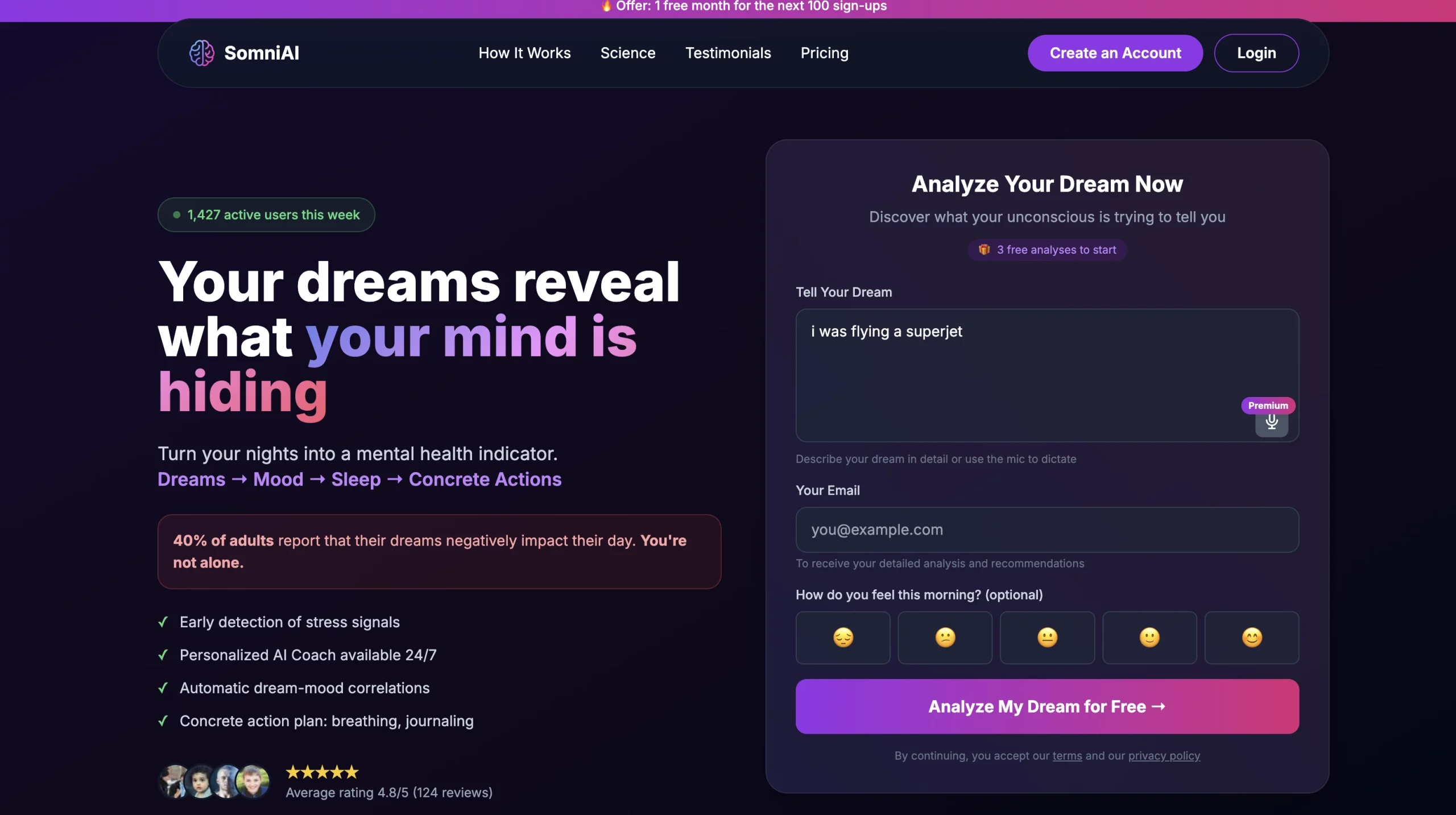
It is said that your dreams are a window to your unconscious. Somni AI opens that window and lets you peek what’s on the other side – and it’s far stranger than you think. Built as an experimental “AI dream companion,” Somni lets you record your thoughts, mood, or journal entries before bed. Once you’re done, the tool uses a set of cognitive models to generate a visual or narrative interpretation of what your subconscious might be processing.
The experience feels like giving your diary to a sentient machine and asking it to psychoanalyse you. Somni identifies themes, emotions, unresolved conflicts, and even recurring symbols that appear across your entries. It then turns them into surreal, dream-like outputs. It is almost like watching your mind rendered through the lens of digital hallucinations.
Of course, there is no real proof of whether it actually understands the human subconscious. Yet, as a creative experiment, Somni is undeniably fascinating. At its best, it acts like a reflective tool to help you understand your emotional patterns. At its weirdest, it feels like letting an alien therapist give commentary on your inner life.
Access: https://somni.ai/
Weirdest Part: The way it confidently interprets your deepest thoughts and emotions. Its comments on your subconscious are nothing short of eerie at times, especially when right!
5. Carto by Givaudan
Most AI models generate text, images, or maybe music. Carto, on the other hand, generates perfume. Yes – actual fragrance formulations. Created by Givaudan, one of the world’s most respected fragrance houses, Carto is a tool that lets perfumers design completely new scent compositions with the help of AI. Think of it as a digital scent chemist that understands how thousands of ingredients interact.
As mentioned in its press note, the tool works through a massive database of aromatic notes, each mapped with intensity, volatility, and compatibility. Perfumers can drag and drop ingredients on its visual “odor value map,” and Carto instantly suggests balanced blends or new creative directions. It even predicts how a fragrance will evolve over time, long before it’s ever bottled.
Know that traditional perfumery relies heavily on experimentation and intuition. Carto obviously accelerates this process dramatically. Need bold, unconventional combinations – use Carto instead of dozens of trials and a lot of wasted samples.
Access: https://www.givaudan.com/fragrances/carto
Weirdest Part: It’s an AI that designs fragrances. It literally creates smells using math. It doesn’t get weirder than this.
6. Osmo
If AI generating perfumes wasn’t strange enough, Osmo takes things a step further – it digitises the sense of smell itself. Built by former Google researchers and supported by cutting-edge machine-learning models, Osmo is designed to map, classify, and even generate new scents by analysing their molecular structure. In simple terms, Osmo is an AI that can sniff.
Osmo breaks down odors into measurable components and predicts what a smell “should” be based on its molecular signature. This opens up wild possibilities – from predicting what a fragrance might smell like before it’s ever made, to designing completely new scent molecules that don’t exist in nature. It’s basically an AI nose with a frighteningly sharp memory.
Access: https://www.osmo.ai/
Weirdest Part: The fact that an AI can “smell” molecules and tell you what fragrance they resemble. I am suddenly very afraid of robotic dogs of the future.
Weird AI Tools #3 – The Offbeat Art Squad
7. Suno AI
Ok, a disclaimer here – Suno AI is quite popular and doesn’t quite fit in the “you’ve never heard of” window. However, its mind-blowing quirkiness helps it rank on this list of weird AI tools. Suno AI lets you create full-fledged songs using nothing but a short text prompt. No mic, no instruments, no music theory. Just type, hit generate, and Suno will write the lyrics, compose the melody, arrange the instruments, and sing the entire track for you.
So, what’s weird about this AI tool, you ask? Let me answer it this way – here are some suggestions given by the app as soon as I landed on the home page –
“Make a house song about quitting your job”
and
“Make a jazz song about watering my plants”
When you see such ideas being presented with a tool right from the start, you know it is not meant for professional grade music. Yet, the vocals sound eerily real, the production quality is shockingly good, and the results feel like you hired a full studio team without paying a single rupee.
Access: https://suno.com/
Weirdest Part: The confidence with which it sings completely absurd prompts – as if generating a heartbreak song from the perspective of a broken toaster is totally normal.

8. Patterned AI
Ever looked at a wallpaper or a fabric print and thought, “Who sits down and designs these repeating patterns?” Well, now the answer is: an AI. Patterned AI is a tool that generates seamless, perfectly looped patterns from a simple text prompt. Think florals, abstracts, geometrics, wavy illusions, or downright chaotic designs that belong in a sci-fi movie.
You just type what you want, like “blue koi fish on neon clouds” or “retro 90s squiggles in pastel pink.” Patterned AI produces a tileable pattern that repeats endlessly without any visible breaks. Designers use it for fabric prints, gift wrap, product packaging, interior wallpapers, and print-on-demand merch. The best part is how bizarre the results from this AI tool can get if you push the prompts into weird territory.
The tool feels like a peek inside the mind of an AI textile artist who has absolutely zero limitations. If Midjourney paints a picture, Patterned AI decorates the entire room with it.
Access: https://www.patterned.ai/
Weirdest Part: How effortlessly it turns the strangest prompts, like “angry vegetables in outer space,” into perfectly looped, professional-looking textile patterns.

9. Fontjoy
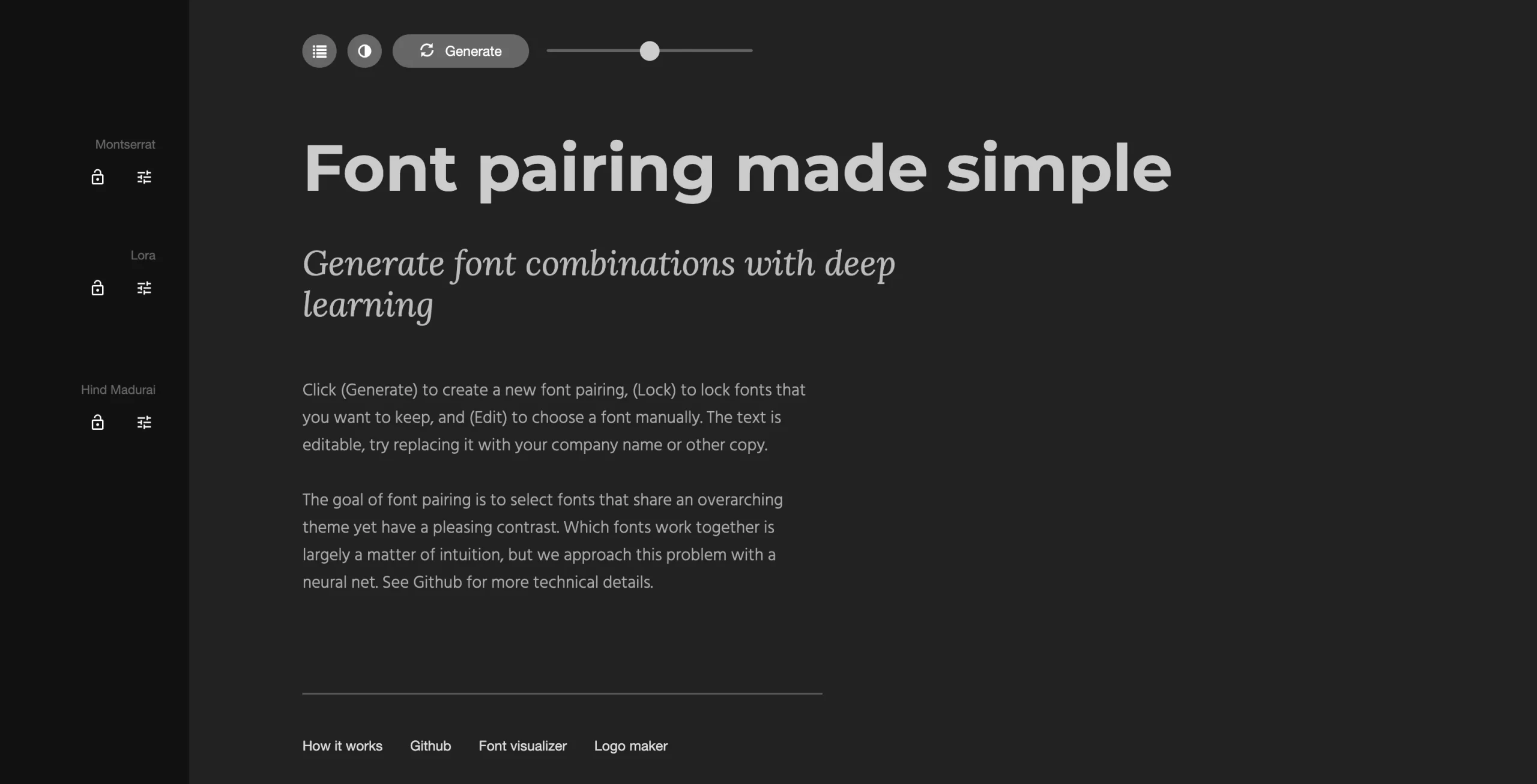
I remember a time when typography used to be an art of utmost respect. I mean, it still is, though a new AI tool in the market may just make it much more accessible for everyone now. Fontjoy is an AI app that generates font combinations you’d never think of pairing. With one click, it mixes elegant serifs with chaotic display fonts, minimalist shapes with handwritten scribbles, and somehow still claims it all “works.”
The tool uses machine learning to understand visual harmony (or deliberate disharmony), then serves up font pairs and trios that range from aesthetically pleasing to completely unhinged. Designers use it as a creative spark when stuck, but the real fun is in exploring the strange combos the AI confidently recommends. Sometimes it nails it. Sometimes it gives you a logo that looks like a horror movie title for a bakery.
Fontjoy is proof that even something as simple as choosing fonts can become a mildly chaotic adventure when AI is involved.
Access: https://fontjoy.com/
Weirdest Part: Ever seen how some pairs should not go together – yet somehow… kind of do? Fontjoy is a master of that.
10. Botnik
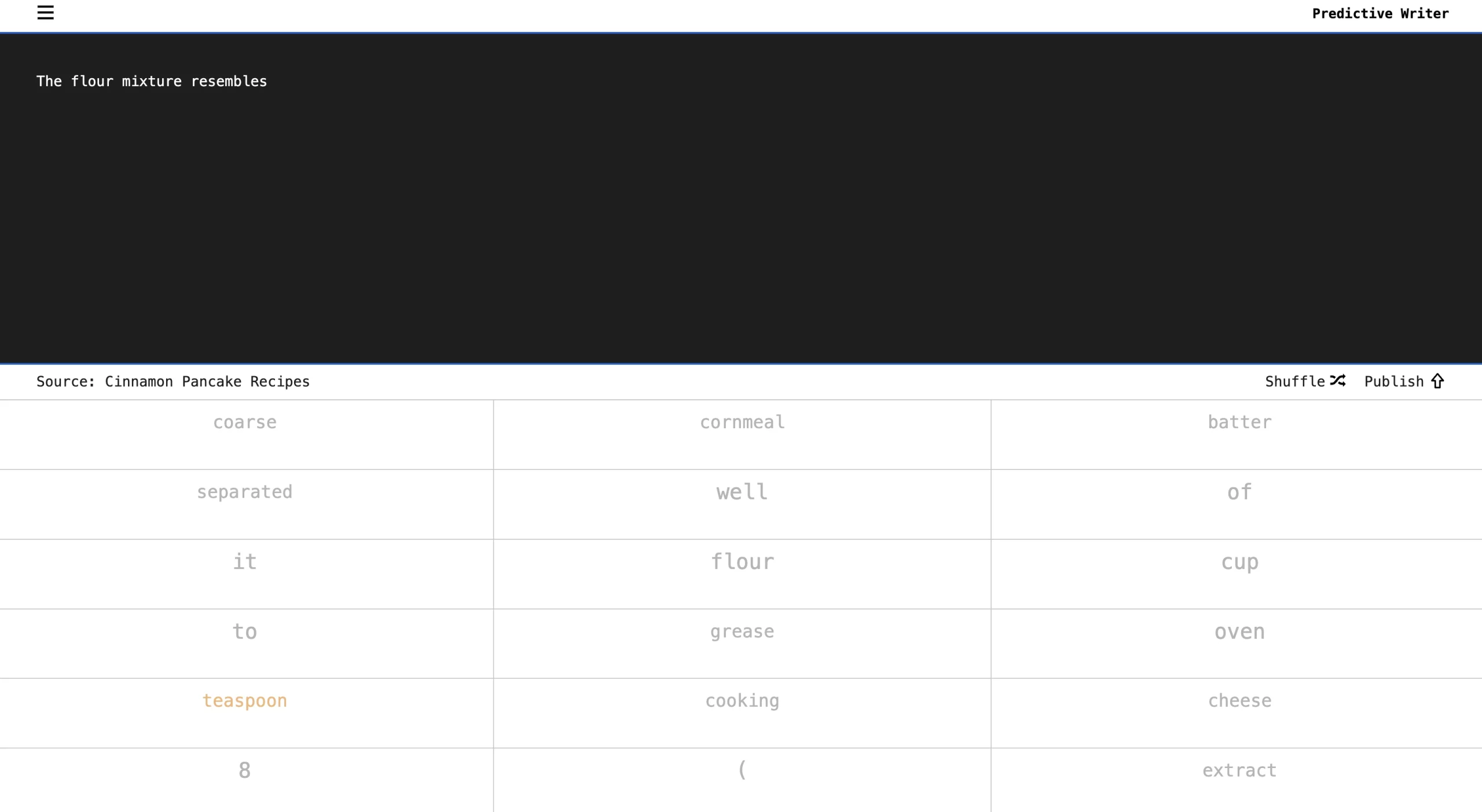
If predictive text ever had a chaotic evil twin, it would be Botnik. This tool blends AI with comedy by using custom predictive algorithms trained on specific datasets, like every episode of Seinfeld, thousands of Yelp reviews, or classic Harry Potter chapters. It then generates scripts, dialogues, and sentences that are so wrong, they become hilarious.
You pick a keyboard (each one trained on a particular style), start typing, and Botnik suggests the next word based on patterns it has learned. The result is content that feels familiar but is completely derailed. Like a sitcom monologue that turns existential halfway through, or a Harry Potter chapter where Harry declares bankruptcy. Writers and comedians use Botnik to break creative blocks or intentionally produce absurd content that goes viral.
It isn’t trying to be useful. It’s trying to be funny. And in a world of hyper-serious AI tools, Botnik is refreshingly, unapologetically chaotic.
Access: https://www.botnik.org/
Weirdest Part: You will only feel the magic of Botnik when your whole plot goes to a toss midway of your story. Think Garfield gets Nuclear codes.
Conclusion
Just because AI is able to write stuff for you, generate images and videos, and basically help you increase your work output, remember – you are the human. Which means you are not really restricted in AI use “as per the norm.” Just as the makers and users of these AI tools thought out of the box, you may want to have a little fun with AI every once in a while.
Next time you do, you know which tool to turn to.