Automation has become the cornerstone of modern software development and operations. Tools like Jenkins, GitHub Actions, and Kubernetes have defined how DevOps teams streamline their delivery pipelines, manage infrastructure, and maintain reliability. New tools like n8n are gaining attention for making workflow automation easier, as it is more accessible, especially to smaller teams and non-developers. This raises an interesting thought: can a tool like n8n entirely replace the role of DevOps? Before we explore that lane, let’s first understand what DevOps means, what n8n offers, and how their purposes differ.
Table of contents
What is DevOps?
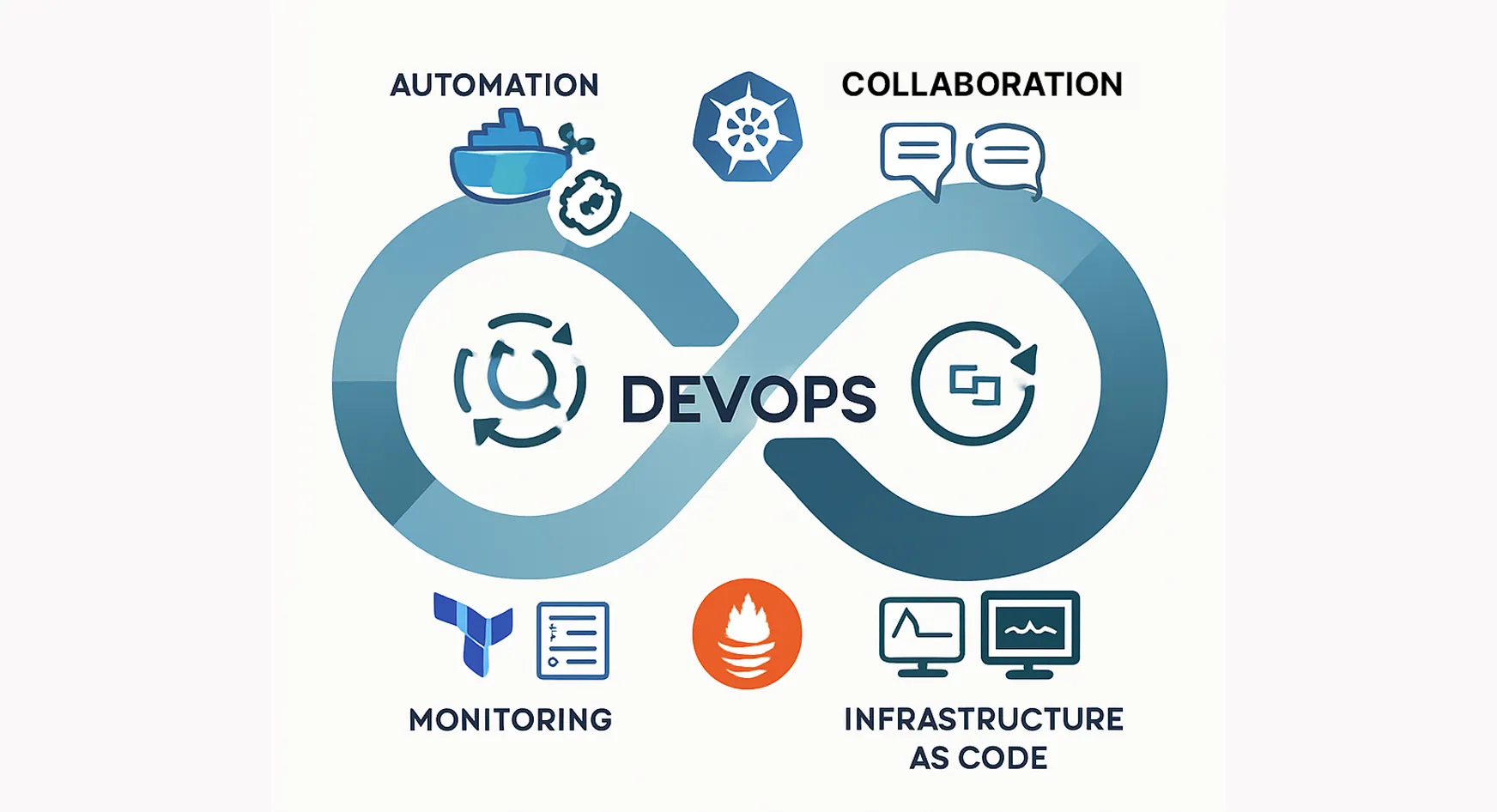
DevOps is a set of cultural and technical practices that aims to bridge the gap between software development and IT operations. It focuses on automation, collaboration, continuous integration (CI), continuous delivery (CD), monitoring, and infrastructure as code (IaC).
DevOps isn’t a single tool or technology; it is a philosophy supported by a rich ecosystem of tools like Docker, Kubernetes, Terraform, Prometheus, and CI/CD platforms. At its core, DevOps helps teams deliver software faster, more reliably, and with fewer bottlenecks, while ensuring scalability, security, and maintainability.
What is n8n?
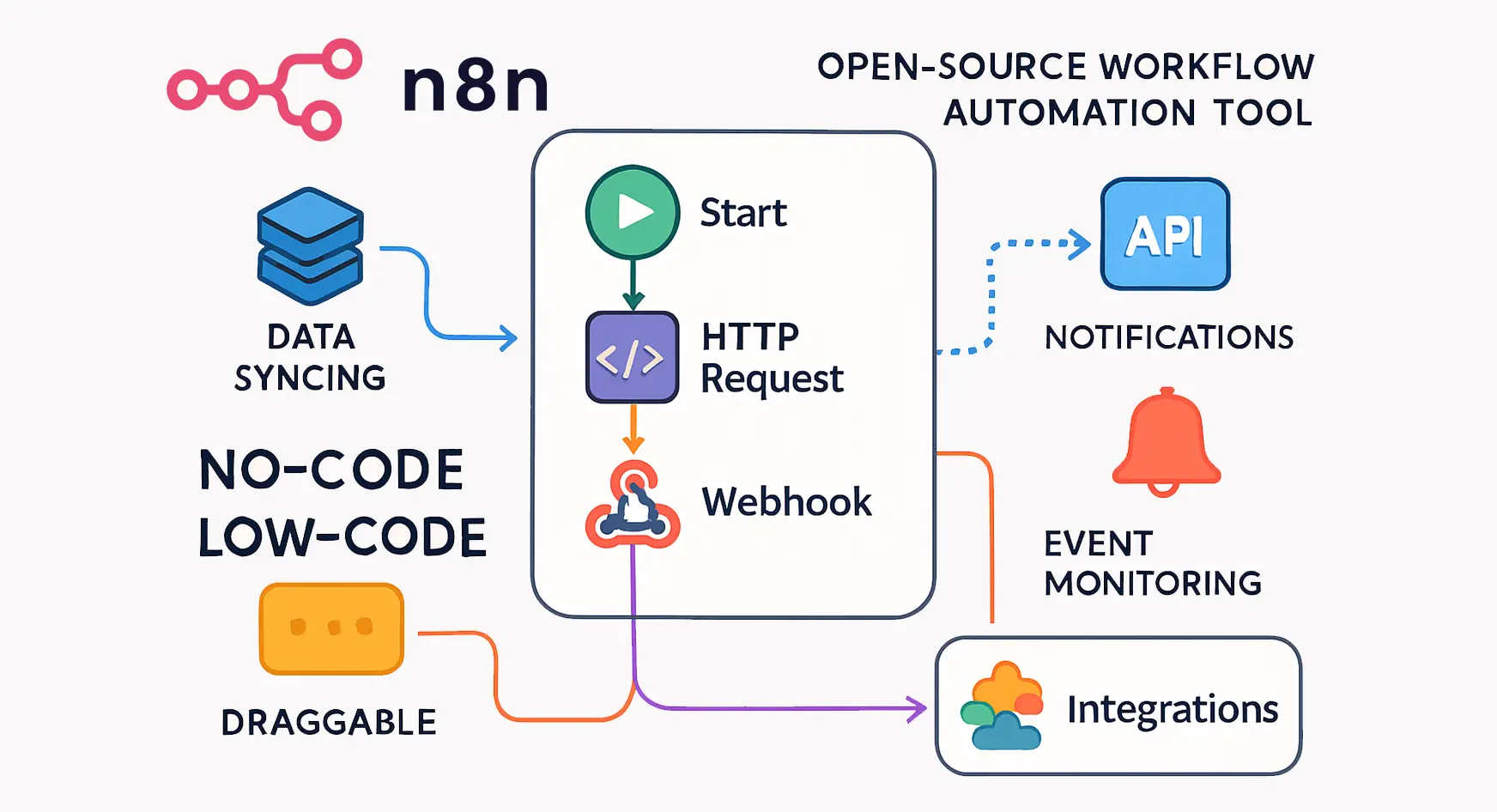
n8n is an open-source workflow automation tool that allows users to connect with APIs, services, and applications using a no-code or low-code approach. It enables both non-technical and technical users to automate their repetitive tasks more efficiently, such as syncing data, sending notifications, integrating services, or even monitoring events across platforms. Unlike traditional DevOps tools, n8n focuses more on lightweight business process automation rather than infrastructure orchestration or deployment pipelines. n8n’s strengths lie in ease of use, visual interface, and flexibility in integrating a wide range of third-party services.
Breaking down the myth: can n8n replace DevOps?
The simple answer is No! n8n cannot fully replace DevOps, but it can complement it. And here’s why:
Scope of Automation
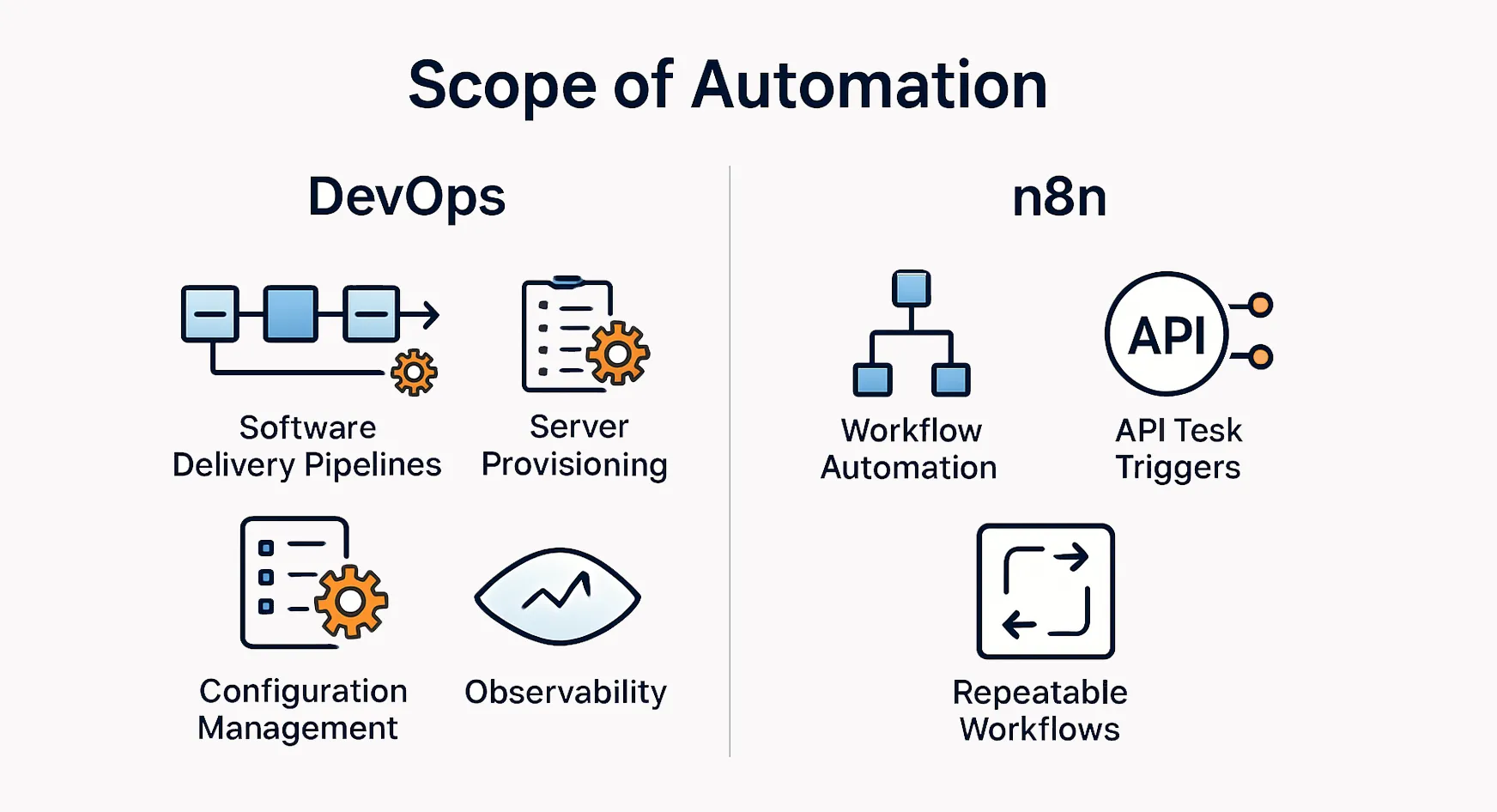
DevOps covers software delivery pipelines, server provisioning, configuration management, observability, and cloud orchestration, all complex operations deeply tied to infrastructure.
n8n, on the other hand, excels at workflow automation, triggering tasks between APIs or enhancing developer productivity with simple, repeatable workflows.
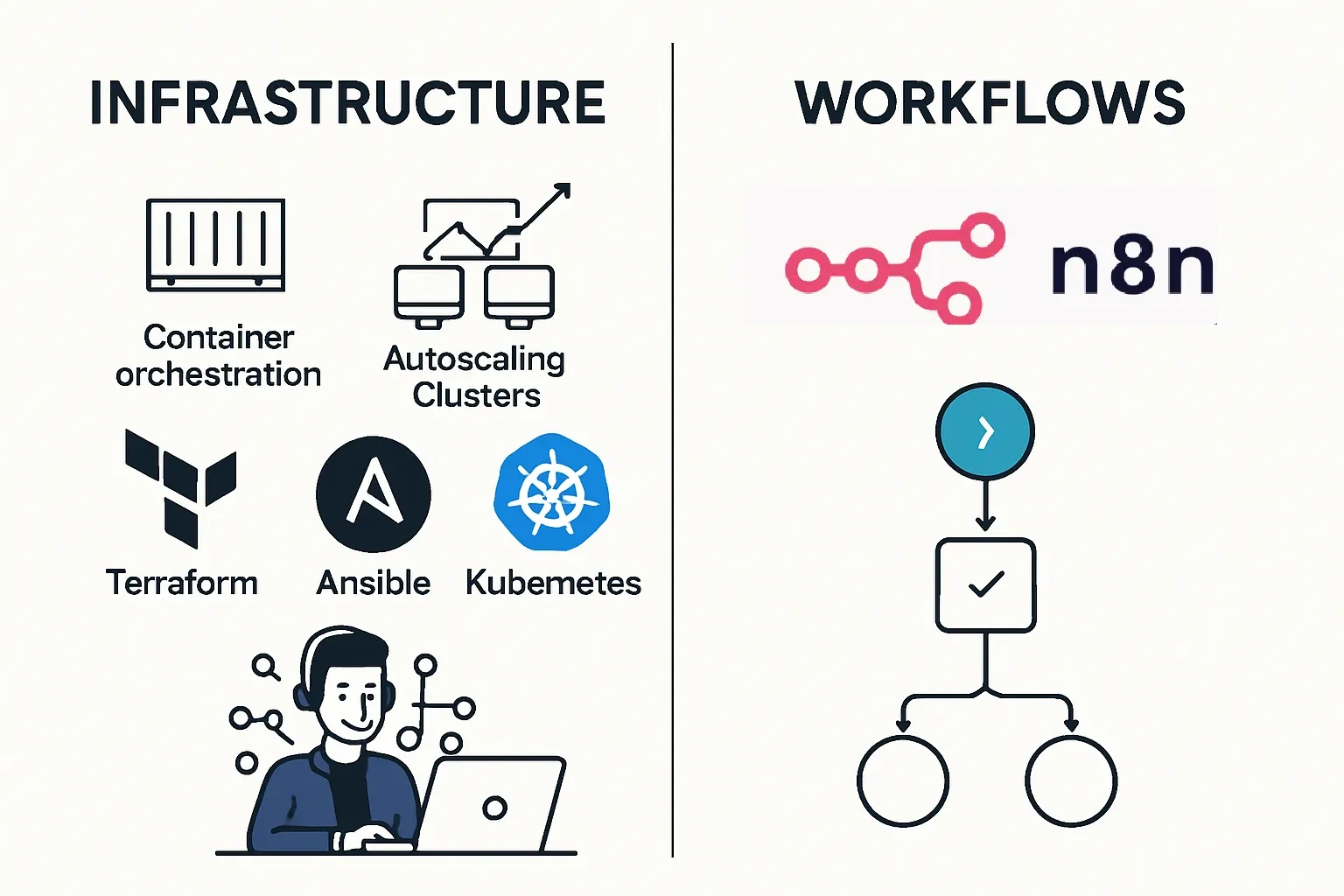
Infrastructure vs workflows
DevOps is about managing infrastructure at scale, from container orchestration to autoscaling clusters. n8n does not provide infrastructure as code capabilities; it cannot replace Terraform, Ansible, or Kubernetes.
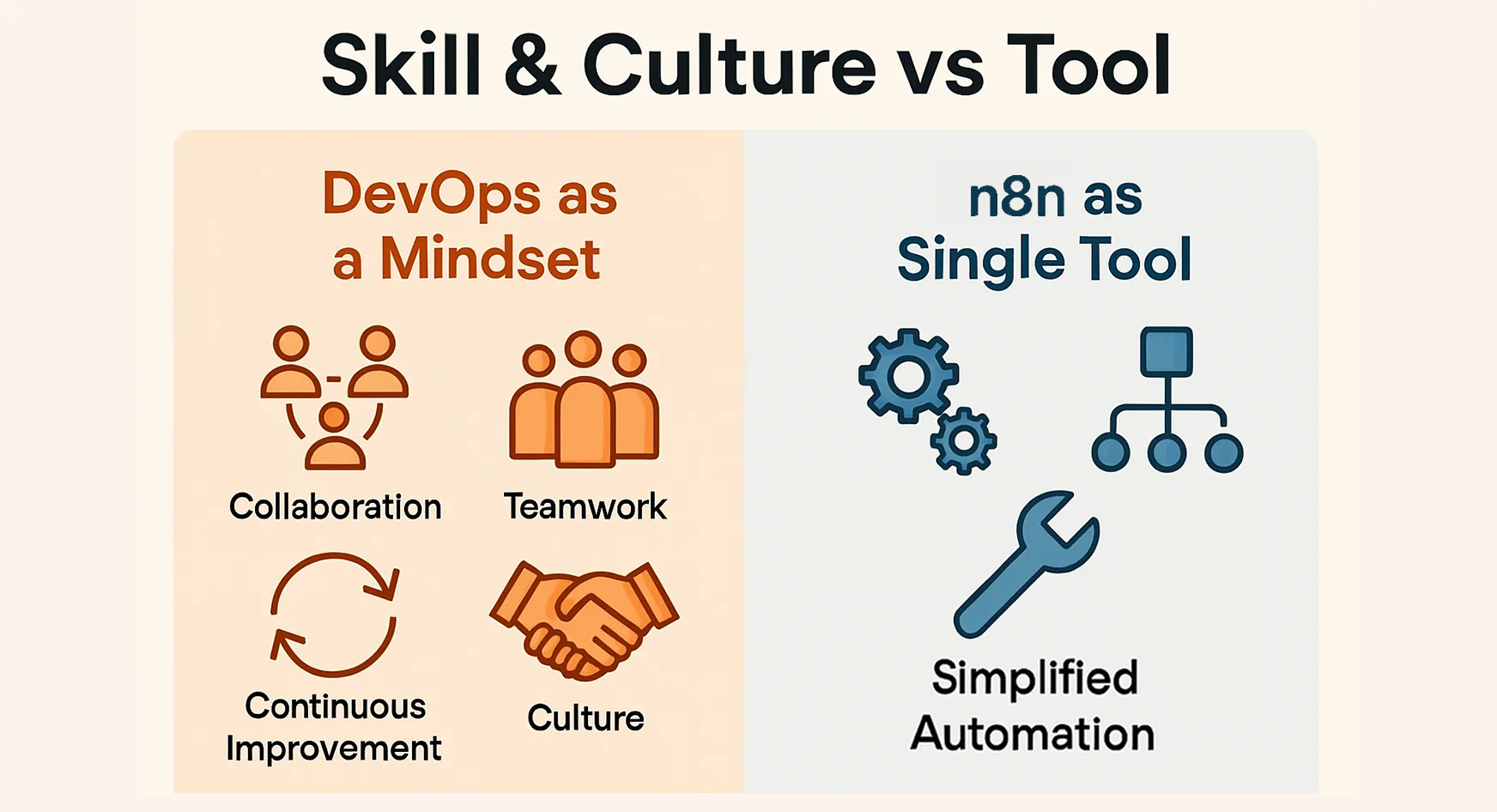
Skill & Culture vs Tool
DevOps is not just about tools; it’s a mindset of collaboration and continuous improvement. n8n is just a single tool that simplifies certain aspects of automation, but it doesn’t embody the culture and practices that define DevOps.
Real-World Perspective
When to use each:
| Aspect | DevOps | n8n |
|---|---|---|
| Primary focus | End-to-end software lifecycle & infrastructure | Workflow automation & API integrations |
| Skill level | Requires specialized DevOps engineers | Accessible to non-developers & developers |
| Infrastructure management | Yes (cloud, containers, IaC) | No |
| Typical use cases | CI/CD pipelines, scaling, and monitoring | Task automation, alert routing, data sync |
| Cultural impact | High (team collaboration, agility) | Low (tool for automation) |
Use-cases where n8n complements DevOps
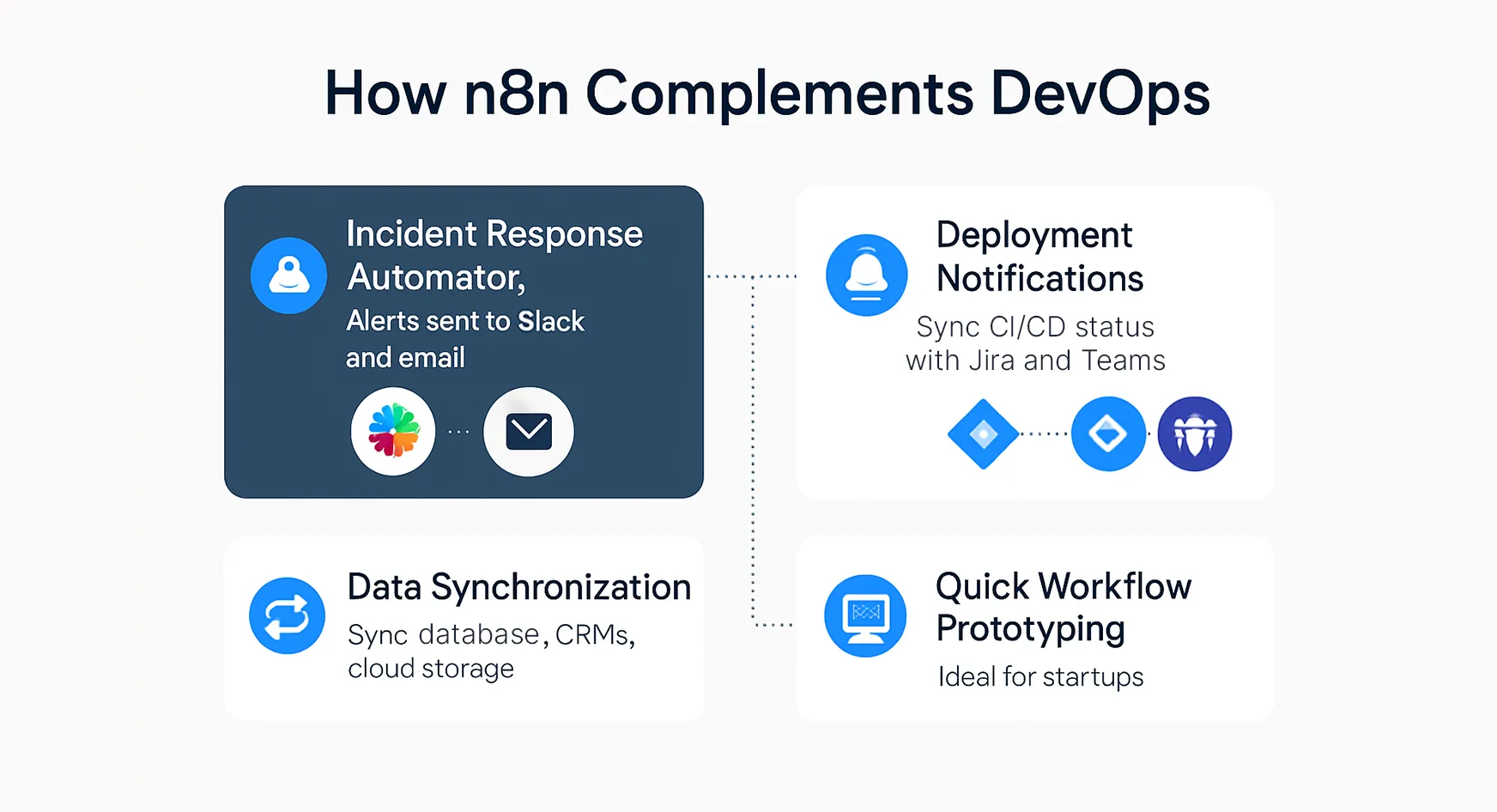
Though n8n cannot replace DevOps, it can significantly ease certain pain points like:
- Incident response automation: Automatically sending alerts from monitoring tools to Slack or email.
- Deployment notifications: keeping trams updated by syncing CI/CD pipeline status with collaboration tools like Jira or Microsoft Teams.
- Data synchronization: Automating updates between databases, CRMs, or cloud storage to keep the environment aligned.
- Quick workflow prototyping: building simple automation before investing in full DevOps pipelines for startups pr small teams.
Conclusion
n8n is a remarkable tool that offers automation, making it easier for teams to bridge applications and automate repetitive workflows. However, it is not a silver bullet that can replace the broad, complex, and cultural domain for DevOps. DevOps is a complex discipline requiring orchestration of infrastructure, development pipelines, and team collaboration at scale. Instead of replacing DevOps, n8n acts as a powerful ally, allowing teams to automate secondary processes, boost productivity, and experiment with automation at low cost and complexity. The future lies in using such tools smartly to empower DevOps teams, not replace them.
Frequently Asked Questions
Q1. Can n8n replace DevOps?
A. No. n8n handles workflow automation, but DevOps covers infrastructure, CI/CD, and culture—far beyond what n8n can do.
Q2. What is DevOps mainly about?
A. DevOps is about collaboration, CI/CD pipelines, infrastructure as code, monitoring, and scaling software delivery.
Q3. What is n8n mainly used for?
A. n8n automates workflows, integrates APIs, syncs data, and routes alerts—especially useful for smaller teams.
Q4. Who can use n8n effectively?
A. Both developers and non-developers can use n8n thanks to its visual, low-code interface.
Q5. What are common DevOps use cases?
A. CI/CD pipelines, container orchestration, cloud scaling, monitoring, and management.
Q6. How can n8n complement DevOps teams?
A. By automating alerts, syncing tools, handling notifications, and reducing repetitive manual work.
Q7. What’s the cultural role of DevOps vs n8n?
A. DevOps drives collaboration and continuous improvement; n8n is just a tool for task automation.
I am a Data Science Trainee at Analytics Vidhya, passionately working on the development of advanced AI solutions such as Generative AI applications, Large Language Models, and cutting-edge AI tools that push the boundaries of technology. My role also involves creating engaging educational content for Analytics Vidhya’s YouTube channels, developing comprehensive courses that cover the full spectrum of machine learning to generative AI, and authoring technical blogs that connect foundational concepts with the latest innovations in AI. Through this, I aim to contribute to building intelligent systems and share knowledge that inspires and empowers the AI community.